



Beginner's Guide to How High Altitude Affects AC Cooling in Northern Colorado
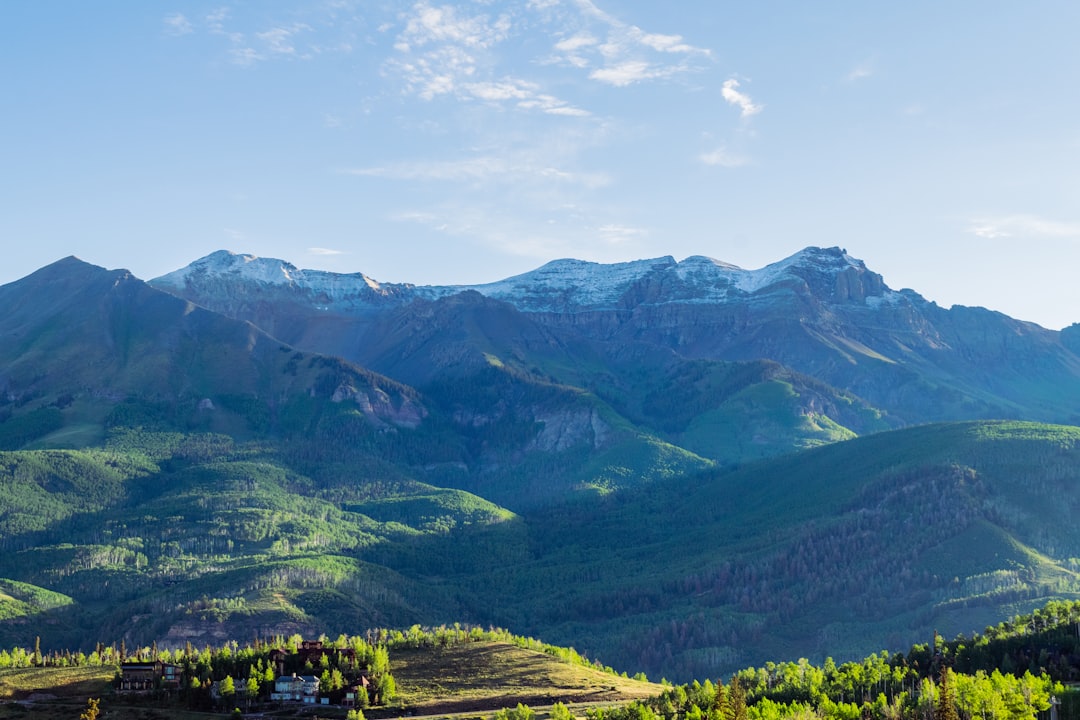
Why High Altitude in Northern Colorado Makes AC Cooling Harder Than You Think
How high altitude in Northern Colorado affects ac cooling performance is one of the most misunderstood challenges homeowners on the Front Range face every summer. If you live in Fort Collins, Loveland, or anywhere along the northern Front Range, here is the short answer:
At elevations above 5,000 feet, your AC system works in air that is roughly 18% less dense than at sea level. That thinner air directly reduces how much heat your system can move — meaning a unit sized for sea-level conditions will underperform here, often significantly.
Quick Answer: How Altitude Affects Your AC in Northern Colorado
• Air density — Sea Level: 100% — Northern Colorado (5,000–5,500 ft): ~82–85%
• Cooling capacity loss — Sea Level: 0% — Northern Colorado (5,000–5,500 ft): 10–15%
• Extra capacity needed — Sea Level: None — Northern Colorado (5,000–5,500 ft): Add 10–15%
• Blower air mass moved — Sea Level: Full rated CFM — Northern Colorado (5,000–5,500 ft): ~18–20% less
• Risk of undersized system — Sea Level: Low — Northern Colorado (5,000–5,500 ft): High without altitude correction
Most homeowners don't realize their AC was likely sized using standard sea-level rules. On a hot July afternoon in Fort Collins, that gap between rated capacity and real-world output is exactly why your system runs nonstop and your upstairs still feels like an oven.
The good news: once you understand what's actually happening in that thin Rocky Mountain air, the fixes become much clearer. This guide walks you through everything — from the physics of altitude cooling to practical sizing adjustments and equipment choices that actually work at elevation.
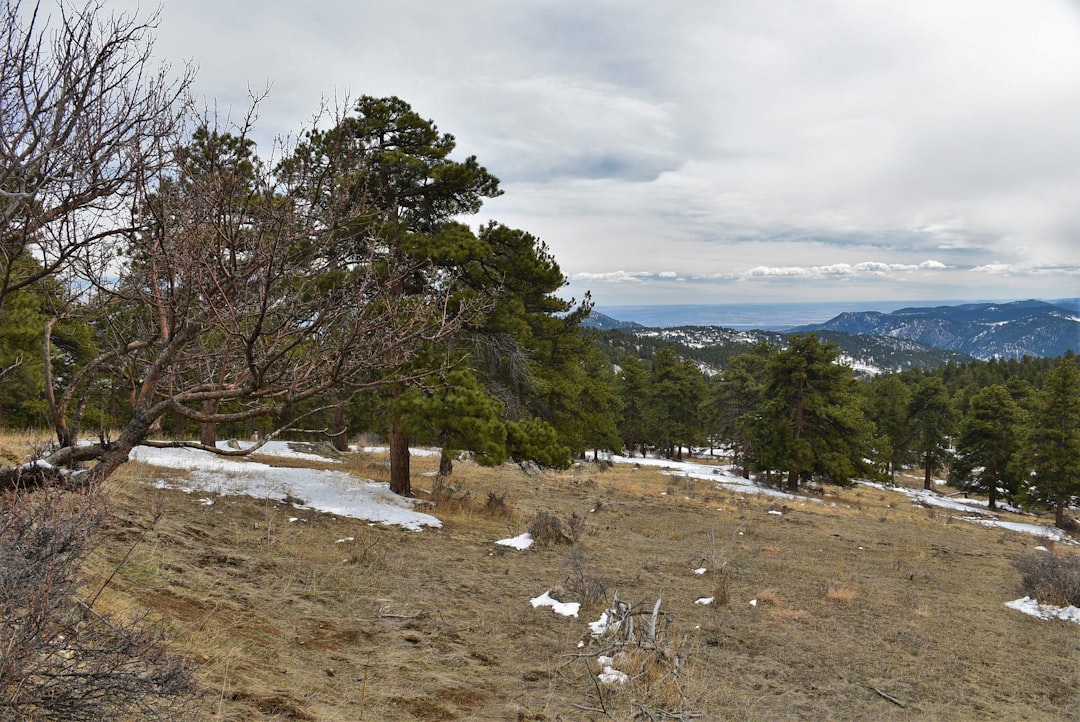
How High Altitude in Northern Colorado Affects AC Cooling Performance
To understand how altitude impacts your home's comfort, we have to look at the relationship between barometric pressure and thermodynamics. At sea level, the weight of the atmosphere presses down with 14.7 pounds per square inch (PSI) of pressure. Up here in Northern Colorado—whether you are in Windsor, Wellington, or Severance—that barometric pressure drops to around 12 PSI.
This drop in atmospheric pressure means the molecules in the air are spread much further apart. Because the air is thinner, it has a lower mass per cubic foot. Since air conditioning systems rely on the physical mass of air to carry heat away from your living spaces, this thin air presents a double-whammy of mechanical and thermodynamic challenges.
First, your outdoor condenser unit must reject heat into this thin air. The refrigerant inside your AC coils is carrying heat extracted from your home. To release that heat, outdoor air must blow across those hot condenser coils. However, because there are fewer air molecules available to absorb and carry that heat away, the heat transfer process becomes significantly less efficient.
Second, this lack of heat transfer efficiency places massive compressor strain on your Air Conditioning system. The compressor must work harder and run longer cycles to reject the same amount of heat. Over time, this constant struggle leads to elevated operating pressures, overheating electrical components, and premature system wear.
The Physics Behind How High Altitude in Northern Colorado Affects AC Cooling Performance
Let's break down the actual physics of thin air. In the HVAC world, we look closely at the air density ratio. At sea level, standard air density is defined as 0.075 pounds per cubic foot. At 5,280 feet (like Johnstown or Greeley), that density drops to approximately 0.062 pounds per cubic foot—about 82.5% of sea-level density.
This directly alters the sensible and latent heat equations:
• Sensible Heat (Temperature changes you can feel): The formula for sensible heat delivery relies heavily on air density. Because the air is 18% less dense, the standard multiplier used by engineers drops from 1.08 at sea level to roughly 0.89 at our elevation. This means the air cannot carry as much physical heat energy.
• Latent Heat (Moisture/humidity removal): Thinner air has a different vapor pressure, which alters how moisture condenses on your indoor evaporator coil. Fortunately, Northern Colorado's dry climate means our latent load (the work required to dehumidify the air) is very low. However, the drop in sensible heat transfer capacity more than offsets this benefit.
If you are curious about how these cycles work under normal conditions, you can read our deep dive on How Does an Air Conditioner Work Anyway to see how refrigerant transitions from liquid to gas to absorb and release heat. At high altitude, those exact boiling and condensing points shift, meaning the refrigerant itself behaves differently under lower atmospheric pressure.
Airflow and Ductwork Challenges at 5,000+ Feet
A common mistake made during residential installations along the Front Range is ignoring how thinner air affects blower fans and ductwork.
Consider this industry fact: a blower fan designed to move 90,000 pounds of air per hour at sea level will only move about 72,000 pounds of air per hour at 6,000 feet. The fan is spinning at the exact same speed and moving the same physical volume of air (measured in Cubic Feet per Minute, or CFM), but because the air is thinner, the actual mass of the air being moved is reduced by nearly 20%.
Because heat transfer depends on the mass of the air rather than just its volume, a standard blower setting will fail to deliver adequate cooling. To compensate, high-altitude systems must be calibrated to deliver a higher actual CFM.
However, pushing more CFM through standard ductwork increases static pressure (resistance to airflow). If your home's ductwork was designed using standard sea-level tables, it is likely already undersized for the higher airflow volumes required at our elevation. This mismatch causes:
• Whistling or rushing wind noises from your vents.
• Increased strain on the blower motor, leading to premature motor failure.
• Reduced airflow to the furthest rooms in your home, leaving your upstairs bedrooms hot and stuffy.
If you are noticing weak airflow or noisy vents in Timnath or Berthoud, scheduling a professional AC Service Fort Collins CO can help identify if your blower speeds and duct static pressures are properly adjusted for our high-altitude environment.
Sizing and Sizing Adjustments for High-Elevation Homes
Because altitude degrades the heat-carrying capacity of air, standard air conditioners suffer a physical capacity loss when installed in Northern Colorado. This is known as altitude derating. If you install a standard 3-ton AC unit straight out of the box without adjusting for elevation, it will not deliver 36,000 BTUs of cooling. In reality, it may only deliver 30,000 to 31,000 BTUs—essentially performing like a 2.5-ton unit.
To ensure your home stays comfortable during peak summer days, HVAC professionals must use precise calculations to size your system.
• 0 (Sea Level) — Air Density Ratio: 1.00 — Required Capacity Adjustment: 0% (No adjustment)
• 4,000 — Air Density Ratio: 0.86 — Required Capacity Adjustment: +8% to +10%
• 5,000 (Greeley / Evans) — Air Density Ratio: 0.83 — Required Capacity Adjustment: +10% to +12%
• 5,400+ (Fort Collins / Loveland) — Air Density Ratio: 0.82 — Required Capacity Adjustment: +12% to +15%
• 6,000+ (High Country / Foothills) — Air Density Ratio: 0.80 — Required Capacity Adjustment: +15% to +20%
As a rule of thumb, we must add 2% to 3% of cooling capacity for every 1,000 feet of elevation above 4,000 feet.
To do this accurately, we perform an ACCA Manual J load calculation. This is the gold standard for HVAC design. Unlike generic online calculators, a proper Manual J load calculation factors in our local barometric pressure, local climate data, insulation values, window orientations, and air infiltration rates to determine the exact sensible cooling load of your home.
When it is time for an upgrade, relying on these customized calculations ensures your new AC Replacement Fort Collins CO is perfectly matched to both your home's structure and our thin Rocky Mountain air.
Why Standard Sizing Ignores How High Altitude in Northern Colorado Affects AC Cooling Performance
If you ask a contractor from a lower-elevation state how to size an AC, they will likely point to the classic "500 square feet per ton" rule of thumb. In Northern Colorado, relying on this rule is a recipe for disaster.
High-altitude systems often require 10% to 15% more cooling capacity than this standard rule suggests. When installers ignore this, the consequences of an undersized system quickly become apparent:
• Constant Operation: The system runs continuously during 90°F days but cannot pull the indoor temperature down to the thermostat setpoint.
• High Energy Bills: Running a system 24/7 during peak rate hours spikes utility costs.
• Coil Freezing: Because the thin indoor air cannot transfer heat efficiently to the evaporator coil, the coil temperature can drop below freezing, causing condensation to turn to ice and completely blocking airflow.
Conversely, simply "sizing up" to a larger unit without a Manual J calculation is equally dangerous. An oversized system will suffer from short cycling—turning on and off rapidly. Because it cools the air too quickly without running long enough to balance temperatures, you end up with massive temperature swings, drafty rooms, and excessive wear and tear on the compressor.
Before making a decision on whether to patch up an old, struggling unit or invest in a properly sized system, take a look at our AC Repair vs Replace Decision Guide for Northern Colorado.
Environmental Factors: Dry Air, Solar Load, and Temperature Swings
Sizing an AC in places like Loveland, Windsor, or Johnstown requires looking at more than just altitude. Northern Colorado has a highly unique microclimate characterized by three major factors:
1. Arid Climate and Low Humidity: Our summer relative humidity often drops below 15%. This dry air means we have almost no latent cooling load (dehumidification). While this makes evaporative cooling options attractive to some, it also means traditional AC systems must be calibrated to focus almost entirely on sensible cooling (dropping the actual air temperature).
2. Intense Solar Radiation: We are a mile closer to the sun, and our clear blue skies mean we receive up to 25% more UV and solar radiation than sea-level locations. This intense solar load pours heat through south- and west-facing windows, dramatically increasing the cooling load of your home during the afternoon.
3. Large Daily (Diurnal) Temperature Swings: It is not uncommon for a summer day in Northern Colorado to start at a crisp 55°F in the morning and soar to 95°F by 4:00 PM.
Because of these extreme daily temperature swings, standard single-stage air conditioners struggle. They are either completely off or running at 100% capacity. This is why variable-speed systems perform 31% better in Colorado's climate. A variable-speed compressor can scale its output down to 25% capacity during mild mornings and ramp up to 100% during peak afternoon heat, keeping your home perfectly comfortable while drastically reducing energy consumption.
Practical Steps for Optimizing High-Altitude AC Systems
If you want to ensure your air conditioning system is running at peak efficiency up here on the Front Range, there are several highly specific, high-altitude adjustments that must be made.
First and foremost is refrigerant charge calibration. Because lower barometric pressure shifts the boiling points of refrigerants, technicians cannot use standard sea-level pressure charts. If a technician charges your system using sea-level target pressures, they will likely overcharge or undercharge the system. This stresses the compressor and can cause the evaporator coil to freeze. Technicians must use altitude-corrected pressure-temperature (PT) charts to set the correct subcooling or superheat levels.
Second, the blower motor speed must be adjusted. Because thin air carries less heat, we often have to increase the fan speed (CFM) to move more air mass across the indoor coil. Many modern systems utilize variable-speed ECM blower motors, which can automatically adjust their speed to maintain the correct airflow despite changes in air density and duct resistance.
To keep your system running smoothly, regular maintenance is vital. We recommend scheduling an annual AC Tune Up Loveland CO to verify that your system’s airflow, refrigerant charge, and electrical components are fully optimized for our local elevation.
SEER2 Standards and High-Altitude Efficiency
If you are planning to install a new cooling system in 2026, you need to understand how federal efficiency standards affect your choice. The Department of Energy’s SEER2 (Seasonal Energy Efficiency Ratio 2) standards require higher testing pressures that better mimic real-world installations.
In Colorado, the minimum allowable efficiency for a residential split-system AC is 13.4 SEER2. However, because high altitude naturally degrades system capacity and forces your AC to work harder, opting for a higher-efficiency system is highly recommended.
Investing in a system rated at 16 SEER2 or higher offers several benefits:
• Offsetting Capacity Loss: High-efficiency systems utilize advanced variable-speed compressors and larger heat exchangers, which naturally adapt to thin air and offset the 10-15% capacity loss caused by altitude.
• Federal Tax Credits: Under the Energy Efficient Home Improvement Credit (Section 25C), homeowners can qualify for federal tax credits up to 30% of the installation cost (up to $600 for qualified air conditioners and up to $2,000 for qualified heat pumps).
• Utility Rebates: Local Northern Colorado utilities offer substantial rebates for high-efficiency cooling upgrades. At Compass Heating & Cooling, we specialize in helping our customers navigate these programs, securing utility rebates up to $8,000+ to significantly offset your upfront investment.
When planning your upgrade, working with a team experienced in AC Installation Fort Collins CO ensures your new system meets all local code requirements, qualifies for maximum rebates, and is mathematically sized to handle our unique altitude.
Frequently Asked Questions About High-Altitude AC Performance
Why does my AC run constantly during Northern Colorado summers?
Because the air at 5,000+ feet is thinner, it has a reduced physical capacity to absorb and transport heat. Your system must move larger volumes of air and run longer cycles to achieve the same cooling effect as it would at sea level. If your system was sized using standard sea-level calculations, it is likely slightly undersized for our elevation, forcing it into continuous operation on hot summer afternoons.
Do I need a larger AC unit just because I live at a high elevation?
Not necessarily "larger" in terms of physical footprint, but you do need a system with a higher rated BTU capacity to deliver the correct actual cooling performance. Simply buying a larger unit without a professional Manual J calculation can lead to short cycling and uneven temperatures. The key is "right-sizing"—selecting a unit whose altitude-derated capacity perfectly matches your home's calculated cooling load.
How does low humidity affect my home's cooling needs?
Our dry climate is actually a benefit for AC systems because they do not have to spend energy condensing moisture out of the air (latent cooling). This allows the system to focus almost 100% of its capacity on lowering the actual air temperature (sensible cooling). However, very dry air can make skin feel cooler due to rapid evaporation, meaning you might feel comfortable at a slightly higher thermostat setting (e.g., 73°F instead of 70°F), which helps save energy.
Conclusion
Living in Northern Colorado offers incredible mountain views and a wonderful lifestyle, but our 5,000+ foot elevation means we cannot treat heating and cooling systems like they do at sea level. From air density losses to intense solar loads and rapid temperature swings, your air conditioner faces a unique set of challenges every single summer.
At Compass Heating & Cooling, we are proud to serve our neighbors across the northern Front Range, including Fort Collins, Loveland, Windsor, Wellington, Severance, Timnath, Johnstown, Greeley, Berthoud, and Evans. We understand the precise physics of high-altitude HVAC design, and we don't rely on generic rules of thumb.
Whether you need a specialized high-altitude system calibration, a seasonal tune-up, or a brand-new, perfectly sized system, we are here to help. Plus, we make high-efficiency upgrades easy by handling utility rebates up to $8,000+ on your behalf, and we offer a comprehensive maintenance plan with priority service and exclusive discounts to keep your system running flawlessly year-round.
Ready to experience true, altitude-optimized comfort in your home? Explore our Air Conditioning services today or reach out to our friendly local team to schedule your consultation!
hear what our satisfied clients have to say
Our clients consistently praise our exceptional service and attention to detail. They appreciate the personalized approach we take to meet their unique needs, ensuring satisfaction every step of the way.
.png)