



Musty Odors From Your Vents: Diagnosing Dirty Sock Syndrome
That Locker Room Smell: Addressing Sudden Musty Odors From Your Vents
Your air conditioner kicks on during a sweltering afternoon, and instead of a wave of refreshing cold air, you are immediately hit with a foul, locker-room stench. Dealing with musty odors from your vents: diagnosing dirty sock syndrome is usually the last thing you want to handle when you just want to cool down your home. This jarring experience is incredibly common. At Compass Heating & Cooling, our technicians field dozens of calls about this exact issue right as kids head back to school, since the problem typically peaks around late summer or August when your cooling system has been running heavily for months on end.
When this sour smell invades your living space, you face an immediate decision point. Do you rely on temporary air fresheners, scented vent clips, and standard filter changes to mask the problem? Or do you address the biological root cause thriving inside your HVAC cabinet? Masking the odor might provide a few hours of relief, but the smell will inevitably return every time the blower motor engages.
If you are ready to eliminate these odors at the source and stop the cycle of masking symptoms, a professional UV light installation is the most effective way to restore your home's indoor air quality. By understanding what is actually happening inside your ductwork, you can take the right steps to permanently neutralize the biological growth causing the stench.
What Exactly is Dirty Sock Syndrome?
The Definition of the Odor
Dirty Sock Syndrome is the industry term for microbial growth—specifically bacteria and fungi—thriving on the damp indoor evaporator coils of your air conditioning system. When you smell that distinct locker-room or gym-bag odor, you are actually smelling the biological off-gassing produced by these living microbes as air passes over the contaminated coil and into your ductwork.
A Systemic HVAC Issue
It is important to understand that this is a systemic issue within your central heating and cooling equipment, not a localized spill, a dead animal in the walls, or an odor originating in your living space. The smell is manufactured inside the dark metal cabinet of your indoor unit and then forcefully distributed into every room of your house simultaneously.
The Timing of the Problem
This biological phenomenon requires very specific conditions to develop, which is why it often aligns with late summer or August cooling cycles. In our years of servicing Loveland homes, we've noticed this is precisely when systems that have been running constantly start showing signs of trouble. The interior cabinet has been generating gallons of condensation and remaining damp for weeks. If you are tired of dealing with this recurring issue, scheduling routine air conditioning maintenance can help our team identify the severity of the buildup before it spreads further.
The Science of Evaporator Coils and Microbial Growth
The Problem: How the Coil Operates
To understand why bacteria colonize your HVAC system, you have to look at the mechanics of the indoor evaporator coil. This crucial component is responsible for extracting heat and moisture from your indoor air. As warm house air blows across the freezing-cold copper or aluminum tubes of the coil, the air drops below its dew point. This causes condensation to form continuously on the metal surfaces, much like water beads sweating on the outside of a cold glass of iced tea on a hot day.
The Cause: A Perfect Breeding Ground
This natural condensation process creates a perpetually dark, damp environment inside the enclosed air handler cabinet. Meanwhile, organic matter from your home—such as microscopic skin cells, pet dander, cooking grease, and household dust—inevitably bypasses your standard air filter. When this organic debris lands on the wet evaporator coil, it creates an unlimited food source for airborne bacterial and fungal spores. The combination of darkness, moisture, and organic food sparks rapid microbial colonization.
The Compounding Factors
The situation worsens as your system ages or if maintenance is deferred. Our technicians see this firsthand: if you live in Loveland CO and have been running your system hard all season, your air filter slowly clogs with debris, which reduces the overall airflow moving across the coil. Reduced airflow means the coil cannot dry out properly between cooling cycles. The longer the coil stays wet, the faster the bacteria multiply, eventually forming a slimy biofilm that produces the intense musty odors blowing through your vents.
Why Monsoonal Moisture Triggers AC Odors in Northern Colorado
The Dry Climate Baseline
The Front Range is famous for its dry, arid climate. For most of the early summer, your air conditioning system easily handles the sensible heat (temperature) without having to extract massive amounts of latent heat (humidity). Because the indoor air is relatively dry, the evaporator coil generates less condensation, and the moisture that does form evaporates quickly between cycles. This is why many homeowners in Loveland CO go years without ever experiencing unusual smells from their ductwork.
The Late-Summer Moisture Spike
However, late summer brings a distinct shift in weather patterns. Monsoonal flows push significant, temporary humidity spikes into Northern Colorado. Suddenly, an HVAC system that has been operating in a dry environment is forced to condense heavy amounts of moisture out of the indoor air. The system becomes overwhelmed by the sudden influx of water, and the drain pan and coil remain saturated for much longer periods.
The Perfect Storm for Odors
This combination of heavy late-season AC usage and sudden monsoonal moisture creates the perfect storm for rapid bacterial colonization. The microbes that have been lying dormant on the dusty coil suddenly have the water they need to thrive. Relying on local expertise is critical here; at Compass Heating & Cooling, we understand that this is a documented regional phenomenon tied to our specific weather shifts, rather than a sign of catastrophic system failure.
Filtration vs. Neutralization: Why Passive Filters Fail
When musty odors strike, most homeowners immediately assume they need a better air filter. While upgrading your filtration is always a good idea for particulate control, it is crucial to understand the scientific difference between passive particle capture and active biological neutralization.
The Limits of Passive Filtration
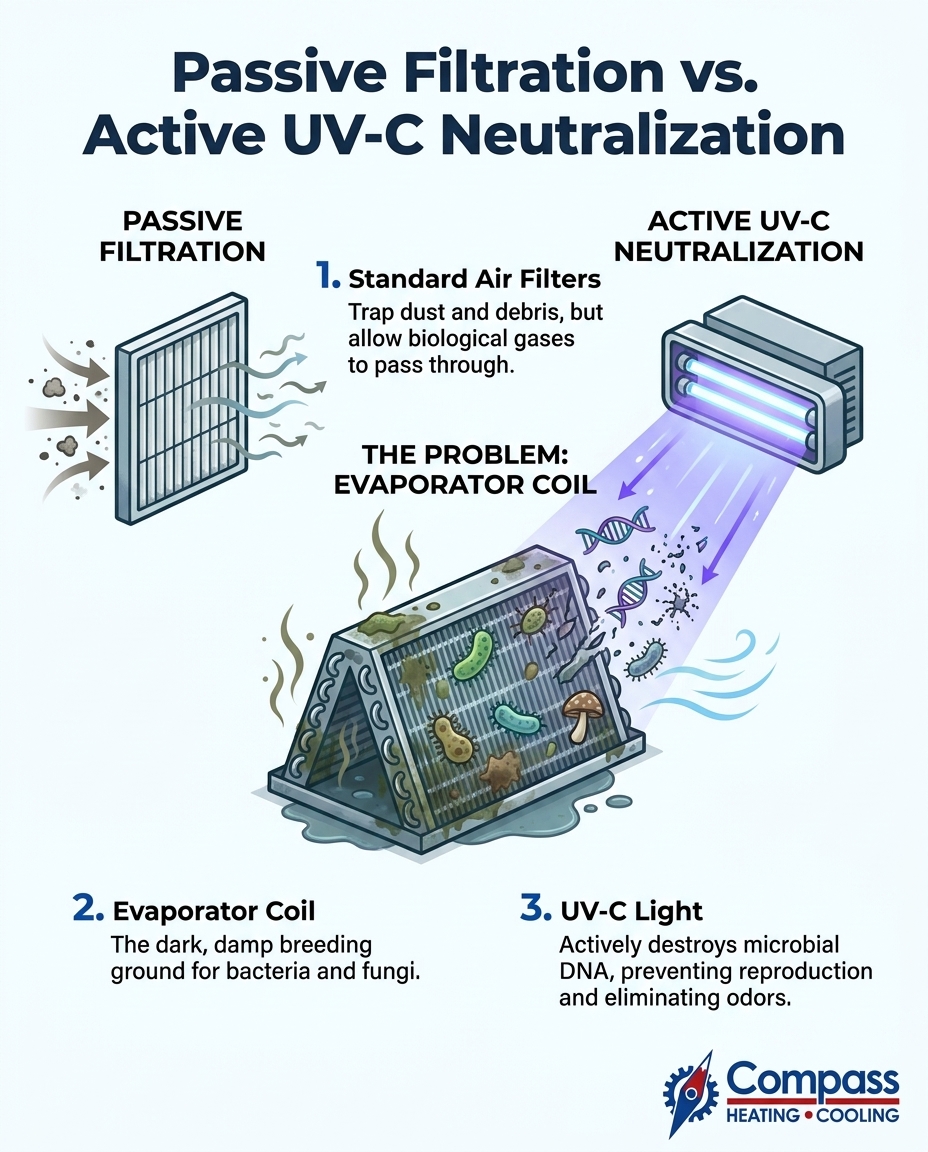
Air filters are passive barriers. They are constructed of woven fiberglass or pleated synthetic materials designed to trap physical particulate matter—like dust, pollen, and the impact of wildfire smoke on indoor air quality. However, filters cannot stop moisture from forming on the coil, nor can they kill living microbes. Furthermore, the odors produced by bacteria are gases, which pass straight through even the most expensive, high-MERV pleated filters.
The Trap of Masking Agents
Frustrated by the lingering smell, many people turn to masking agents like aerosol air fresheners, scented candles, or chemical vent clips. These products only hide the symptom by overwhelming your olfactory senses with synthetic perfumes. Meanwhile, the biological growth on the coil continues to spread, multiply, and degrade your system's efficiency.
Comparing the Approaches
To clearly see why active intervention is required, consider the differences between standard filtration and active neutralization:
• Primary Function — Passive Air Filters: Traps physical dust, dirt, and debris — Active UV-C Neutralization: Destroys microbial DNA on the coil
• Effect on Odors — Passive Air Filters: None (gases pass right through) — Active UV-C Neutralization: Eliminates the biological source of the smell
• Effect on Microbes — Passive Air Filters: May catch spores, but cannot kill them — Active UV-C Neutralization: Inactivates bacteria, preventing reproduction
• Moisture Control — Passive Air Filters: None — Active UV-C Neutralization: Purifies the wet environment continuously
Active Eradication: The Role of UV-C Light Purification
Because passive filters cannot solve dirty sock syndrome, the industry standard for biological remediation relies on active eradication. Professional UV light installations represent the superior, permanent fix over temporary DIY masking, reinforcing a commitment to true root-cause solutions rather than band-aids.
1. Industry-Recognized Technology: UV-C lighting is an active purification method recognized by ASHRAE and the EPA for effectively inactivating airborne and surface-dwelling microbes in residential and commercial HVAC systems.
2. Targeted DNA Disruption: When installed correctly, the UV-C lamp shines directly onto the damp evaporator coil. The specific wavelength of the light penetrates the cellular walls of bacteria and fungi, disrupting their DNA. This permanently prevents them from reproducing and eliminates the odor source.
3. Continuous 24/7 Protection: Unlike a chemical spray that dissipates in hours, a professionally installed UV system operates continuously. It bathes the coil in neutralizing light 24 hours a day, ensuring that new spores introduced into the system cannot establish a foothold.
4. Permanent Preventative Solution: Rather than waiting for the smell to return late summer or August, a UV light acts as a permanent, preventative safeguard. It keeps the coil biologically clean, which also helps maintain the heat transfer efficiency of the metal fins, potentially lowering your operational energy costs.
The Hidden Dangers of Attempting DIY Coil Cleaning
Once homeowners realize the smell is coming from the indoor coil, the immediate temptation is to grab a flashlight, a scrub brush, and a bottle of bleach to clean it themselves. This is highly dangerous and strongly advised against. Accessing and servicing an evaporator coil requires dismantling critical HVAC components, and doing so without proper training poses severe safety and financial risks.
Electrical and Chemical Hazards
Your air handler contains high-voltage electrical components that can cause severe shock if improperly handled. Furthermore, using harsh, over-the-counter chemicals like bleach or standard household degreasers can cause toxic fumes to circulate through your home. Worse, these improper chemicals rapidly corrode the delicate metals of the coil, leading to expensive, irreparable refrigerant leaks.
Catastrophic Equipment Damage
The fins on an evaporator coil are made of incredibly thin aluminum—thinner than a piece of paper. Over the years, we have unfortunately seen well-meaning homeowners accidentally crush these fins flat with improper tools. Bending coil fins restricts the vital airflow needed for the system to operate. If the airflow is blocked, the coil will freeze into a solid block of ice, which can send liquid refrigerant slugging back to the outdoor unit, causing catastrophic compressor failure.
Rely on Licensed Professionals
Internal biological remediation and equipment modifications should only be handled by licensed professionals. If you suspect your coil is heavily fouled in Loveland CO, the safest and most cost-effective route is to schedule professional AC repair in Loveland to have the system safely opened, assessed, and treated with specialized, non-corrosive coil detergents.
Frequently Asked Questions About Dirty Sock Syndrome
What causes my AC to smell like dirty socks?
Microbial growth on the indoor evaporator coil is the direct cause of the dirty sock smell. As your air conditioner extracts heat from the house, moisture naturally condenses on the cold metal coil. When household dust and organic debris mix with this standing moisture in the dark cabinet, it creates a perfect breeding ground for bacteria and fungi to thrive and off-gas foul odors.
How do UV lights fix dirty sock syndrome?
UV-C light destroys the DNA of microbes living on the evaporator coil. By shining a specific germicidal wavelength directly onto the wet metal surfaces, the light disrupts the cellular structure of the bacteria. This active neutralization prevents the microbes from reproducing, effectively killing the colony and stopping the biological off-gassing that produces the smell.
Why do passive air filters fail to stop musty AC odors?
Filters trap physical particles like dust and hair, but they cannot kill living biological growth or capture gases. Because musty odors are essentially biological gases produced by bacteria, they pass right through the woven fibers of standard air filters. You need an active purification method to address the living organisms causing the smell.
Is dirty sock syndrome dangerous?
It is generally considered a severe nuisance, but it can actively irritate individuals with underlying allergies, asthma, or respiratory sensitivities. Airborne biological pollutants continually degrade the overall indoor air quality of your home, meaning you are constantly breathing in microbial byproducts, which should be addressed promptly for your family's comfort.
Will dirty sock syndrome go away on its own?
No, the biological growth will persist and multiply as long as moisture and organic food sources are present on the coil. Without active neutralization like a UV light or professional chemical cleaning, the smell will simply go dormant in the winter and return with a vengeance every time the system runs heavily in cooling mode.
Does late-summer humidity make AC odors worse?
Yes, increased humidity provides the excessive moisture that microbes need to rapidly multiply. During late summer or August, sudden monsoonal moisture spikes in normally dry climates can overwhelm the air conditioner's ability to dry out the coil between cycles, leading to a sudden and intense bloom of odor-causing bacteria.
Breathe Easier with a Permanent Indoor Air Quality Solution
Musty, sour odors blasting through your vents are a clear, undeniable sign of biological growth thriving on your indoor evaporator coil. While the sudden appearance of dirty sock syndrome can be incredibly frustrating—especially during the peak heat of late summer—it is a highly solvable problem. Reaching for temporary air fresheners or slightly thicker filters will only mask the issue while the bacteria continue to multiply inside your ductwork.
If you live in Loveland CO and are tired of holding your breath every time the thermostat clicks on, it is time to address the root cause. Our team at Compass Heating & Cooling is ready to help. Talk to our local experts about your indoor air quality and schedule an inspection today to explore how a professionally installed UV-C light system can permanently neutralize odors and keep your home smelling fresh all season long.
hear what our satisfied clients have to say
Our clients consistently praise our exceptional service and attention to detail. They appreciate the personalized approach we take to meet their unique needs, ensuring satisfaction every step of the way.
.png)