



Protecting Your Outdoor HVAC Unit From Snow: Why You Should Never Tarp a Heat Pump
The Blizzard Dilemma: To Cover or Not to Cover Your Heat Pump
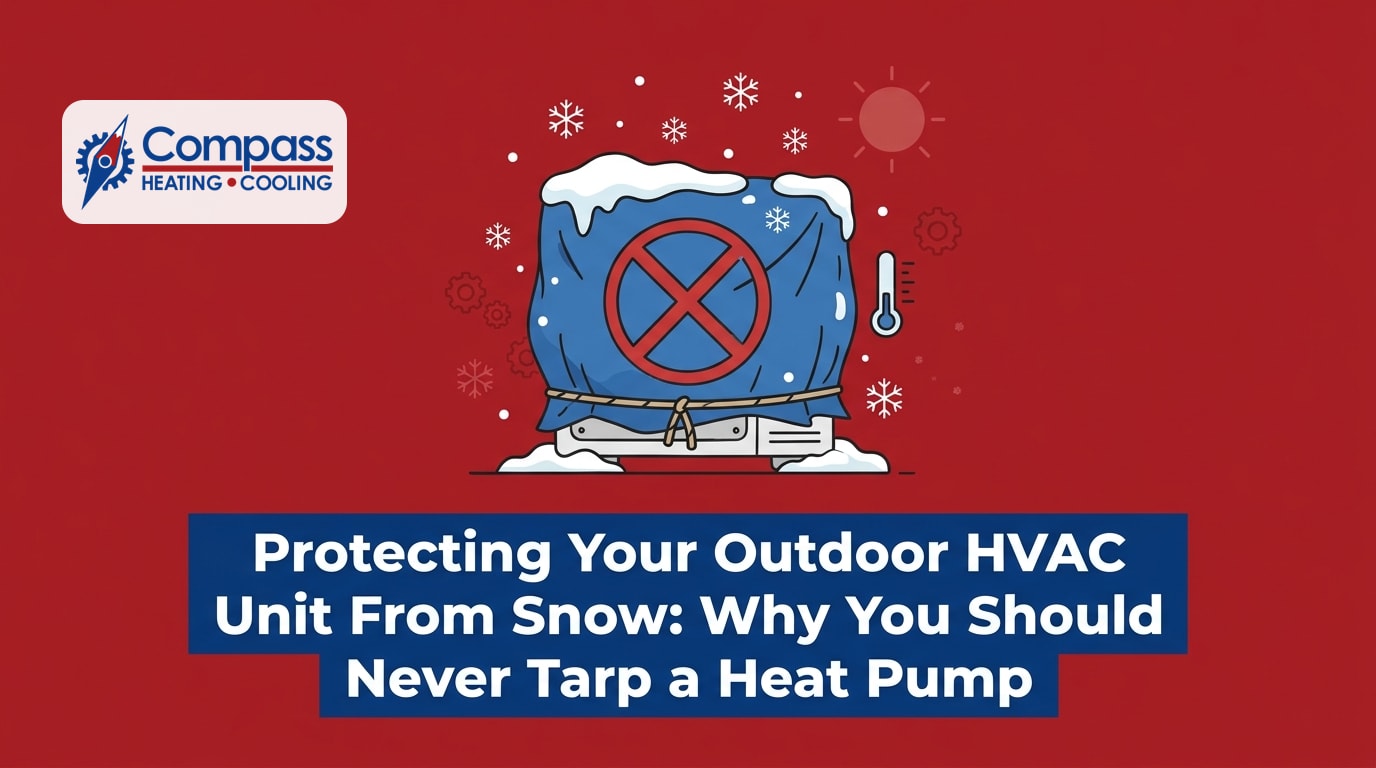
As November pre-winter readiness shifts into high gear across the Front Range, the strategy for protecting outdoor hvac unit from snow becomes an urgent priority for homeowners facing the first major storm. The natural instinct is to shield expensive equipment from the harsh elements, leading many to grab a heavy canvas tarp as the heavy, wet snow begins to fall. However, the decision of whether to cover your outdoor HVAC unit before a blizzard or let its built-in defrost cycle handle the accumulation is the difference between a warm home and a costly mechanical breakdown.
If you are exploring reliable heat pump services or need to secure your winter heating services before the deep freeze arrives, understanding how your system interacts with winter weather is your first line of defense.
At Compass Heating & Cooling, our localized experience dealing with frozen units across Northern Colorado has shown us exactly what happens when well-meaning homeowners tightly wrap their systems. Improperly tarping or covering a heat pump actively restricts the massive airflow it needs to operate, traps damaging moisture inside the housing, and ultimately causes the compressor to fail. Modern heat pumps are engineered specifically to withstand extreme Loveland, CO winter weather without any physical covers. Interfering with that rugged design usually does far more harm than good.
Why Tarping Your Heat Pump is a Recipe for Disaster
To understand why covers are so destructive, you have to look at how a heat pump actually generates warmth. Even in freezing temperatures, there is ambient heat energy in the outside air. Your heat pump acts as a heat transfer machine, pulling in massive volumes of this outdoor air, extracting the available heat, and pumping it into your home. When you throw a tarp over the top and sides of the unit, you instantly suffocate this process.
The Problem: A homeowner covers their unit to block snow, inadvertently blocking all airflow.
The Cause: The system is forced to work exponentially harder to pull air through the restrictive material, causing the compressor to overheat and consume excessive amounts of electricity.
The Solution: Leave the unit completely uncovered so the fan can pull unobstructed air through the aluminum fins.
The Threat of Trapped Moisture
Condensation is a completely normal byproduct of your heat pump's daily operation. As the system runs, moisture naturally forms on the internal coils. In an open, breathing unit, this moisture evaporates or drains away harmlessly. However, tightly wrapped covers trap this condensation inside the metal housing. As dropping temperatures hit the Front Range, this trapped moisture has nowhere to go. It rapidly turns into damaging ice, completely encasing the delicate internal components, coil fins, and fan blades in a solid frozen block.
Airflow Restriction and Efficiency Loss
Blocking the air intake with a cover causes your heating efficiency to plummet immediately. The system cannot extract heat if it cannot breathe. This restriction forces the unit to run continuously without ever reaching your thermostat's set temperature.
• Tightly Tarped — Airflow Status: Severely Restricted — Moisture Level: Trapped & Freezing — System Risk: High (Compressor Failure)
• Covered Top Only — Airflow Status: Partially Blocked — Moisture Level: Moderate Condensation — System Risk: Medium (Efficiency Loss)
• Completely Uncovered — Airflow Status: Optimal — Moisture Level: Evaporates Naturally — System Risk: Low (Normal Operation)
The contrast between the intention of a cover and the reality is stark. While you might think you are protecting the metal casing from snow, you are actually accelerating internal wear and tear that leads to early system failure.
Built-In Defense: Understanding the Heat Pump Defrost Cycle
You do not need to manually protect your system from frost because the manufacturer already built a defense mechanism directly into the unit. Modern heat pumps are equipped with an automatic defrost mode designed specifically for harsh winter weather. This cycle manages frost and snow accumulation entirely without human intervention.
1. Detection: Internal sensors detect when frost has accumulated on the outdoor coil to a point that it impedes airflow.
2. Reversal: The system temporarily shifts into defrost mode by reversing the flow of refrigerant.
3. Melting: Hot refrigerant is sent back to the outdoor unit, rapidly heating the coils to melt away the accumulated ice.
4. Resumption: Once the sensors detect the ice is gone, the system switches back to normal heating mode.
How the Reversing Valve Works
The reversing valve is the mechanical heart of the defrost cycle. It literally switches the system from heating your home to briefly heating the outdoor coil. This melts the ice from the inside out. During this 10 to 15-minute process, it is completely normal to see steam rising from the top of the outdoor unit. This steam indicates the system is working exactly as designed. Because the unit is temporarily not sending heat indoors, your system may automatically activate its auxiliary electric heat strips so you do not feel a cold draft inside.
When Defrost Mode Isn't Enough
While the defrost cycle is highly effective, it cannot overcome a system that is buried under a massive snowdrift or suffocated by a tarp. If you notice that your unit remains encased in a thick block of solid ice for several hours, or if the defrost cycle seems to be running constantly without clearing the coils, the built-in defense is failing. This usually points to a faulty sensor, a stuck reversing valve, or a failing control board. At this stage, you should call a professional technician rather than attempting a complex DIY repair on high-voltage equipment.
The 24-to-36-Inch Rule: Why Clearance is Non-Negotiable
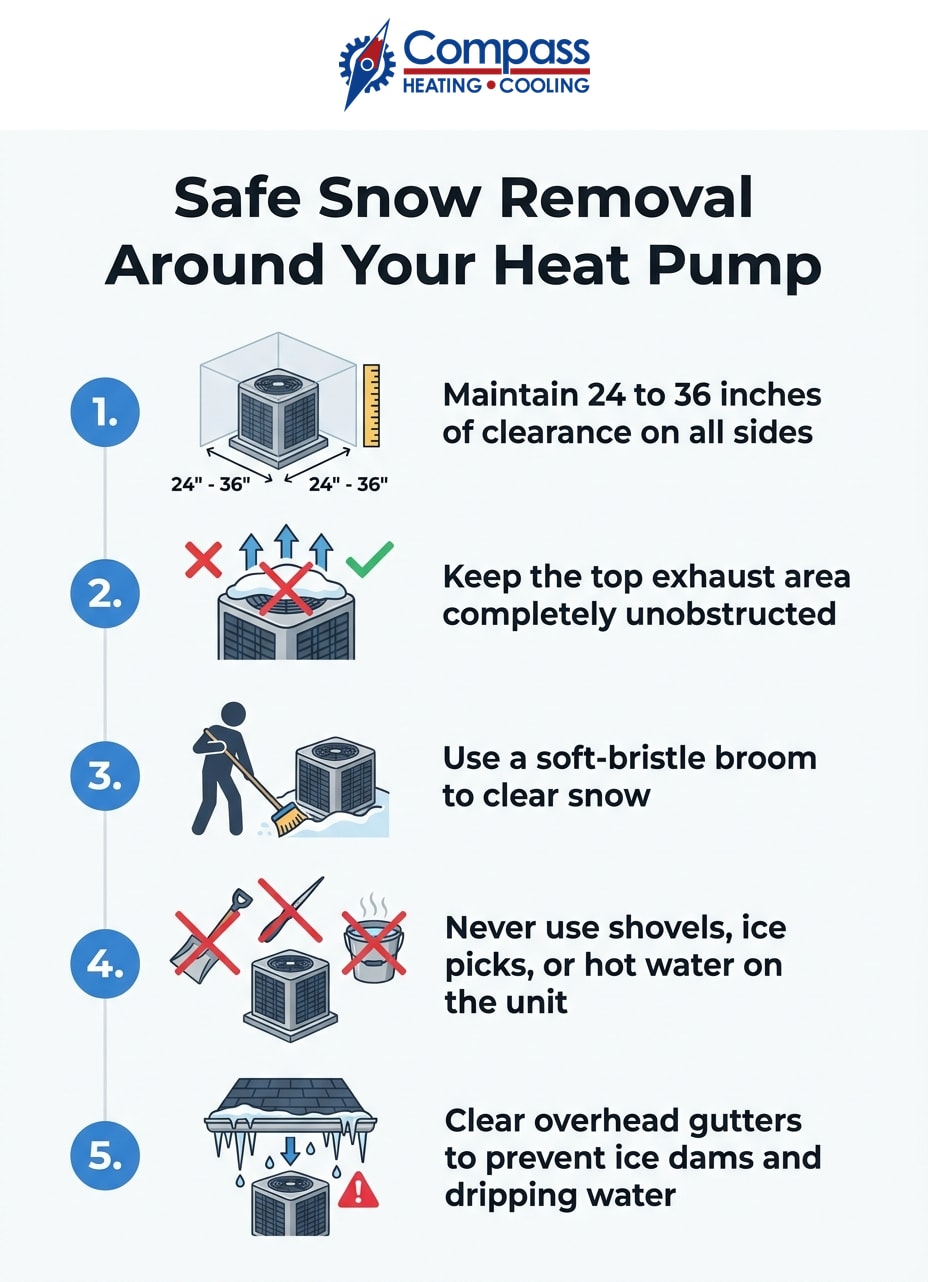
Maintaining physical space around your system is the single most effective way to ensure it survives a harsh winter. Standard HVAC manufacturer specifications and Department of Energy guidelines strictly require 24 to 36 inches of unobstructed clearance around the entire perimeter of the heat pump.
Heavy snowdrifts can easily encroach on this required space. When snow piles up against the metal grates, it effectively acts like a natural, freezing tarp. It suffocates the intake and prevents the exhaust fan from pushing cold air up and away from the unit.
Measuring Your Clearance Zone
You need to keep a two-to-three-foot radius completely clear on all four sides of the equipment. Just as importantly, ensure the top of the unit is completely unobstructed. The large fan on top needs to blow exhaust air straight up into the sky. If snow or debris blocks this upward path, the cold exhaust air is forced back down into the unit, drastically lowering the surrounding temperature and accelerating ice formation.
Managing Drifts and Wind-Blown Snow
Front Range blizzards are notorious for creating heavy, unpredictable snowdrifts that can rapidly bury a unit overnight. You must monitor the specific wind patterns around your home that tend to create deep drifts near your HVAC equipment. Proactively managing these specific drift zones before the snow hardens into a solid block of ice makes post-storm perimeter checks much easier and keeps your system breathing.
Safe Strategies for Clearing Snow Around Your System: Protecting Outdoor HVAC Unit From Snow
After a major winter storm rolls through Loveland, CO, you will likely need to clear the area around your equipment. How you interact with the unit is critical. Aggressive snow removal can cause thousands of dollars in accidental damage in just a few seconds.
• Use the right tools: Always use a soft-bristle broom or a specialized foam snow brush to gently sweep snow off the top and sides of the unit.
• Keep sharp tools away: Strongly resist the urge to use metal shovels, ice picks, or sharp scrapers near the equipment. One slip can easily crush the delicate aluminum fins or puncture a highly pressurized refrigerant line.
• Avoid thermal shock: Never pour hot or boiling water over the unit to melt stubborn ice. The rapid temperature change can crack components, and the water will quickly refreeze into an even harder layer of expansion ice.
• Focus on the perimeter: Clearing the surrounding 24-to-36-inch area is actually more important than scrubbing every snowflake off the metal housing. Give the unit room to breathe, and let the defrost cycle handle the rest.
Mitigating Overhead Hazards Before the Storm
Homeowners often focus entirely on the snow accumulating on the ground, completely missing the secondary threats looming above. Falling icicles or heavy, wet snow loads sliding off a pitched roof can generate enough force to crush the top fan grate of your heat pump instantly.
Gutter Maintenance and Ice Dams
Clogged gutters are a primary cause of overhead HVAC damage during the winter. When leaves and debris block the flow of water, melting snow backs up and forms heavy ice dams along the roofline. As these ice dams slowly melt during the day, water drips directly onto the heat pump below, creating an artificial freezing rain effect. This constant dripping quickly overwhelms the unit's defrost cycle. Cleaning your gutters thoroughly during your November pre-winter readiness checks prevents this specific hazard entirely.
Constructing Safe Snow Shelters
If your unit is permanently located under a problematic roofline that dumps snow, you might consider building a freestanding snow shelter or awning. However, these shelters must be designed carefully. They must be completely freestanding and never physically attached to the HVAC unit itself. Furthermore, they must provide ample vertical clearance—usually several feet above the unit—so the cold exhaust air can escape freely without recirculating back down into the system.
Essential Pre-Winter Readiness for Continuous Comfort
The best time to handle winter HVAC maintenance is long before the first snowflake falls. Late fall provides a critical window to prepare your system for the grueling months ahead. A well-maintained system is far less likely to freeze up or fail when temperatures plummet into the single digits.
1. Clear autumn debris: Rake away dead leaves, trim back overgrown shrubs, and remove any autumn debris that has collected around the base of the unit. Wet leaves block airflow just as severely as packed snow.
2. Inspect the pad: Ensure the concrete or composite pad supporting the unit is level. A tilted unit can prevent proper drainage during the defrost cycle, causing water to pool and freeze inside the base pan.
3. Schedule professional maintenance: Have a certified technician verify that the defrost control board, temperature sensors, and reversing valve are functioning perfectly.
By scheduling a comprehensive HVAC maintenance plan visit in the fall, you ensure these critical self-preservation components are tested and calibrated before a blizzard puts them to the ultimate test.
Seasonal Misconceptions: Winter Covers vs. Summer Plastic
The urge to cover HVAC equipment often stems from a common misconception that all outdoor machinery needs to be wrapped up when the weather turns harsh. It is crucial to understand the difference between a heat pump, which runs all winter long to heat your home, and a traditional AC-only unit, which sits completely dormant until spring.
Even for dormant air conditioners, wrapping them tightly in plastic is highly discouraged. A plastic wrap traps ground moisture rising into the unit, accelerating rust and corrosion on the electrical contacts. Furthermore, a dark, dry, tightly wrapped box is the perfect winter nesting ground for mice and rodents, who will gladly chew through your wiring. Whether you are dealing with a winter heat pump or wondering why you should never wrap your AC unit in plastic during the off-season, the rule remains the same: HVAC units are built to live outside and they always need to breathe.
Frequently Asked Questions About Winter HVAC Care
Should I cover my outside AC unit in the winter?
No, you should never tightly cover your outside AC unit in the winter. While it might seem protective, covers trap rising moisture inside the system, which accelerates rust and corrosion on the internal components. Additionally, wrapped units become attractive, sheltered nesting spots for rodents that can destroy internal wiring. If you are concerned about falling debris, you can place a small piece of plywood over just the top fan grate, leaving the sides completely open to breathe.
How do I protect my heat pump from snow?
The best way to protect your heat pump from snow is to maintain a clear 24-to-36-inch perimeter around the unit. Keep the area free of deep snowdrifts and ensure the top exhaust fan is unobstructed. Rely on the unit's built-in automatic defrost cycle to melt away internal frost, and never wrap the unit in a tarp or canvas cover.
Can snow damage an outdoor HVAC unit?
Yes, heavy snow can damage an outdoor HVAC unit if it is allowed to completely bury the system or block the exhaust fan. When snow severely restricts airflow, the compressor has to overwork, which can lead to overheating and mechanical failure. Falling ice or heavy snow loads from a roof above can also crush the top grate and damage the fan blades.
Should I shovel snow away from my heat pump?
You should clear the snow away from the immediate area surrounding your heat pump, but you must do so carefully. Maintain a two-to-three-foot clear zone around the unit to ensure proper airflow. However, never use a metal shovel or sharp ice pick directly on the unit itself, as you can easily puncture the pressurized refrigerant lines or bend the delicate aluminum fins.
How long does a normal heat pump defrost cycle take?
A normal heat pump defrost cycle typically takes between 10 and 15 minutes to complete. During this brief period, the system reverses its operation to send hot refrigerant to the outdoor coils, melting away accumulated frost. You may see steam rising from the unit and hear a temporary shift in the system's normal operating noise, both of which are completely standard.
What should I do if my heat pump is entirely encased in a block of ice?
If your heat pump is completely encased in a thick block of solid ice that does not melt away after a few hours, turn the system off to prevent severe compressor damage. Do not attempt to chip the ice away with tools or melt it with boiling water. This indicates a failure in the defrost control board or reversing valve, and you need to call a professional HVAC technician immediately to diagnose the mechanical issue.
Stay Warm and Keep Your System Breathing Freely
The most important takeaway for surviving a Front Range winter is that your outdoor equipment is tougher than it looks. The best method for protecting outdoor hvac unit from snow is simply giving it the space it needs to breathe and allowing its engineered defrost cycle to do the heavy lifting. Tarping your system is a definitive mistake that restricts vital airflow, traps freezing moisture, and invites expensive mechanical breakdowns when you need heat the most.
As part of your November pre-winter readiness, take the time to clear away debris, check your overhead gutters, and verify your clearance zones. If you are unsure about your system's winter readiness or suspect the defrost cycle is struggling to keep up with the Loveland, CO weather, do not wait for the next blizzard to find out. Reach out to a professional to ensure your heating equipment is fully prepared to deliver continuous, reliable comfort all season long.
hear what our satisfied clients have to say
Our clients consistently praise our exceptional service and attention to detail. They appreciate the personalized approach we take to meet their unique needs, ensuring satisfaction every step of the way.
