



Why We Tell Loveland Homeowners Never to Wrap Their AC Unit in Plastic
Is Wrapping Your AC Unit for Winter Actually Necessary?
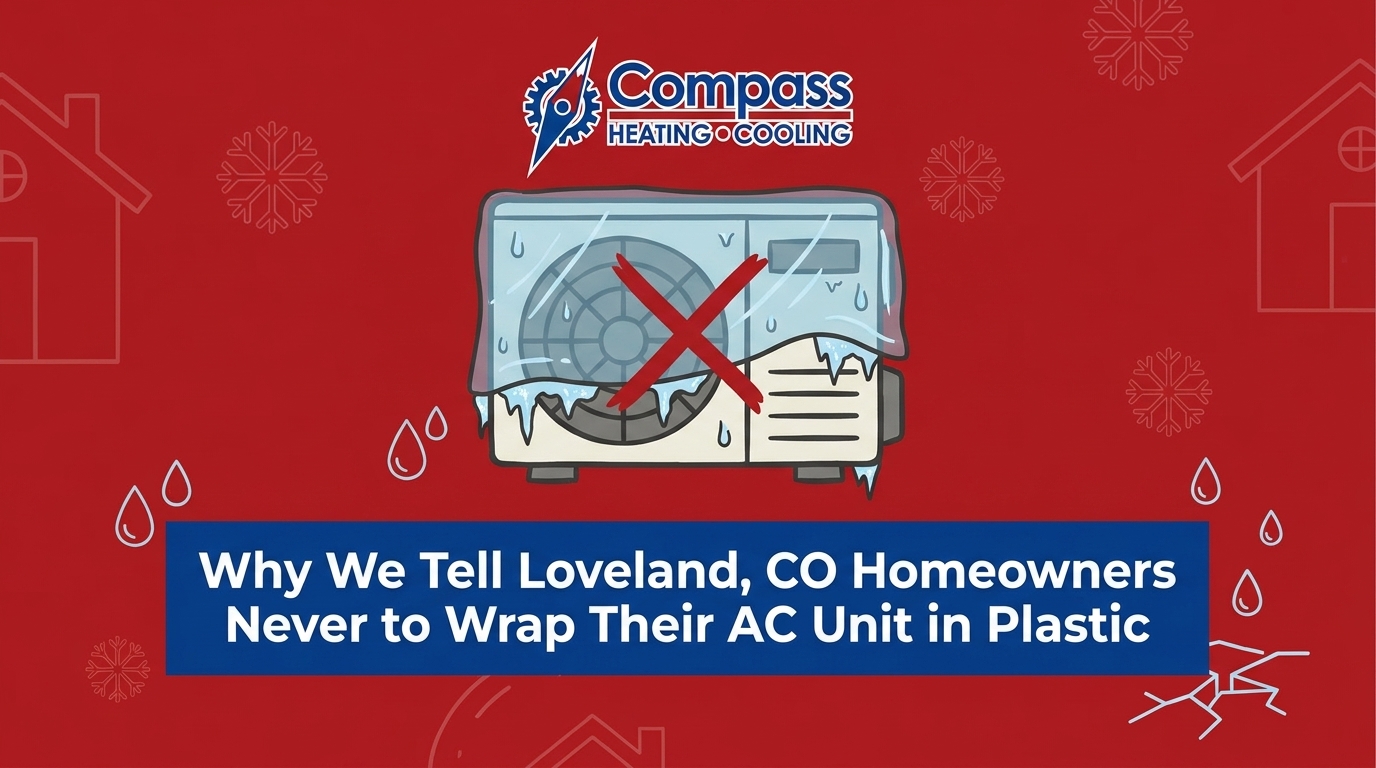
Are you starting your end-of-season yard cleanup and wondering exactly why we tell Loveland homeowners never to wrap their AC unit in plastic? As the long, hot days begin to fade, it is completely natural to want to protect your expensive outdoor cooling equipment from the upcoming snow and ice. Many homeowners assume that tightly sealing their condenser under a heavy-duty tarp is the most responsible way to put the system to bed for the winter. However, this common practice often leads to severe, hidden damage that remains undiscovered until you try to turn the system back on next spring.
If you are exploring the best ways to care for your cooling system, professional air conditioning services focus on keeping the internal components dry and well-ventilated, rather than suffocating them under synthetic covers.
The decision point usually comes down to choosing between a breathable top-cover and a full-unit plastic wrap. While the instinct to shield your equipment in Loveland, CO is correct, the method matters immensely. Local professionals consistently advise against full plastic wraps because they create a micro-environment that actively destroys the very metals and wiring you are trying to protect. By understanding how your system is engineered to handle the outdoors, you can save yourself from unnecessary repairs and ensure your equipment is ready when the weather warms up again.
The Late-Summer Hardware Store Illusion
One of the main reasons this winterization myth persists is the heavy marketing push that begins during the late-summer to fall transition. Walk into almost any major hardware store in August or September, and you will find endcaps prominently displaying heavy vinyl and plastic air conditioner covers. These displays are highly effective because they tap into a specific psychological trigger: the seasonal yard cleanup routine.
Hardware stores stock these items because consumers expect to see them, not because major HVAC manufacturers actually recommend them. The typical homeowner's transition into autumn usually follows a predictable pattern:
1. Raking and bagging leaves: Clearing organic debris from the lawn to prevent fungal growth under the snow.
2. Cleaning out the gutters: Ensuring autumn rains and melting snow can flow freely away from the foundation.
3. Purchasing winterization gear: Buying weather stripping, pipe insulation, and, unfortunately, tight-fitting plastic tarps for the AC condenser.
This sequence makes wrapping the unit feel like a necessary chore. However, purchasing a tight-fitting tarp is an unnecessary expense that often leads to costly repairs. By intercepting this habit early in the late-summer to fall transition, you can avoid the trap of buying an accessory that will ultimately suffocate your system. For comprehensive guidance on preparing your system for the off-season, scheduling professional AC maintenance is a far better investment than a plastic cover.
How Plastic Wraps Accelerate Rust and Corrosion
The Problem: Outdoor condenser coils are primarily constructed from aluminum and copper. These metals are highly weather-resistant when exposed to open air, but they become extremely vulnerable when forced to sit in stagnant, trapped moisture.
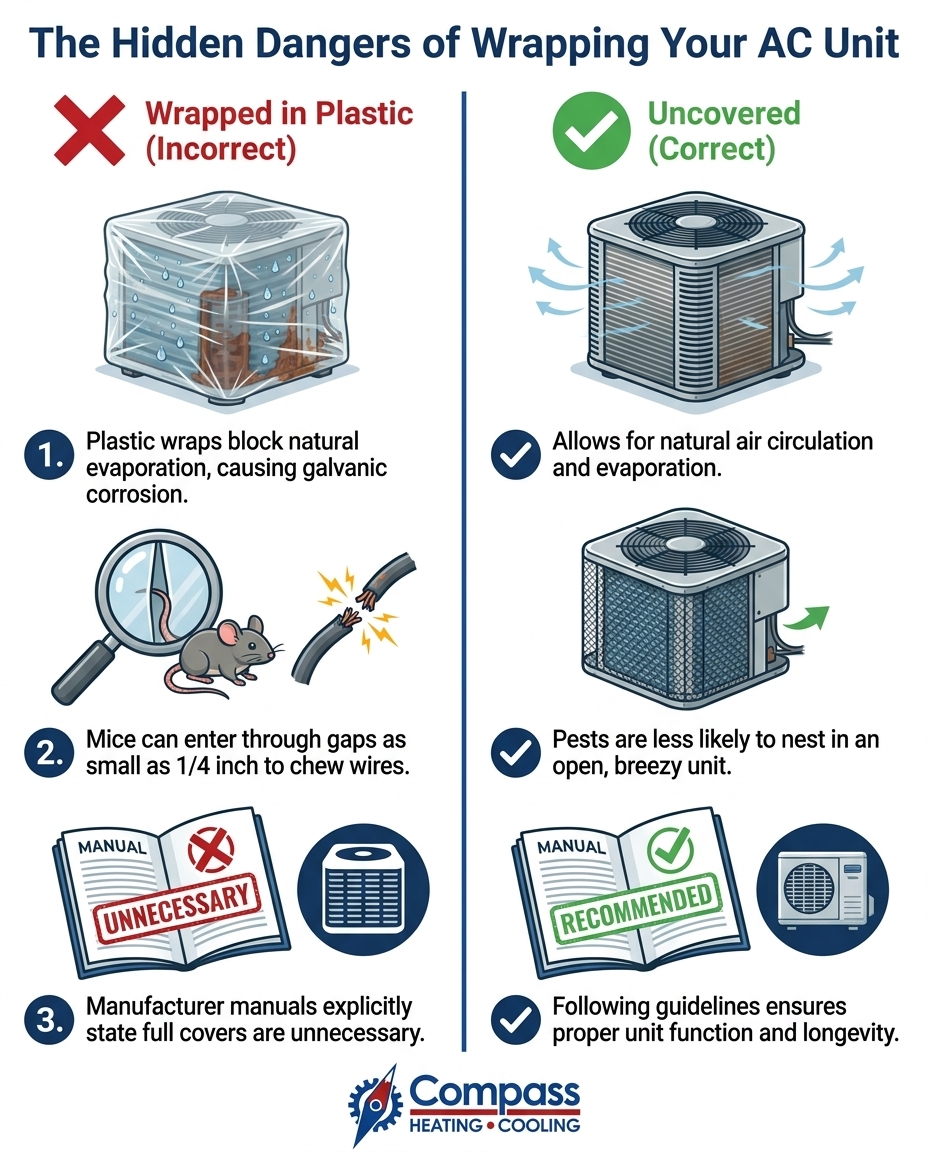
The Cause: When you wrap your unit tightly in plastic, you completely block natural evaporation. The plastic acts as a vapor barrier, trapping ground moisture and condensation inside the cabinet. Because there is no airflow, the internal environment remains perpetually damp. This moisture interacts with the dissimilar metals of the coils and the electrical connections, creating the perfect conditions for galvanic corrosion. Over a few short months, this trapped humidity eats away at the delicate fins and copper tubing, leading to massive refrigerant leaks.
The Solution: Leave the sides of the unit completely exposed to the open air. A dry, well-ventilated unit will naturally shed water and dry out in the breeze, whereas a suffocated, wet unit will slowly rot from the inside out. For residents relying on Loveland HVAC services, maintaining proper airflow is the single most effective way to extend the lifespan of an outdoor condenser.
The Danger of Freeze-Thaw Cycles
The specific climate in Loveland, CO makes plastic wrapping particularly destructive. Our region is famous for its rapid Front Range freeze-thaw cycles. You might experience a sunny, relatively warm afternoon followed immediately by a freezing night. Inside a plastic-wrapped AC unit, that afternoon sun causes condensation to form heavily on the cold metal coils. When the sun goes down and temperatures plummet, that trapped condensation turns into solid ice.
Without natural airflow to evaporate the moisture during the warmer hours, this cycle repeats daily. The constant expansion and contraction of ice on the delicate aluminum fins causes physical damage, while the never-ending presence of water accelerates deep, structural rust across the steel base pan and compressor shell.
Unintentional Shelters: Inviting Rodents into Your System
Beyond the chemical breakdown of rust, wrapping your unit introduces a serious biological risk. As the late-summer to fall transition brings cooler nights, local wildlife actively seeks out dry, wind-blocking shelters to survive the coming winter. By draping a heavy plastic tarp over your AC condenser, you are essentially building a luxury, predator-free condominium for mice, voles, and other rodents.
The anatomy of an AC unit makes it a prime target:
• The electrical compartment: This area is heavily insulated and completely protected from the elements, making it an ideal nesting spot.
• The fan motor housing: A dry, secure space where rodents can hoard seeds and build massive nests out of leaves and yard debris.
• The compressor blanket: Many high-efficiency units feature a sound-dampening blanket around the compressor, which mice love to shred for nesting material.
According to EPA guidelines, mice can squeeze through holes as small as a quarter-inch. Once they set up camp inside your wrapped unit, they begin chewing on everything in sight to keep their teeth filed down. This often includes the high-voltage wires connected to your capacitor and contactor. When spring arrives and you attempt to turn the system on, these chewed wires cause immediate electrical shorts, blown fuses, and potentially catastrophic damage to the compressor itself.
Built for the Elements: Why Your AC Can Handle the Snow
It is important to remember that your outdoor air conditioning unit is not a fragile piece of indoor electronics. It is factory-designed, engineered, and heavily tested to sit outside uncovered, 365 days a year. Major HVAC manufacturers, including industry leaders like Carrier and Trane, explicitly state in their operating manuals that full winter covers are not required and can actually void warranties if they cause damage.
The outer cabinet is constructed from heavy-gauge, galvanized steel treated with baked-on, weather-resistant powder paint. The internal components are sealed against rain, sleet, and snow. In Loveland, CO, units are rigorously tested to withstand the region's average annual snowfall of roughly 45 inches without requiring any external tarping.
Snow accumulation on the outside of the louvered cabinet does not harm the dormant system. In fact, snow is relatively dry compared to the stagnant, humid environment created by a plastic wrap. When the snow eventually melts, the open-air design allows the water to drain through the weeping holes in the base pan and evaporate naturally into the breeze. This same durable engineering applies to the outdoor components of your heating services equipment, which are built to operate flawlessly in the dead of winter without protective wrapping.
Safe, Professional Alternatives for End-of-Season Protection
While a full plastic wrap is dangerous, it is still wise to protect your unit from specific winter hazards, primarily falling debris. During the late-summer to fall transition, dropping autumn leaves, heavy twigs, and eventually large icicles falling from your roof's eaves can enter the top fan grille and cause physical damage to the fan blades.
As your honest local guide, Compass Heating & Cooling focuses on protecting homeowners from unnecessary hardware-store purchases, emphasizing climate-appropriate advice over selling you accessories you do not need. Here are the safest, professional alternatives for protecting your unit:
• Full Plastic Tarp — Impact on Airflow: Completely blocks evaporation — Professional Recommendation: Never use. Causes severe rust and invites rodents.
• Breathable Mesh Top-Cover — Impact on Airflow: Allows full side airflow — Professional Recommendation: Highly recommended. Keeps leaves out while letting moisture escape.
• Plywood and Brick (DIY) — Impact on Airflow: Allows full side airflow — Professional Recommendation: Excellent DIY solution. Protects the fan grille from falling icicles.
The Professional Checklist for Safe Covering:
• Use a breathable mesh top-cover: If you purchase anything, buy a cover made of heavy-duty mesh that only covers the top grille. This keeps leaves out while allowing moisture to evaporate fully.
• The Plywood Method: Cut a piece of scrap plywood slightly larger than the top of your unit. Place it over the fan grille and weigh it down with a heavy brick. This safely deflects falling icicles without restricting side airflow.
• Keep the sides completely open: No matter what you place on top of the unit, the louvered side panels must remain 100% exposed to the wind and sun.
• Clear the perimeter: Trim back any bushes, weeds, or tall grass within two feet of the unit to ensure maximum ventilation.
For more insights on preparing your entire home for the changing weather, review our seasonal HVAC maintenance tips to keep your systems running efficiently year-round.
Frequently Asked Questions About Winterizing Your AC
Homeowners in Loveland, CO frequently ask our technicians for clarity on winterizing their outdoor equipment. Here are the direct answers to the most common questions we receive during the fall season.
Should I cover my AC unit in the winter?
No, you should not fully cover your AC unit during the winter. While a breathable mesh cover placed strictly over the top fan grille is acceptable to keep out leaves, full plastic wraps cause severe damage. Wrapping the unit suffocates the equipment, leading to rapid rust and electrical degradation.
What happens if I wrap my air conditioner in plastic?
If you wrap your air conditioner in plastic, moisture from the ground and condensation gets permanently trapped inside the cabinet. Because the air cannot circulate, this stagnant moisture leads to severe galvanic corrosion and rust on the copper and aluminum coils. It also creates a warm, dry shelter that attracts destructive rodents.
How do I protect my AC unit from snow?
Your outdoor AC unit is factory-built to withstand heavy snow and freezing temperatures without any external protection. The best way to protect it is simply to ensure that heavy, sharp icicles falling from your roof gutters do not crash into the top grille. Placing a simple piece of plywood over the top is a safe way to deflect falling ice.
Can mice get into my outside AC unit?
Yes, mice can easily get into your outside AC unit, especially if a plastic cover provides them with a dry, wind-free environment to nest. Mice can squeeze through openings as small as a quarter of an inch. Once inside, they frequently chew through high-voltage electrical wires, causing massive system failures.
What is the best way to keep autumn leaves out of my condenser?
The best way to keep autumn leaves out of your condenser is to use a breathable mesh top-cover. This specialized cover sits only on the top of the unit, acting as a net for falling leaves and twigs, while leaving the sides completely exposed so the internal components can breathe and dry out naturally.
Does wrapping my AC void the manufacturer warranty?
Yes, in many cases, wrapping your AC can void the manufacturer warranty if the cover is proven to be the cause of the damage. If a plastic wrap causes severe internal rust or provides a haven for rodents that destroy the electrical wiring, the resulting repairs are typically not covered by the manufacturer's standard warranty.
Prepare Your System the Right Way This Fall: Why We Tell Loveland Homeowners Never to Wrap Their AC Unit in Plastic
As the late-summer to fall transition takes hold, skipping the hardware store plastic wrap is one of the easiest ways to protect your cooling system. By leaving the sides of your condenser exposed to the open air, you actively prevent the buildup of trapped moisture, stop aggressive galvanic corrosion in its tracks, and remove the cozy, wind-free environment that invites wire-chewing mice into your electrical panels.
Remember, proper end-of-season care is about promoting airflow, not restricting it. If you want to ensure your system has survived the heavy summer workload and is safely prepared for its winter hibernation, the best approach is a professional inspection. Schedule your end-of-season maintenance before the deep freeze sets in, and rest easy knowing your equipment is protected the right way.
hear what our satisfied clients have to say
Our clients consistently praise our exceptional service and attention to detail. They appreciate the personalized approach we take to meet their unique needs, ensuring satisfaction every step of the way.
.png)