



Why Does My Furnace Smell Like Burning? Common Homeowner Questions Answered
Is That Burning Smell Normal When Turning on the Heat?
Are you staring at your thermostat, wondering if you need to evacuate your home? When we get calls for emergency service, getting your common homeowner questions answered right away is our top priority—especially when the question is, "Why does my house smell like smoke?" The first major cold snap of the season is stressful enough without the added anxiety of a potential fire hazard inside your ductwork. You switch the system from cool to heat, listen to the blower kick on, and suddenly, an acrid scent fills the hallway. Most homeowners immediately assume the worst and rush to shut the system down.
The reality is that an October heating startup often brings a few unexpected odors, and not all of them mean your equipment is failing. However, knowing the exact difference between harmless seasonal dust and a true mechanical emergency is critical for your family's safety. Some smells are simply a byproduct of a dormant system waking up, while others require immediate professional intervention. We want to walk you through exactly what is happening inside your system, how to identify dangerous red flags, and why honest, transparent diagnostics matter so much when your peace of mind is on the line.
If you are dealing with an alarming odor right now and need immediate reassurance, our comprehensive HVAC services are designed to get to the root of the problem safely and efficiently.
The Science Behind the Scent: Dust Burn-Off Explained
To understand why your furnace produces a burning smell, we have to look at what happens to your heating system during the long summer months. From late spring until early fall, your furnace's primary heating components sit completely dormant. While the blower motor might run to circulate air for your air conditioner, the burners and the heat exchanger remain inactive and cool.
The Accumulation of Airborne Debris
The dry climate of the Colorado Front Range leads to increased airborne dust accumulation inside dormant HVAC systems during the summer cooling season. Without high humidity to weigh particles down, microscopic debris—including pet dander, dead skin cells, carpet fibers, and standard household dust—circulates freely through your return vents. Even with a high-quality air filter in place, a small percentage of this fine particulate matter makes its way into the furnace cabinet. Over several months, this debris settles directly onto the cold metal surfaces of the burners and the heat exchanger.
The Ignition and Burn-Off Process
When the first freezing night arrives and you finally trigger that October heating startup, the furnace undergoes a rapid physical transformation. The burners ignite, creating flames that shoot into the heat exchanger. Within seconds, the metal surface of the heat exchanger reaches incredibly high temperatures. All of that accumulated dust and dander has nowhere to go, so it literally incinerates on contact.
This rapid incineration is what creates that distinct, hot, dusty odor that blows through your vents. It is a completely normal physical reaction. Because the dust is microscopic, there is no actual fire risk from this specific burn-off process. The smell typically permeates the house within the first ten minutes of operation and should begin to dissipate shortly after.
How Long Should the Smell Last?
For a typical household, this harmless dust burn-off odor will last anywhere from one to three hours. If your home has multiple pets, or if you recently completed a dusty home renovation project during the summer, the smell might linger for up to a full day as the system cycles on and off. If the smell persists beyond 24 hours, or if it changes from a dusty scent to something more acrid, it is time to call a professional. But for that initial startup, a temporary dusty odor does not mean your furnace is broken.
When to Turn Off Your Furnace Immediately: Dangerous Odors
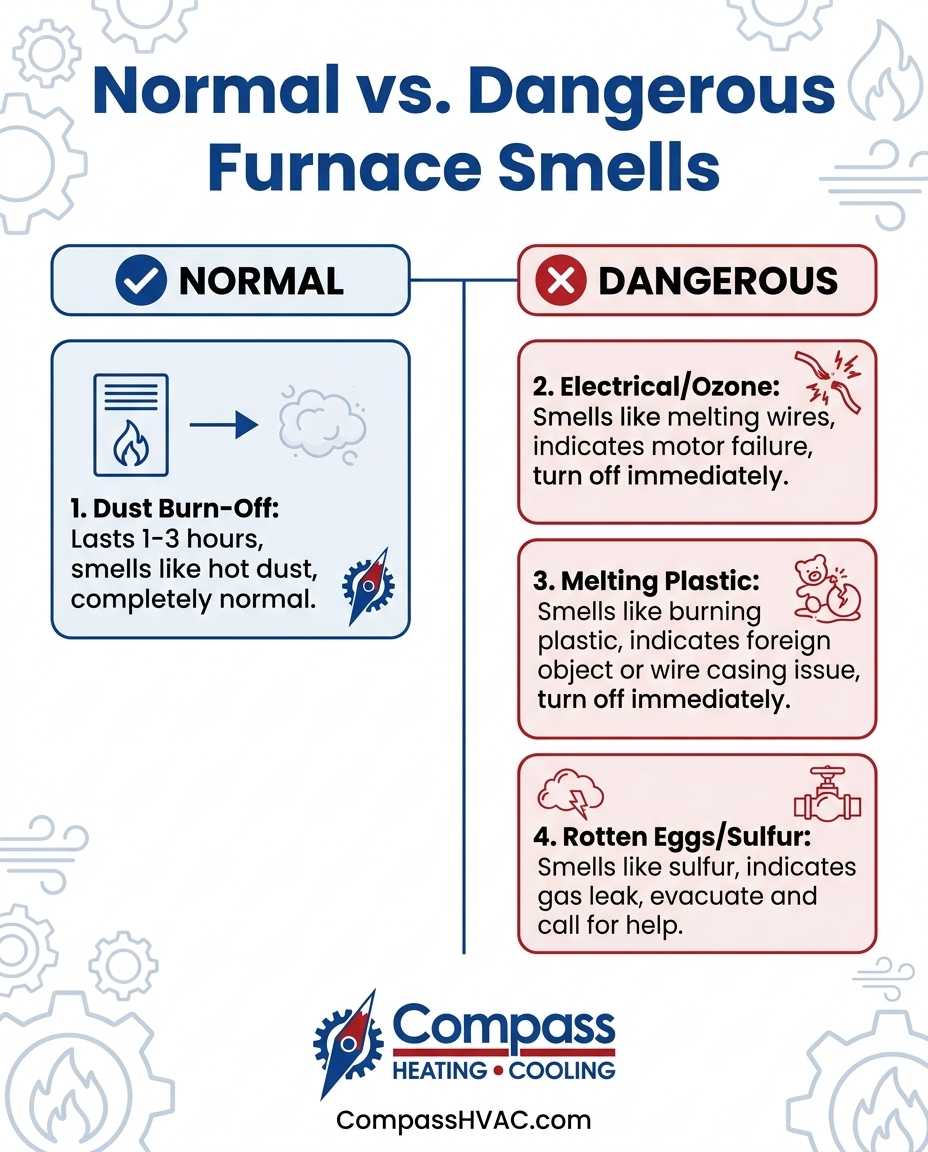
While dust burn-off is harmless, other scents indicate a severe mechanical or electrical failure that requires immediate action. If you detect any of the following odors during your October heating startup, do not wait to see if they go away. Turn off the system at the thermostat immediately to prevent further damage or potential safety hazards.
• Ozone or electrical fire smells: If your vents smell like an overheating electrical outlet, melting wires, or a metallic "ozone" scent, you likely have a failing component. This often points to a seizing blower motor, a failing capacitor, or a short circuit in the control board. Continuing to run the system can lead to a complete electrical failure or a localized fire inside the cabinet.
• Melting plastic smells: A distinct odor of burning plastic usually means one of two things. Either a foreign object (like a child's toy or a stray piece of plastic wrapping) has fallen into the ductwork and is resting against a hot surface, or the protective casing around your internal wiring is melting due to excessive heat.
• Rotten egg or sulfur smells: This is the most dangerous odor you can encounter. Natural gas is naturally odorless, but utility companies add a chemical called mercaptan to give it a distinct rotten egg smell. If you smell sulfur near your furnace or coming from your vents, you have a raw gas leak. Do not adjust the thermostat, do not turn on any light switches, evacuate the home immediately, and call your utility provider from outside.
• Acrid smoke or exhaust smells: If your home smells like a car's exhaust pipe, you may have a cracked heat exchanger or a blocked flue pipe venting dangerous combustion gases (including carbon monoxide) directly into your living space.
If you detect any of these dangerous scents during your October heating startup, shut the system down and schedule a professional HVAC evaluation immediately.
Diagnostic Trust: Avoiding the Panic-Driven Furnace Condemnation
An urgent service call for a burning smell puts homeowners in a highly vulnerable position. It is cold outside, your house smells like smoke, and you are understandably anxious about the safety of your family. Unfortunately, this exact scenario is a prime opportunity for shady contractors to utilize high-pressure sales tactics. When you are operating out of fear, it is easy to be pushed into a massive purchase you might not actually need.
The Red Flags of Scare Tactics
A typical pattern we see in the industry involves a technician arriving at a home, spending less than ten minutes looking at the furnace, and immediately condemning the system. They might claim that the burning smell is "proof" that the heat exchanger is completely compromised, or that the system is a ticking time bomb. They will often refuse to show you exactly where the failure is, relying instead on technical jargon and urgency to pressure you into signing a contract for a full system replacement on the spot.
The Value of Transparent Diagnostics
Homeowners in the Colorado Front Range deserve better than panic-driven sales. A burning smell rarely means an entire furnace must be replaced immediately without concrete evidence. We believe in honest, transparent diagnostics without high-pressure sales tactics, ensuring homeowners only pay for necessary repairs. A trustworthy technician will use specialized tools to prove their diagnosis.
If they suspect a cracked heat exchanger is causing an exhaust smell, they should use a borescope camera to show you the exact crack on a screen. If an electrical smell is present, they should use a multimeter to show you the exact voltage drop or over-amperage on the failing motor. Transparent diagnostics mean you are never asked to take a technician's word blindly. You are given the visual evidence and the technical context needed to make an informed decision about your own property.
Why You Should Always Get an HVAC Second Opinion
If a technician hastily condemns your furnace because of a startup odor, you hold the power to hit the pause button. Empowering yourself to seek a second opinion is one of the smartest moves a homeowner can make. A proper second opinion involves a fresh, unbiased look at the system's mechanics by a completely different company. The goal is not necessarily to find a cheaper price, but to verify that the initial catastrophic diagnosis is actually accurate.
Just like you would research what to expect from a second opinion on a condemned AC during the summer, the same logic applies to your heating system in the fall. Reputable companies actively encourage second opinions because their evidence-based diagnostics stand up to scrutiny. If a contractor gets angry or aggressive when you mention getting another expert's perspective, that is a massive red flag.
Comparing the Diagnostic Experience
• Speed of Condemnation — High-Pressure Diagnosis: System condemned within minutes of arrival. — Transparent Second Opinion: Takes time to measure electrical draw and inspect components.
• Evidence Provided — High-Pressure Diagnosis: Relies on fear, jargon, and vague claims of danger. — Transparent Second Opinion: Provides camera footage, combustion readings, and clear photos.
• Focus of the Visit — High-Pressure Diagnosis: Pushes heavily toward immediate system replacement. — Transparent Second Opinion: Focuses on identifying the exact root cause of the specific odor.
• Homeowner Outcome — High-Pressure Diagnosis: Left feeling panicked, pressured, and financially stressed. — Transparent Second Opinion: Left feeling informed, in control, and confident in the next steps.
The financial and safety benefits of having another expert verify a major repair during your October heating startup cannot be overstated. A second look can save you from replacing a system that only needed a minor motor repair or a thorough internal cleaning.
Preventing Startup Odors Before the Cold Hits
The best way to handle a burning smell is to prevent it from happening in the first place. Colorado's extreme fall temperature swings often require abrupt, heavy furnace loads, making pre-season maintenance vital. When the temperature drops thirty degrees in a single afternoon, your system has to work incredibly hard right out of the gate. Taking proactive steps ensures your system operates safely and efficiently.
1. Change your air filter before the season starts: A severely clogged filter restricts airflow, causing the furnace to run hotter than it was designed to. This excessive heat bakes the settled dust even harder, intensifying the burning smell and potentially triggering the system's high-limit safety switch. Always start the heating season with a fresh, clean filter.
2. Schedule a professional fall tune-up: Proactive maintenance eliminates the surprise of burning smells and catches electrical issues early. During a tune-up, a technician will safely clean the burners, inspect the heat exchanger for stress cracks, and test the electrical components before they have a chance to fail under a heavy load. Enrolling in an HVAC maintenance plan ensures this vital cleaning happens before the first freeze.
3. Keep vents and registers clear: Ensure that rugs, furniture, and curtains are not blocking your supply or return vents. Restricted airflow forces the blower motor to work harder, which can lead to overheating and electrical odors.
4. Never attempt DIY internal cleaning: While changing your filter is a great homeowner task, you should never open the furnace cabinet to wipe down the burners or heat exchanger yourself. These components are highly sensitive, and improper cleaning can misalign the burners, damage the igniter, or create a severe safety hazard. Internal cleaning requires a licensed professional with the right tools and training.
By preparing your system for the heavy loads required in the Colorado Front Range, you can enjoy the transition to fall weather without the anxiety of unexpected mechanical odors.
Comprehensive FAQ: Common Homeowner Questions Answered
When the temperature drops and systems fire up for the first time, our phones ring off the hook. To help you navigate your October heating startup with confidence, we have compiled the most urgent inquiries we receive into this detailed guide. Getting these common homeowner questions answered accurately can be the difference between a peaceful evening and an unnecessary emergency call.
How long does the burning dust smell last on a furnace?
The normal burning dust smell usually dissipates within 1 to 3 hours of the furnace running for the first time. The odor is caused by microscopic particles incinerating on the heat exchanger, and once that initial layer is burned away, the smell will fade. If the odor lasts longer than a full day, or if it suddenly grows significantly stronger, professional inspection is required to ensure there isn't a deeper airflow or mechanical issue.
Is a burning smell from the heater dangerous?
Dust burn-off is not dangerous, but odors resembling melting plastic, electrical fires, or raw gas are highly dangerous. The key is identifying the specific type of scent filling your home. A hot, dusty smell is a normal physical reaction to a dormant system waking up. However, if you smell anything metallic, acrid, or sulfuric, you must prioritize safety, shut the system down, and call for emergency diagnostics.
What does an electrical fire in a furnace smell like?
An electrical fire in a furnace smells like ozone, melting wires, or burning plastic. It is often accompanied by a distinct metallic scent that bites at the back of your throat. This typically indicates a failing blower motor, a seized bearing causing excessive friction, or a short circuit melting the protective casing around internal wiring. This requires immediate shutdown to prevent further damage.
When should I turn off my furnace due to a smell?
You should turn off your furnace immediately if the smell is acrid, metallic, smells like melting plastic, or resembles rotten eggs (gas). You should also shut the system down immediately if the odor is strong enough to trigger your home's smoke alarms or carbon monoxide detectors. It is always better to err on the side of caution and have a professional verify the system is safe to operate.
Can a dirty filter cause a burning smell?
Yes, severely clogged filters restrict airflow, causing the entire heating system to overheat. When the furnace cannot pull enough cool air over the heat exchanger, the internal temperature spikes, which can produce a very strong, hot, dusty odor. If left unchecked, this restricted airflow can permanently damage the heat exchanger and drastically shorten the lifespan of your equipment.
How do I know if I need a second opinion on a condemned furnace?
You need a second opinion if the technician uses high-pressure tactics, rushes the diagnosis, or refuses to show you the specific damage on your equipment. Any major replacement quote warrants a second look for your own peace of mind. A reputable company will gladly provide a second opinion, take the time to run proper diagnostic tests, and explain their findings clearly without pressuring you into a hasty decision.
Securing Peace of Mind for Your Heating System
Navigating the start of the heating season shouldn't feel like a guessing game. Knowing the clear difference between normal dust burn-off and a true mechanical danger is the key to homeowner peace of mind. We hope getting these common homeowner questions answered gives you the confidence to assess your system calmly during the next cold snap in the Colorado Front Range. Remember, you should never feel pressured into a hasty, expensive replacement over a simple startup smell.
Whether you are dealing with a lingering odor that won't go away, or you simply want to ensure your system is clean and ready for winter, seeking honest, transparent evaluations is the best way to protect your home. If you need trustworthy HVAC service in Loveland, our team is ready to help. We are committed to providing the evidence-based diagnostics and clear communication you need to keep your family comfortable and safe all season long.
hear what our satisfied clients have to say
Our clients consistently praise our exceptional service and attention to detail. They appreciate the personalized approach we take to meet their unique needs, ensuring satisfaction every step of the way.
.png)