


HVAC Company in Loveland, CO
Keeping your Loveland home comfortable through every season means finding HVAC solutions built for Northern Colorado’s unique weather patterns. At Compass Heating and Cooling, we offer complete heating, cooling, and air quality services, from high-efficiency heat pumps and traditional systems to ductless mini-splits, repairs, maintenance, and indoor air upgrades. Whether you're facing a sudden breakdown, planning an upgrade, or just need a seasonal tune-up, we’re here to help. We’ll walk you through common local HVAC issues, your service options, our diagnostic process, and what to consider when choosing a new system. With clear guidance on warranties, payment options, and efficiency, we make it easier to invest in comfort you can rely on.
Why specialized HVAC service matters in Loveland
- Loveland experiences cold, dry winters and warm summers, with significant daily temperature swings. These conditions stress HVAC equipment differently than milder climates.
- High altitude and thin air reduce heat transfer efficiency, which affects system sizing and performance.
- Dry winter air increases demand for whole-home humidification to protect comfort, wood floors, and respiratory health.
- Homes in Loveland vary from newer energy-efficient builds to older properties with aging ductwork or undersized systems, so tailored solutions are essential.
Common HVAC issues in Loveland homes
- Insufficient heating during cold snaps: Often caused by inefficient or undersized furnaces, heat pumps with low refrigerant or improper charge, or restricted airflow from dirty filters and ducts.
- High energy bills in winter and summer: Aging equipment, poor insulation, and systems that are not properly matched to the home can drive costs up.
- Frequent short cycling: Too-large units, thermostat issues, or airflow restrictions can cause systems to turn on and off too quickly, reducing comfort and life expectancy.
- Condensation and humidity problems: Dry indoor air in winter leads to discomfort and static; conversely, inadequate dehumidification in summer can make interiors feel muggy.
- Noisy operation or mechanical sounds: Worn bearings, loose components, or duct issues commonly create rattles, squeals, or vibrations.
- Uneven temperature distribution: Duct leaks, zoning problems, or poor system sizing often cause hot and cold spots within the home.
Types of HVAC services offered Installation and replacement
- High-efficiency heat pump installation and replacement: Modern cold-climate heat pumps are an efficient all-electric option for Loveland homes. Proper sizing, correct refrigerant charge, and matching to the home’s heating load at Loveland elevations are critical for winter performance.
- Traditional furnace and air conditioner installation and replacement: For homes that prefer gas furnaces or have existing ductwork suited to conventional split systems, Compass Heating and Cooling offers expert furnace and AC installations with correct sizing, venting, and commissioning.
- Ductless mini-split systems: Ideal for homes without ductwork, room additions, or targeted comfort zones. Mini-splits offer flexible zoning, high efficiency, and minimal disruption.
- Hybrid systems and retrofit options: Combining a heat pump with a gas furnace or upgrading key components to improve seasonal efficiencies without a full system replacement.
Repairs, diagnostics, and seasonal service
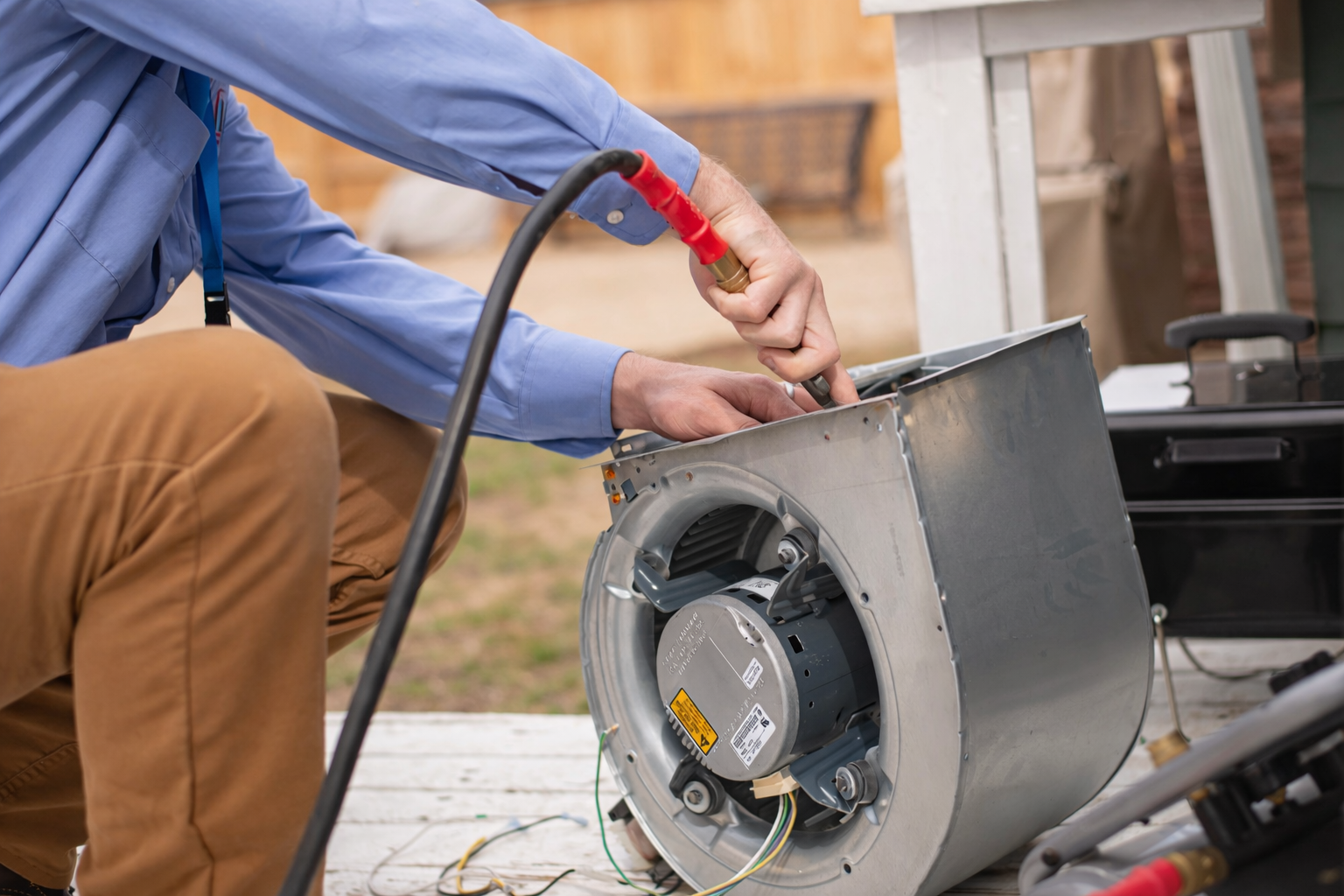
- Diagnostic inspections for all major brands: Every repair begins with a thorough diagnostic inspection. Our technicians evaluate electrical components, refrigerant levels, heat exchanger condition, airflow, thermostats, and duct integrity to pinpoint root causes.
- Component repairs and replacements: Compressors, motors, capacitors, control boards, ignition systems, and sensors are typical repair items addressed with OEM-quality parts when possible.
- Emergency repairs and scheduled service: Fast response for loss of heat or AC, plus routine seasonal tune-ups to prevent unexpected failures.
- Second-opinion consultations and free on-site estimates: For homes shopping for replacement or unsure about previous recommendations, a second-opinion consultation provides clear, objective options with accurate on-site measurements.
Maintenance and Compass Club Service Plan
- Seasonal tune-ups: A fall heating tune-up and a spring cooling check include safety checks, combustion analysis (for gas furnaces), refrigerant verification, lubrication, filter assessment, and airflow testing to keep systems operating safely and efficiently.
- Compass Club maintenance plan: Membership includes scheduled annual inspections, priority service scheduling, waived or reduced service fees, and discounts on repairs. Regular maintenance extends equipment life, maintains warranty compliance, and reduces the likelihood of mid-season breakdowns.
Indoor air quality (IAQ) solutions for Loveland homes
- Whole-home humidification: With Loveland’s dry winters, whole-home humidifiers mounted on the furnace or integrated with a heat pump can maintain indoor humidity in a healthy range, reducing static, preserving woodwork, and improving occupant comfort.
- Filtration upgrades: High-efficiency filters and media filtration systems reduce particulates, pollen, and allergens common during seasonal transitions and dusty mountain winds.
- UV air purifiers and ventilators: UV treatment in the air handler reduces biological contaminants; energy-recovery ventilators (ERVs) and heat-recovery ventilators (HRVs) provide controlled fresh air without sacrificing efficiency.
- Duct cleaning and sealing: Addressing leaks and contaminants in ductwork improves airflow and IAQ while reducing energy waste.
How we diagnose issues and plan repairs
- Comprehensive system evaluation: Technicians start with a full visual inspection, thermostat verification, and performance testing. For heating, checks include ignition safety, heat exchanger condition, gas pressure, and combustion. For cooling, checks include refrigerant levels, superheat/subcooling, compressor operation, and evaporator coil cleanliness.
- Measurement-driven recommendations: Rather than guessing, recommendations rely on measured data like temperature splits, airflow (CFM), and static pressure in ducts to determine if repairs or replacement are appropriate.
- Transparent options: For each issue we present repair, replacement, and interim options where applicable, including expected performance outcomes, warranty implications, and long-term cost considerations.
- Second opinions and no-surprise estimates: For replacements, an on-site load calculation (Manual J or equivalent) ensures correct sizing. Clear line-item estimates help you compare options objectively.
System selection guidance tailored to Loveland conditions
- Sizing matters: At higher elevations, heating loads and system performance behave differently. Accurate load calculations account for elevation, home orientation, insulation levels, and infiltration to prevent undersizing or oversizing.
- Heat pump vs furnace tradeoffs: Cold-climate heat pumps are increasingly efficient and can deliver cost savings and electrification benefits, but very cold periods may necessitate backup heat or a hybrid solution. Gas furnaces provide reliable heat at extreme lows but come with combustion safety and ventilation considerations.
- Ductless solutions for specific needs: For homes with rooms that are hard to heat or cool, ductless mini-splits provide targeted comfort without retrofitting ducts.
- Efficiency ratings and real-world performance: SEER, HSPF, AFUE, and ENERGY STAR ratings provide a baseline for efficiency, but real-world performance depends on installation quality, ductwork condition, and proper commissioning. A well-installed mid-efficiency system can outperform a poorly installed high-efficiency model.
- Longevity and lifecycle costs: Consider expected service life, maintenance needs, energy consumption, and potential incentive programs when choosing a replacement to quantify lifetime costs, not just upfront price.
Warranties, parts, and labor considerations
- Manufacturer warranties: New equipment typically includes manufacturer parts warranties and sometimes limited labor warranties. Understand what is covered, for how long, and any required maintenance to keep warranties valid.
- Installation workmanship: Proper installation is as important as the equipment. Professional commissioning, refrigerant charge verification, correct venting, and duct sealing are critical tasks that protect warranties and performance.
- Extended warranties and service agreements: Service plans and extended warranty options can provide predictable maintenance costs and protect against expensive component failures. Review exclusions and coverage limits carefully.
Payment options and discounts
- Payment options plans: Many homeowners prefer payment options to spread the cost of a new system. Payment options often include flexible terms to match homeowners budgets and energy savings projections.
- Senior and veteran discounts: Discounts for seniors and veterans help make necessary repairs and replacements more accessible for those who qualify.
- Local incentives and rebates: Energy programs, utility rebates, and state incentives for high-efficiency equipment or heat pump conversions can reduce net costs. Eligibility varies; verify available programs for Loveland properties and project-specific requirements.
Energy-saving performance and expectations
- Realistic savings estimates: Energy savings depend on current equipment efficiency, fuel costs, home envelope performance, and how a home is used. Replacing a very old furnace or AC with modern high-efficiency equipment can produce noticeable monthly savings, but results vary.
- HVAC tuning for performance: Proper airflow, correct refrigerant charge, tight ductwork, and correct system sizing are essential to realizing manufacturer-rated efficiency gains.
- Smart thermostats and zoning: Programmable and smart thermostats, together with zoning systems, allow nuanced control and can reduce wasted heating and cooling by focusing comfort where and when it is needed.
- Envelope improvements: Adding insulation, sealing air leaks, upgrading windows, and managing solar gains can complement HVAC upgrades and accelerate payback through lower energy use.
What to expect during installation or replacement
- On-site assessment and load calculation: An accurate Manual J load calculation and ductwork inspection ensure proper system sizing and allow for improvements where needed.
- Equipment selection and matching: Outdoor units, indoor air handlers, coils, and controls are selected to work together for optimum performance.
- Professional removal and disposal: Old equipment is removed safely and disposed of in accordance with local codes.
- Duct adjustments and balancing: Duct sealing, insulation, and balancing help eliminate hot and cold spots and improve system efficiency.
- Commissioning and performance verification: After installation, performance is tested: refrigerant charge, electrical draw, airflow, temperature differentials, and safety checks are completed to ensure the system operates to specification.
- Documentation and warranty registration: Necessary paperwork, warranty registrations, and maintenance recommendations are provided so homeowners have a clear record for the life of the system.
Repair vs replacement: making the right choice
- Repair when practical: If a system is relatively new, repairs are limited to single components, and repair costs are a modest fraction of replacement, repairing can be the right choice to extend service life.
- Replace when it makes cost or reliability sense: Replacement is often the best option when the system is older (typically 12 to 15 years for many systems), repair costs are high, efficiency is poor, or frequent service calls are required. Replacement improves reliability and often reduces operating costs.
- Consider overall home goals: If you plan to stay in your Loveland home long term and want lower energy bills, improved comfort, or an all-electric transition, replacement with a properly sized, efficient system may be the best investment.
Preventive maintenance practices that pay off
- Biannual inspections: Routine fall and spring checkups identify problems before they become failures, protect safety, and keep efficiency optimized.
- Replace or clean filters regularly: Filters are the first line of defense; changing them on a regular schedule prevents airflow restriction and preserves indoor air quality.
- Keep outdoor units clear: In Loveland, clear snow, ice, and debris from outdoor coils in winter and remove vegetation or dust in summer to maintain airflow.
- Monitor system performance: Track energy usage, unusual noises, and comfort trends. Early detection of abnormal behavior reduces repair costs and avoids emergency replacements.
Service process overview and transparency
- Inspection-first approach: Each call begins with a complete diagnostic to identify the root cause rather than simply treating symptoms.
- Clear written estimates: For repairs and replacements, homeowners receive detailed, itemized estimates explaining scope, parts, labor, and expected outcomes.
- Options and tradeoffs: We outline immediate fixes, recommended repairs, and replacement alternatives with pros and cons so you can decide based on facts and priorities.
- Compliance and safety: All service follows local codes and manufacturer requirements to ensure safe, code-compliant installations and repairs.
Why attention to installation detail matters in Loveland
- Altitude and load differences: Proper commissioning accounts for Loveland elevation and climate. This affects refrigerant management, burner performance, and airflow tuning.
- Dry air implications: Adding whole-home humidification or advising on humidification settings reduces winter discomfort and helps systems run more efficiently by improving perceived warmth.
- Seasonal durability: Snow, ice, and temperature swings require robust installation practices for outdoor units and vents to ensure consistent operation through winter storms and summer heat.
Frequently asked questions
Q: Is a heat pump a good option for homes in Loveland, CO?
A: High-efficiency cold-climate heat pumps are an excellent option for many Loveland homes. They provide both heating and cooling with high seasonal efficiency and work well when sized and installed correctly. In some homes, a hybrid configuration or auxiliary heat may be recommended for the coldest periods.
Q: How often should I have my furnace or heat pump serviced?
A: Routine service twice a year (fall for heating, spring for cooling) keeps systems running efficiently, verifies safe operation, and reduces the likelihood of sudden failures. Compass Club membership can make this maintenance predictable and consistent.
Q: Will a new HVAC system lower my energy bills?
A: A new high-efficiency system properly sized and installed will typically reduce energy consumption compared with older equipment. Exact savings depend on current system efficiency, thermostat settings, home insulation, and usage patterns.
Q: What is included in a diagnostic inspection?
A: A diagnostic inspection includes a visual and performance evaluation of the system, electrical checks, refrigerant verification (for cooling systems), combustion analysis (for gas furnaces), airflow measurements, and inspection of safety controls and ductwork.
Q: Do you offer payment options and discounts for seniors or veterans?
A: Payment options and discounts for eligible seniors and veterans are available to help make necessary repairs or replacements more accessible. payment terms and eligibility vary.
Q: How do I know if my ducts need sealing or replacement?
A: Signs of duct issues include uneven temperatures, high energy bills, excessive dust, and poor airflow. A duct leakage test or airflow measurements help determine whether sealing, insulation, or sections of replacement are recommended.
Q: Will adding humidification help with my winter comfort?
A: Yes. Proper whole-home humidification in Loveland can reduce dryness, improve perceived warmth, protect woodwork, and reduce static electricity. Humidification should be balanced to avoid excessive moisture that could lead to condensation.
Q: Are there local rebates or incentives for heat pumps or high-efficiency equipment?
A: Local utility rebates and state incentives for high-efficiency equipment or heat pump installations may be available. Eligibility depends on program requirements and the specific equipment installed.
hear what our satisfied clients have to say
Our clients consistently praise our exceptional service and attention to detail. They appreciate the personalized approach we take to meet their unique needs, ensuring satisfaction every step of the way.
.png)