


AC Installation in Loveland, CO
Getting the right AC installation from Compass Heating and Cooling is about more than just staying cool in your Loveland home. Here in Loveland, CO, we have warm, sunny summers, low humidity, high elevation, and sometimes even wildfire smoke. All of these things can make it hard to stay comfortable and breathe clean air. A good AC system that's the right size and installed efficiently can lower your energy bills, make your equipment last longer, and keep your indoor air healthy. We offer a complete, honest installation process for Loveland homeowners. This includes free consultations, professional calculations, advice on energy-efficient systems (like mini-splits and heat pumps), help with permits, disposal of old equipment, information on rebates, warranties, and thorough testing after installation. We'll also show you how to use your new system.
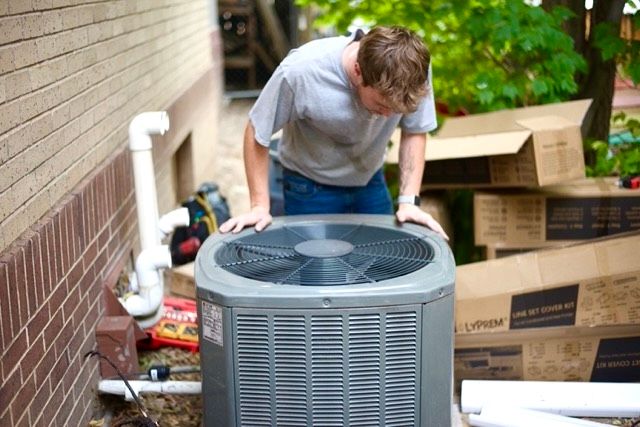
Why a professional installation matters in Loveland homes
A new air conditioner is more than a box in the yard and an air handler in the attic. In Northern Colorado, elevation and climate affect how equipment performs. Higher elevation means lower air density, which can slightly change system capacity and airflow needs. Loveland summers are often sunny and warm with strong daytime heat and cooler nights, so systems sized only on square footage can be oversized or undersized for your home’s real load. Oversized systems short cycle, causing humidity control problems, higher repair frequency, and reduced comfort. Undersized systems struggle on peak days and run continuously.
A professional installation uses a whole-home approach: measuring your actual cooling load, checking ductwork and insulation, recommending equipment that matches your needs, and installing components with precision. This protects your investment, improves comfort, and maximizes system efficiency through Colorado’s seasonal swings.
Common cooling needs and problems we address in Loveland
- Improperly sized systems causing short-cycling or poor peak performance
- Leaky or undersized ductwork reducing efficiency and comfort
- Inadequate refrigerant charge or poor airflow from improper installation
- Indoor air quality concerns during wildfire season or low-humidity summers
- Homes without ductwork or with additions that need zoning solutions
- Desire to shift to more efficient all-electric systems such as heat pumps or ductless mini-splits
Our complete Air Conditioning Installation process
Compass Heating and Cooling follows a detailed, transparent workflow designed to deliver predictable, long-lasting results. Each step is performed with Loveland homes and climate in mind.
Free on-site consultation and home evaluation
- We start with a no-cost, on-site consultation to learn your priorities: lower utility bills, quieter operation, better humidity control, zoning for comfort, or all-electric options. We inspect the home layout, attic and crawlspace, ductwork condition, insulation levels, and existing equipment. This step determines whether a central A/C, heat pump, or ductless solution is the best fit for your home.
Professional load calculations (Manual J and related checks)
- We perform a Manual J load calculation, which is the industry standard for sizing cooling equipment. This assessment factors in local climate data, Loveland’s elevation effects, window orientation and type, insulation values, home air infiltration, and occupancy patterns. A correct load calculation prevents oversizing and ensures consistent temperature and humidity control.
Detailed system selection and efficiency guidance
- Based on the load calculation and your goals, we present equipment options with clear explanations:
- Central air conditioners and matched air handlers for homes with ductwork
- High-efficiency systems with variable-speed compressors for better humidity control and efficiency
- Heat pump systems that provide both cooling and heating, often with higher year-round efficiency in Northern Colorado
- Ductless mini-split systems for additions, homes without ducts, or precise zoning controlWe review SEER ratings, variable-speed benefits, inverter technology, and thermostat options so you can compare performance and lifetime operating costs. We also outline the pros and cons of refrigerant types and future-proof choices.
Quote with transparent line items and compliance planning
- Your installation quote includes equipment, materials, labor, permit fees, and estimated disposal handling. We document any recommended duct repairs, insulation improvements, or electrical upgrades necessary for safe operation. Quotes reflect local code requirements and Loveland permitting needs.
Permits, code compliance, and rebate documentation
- We handle permit submission and ensure the installation meets local building codes and inspection requirements. We also provide the paperwork you need to apply for local utility rebates or state and federal incentives.
Pre-installation preparation
- Before install day we confirm access, electrical capacity, and any scheduled inspections. Our team coordinates equipment delivery and staging to minimize disruption to your home. If duct repairs or insulation upgrades are part of the scope, we schedule them in sequence to avoid rework.
Professional installation steps
- Equipment placement and pad setting for outdoor units
- Leveling and secure mounting of the outdoor condenser and indoor air handler
- Refrigerant line sizing and brazing by certified technicians, including vacuum and pressure testing
- Proper duct connections, sealing, and balancing for optimal airflow
- Electrical connections, safety device installation, and thermostat wiring
- Condensate management and drain routing to prevent leaks and freeze issues
- System start-up using manufacturer procedures to confirm proper operation
Responsible removal and disposal
- We remove old equipment and dispose of it according to local and federal regulations. We handle refrigerant recovery and documentation in compliance with EPA requirements and Loveland recycling programs, ensuring environmentally responsible disposal of old units.
Post-install testing and performance verification
- After installation we perform in-depth system checks:
- Measured supply and return airflow to match design values
- Refrigerant charge verification and superheat/subcooling measurements
- Electrical load and safety control testing
- Temperature drop and conditioned space checks to confirm cooling performance
- Thermostat calibration and communication with multi-zone controlsThese tests confirm that the system operates at the efficiency and comfort levels specified in the quote.
Homeowner orientation and documentation
- We walk through operation steps with you, explaining thermostat settings, zoning controls, filter types and replacement intervals, and how to interpret system alerts. You receive documentation for equipment warranties, manufacturer registration instructions, permit records, and maintenance recommendations. New A/C installations with Compass Heating and Cooling include one year of the Compass Club maintenance plan to keep the system running as intended during its critical first year.
Follow-up and routine maintenance planning
- We schedule or recommend an annual maintenance plan tailored to Colorado’s climate to preserve efficiency and prevent small issues from becoming major repairs. Regular checks of refrigerant, airflow, and electrical components extend equipment life in high-altitude, high-sun environments like Loveland.
Selecting the right system for Loveland: options and tradeoffs
Each home is different. Below are common system choices and how they perform in Loveland conditions.
Central air conditioning (split systems)
- Best for homes with ductwork. Central A/C offers whole-home cooling and pairs well with high-efficiency air handlers and programmable thermostats. When installed correctly with right-sized ducts and variable-speed components, central systems provide consistent comfort and improved humidity control during warm Colorado months.
Heat pumps (air-source and cold-climate models)
- Modern heat pumps provide both heating and cooling and are an efficient all-electric alternative to furnace plus air conditioner systems. Cold-climate heat pumps maintain higher efficiency in Northern Colorado winters and simplify maintenance by combining seasonal functions into one system. For homeowners looking to move away from fossil fuel heating, heat pumps are a strong contender.
Ductless mini-split systems
- Ideal for homes without ducts, additions, basements, or rooms with unusual heat loads. Mini-splits deliver zoned comfort with high efficiency and minimal disruption during installation. They are excellent for primary cooling in smaller homes or as supplemental comfort to address hot spots. In Loveland, mini-splits perform well due to the dry climate and offer efficient dehumidification when set correctly.
High-efficiency central AC and variable-speed technology
- Systems with higher SEER ratings and variable-speed compressors deliver better part-load efficiency, quieter operation, and superior humidity control. For Loveland homeowners who want the best balance of comfort and energy savings, investing in higher-efficiency equipment often pays back in lower utility bills and improved indoor conditions during extended warm periods.
Ductwork and ventilation upgrades
- Many older homes in Northern Colorado need duct sealing, insulation, or rerouting to support a new high-efficiency system. Proper ductwork tuning improves comfort distribution and reduces energy waste. We evaluate ducts and recommend cost-effective solutions during the consultation.
Energy savings and rebates
High-efficiency systems reduce operating costs over time, and Loveland homeowners may be eligible for rebates or incentives that lower upfront costs. Local utilities and state programs sometimes offer rebates for ENERGY STAR qualified systems, heat pumps, or insulation improvements. There are also federal tax credits and performance-based incentives that can apply to certain high-efficiency installs.
Compass Heating and Cooling helps you identify potential savings streams and provides the documentation you need to apply. This enables many homeowners to choose higher-efficiency systems without a large cash outlay.
Permits, inspections, and code compliance
Installing an air conditioning system involves mechanical, electrical, and sometimes structural work that must comply with local codes. Compass Heating and Cooling prepares and submits permit applications, coordinates required inspections, and ensures all work meets Loveland and Larimer County requirements. Proper permitting protects your property value and ensures that the installation will pass resale and insurance reviews.
Warranty coverage and Protector Plans
Manufacturer warranties and installation labor warranties protect your investment. Manufacturer warranties vary by model and registration status; typical coverage may include parts warranties and optional extended coverage for compressors or sealed systems. Compass Heating and Cooling documents manufacturer registration for you and provides information on available labor warranties and maintenance plans. Our installations include the initial Compass Club maintenance plan year to ensure proper early-care care and documentation.
What to expect on install day in your Loveland home
- Technicians arrive on schedule with a complete work plan and all necessary equipment.
- Work areas are protected to minimize dust and disruption to living spaces.
- Outdoor units are placed on appropriate pads or mounts, selected for visibility and noise considerations relative to your property and neighborhood.
- Interior work includes secure mounting of air handlers or mini-split heads, careful routing of lines and condensate drains, and sealed duct connections.
- The system is started and tuned while you watch if you prefer, and we explain each control and setting in plain language.
Post-install testing, monitoring, and homeowner training
A high-quality installation is validated by objective testing. After start-up, we perform performance verification including airflow measurements, refrigerant charge checks, electrical tests, and a thermal performance review for each conditioned zone. We program thermostats for efficiency and comfort and demonstrate how to change filters and set vacation or setback schedules.
We also explain seasonal considerations for Loveland homes:
- Cooling system settings that reduce moisture issues during warm stretches
- Filters and indoor air quality devices to mitigate smoke events
- Heat pump winter operation if you select an all-electric system
Long-term care and maintenance to protect your investment
Routine maintenance keeps systems efficient and reliable. Recommended tasks include seasonal filter replacement, annual tune-ups for refrigerant and airflow checks, cleaning coils and condensate drains, and verifying electrical safety. Compass Club membership is available as a structured annual program that helps homeowners stay on schedule with maintenance and receive documented service history that supports warranty claims.
Common questions during decision-making
Q: How do I know if I should replace my existing A/C or repair it?
A: If your unit is more than 10 to 15 years old, has frequent breakdowns, uses outdated refrigerant, or runs inefficiently even after repairs, replacement is often more cost-effective. A new properly sized system offers better comfort and lower operating costs. We evaluate performance during the consultation and provide options with transparent long-term cost comparisons.
Q: What is a Manual J load calculation and why is it necessary?
A: Manual J is the formal method for calculating your home’s heating and cooling needs. It considers local weather, insulation, window orientation, air leakage, and occupancy to determine the right equipment size. Using Manual J prevents oversizing or under sizing and is essential for a comfortable, efficient system in Loveland.
Q: Are ductless mini-splits a good choice in Loveland?
A: Yes. Mini-splits are effective for homes without ducts, for additions, or when you need room-by-room control. They are efficient in dry climates like Loveland, and modern units provide strong cooling with precise humidity control. For whole-house applications, ductless can be combined with other systems as part of a hybrid solution.
Q: Will I need electrical upgrades to install a new A/C or heat pump?
A: Possibly. New high-efficiency outdoor units or heat pumps can require dedicated breakers or higher amperage service. During the site evaluation we assess your electrical panel and note any upgrades required in the estimate.
Q: What rebates or incentives are available for Loveland homeowners?
A: Rebates and incentives change over time and can come from local utilities, state energy programs, or federal tax credits for qualifying high-efficiency or electrification projects. We help identify programs that may apply and provide the necessary documentation to support your rebate applications.
Q: How long does a typical installation take?
A: A standard central A/C or heat pump swap in a home with accessible ducts typically takes one to two days. Ductless mini-split installs or projects requiring duct or electrical upgrades may require more time. We provide a realistic timeline in your estimate.
Q: What maintenance does a new system need?
A: Annual tune-ups to check refrigerant levels, airflow, electrical components, and thermostat calibration are recommended. Filter changes vary by type but are typically every 1 to 3 months for disposable filters. Proper maintenance preserves efficiency, lowers energy costs, and validates warranty coverage.
Q: Does Compass Heating and Cooling handle permits and disposal?
A: Yes. Compass Heating and Cooling prepares and submits permits, coordinates inspections, recovers and disposes of old refrigerant in compliance with regulations, and disposes of old equipment according to local rules.
Q: Will a new system reduce my humidity in summer?
A: Properly sized equipment with variable-speed technology and correct airflow control improves humidity removal. Oversized units can short-cycle and fail to remove enough moisture. We size and recommend systems that balance temperature control and indoor humidity needs.
Q: What is included in the post-install homeowner orientation?
A: Orientation covers thermostat programming, filter replacement, basic troubleshooting, system features, warranty registration, and documentation for maintenance and rebates. We ensure you know how to operate the system and where to find key documents.
Installing a new air conditioning system in Loveland, CO involves technical and cost considerations. Compass Heating and Cooling approaches each installation with local knowledge, professional load calculations, careful equipment selection, code-compliant permitting and disposal, and thorough testing and homeowner education. The result is reliable, efficient cooling tuned to the unique climate and lifestyle of Northern Colorado.
Related Home Comfort Services
If your system is beyond repair, you may want to consider AC Maintenance in Loveland; CO. We also offer AC Repair in Loveland; CO. For homes that need additional attention, check out our Furnace Installation in Loveland; CO options. Learn more about our full ac installation services, or view all air conditioning options. See all the services in loveland; co we provide.
hear what our satisfied clients have to say
Our clients consistently praise our exceptional service and attention to detail. They appreciate the personalized approach we take to meet their unique needs, ensuring satisfaction every step of the way.
.png)