


Heat Pump Maintenance in Fort Collins, CO
Heat Pump Maintenance in Fort Collins, CO
At Compass Heating and Cooling, we understand that keeping your heat pump tuned and healthy is one of the most effective ways to protect your comfort, control energy costs, and avoid emergency repairs in your Fort Collins home. We provide thorough, seasonal heat pump maintenance and professional tune-ups tailored to Northern Colorado conditions. Let us explain what our routine maintenance covers, common local issues Fort Collins homeowners face, the diagnostic process our technicians use, our recommended service frequency, and the concrete benefits of regular care — including how Compass Club membership enhances maintenance value.
Why heat pump maintenance matters in Fort Collins
Fort Collins experiences wide temperature swings across the year: hot, dry summers, cold winters with occasional deep freezes, and seasonal wildfire smoke and pollen. Heat pumps operate year round for both heating and cooling, so they endure continuous wear. Regular maintenance:
- Keeps systems running efficiently so your home stays comfortable in both heat and cold.
- Reduces the chance of unexpected breakdowns when extreme weather hits.
- Preserves equipment lifespan and manufacturer warranty requirements.
- Helps maintain indoor air quality during wildfire smoke and high-pollen seasons by ensuring filters and airflow are working correctly.
Compass Heating and Cooling understands local conditions. Our technicians adjust inspections and tune-ups to address Fort Collins-specific challenges such as dust and pollen accumulation, defrost cycle stress in subfreezing snaps, and the impact of altitude on system performance.
Common heat pump problems in Fort Collins homes
Heat pumps are reliable, but common issues can arise when systems are not regularly maintained. Watch for these problems:
- Reduced airflow from clogged filters or blocked return vents.
- Icing or frozen outdoor coils caused by restricted airflow or refrigerant imbalance.
- Short cycling or reduced heating capacity in cold snaps, which increases wear.
- Low refrigerant levels from leaks that reduce efficiency and damage compressors.
- Electrical faults such as failing capacitors, contactors, or loose terminals.
- Strange noises from bearings, fan motors, or compressor stress.
- Ineffective defrost cycles in winter, causing longer run times and poor heating.
- Dirty coils and condensate drains that impair heat transfer and create moisture issues.
- Thermostat calibration errors leading to inconsistent indoor temperatures.
Addressing these early during a scheduled maintenance visit prevents small issues from escalating into full replacements or emergency calls during severe weather.
Types of heat pump maintenance and tune-ups
Compass Heating and Cooling offers routine maintenance tailored to the type of heat pump and how you use it. Typical programs include:
- Seasonal tune-ups for split-system heat pumps
- Ductless mini-split maintenance (indoor heads and outdoor condenser)
- High-efficiency and cold-climate heat pump inspections
- Annual safety checks and electrical testing
- Preventive maintenance agreements via the Compass Club for ongoing care and perks
Each service is designed to match the demands Fort Collins homeowners place on their systems, combining manufacturer recommended checks with field adjustments experienced technicians use in this climate.
Seasonal inspection checklist — what our tune-up covers
Our heat pump maintenance follows a structured checklist to ensure nothing important is missed. We perform a full inspection, cleaning, testing, and adjustment routine that includes:
Outdoor unit and condenser checks
- Visual inspection of the outdoor unit for physical damage, debris, or obstruction.
- Clear around the unit to ensure at least 2 feet of airflow clearance.
- Inspect fan blades and motor operation; tighten hardware and lubricate bearings where applicable.
- Clean condenser coils to restore proper heat transfer and efficiency.
- Check refrigerant lines for insulation and proper routing; inspect for visible signs of leaks.
- Verify proper mounting and secure electrical conduit.
Indoor unit, air handler, and duct checks
- Inspect air handler and indoor coil for dust, debris, and buildup.
- Clean or replace filters as appropriate to maintain proper airflow and indoor air quality.
- Check condensate drain and trap for clogs; flush drain lines to prevent water damage and mold growth.
- Inspect ductwork visible at registers for disconnected or leaking joints and poor insulation.
- Evaluate return and supply vents for obstruction or poor airflow patterns.
Refrigerant and system performance
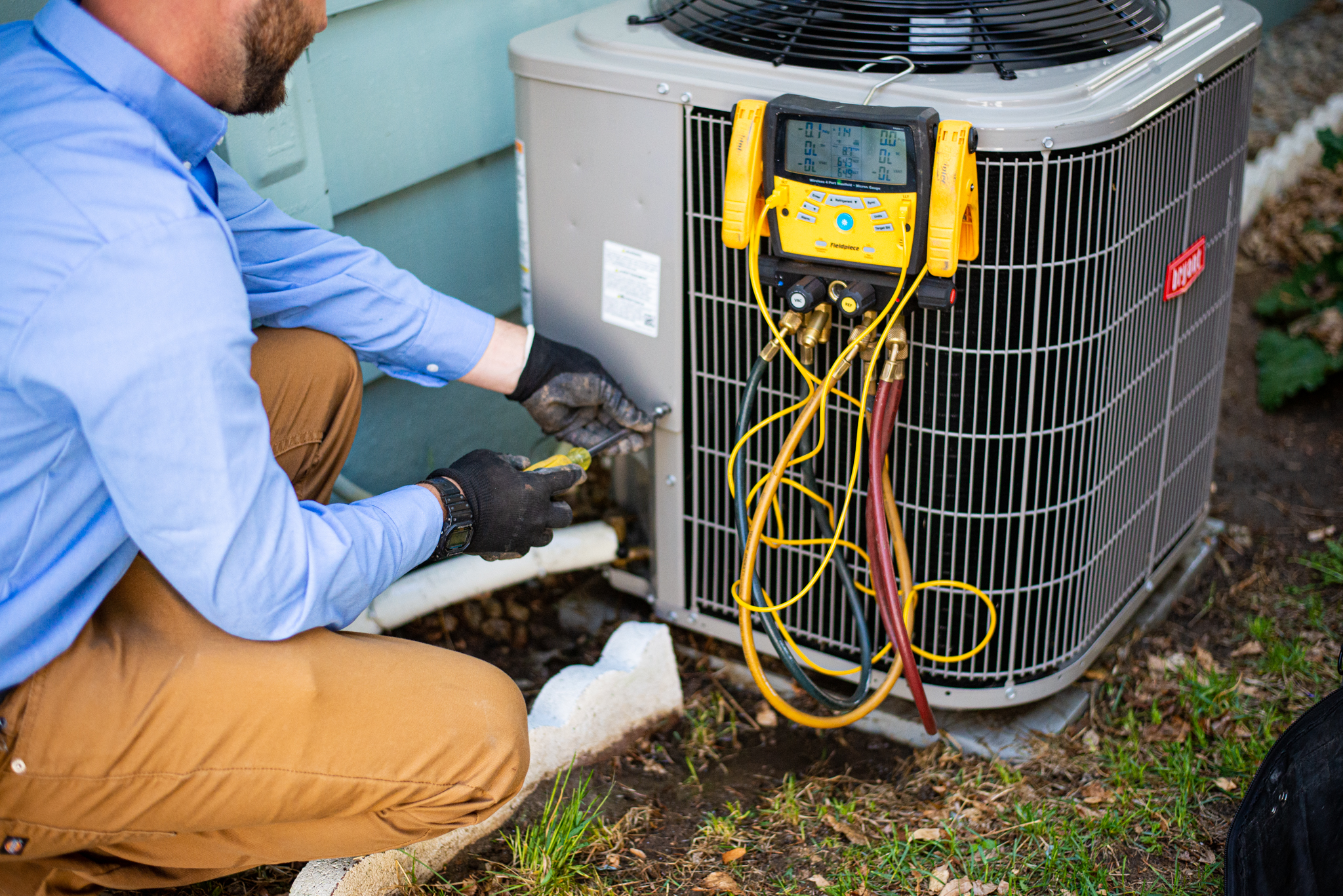
- Measure refrigerant pressures and temperature differentials to confirm correct charge and operation.
- Check compressor amp draw and compare to manufacturer specs to identify stress or impending failure.
- Test reversing valve operation for reliable heat/cool switching.
- Verify defrost cycle function and duration for reliable winter heating performance.
Electrical and safety checks
- Tighten electrical connections at contactors, breakers, and control boards.
- Test capacitors and contactors for wear and replace if readings fall outside acceptable ranges.
- Inspect and test safety controls, including high limit switches and float switches on condensate systems.
- Confirm proper operation of thermostats and control systems, updating settings for seasonal efficiency.
Airflow and comfort optimization
- Measure airflow and static pressure where possible and recommend adjustments to fan speed or filters.
- Balance zones and evaluate thermostat placement if uneven temperatures are reported.
- Provide guidance on thermostat settings and schedules to optimize comfort and energy use in Fort Collins climate conditions.
Documentation and recommendations
- Provide a written summary of findings and recommended actions, including any parts that may require future replacement.
- Inform homeowners how maintenance affects warranty compliance and long term system reliability.
How Compass Heating and Cooling diagnoses issues during maintenance
Our approach is systematic. Technicians begin with a visual inspection, then move into electrical and refrigeration diagnostics using industry tools. Steps include:
- Interview homeowner about symptoms and recent performance changes.
- Confirm thermostat settings and basic user behavior that can affect system operation.
- Visual inspection of indoor and outdoor components for obvious faults.
- Electrical checks: voltage, amp draw, capacitor health, and control board diagnostics.
- Refrigerant and pressure checks to identify undercharge or overcharge conditions.
- Airflow measurements and filter inspection to locate restrictions.
- Functional test: run the system through heat and cool cycles, observe defrost operation and compressor cycling.
- Finalize findings and prepare service recommendations and any safety-critical repairs.
This clear diagnostic flow reduces unnecessary parts replacement and targets the actual root cause of issues, minimizing repeat visits and downtime.
Recommended service frequency for Fort Collins homes
Because heat pumps provide year-round climate control in Fort Collins, we recommend:
- Twice yearly maintenance: one tune-up in spring focused on cooling readiness and one in fall focused on heating readiness.
- Homes with heavy indoor air pollution, pets, or wildfire smoke exposure may benefit from more frequent filter changes and an interim inspection.
- Ductless mini-splits also benefit from twice yearly service, with additional mid-season filter cleaning by homeowners.
Biannual service ensures the system is optimized for seasonal shifts, reduces peak-season failures, and keeps efficiency high throughout the year.
How regular maintenance improves efficiency and longevity
Routine maintenance returns tangible benefits that matter at the decision stage:
- Energy efficiency: Clean coils, correct refrigerant charge, and unrestricted airflow reduce the energy required to reach set temperatures, lowering utility bills.
- Increased lifespan: Components that are cleaned and adjusted run with less stress, which delays wear on motors, compressors, and electrical parts.
- Fewer emergency repairs: Proactive maintenance identifies worn parts early, preventing in-season catastrophic failures when temperatures are extreme.
- Stable comfort: Proper refrigerant charge, defrost operation, and airflow result in steady indoor temperatures and quicker recovery after temperature setbacks.
- Warranty protection: Many manufacturers require regular maintenance to maintain warranty eligibility. Service records establish compliance.
- Better indoor air quality: Filter management and clean coils reduce dust and particulates circulated in the home, which is especially important during wildfire smoke events.
Compass Heating and Cooling documents each visit so you have clear records showing the care performed on your system.
Compass Club membership perks for Fort Collins homeowners
For homeowners who want consistent, worry-free care, Compass Club provides ongoing maintenance advantages. Membership features include:
- Annual or semiannual maintenance visits scheduled for optimal seasonal timing.
- Waived service call fees for covered maintenance trips.
- Discount on repairs and parts to reduce the cost of unexpected fixes.
- Priority scheduling during peak seasons so members are serviced sooner.
- Maintenance reminders and record keeping to meet warranty requirements and simplify long term upkeep.
- Benefits that apply across heat pump types, including split systems and ductless mini-splits.
Compass Club is designed to deliver predictable maintenance and reduce total cost of ownership for heat pump systems in Fort Collins.
How maintenance reduces unexpected breakdowns — real examples
Routine maintenance prevents the small problems that cause emergency failures. Examples common in Fort Collins:
- A clogged filter during a smoke-heavy summer increases compressor run time and can cause overheating. Regular filter changes prevent this and improve cooling performance.
- A failing capacitor often starts with slow motor spin or humming. Electrical checks catch failing capacitors before motors stall and require costly replacement.
- Low refrigerant from a slow leak reduces heating capacity in winter. Detecting and repairing leaks during a tune-up prevents compressor burnout in subfreezing conditions.
- Blocked condensate drains can cause indoor water damage and system shutdown. Clearing the drain during service avoids downstream repairs.
Proactive inspections convert unknown risks into scheduled maintenance actions.
What homeowners can do between professional visits
Homeowners play a key role in keeping heat pumps healthy. Simple tasks between professional maintenance visits include:
- Replace or clean filters monthly during high-use seasons and at least every 90 days otherwise.
- Keep outdoor units clear of leaves, snow, and debris; maintain at least 2 feet of clearance.
- Check for strange noises, odors, or inconsistent temperatures and note them for the technician.
- Ensure registers and returns are not blocked by furniture or storage.
- Use thermostat scheduling to avoid unnecessary short cycling.
- For ductless systems, clean washable filters in indoor heads regularly per the manufacturer.
These small steps help your technician focus on systems that need professional adjustment rather than basic upkeep.
Safety and regulatory considerations
Heat pump maintenance includes safety checks to protect your home and family. Technicians verify safe electrical connections, test controls and emergency shutoffs, and inspect for refrigerant leaks that require certified handling. Compass Heating and Cooling follows local regulations and safe refrigerant handling practices to ensure compliance and safe operation.
Documentation and transparency
After every service, Compass Heating and Cooling documents findings and any work performed. You receive a clear summary that includes notes on:
- Parts replaced or cleaned
- Readings taken for refrigerant, amperage, and temperatures
- Recommended repairs with priority levels
- Maintenance schedule for the year and suggested next service date
This transparency helps homeowners make informed decisions about repairs and plan budgets for replacement when necessary.
Choosing the right maintenance program for your home
Selecting the right maintenance cadence depends on system type, age, and home conditions. Consider the following:
- New high-efficiency systems: semiannual maintenance keeps performance optimal and preserves warranty.
- Older systems: semiannual visits detect wear and help prioritize replacement planning.
- Homes near agricultural areas or with pets: more frequent filter attention is recommended.
- Homes impacted by wildfire smoke: frequent filter changes and indoor air quality checks are prudent.
Compass Heating and Cooling technicians will assess your home and provide an individualized recommendation based on usage patterns and Fort Collins climate factors.
Q: How often should a heat pump in Fort Collins be serviced?
A: Heat pumps should be professionally serviced at least twice a year, once before the cooling season and once before the heating season. Homes with heavy use, indoor air quality challenges, or exposure to wildfire smoke may need more frequent attention.
Q: What does a typical maintenance visit cost?
A: Pricing varies by program and system type. Compass Heating and Cooling offers maintenance plans that include recurring service benefits like waived service fees and discounts. Members of the Compass Club receive additional savings on repairs and prioritized scheduling.
Q: Will maintenance affect my system warranty?
A: Yes. Many manufacturer warranties require documented, regular maintenance. Keeping service records from Compass Heating and Cooling helps ensure your warranty remains valid.
Q: How long does a full heat pump tune-up take?
A: A thorough tune-up usually takes between 60 and 120 minutes, depending on system complexity, whether ductwork needs inspection, and whether repairs are required during the visit.
Q: Can I do any of the maintenance myself?
A: Homeowners can regularly replace or clean filters, keep the outdoor unit clear of debris, and clean washable filters on ductless heads. More technical tasks, such as refrigerant checks, electrical testing, and coil cleaning, should be performed by trained technicians.
Q: What signs indicate I need immediate service?
A: Seek service if you notice ice on the outdoor coil, reduced heating or cooling capacity, unusual noises, water leaks, an increase in energy bills, or repeated short cycling. These symptoms often indicate issues that can worsen quickly without intervention.
Q: What is included with Compass Club membership for heat pump maintenance?
A: Compass Club typically includes scheduled maintenance visits, waived service fees for covered visits, a percentage discount on repairs and parts, priority scheduling during peak seasons, and record-keeping to support warranty requirements. Membership details can vary, so ask about specific benefits for your home and system.
Q: Do you service ductless mini-split systems?
A: Yes. Compass Heating and Cooling provides maintenance for both traditional split-system heat pumps and ductless mini-split systems, addressing indoor heads, outdoor condensers, refrigerant, and controls as part of the tune-up.
Q: How does Fort Collins weather affect my heat pump?
A: Fort Collins experiences hot, dry summers and cold winters with occasional freezes. These conditions mean your heat pump works year round and faces challenges like dust, pollen, and winter defrost cycles. Regular maintenance adapted for local conditions keeps systems efficient and reliable.
Q: Will maintenance reduce my energy bills?
A: Proper maintenance restores system efficiency by ensuring correct refrigerant charge, clean coils, and unrestricted airflow. These improvements often result in lower energy consumption and more consistent indoor temperatures, which helps reduce utility costs over time.
Related Home Comfort Services
If your system is beyond repair, you may want to consider Heat Pump Installation in Fort Collins; CO. We also offer Heat Pump Repair in Fort Collins; CO. For homes that need additional attention, check out our AC Maintenance in Fort Collins; CO options. Learn more about our full heat pump maintenance services, or view all heat pump options. See all the services in fort collins; co we provide.
hear what our satisfied clients have to say
Our clients consistently praise our exceptional service and attention to detail. They appreciate the personalized approach we take to meet their unique needs, ensuring satisfaction every step of the way.
.png)