


Fall Furnace Troubleshooting & When to Get an HVAC Second Opinion
Surviving the First Cold Snap: Is Your Furnace Safe or Failing?
Are those strange noises and unusual smells coming from your vents a sign of impending system failure, or just a dormant heater waking up? At Compass Heating & Cooling, we know that finding accurate home maintenance tips and troubleshooting advice becomes an urgent priority the moment you flip your thermostat to "heat" for the first time. After months of sitting idle through the summer, your heating system has to spring into action on a moment's notice. This sudden demand often produces alarming symptoms that leave homeowners wondering if they are facing a minor quirk or a major mechanical disaster.
The anxiety is entirely justified. The October first freeze rarely gives advance warning, forcing your system to work at maximum capacity overnight. During this initial startup, you might notice odd odors, strange clicks, or cycles that seem too short. While many of these behaviors are completely normal, brushing off the wrong symptom can lead to a mid-winter breakdown. Conversely, panicking over a normal startup sound might result in an unnecessary emergency service call. Understanding your system's baseline behavior is the first step in protecting your home. If you are ever in doubt about the safety of your equipment, reaching out for professional HVAC services ensures that your home remains safe and warm without the guesswork.
Decoding Furnace Smells: Normal Dust Burn-Off vs. Real Danger
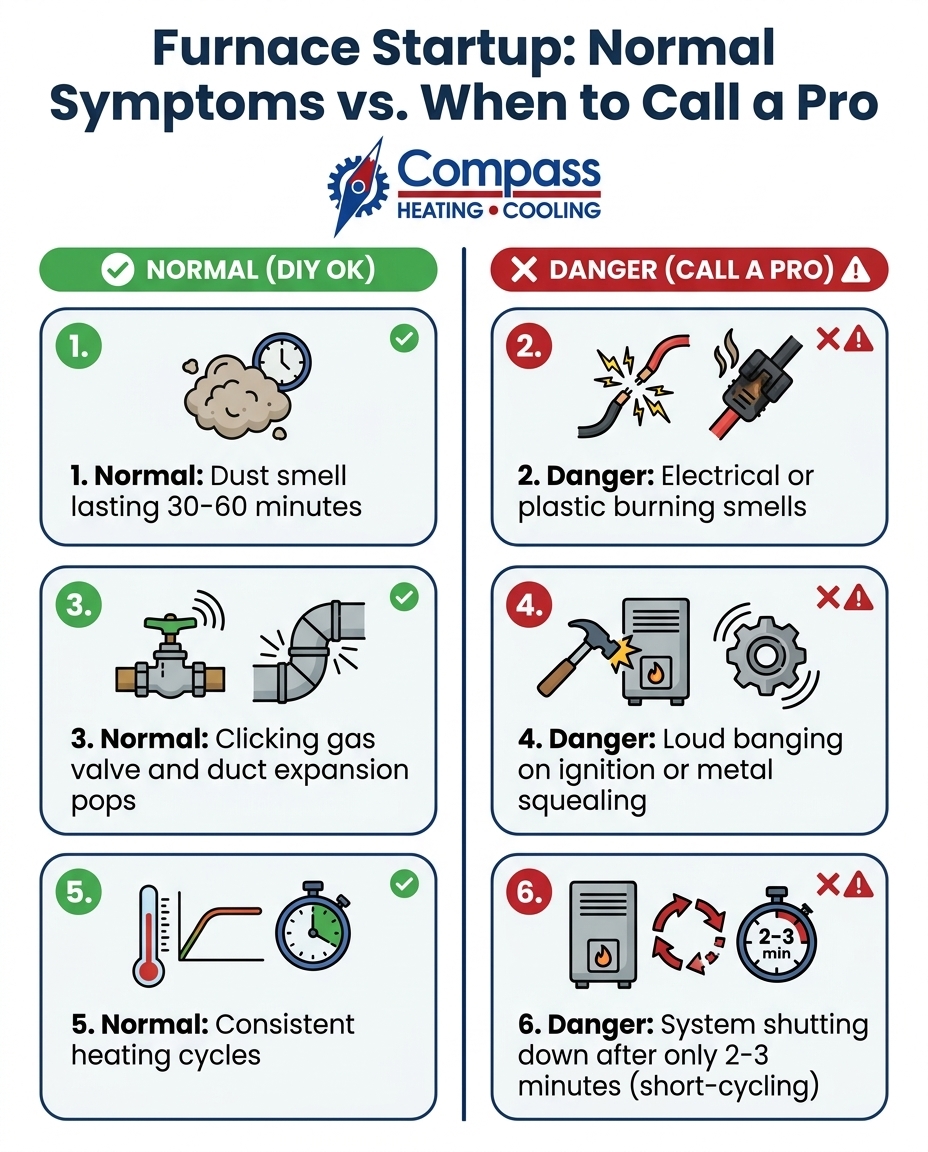
The Problem: You turn on your heater for the first time in months, and within minutes, a distinct burning odor fills your home. This is the single most common cause for alarm during the fall season, and it often prompts immediate panic.
The Cause: Throughout the summer, microscopic dust particles, pet dander, and airborne debris settle on your furnace's internal components. The heat exchanger—the metal chamber that warms the air circulating through your home—acts like a magnet for this dust. When the burners ignite for the first time in Loveland and the Colorado Front Range, this accumulated layer of debris instantly incinerates. Our technicians see this exact scenario every October, and while the resulting smell pushed directly into your ductwork is alarming, it is usually harmless.
The Solution: Rely on the 30-to-60-minute rule. Harmless dust burn-off typically dissipates within an hour of the first continuous heating cycle. You can open a few windows to help ventilate the space while the system clears itself out. However, if the smell persists beyond that timeframe, or if it changes in character, you need to take action.
You must learn to distinguish between burning dust and dangerous mechanical odors. A smell resembling melting plastic usually points to overheating electrical wires or a failing capacitor. An acrid, metallic odor resembling ozone often indicates a blower motor that is seizing up and overheating. If you detect the smell of rotten eggs, that is a clear sign of a natural gas leak. If you experience persistent electrical, plastic, or gas odors, shut your system down immediately at the thermostat. These are not DIY fixes; they require professional heating repair and replacement diagnostics to prevent electrical fires or carbon monoxide exposure.
Why Your Furnace Turns On and Off Quickly (Short-Cycling)
Short-cycling occurs when your heating system fires up, runs for a brief period, and then shuts down before the house actually reaches the temperature you set on the thermostat. This rapid on-and-off behavior puts immense wear and tear on your equipment and completely ruins your home's energy efficiency. When the October first freeze hits, a short-cycling system will leave you shivering while your utility bills skyrocket.
The weather in our region plays a massive role in how your system behaves. The Colorado Front Range is characterized by rapid temperature drops, and our repair team often sees mild afternoons plummet into freezing nights within a matter of hours. This means your furnace does not get a gradual seasonal transition; it goes from zero demand to maximum capacity instantly. When an idle system is suddenly pushed to its limits, underlying issues quickly reveal themselves through short-cycling. Here is what typically happens:
1. The thermostat calls for heat: The system registers the sudden temperature drop and initiates the ignition sequence.
2. The burners ignite: Heat begins to build inside the heat exchanger chamber.
3. A safety limit is breached: Because of an internal restriction or sensor failure, the internal temperature of the unit spikes dangerously high.
4. The safety switch trips: To prevent a fire or a cracked heat exchanger, the high-limit switch automatically cuts power to the burners, shutting the system down prematurely.
Airflow Restrictions vs. Mechanical Failures
The most common culprit behind a short-cycling furnace is severely restricted airflow. If your air filter is clogged with summer dust, or if too many supply vents are closed off in unused rooms, the blower motor cannot push enough cold air over the heat exchanger to keep it cool. The trapped heat triggers the safety shutoff. Checking your filter and opening all vents are the only safe DIY steps you should take.
If the filter is clean and the vents are open, the short-cycling is likely caused by a mechanical failure. A dirty flame sensor might fail to detect the burner flame, shutting the gas valve off as a precaution. A failing thermostat might be sending erratic signals to the control board. Most dangerously, a failing blower motor might be overheating. Bypassing internal safety switches to force the system to run is incredibly dangerous and strictly requires a licensed technician with the proper diagnostic tools.
Listening to Your System: Normal Clicks vs. Warning Sounds
Your heating system communicates its health through sound. During the first startup of the season in Loveland and the Colorado Front Range, our team at Compass Heating & Cooling gets flooded with questions about what's normal and what's a warning cry of failing metal. Knowing the difference between standard operation and a catastrophic breakdown can save you significant stress.
• Low hum followed by a distinct click — Normal or Warning?: Normal — Likely Cause: Draft inducer motor starting, followed by the gas valve opening. — Required Action: None. This is the standard ignition sequence.
• Light popping or ticking from vents — Normal or Warning?: Normal — Likely Cause: Metal ductwork expanding as hot air rushes through cold pipes. — Required Action: None. Completely normal during seasonal transitions.
• Loud boom or bang on startup — Normal or Warning?: Warning — Likely Cause: Delayed ignition. Gas is building up before igniting all at once. — Required Action: Turn off system. Call a professional to clean burners and check ignition.
• High-pitched squealing or shrieking — Normal or Warning?: Warning — Likely Cause: Blower motor bearings are failing or the fan belt is slipping. — Required Action: Schedule service immediately to prevent motor burnout.
• Harsh metallic scraping — Normal or Warning?: Warning — Likely Cause: The blower wheel has come loose and is hitting the metal housing. — Required Action: Shut system down instantly to prevent destroying the blower assembly.
While duct expansion is a harmless physical reaction to temperature changes, noises like delayed ignition pose a significant safety risk. A loud boom means small mini-explosions are happening inside your unit, which can eventually crack the heat exchanger and leak carbon monoxide into your living space.
Navigating Major Repair Quotes: When to Get an HVAC Second Opinion
It happens far too often during the October first freeze: a homeowner calls a technician because of a strange burning smell or a persistent short-cycling issue, expecting a simple tune-up. Instead, they are handed a massive quote and told their entire system needs to be replaced immediately. Over our years serving the Loveland area, we have stepped in countless times to provide an HVAC second opinion for homeowners vulnerable to aggressive seasonal sales tactics.
This is where an independent verification becomes vital. A second opinion means having a reputable, neutral technician verify a catastrophic diagnosis before you sign any paperwork. If you are told you have a cracked heat exchanger, a blown compressor, or a fried control board that warrants a total system replacement, you owe it to yourself to get that diagnosis verified by a third party.
The financial and peace-of-mind benefits of verifying major repair quotes are immense. Just as you wouldn't agree to major surgery without consulting a second doctor, you shouldn't overhaul your home's infrastructure based on one brief inspection. The principles are the same across all your climate control systems; just as you might seek air conditioning diagnostics to verify a failed AC compressor in July, you should demand verification for a condemned furnace in October. A second set of eyes ensures you aren't paying for a replacement when a simple part swap would keep your system running safely for years.
Protecting Your Home: Steps to Verify a Major Furnace Diagnosis
Empowering yourself with the right questions is the best way to ensure you receive honest diagnostics for your seasonal heating issues. If a technician tells you your system is dead, follow these actionable steps our team recommends to protect your home and your wallet in Loveland and the Colorado Front Range.
1. Ask for physical, verifiable proof: Do not accept "it's broken" as an answer. If a technician claims your heat exchanger is cracked, ask them to physically show you the crack using an inspection camera, or ask to see the dangerous readings on their combustion analyzer. Legitimate technicians are always happy to show their work.
2. Request a detailed, itemized breakdown: Ask for a written quote that separates the cost of the specific repair from the cost of a full replacement. Compare the exact components they claim have failed against your system's warranty status.
3. Pause and break the urgency: High-pressure sales tactics rely on the discomfort of a cold house. If a technician tells you that a special deal is "only good for today," politely decline. Take a breath, bundle up for the night if necessary, and schedule an independent evaluation for the next morning.
4. Seek out local, repair-focused experts: Look for contractors who prioritize repairing systems over immediate replacements whenever safely possible. Working with a locally owned company means you benefit from honest, transparent diagnostics rooted in community trust, rather than national sales quotas.
Taking a day to verify a major diagnosis can save you from a massive, unnecessary expense. Understanding why getting a second opinion matters is the ultimate defense against aggressive seasonal sales tactics.
Frequently Asked Questions About Fall Heating Startup
When the first cold snap arrives, homeowners naturally have a lot of questions about what is happening inside their utility closets. Finding trustworthy HVAC contractors in Fort Collins and the surrounding areas means finding professionals who take the time to answer these questions directly. Here at Compass Heating & Cooling, these are the most common inquiries our technicians receive during the October first freeze.
Why does my furnace smell like burning on the first use?
The burning smell is caused by the combustion of dust and debris that settled on your heat exchanger during the summer. When the burners ignite for the first time, this layer of dust is instantly incinerated, sending the odor through your ductwork. It is a normal physical reaction to months of inactivity. As long as the smell resembles dusty air and not electrical melting, it is generally harmless.
How long does the burning smell last when turning on the heater?
A normal dust burn-off smell will typically last between 30 and 60 minutes during the first continuous heating cycle. Once the initial layer of debris is cleared from the internal components, the odor should fade completely. If the smell lingers for several hours or returns during subsequent cycles, you should turn the system off and have it inspected by a professional.
What does a bad furnace sound like?
A failing furnace will typically make loud, disruptive noises like heavy banging, metallic scraping, or high-pitched squealing. Banging usually indicates delayed gas ignition, which is a serious safety hazard that can damage the heat exchanger. Squealing points to failing motor bearings, while scraping means a moving part, like the blower wheel, has broken loose from its mount.
When should I call an HVAC professional for short cycling?
You should call a professional for short-cycling immediately after you have confirmed that your air filter is clean and your vents are fully open. If airflow is not the issue, short-cycling means an internal safety switch is repeatedly shutting the system down to prevent overheating or electrical failure. Ignoring this will eventually burn out the motors or crack the heat exchanger.
What is considered normal when turning on heat for the first time?
It is perfectly normal to experience a brief dusty smell, hear the clicking of the gas valve engaging, and notice light popping sounds as your metal ductwork expands. You should also expect the blower fan to wait a minute or two before turning on, as the system needs time to warm the air before distributing it. Consistent, steady heating cycles are the ultimate sign of a healthy startup.
Is it worth paying for an HVAC second opinion?
Yes, paying a small diagnostic fee for a second opinion is absolutely worth it when facing a major repair or a full system replacement quote. A second evaluation can reveal that a catastrophic diagnosis was actually just a minor sensor issue or a dirty component. Verifying the problem provides peace of mind and prevents you from spending thousands on unnecessary equipment.
How do I know if my heat exchanger is actually cracked?
You cannot definitively diagnose a cracked heat exchanger yourself; it requires a professional using a combustion analyzer to detect carbon monoxide leaks or a specialized inspection camera to visually locate the crack. If a technician claims it is cracked, you should ask them to show you the camera footage or the analyzer readings to verify the failure before agreeing to a replacement.
Secure Your Winter Comfort with Honest Diagnostics
Surviving the first seasonal cold snap in Loveland and the Colorado Front Range shouldn't involve guessing about the safety of your home. While minor dust smells and ductwork pops are standard seasonal quirks, you should never have to wonder if a loud bang or a short-cycling system is putting your property at risk. True peace of mind comes from having accurate, verified diagnostics that clearly distinguish between normal startup behavior and actual mechanical issues. If you feel unsure about your system's health, or if you are questioning a massive repair quote you recently received, do not hesitate to seek professional verification. Ensuring your equipment is properly evaluated today guarantees a safe, warm, and comfortable home for the long winter ahead.
hear what our satisfied clients have to say
Our clients consistently praise our exceptional service and attention to detail. They appreciate the personalized approach we take to meet their unique needs, ensuring satisfaction every step of the way.
.png)