


Why Your New Furnace Might Be Overheating: The Reality of Derating for High Altitude

When Your New Heating System Fails the First Winter Test
When a brand-new heating system keeps shutting itself down during harsh November cold snaps, the culprit is rarely a defective unit—instead, the solution often involves derating furnaces for altitude. You just invested in this equipment to enjoy reliable warmth, but now the thermostat is dropping, the house feels chilly, and you are left frustrated. If you live in a mountainous region, your new unit likely lacks the proper high-elevation calibration.
When your equipment struggles to keep up, understanding the physics behind your heating systems is the first step toward securing reliable HVAC installation and repair.
It is incredibly frustrating to experience unexpected shutdowns or overheating right as early winter weather hits. Most homeowners assume that a brand-new, mechanically sound furnace should work perfectly straight out of the box. However, heating equipment is highly sensitive to the environment where it operates. High altitude drastically changes how a furnace breathes and burns fuel, requiring specific, precise adjustments to function safely.
A furnace installed at sea level behaves very differently than the exact same model installed in a high-elevation city. Without taking corrective action to account for this environmental shift, your new system will continuously fail its winter tests. To understand why this happens, we have to look closely at the physics of combustion and how thin air impacts your home's comfort.
What Does 'Derating' a Furnace Actually Mean?
Combustion is a precise chemical reaction. For a gas furnace to produce safe, consistent heat, it requires an exact ratio of fuel (natural gas or propane) to oxygen. If that ratio becomes unbalanced, the entire heating process breaks down.
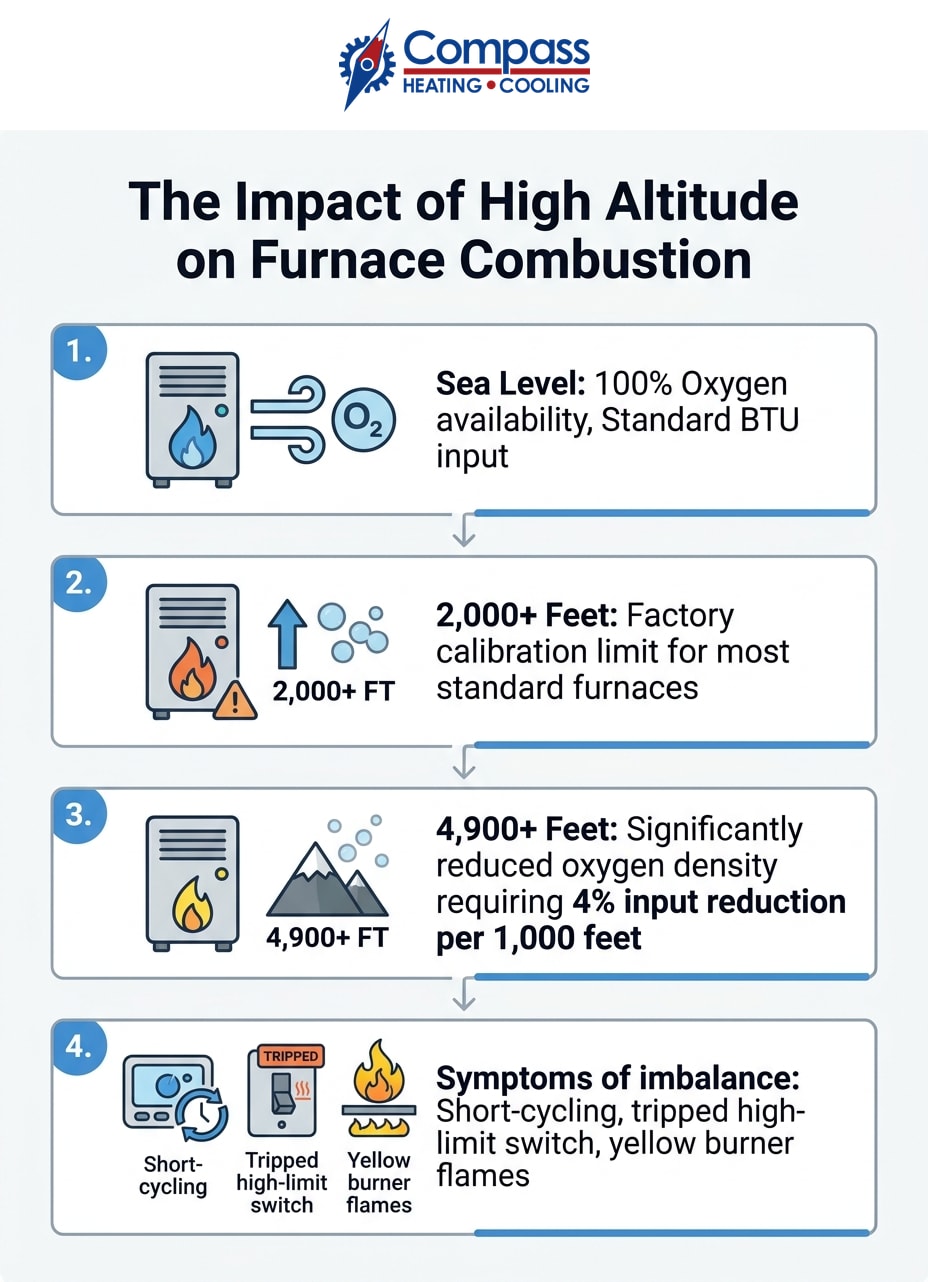
Derating is the process of reducing the BTU (British Thermal Unit) input of a gas furnace to match the lower oxygen levels found at higher elevations. Because the air at higher elevations is much thinner, every cubic foot of air contains fewer oxygen molecules than it would at sea level. If you push the standard, factory-set amount of gas into an oxygen-deprived combustion chamber, the mixture becomes too "rich."
A rich burn generates excess, dangerous heat because the fuel cannot burn cleanly or efficiently. The thinner air along the Front Range strictly requires these fuel-to-air ratio adjustments to avoid dangerous overheating. If your home sits at a 4,900+ feet elevation, the air simply does not hold enough oxygen to support the factory fuel settings of a standard furnace.
The Science of Fuel-to-Air Ratios
Furnaces are meticulously engineered for specific atmospheric pressures. When manufacturers design a burner, they calculate exactly how much air will naturally draft into the combustion chamber to mix with the gas.
When oxygen is restricted by high altitude but the fuel supply remains wide open, the chemical reaction changes. Instead of a clean, hot, blue flame, the furnace produces a lazy, overly hot, and often yellow flame. This incomplete combustion not only wastes fuel but also traps excess thermal energy inside the unit. The system physically cannot vent the heat fast enough, leading to a rapid and dangerous temperature spike inside the cabinet.
Why Factory Specifications Fail in the Front Range
Most standard HVAC equipment is factory-calibrated for elevations only up to 2,000 feet above sea level. Manufacturers build units to operate efficiently for the majority of the population, which generally resides at lower altitudes.
When these units are shipped to mountain regions, they are fundamentally incompatible with the local atmosphere straight out of the box. The National Fuel Gas Code (NFPA 54) recognizes this discrepancy and provides strict regulatory guidelines. The code generally requires a 4% reduction in gas input for every 1,000 feet of elevation above sea level. Applying sea-level factory specs to mountain-region installations guarantees poor performance, massive inefficiency, and eventual system failure.
• Sea Level to 2,000 ft — Oxygen Density Impact: Standard density — Required Calibration Action: Factory settings usually sufficient
• 2,001 ft to 4,000 ft — Oxygen Density Impact: Noticeable reduction — Required Calibration Action: Minor orifice adjustment required
• 4,900+ ft (Front Range) — Oxygen Density Impact: Severe reduction — Required Calibration Action: Strict derating required by local codes
This is exactly why generic out-of-state or big-box installers often run into trouble. In our experience working throughout Northern Colorado, the team at Compass Heating & Cooling frequently sees these critical local steps overlooked by contractors who assume a "plug-and-play" installation will suffice. Working with a company that has deep local expertise in our specific high-altitude HVAC requirements ensures your system is properly calibrated from day one. Because we understand the unique environmental challenges of the Loveland area, we know that skipping this step is never an option for safe winter heating.
Recognizing the Symptoms of a Non-Derated Furnace
If you are unsure whether your newly installed system was properly adjusted for the local altitude, the furnace will usually tell you through its behavior. At Compass Heating & Cooling, our technicians regularly diagnose these issues, and translating the technical jargon of derating into real-world homeowner symptoms can help you quickly understand why your system is struggling.
• Rapid short-cycling: This is a primary symptom of a system struggling with improper gas pressure. The furnace turns on, runs for just a few minutes, and abruptly shuts off before the house reaches the desired temperature.
• Yellow or wavering flames: If you look into the burner compartment and see a yellow, lazy, or flickering flame instead of a sharp, steady blue flame, the system is experiencing incomplete combustion due to a lack of oxygen.
• Excessive cabinet heat: The physical metal cabinet of the furnace may feel unusually hot to the touch while running, indicating that thermal energy is trapped inside.
• Soot buildup: A poorly mixed fuel-to-air ratio often produces excess soot, which can accumulate around the burners and exhaust flues.
These symptoms become painfully obvious during severe weather drops. When November cold snaps hit and your system suddenly faces a massive heating load, an improperly calibrated furnace will buckle under the pressure. You might also be curious about other modern furnace behaviors, such as why modern furnaces don't have pilot lights, which is another safety and efficiency evolution tied to proper combustion.
The High-Limit Switch Safety Response
The quick fix you can't ignore: When your furnace overheats, a critical safety component called the high-limit switch steps in. This sensor monitors the internal temperature of the heat exchanger. If the temperature exceeds a safe threshold, the switch automatically cuts the power to the gas valve, instantly shutting down the burners while leaving the blower fan running to cool the system down.
A tripping high-limit switch is doing exactly what it was designed to do: preventing a catastrophic fire or total equipment meltdown. However, if this switch trips repeatedly, it indicates a severe underlying calibration issue. Resetting the system without addressing the altitude derating will only cause the switch to trip again, eventually wearing out the sensor entirely.
The Hidden Dangers of Ignoring High-Altitude Calibration
Ignoring a furnace that constantly overheats is a recipe for disaster. The long-term consequences of running an improperly calibrated furnace go far beyond the annoyance of a chilly living room. It presents severe risks to both your property and your family's safety.
Continuous overheating places immense stress on the heat exchanger. The heat exchanger is a series of metal tubes or coils that separate the toxic combustion gases from the clean air being blown into your home. When a furnace runs too hot because it hasn't been derated for a 4,900+ feet elevation, this metal expands and contracts violently. Over time, this extreme thermal stress causes the metal to fatigue and crack.
A cracked heat exchanger is a severe safety hazard. Once a crack forms, carbon monoxide and other dangerous exhaust gases can escape the combustion chamber and enter the living space of your home. This turns a simple calibration oversight into a life-threatening situation.
Beyond the safety risks, there is a massive financial impact. Running a furnace outside of its specified temperature range drastically reduces the system's lifespan. Furthermore, most manufacturers will immediately void the warranty if they discover the equipment was installed without the required high-altitude modifications. These issues compound rapidly over time, turning what should have been a minor installation adjustment into the need for a complete, premature system replacement.
How Professionals Adjust Your System for Altitude
Correcting an altitude imbalance requires specialized knowledge and tools. The professional process of derating is precise and strictly regulated to ensure the equipment operates safely and efficiently.
1. Calculating the reduction: The technician first calculates the exact BTU reduction required based on your specific elevation and the local gas codes.
2. Changing the burner orifices: The technician removes the factory-installed gas orifices (the small brass fittings that spray gas into the burners) and replaces them with smaller, high-altitude orifices. This physically restricts the volume of gas entering the combustion chamber.
3. Adjusting manifold pressure: Using a specialized digital manometer, the technician carefully measures and adjusts the manifold gas pressure at the gas valve to match the manufacturer's high-altitude specifications.
4. Verifying combustion: Finally, the technician runs the system and tests the exhaust gases to ensure complete, clean combustion and verifies that the high-limit switch is no longer tripping.
Proper calibration ensures the system is ready to handle sudden temperature drops reliably. Keeping up with routine furnace maintenance allows technicians to verify these settings year after year.
Why This Is Never a DIY Project
Adjusting gas pressure and replacing orifices requires a licensed professional. This is never a weekend DIY project. Handling gas lines, modifying combustion equipment, and altering factory safety settings without proper licensing and diagnostic tools is incredibly dangerous.
Local building codes and manufacturer warranties mandate that only certified professionals perform these modifications. A slight miscalculation in orifice sizing or a tiny leak introduced during a DIY adjustment can lead to gas leaks, carbon monoxide poisoning, or explosive ignition. Always trust a certified local expert to handle your winter preparations, especially before the harsh November cold snaps arrive.
Frequently Asked Questions About Furnace Derating
What does it mean to derate a furnace?
Derating a furnace means reducing its physical gas input to compensate for the thinner air at higher elevations. Because there is less oxygen available for combustion in mountain regions, a technician must install smaller gas orifices and lower the gas pressure. This ensures the fuel-to-air ratio remains balanced, allowing the furnace to burn cleanly and safely without overheating.
What happens if you don't derate a furnace?
If you do not derate a furnace at high altitude, the system will burn a "rich" mixture of too much gas and not enough oxygen. This causes the furnace to severely overheat, which triggers the high-limit safety switch to shut the system down repeatedly. Over time, this constant overheating will crack the heat exchanger, leak carbon monoxide, and destroy the furnace entirely.
At what altitude do you need to derate a furnace?
Most standard furnaces require derating when installed at elevations above 2,000 feet. The general rule dictated by the National Fuel Gas Code is a 4% reduction in gas input for every 1,000 feet above sea level. Therefore, homes at a 4,900+ feet elevation require significant calibration to operate safely.
How do you derate a gas furnace for high altitude?
A licensed HVAC professional derates a furnace by physically replacing the factory burner orifices with smaller ones designed for high altitude. They also use a digital manometer to adjust the manifold gas pressure at the gas valve. This process requires specialized tools and strict adherence to manufacturer charts and local safety codes.
Does derating a furnace lower its efficiency rating?
Derating a furnace lowers its total heating output (BTUs), but it does not lower its Annual Fuel Utilization Efficiency (AFUE) percentage. In fact, derating ensures the furnace operates at its peak intended efficiency for your specific altitude. Without derating, the furnace would waste fuel through incomplete combustion and constant short-cycling.
Can a high altitude kit be installed on an existing furnace?
Yes, a high altitude kit can usually be installed on an existing furnace, provided the correct manufacturer-approved kit is used. However, it is always best to have this kit installed during the initial setup of a new system. If an existing furnace has been running without a kit for years, a professional must carefully inspect the heat exchanger for hidden thermal damage before installing the new parts.
Restore Safe Heating Performance With Local Altitude Expertise
Thin mountain air causes specific overheating symptoms that require precise gas input reduction. If your brand-new system is repeatedly shutting down during those harsh November cold snaps, you do not have to settle for a freezing house. Reassure yourself that a tripping high-limit switch on a new system is highly fixable with proper, professional calibration.
Do not let a factory oversight ruin your winter comfort or put your family at risk of carbon monoxide exposure. We encourage you to schedule a thorough inspection with a local expert who truly understands regional physics and atmospheric demands. Reach out today for professional adjustments to ensure safe, reliable, and consistent winter heating all season long.
hear what our satisfied clients have to say
Our clients consistently praise our exceptional service and attention to detail. They appreciate the personalized approach we take to meet their unique needs, ensuring satisfaction every step of the way.
