



Ventilation for Large Holiday Gatherings: Why Hosts Should Rethink Their HVAC Fan Settings
The Hidden Challenge of Hosting in Tightly Sealed Homes
Thanksgiving and late November gatherings bring excitement, massive feasts, and a house full of friends and family. However, managing proper ventilation for large holiday gatherings is usually the last thing on a host's mind until the house is packed and the air feels heavy. Before the first guest even knocks on the door, the indoor environment is already shifting. When dozens of people gather indoors alongside a busy kitchen, the air quickly becomes stuffy, warm, and filled with trapped cooking odors. At Compass Heating & Cooling, we frequently field calls during the holiday season from homeowners who think their HVAC system is failing, when they are really just battling trapped heat and poor airflow. Hosts must figure out how to manage airflow before the crowd arrives, but standard solutions often fall short.
If you need help preparing your system for the season, professional HVAC services ensure your equipment is ready to handle the extra load.
The obvious answer for a stuffy room is usually to let in some fresh air. However, with late November average low temperatures in Loveland, CO routinely dropping into the 20s, throwing open the windows to catch a cross-breeze simply isn't an option unless you want to freeze your guests. In our years of servicing local homes, we've noticed modern construction is increasingly utilizing tight building envelopes designed to prevent winter heat loss. While this tight construction is excellent for your utility bills, it creates a sealed box effect during a party. Without natural ventilation from open windows, mechanical ventilation becomes the only practical solution to keep the air breathable, fresh, and comfortable.
Most homeowners don't realize that their existing heating and cooling system holds the key to solving this problem. You do not necessarily need to purchase expensive, standalone air purifiers or resort to masking odors with heavily scented candles. By understanding how your thermostat interacts with your home's blower motor, you can actively manage the indoor climate. The challenge lies in overcoming the common instincts hosts have when the house starts to heat up, which often make the air quality worse rather than better.
Why Lowering the Thermostat Traps Stale Air
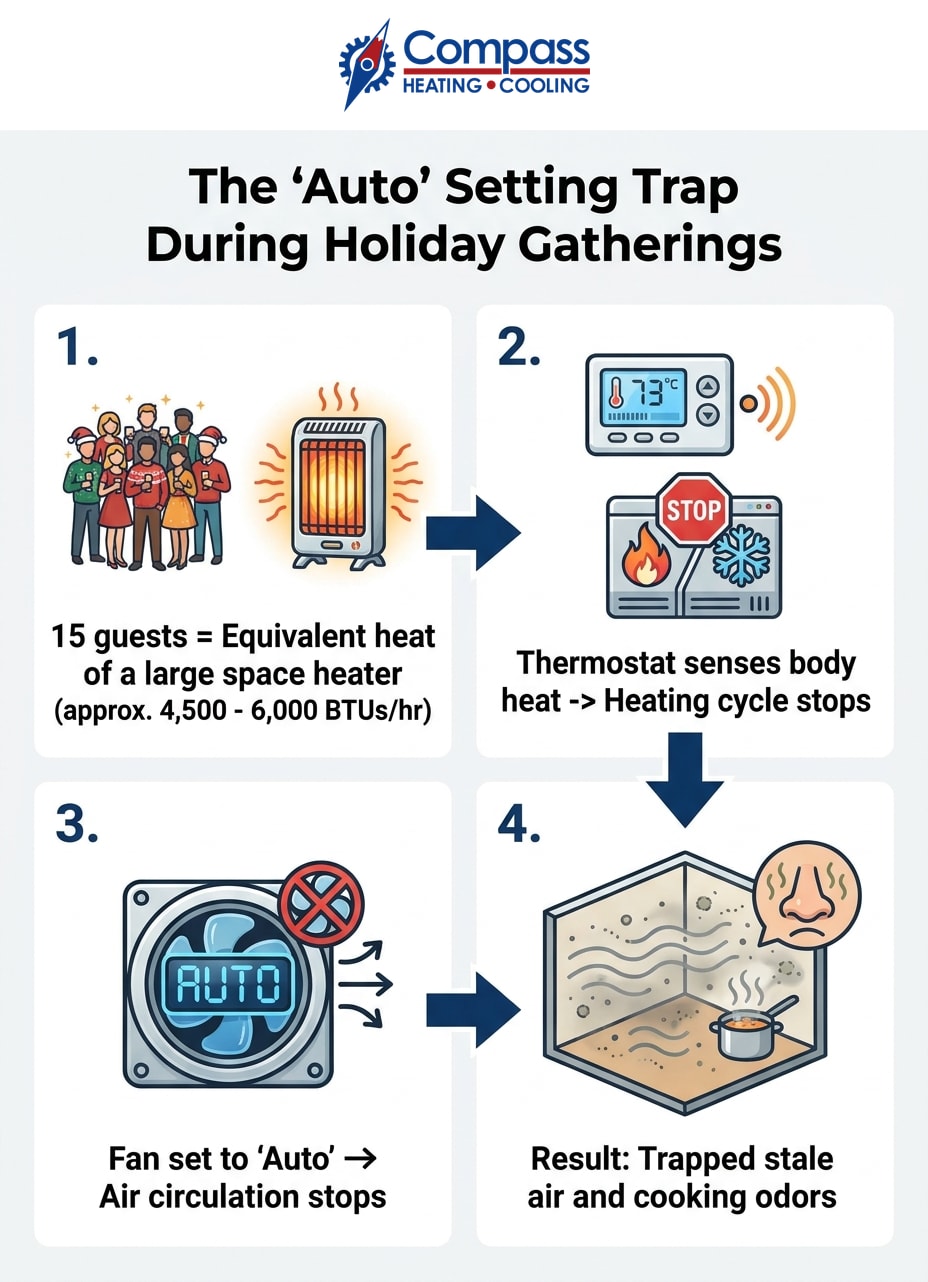
When a home fills with guests, the ambient temperature naturally rises. This is not a malfunction of your heating system; it is basic physics. An average resting adult generates about 250 to 400 BTUs (British Thermal Units) of heat per hour. If you invite 15 guests over for a holiday dinner, they are collectively adding between 3,750 and 6,000 BTUs of heat to your living space every single hour. To put that in perspective, a group of 15 guests acts exactly like a large, 1,500-watt electric space heater running continuously in the middle of your dining room.
The typical host reaction to this sudden spike in warmth is to walk over to the thermostat and lower the target temperature. If the house feels too hot, turning down the heat seems like the logical next step. Unfortunately, this action triggers a chain of events that severely degrades your indoor air quality and traps stale air inside the home.
The Human Heat Load Factor
To understand why this happens, you have to look at how human body heat impacts indoor ambient temperatures within a tightly sealed environment. Modern building codes require heavy insulation, weatherstripping, and double-pane windows to keep winter cold out. Because this building envelope is so effective, the excess heat generated by your guests has nowhere to escape. The ambient temperature in the living room and kitchen quickly rises above the set point on your thermostat. The thermostat reads this elevated temperature and determines that the house is already warm enough, so it stops calling for heat from the furnace.
The 'Auto' Setting Trap
Here is where the real problem begins, and it's a pattern our team sees constantly. Most homeowners keep their thermostat fan setting on "Auto." The "Auto" setting links the operation of the blower motor exclusively to the heating or cooling cycle. When the furnace burners are firing, the fan blows air through the ducts. When the burners shut off, the fan shuts off immediately.
Because your guests are keeping the room artificially warm with their body heat, the heating cycle satisfies early and stays off for hours. If your fan is set to "Auto," the blower motor also stays completely dormant. With the fan off, zero air circulates through your ductwork. The air in the crowded dining room stays in the dining room, growing increasingly stale, humid, and warm. Meanwhile, the empty bedrooms at the far end of the house, which aren't benefiting from the body heat, become freezing cold. A paused heating cycle means zero air filtration, leaving dust, dander, and odors suspended in the air your guests are breathing.
The Simple Thermostat Trick for Continuous Air Circulation
The immediate, actionable solution to the "Auto" trap requires nothing more than the push of a button. By switching the thermostat fan setting from "Auto" to "On," you detach the blower motor's operation from the furnace's heating cycle. This forces the fan to run continuously, pulling air from the return vents, pushing it through the filter, and redistributing it throughout the supply vents, regardless of whether the furnace is actively producing heat.
Continuous air movement solves multiple problems at once. First, it evens out the temperature disparities across the house. The fan pulls the excess body heat from the crowded living room and redistributes it to the colder, empty bedrooms, balancing the climate. Second, running the fan forces all that stale, occupied air through the system's filter. This actively removes dust, pet dander, and airborne particles, keeping the air fresh even when the furnace isn't running. If you are choosing the right MERV filter, a continuous fan cycle maximizes its effectiveness by passing the air through the media dozens of times an hour.
Steps to Prep Your HVAC for a Party
To optimize your indoor environment and capture the benefits of continuous circulation, follow this simple checklist before your guests arrive:
1. Step 1: Switch the fan setting from 'Auto' to 'On'. Do this about two hours before the party starts to establish a strong, continuous airflow pattern throughout the house.
2. Step 2: Lower the target temperature slightly. Drop the thermostat by 2 to 3 degrees to account for the incoming body heat. Because the fan is now running constantly, the air will keep moving even while the furnace stays off.
3. Step 3: Ensure all return vents are unblocked. Walk through the house and make sure no holiday decorations, temporary tables, or pushed-back furniture are blocking the large return grilles. The system needs to pull in air freely to work.
4. Step 4: Verify your air filter is clean and properly seated. A dirty filter will restrict airflow and put unnecessary strain on the blower motor, especially when it is running continuously for several hours.
Managing Moisture and Odors from Holiday Cooking
While the thermostat "On" trick works wonders for circulating air and filtering out dust, the kitchen introduces a completely different set of indoor air quality challenges during a large gathering. Intense holiday cooking, roasting, and baking release massive volumes of moisture, airborne grease, and volatile organic compounds (VOCs) into the air. Boiling large pots of potatoes or simmering gravies pumps heavy humidity into the environment, which can make a crowded house feel sticky and uncomfortable.
Modern Colorado homes are built exceptionally tight to prevent winter heat loss. While this is great for energy efficiency, it means these cooking byproducts are trapped indoors if mechanical extraction isn't utilized. Our technicians at Compass Heating & Cooling frequently see the effects of poor kitchen ventilation, which ranges from lingering odors that last for days to excess condensation forming on cold windowpanes in Loveland homes.
The Role of Exhaust Ventilation
To combat this, you must rely on dedicated kitchen exhaust fans that vent directly to the outside. It is important to differentiate between spot ventilation (like kitchen and bath exhausts) and whole-home circulation (your HVAC blower). Spot ventilation is designed to capture and remove concentrated pollutants at their source before they can spread to the rest of the living areas.
Many homes have recirculating microwave fans that simply pull air through a flimsy mesh filter and blow it right back into the kitchen. These do nothing to remove moisture or VOCs. If you have a true exterior-venting exhaust hood, you should turn it on at least 15 minutes before you begin cooking. This establishes a negative pressure draft that smoothly carries steam and odors outside. Leave the exhaust fan running continuously while you cook, and keep it on for at least 30 minutes after the cooking concludes to clear out the residual heat and airborne grease. Combined with your HVAC fan running on "On," this dual approach keeps the air moving and prevents the kitchen from overwhelming the rest of the house.
Elevating Indoor Air Quality Beyond the Fan Setting
While utilizing the "On" fan setting and running exhaust hoods provides immediate relief during a party, standard media filters can only do so much. A typical 1-inch fiberglass or pleated filter is designed primarily to protect the HVAC equipment from large dust and hair particles. It is not highly effective at capturing microscopic pathogens, neutralizing strong odors, or eliminating the volatile organic compounds generated by a busy household.
For homeowners who frequently host gatherings, have pets, or suffer from seasonal sensitivities, elevating indoor air quality requires a more robust approach. Active air purification systems offer a powerful upgrade that integrates directly into your existing ductwork. Unlike standalone room purifiers that take up floor space and only clean one area, whole-home systems treat every cubic foot of air that passes through your HVAC system.
Active vs. Passive Filtration
Understanding the difference between passive and active filtration is key to long-term air quality management. Passive filtration relies on air physically pushing through a dense material to trap particles. It catches what it touches, but it cannot neutralize gases or bacteria. Active purification, on the other hand, goes on the offensive. In our experience upgrading HVAC systems throughout Northern Colorado, technologies like UV light purifiers and ionization systems offer the best defense, working within the airstream to neutralize biological contaminants, viruses, and odors.
When a home is packed with guests traveling from different areas, the risk of airborne irritants increases. Active systems scramble the DNA of biological pollutants, rendering them harmless as they cycle through the return ducts. Framing this as a long-term investment rather than just a temporary holiday fix ensures your home remains a healthy, comfortable sanctuary year-round, regardless of how many people are inside.
Your Pre-Gathering Airflow Timeline
Managing the climate for a Thanksgiving or late November gathering doesn't have to be stressful if you have a clear plan. By breaking the process down into a chronological timeline, you can ensure the house stays fresh from the moment the turkey goes in the oven until the last guest heads home.
• Morning of Event — Action Required: Check the HVAC filter and ensure all return and supply vents are clear of furniture and decorations. — Why It Matters: Guarantees maximum airflow efficiency and prevents the blower motor from overworking later in the day.
• 2 Hours Before — Action Required: Switch the thermostat fan from 'Auto' to 'On' and lower the ambient temperature by 2-3 degrees. — Why It Matters: Establishes continuous air circulation and pre-cools the home to offset the incoming body heat of your guests.
• During Cooking — Action Required: Run the exterior-venting kitchen exhaust fan continuously on a medium or high setting. — Why It Matters: Removes heavy moisture, airborne grease, and VOCs at the source before they migrate to the living room.
• Post-Party — Action Required: Return the fan setting to 'Auto' and reset the thermostat to your normal heating schedule. — Why It Matters: Resumes normal, energy-efficient winter operation once the extra body heat and cooking loads have dissipated.
Following this simple schedule prevents the dreaded mid-afternoon stuffiness that plagues so many holiday dinners. It puts your existing mechanical systems to work, doing exactly what they were designed to do: managing the indoor environment efficiently.
Frequently Asked Questions About Holiday Home Ventilation
Should I leave my HVAC fan on when I have guests?
Yes, switching your thermostat fan setting to "On" is highly recommended when hosting a large group. This forces the blower motor to run continuously, which circulates the air and evens out temperature imbalances caused by body heat. It also ensures that the air is constantly passing through your system's filter, removing dust and dander even when the furnace isn't actively heating the home.
How do you ventilate a room with a lot of people?
The most effective way to ventilate a crowded room in winter is by utilizing your home's mechanical HVAC system. Set the thermostat fan to "On" to keep air moving out of the crowded room and through the return ducts. Ensure that no return vents are blocked by furniture or decorations, and use spot ventilation like bathroom exhaust fans to help pull stale air out of the building.
How do you get rid of cooking smells when hosting Thanksgiving?
The key to eliminating cooking odors is extracting them at the source using an exterior-venting kitchen exhaust hood. Turn the hood on 15 minutes before you start cooking to establish a draft, and leave it running for at least 30 minutes after you finish. Running your HVAC fan continuously will also help push residual odors through your main air filter rather than letting them linger in the dining room.
Will running the HVAC fan continuously damage my system?
No, running the fan continuously for a day or two will not damage a well-maintained HVAC system. Blower motors are designed to handle long run cycles, and the "On" setting simply keeps the motor engaged. While it will use a small amount of extra electricity, the benefit of improved air quality and balanced temperatures during a gathering far outweighs the temporary energy use.
Does opening windows help more than the HVAC fan in winter?
Opening windows provides immediate fresh air, but it is rarely practical during freezing winter months because it will quickly make your guests uncomfortably cold. Furthermore, opening windows disrupts the thermostat's readings and can cause your furnace to overwork trying to heat the incoming freezing air. Relying on your HVAC fan and exhaust vents is a much more controlled and comfortable way to manage winter ventilation.
Keep Your Home Comfortable Long After the Guests Leave
Proactive mechanical ventilation is the key to hosting a comfortable, odor-free holiday gathering without freezing your guests out. By simply utilizing your existing thermostat settings—switching the fan from "Auto" to "On"—you provide clear, actionable relief from stuffy indoor air and uneven temperatures. Managing your exhaust fans properly ensures that heavy cooking moisture never has a chance to settle in your living spaces. To ensure your system is always ready for the extra load of hosting, we highly recommend enrolling in a routine HVAC maintenance plan with our Compass Heating & Cooling experts so your equipment delivers clean, reliable airflow all season long.
hear what our satisfied clients have to say
Our clients consistently praise our exceptional service and attention to detail. They appreciate the personalized approach we take to meet their unique needs, ensuring satisfaction every step of the way.
