



Why Clearing Snow Off Your Heat Pump Prevents Emergency Lockouts
When Early-Winter Snowstorms Threaten Your Heat Pump's Performance
Before the first major freeze hits, knowing how to safely manage snow on a heat pump outdoor unit is one critical thing every homeowner should check outside. Those unpredictable November early-winter snowstorms often catch us off guard, and leaving heavy snow on your equipment is a fast track to a complete system shutdown. While modern heating equipment is built to withstand harsh weather, a condenser buried under a snowdrift cannot breathe. When that happens, your system is forced to work overtime until it eventually locks itself out to prevent permanent mechanical failure.
If you find yourself facing a sudden system shutdown, reaching out for heat pump services or professional heating repair is the safest next step. However, in our years serving the Loveland, CO area, our team at Compass Heating & Cooling has found that many of these emergency calls are entirely preventable. The key is understanding exactly how your outdoor equipment interacts with winter weather. Knowing when to intervene with a broom and when to let the system manage itself can mean the difference between a warm, comfortable home and a freezing night waiting for a technician.
Heat pumps are incredibly efficient, but they operate on a delicate balance of airflow and temperature transfer. When a sudden November storm dumps heavy, wet snow over your property, that balance is immediately threatened. By learning how to properly monitor and clear your outdoor unit, you protect your compressor from unnecessary wear and tear while keeping your energy bills in check.
How Snow Accumulation Suffocates Heat Pump Airflow
To understand why snow is such a threat, you have to look at how your system actually generates warmth. The U.S. Department of Energy strictly recommends maintaining 12 to 24 inches of clear space on all sides of your outdoor equipment. This rule isn't just for easy maintenance access; it is a strict mechanical requirement for the system to function. When a heavy storm rolls through Loveland CO, snowdrifts can quickly swallow the base of the unit, choking off the vital air intake.
When airflow is blocked, a cascading effect begins. The system cannot pull in enough ambient air to extract heat, so it runs longer and harder trying to meet the temperature set on your thermostat. This constant straining drastically reduces the system's energy efficiency and accelerates wear on the internal components. These exact same clearance rules apply to other outdoor climate systems, including ductless mini-split systems, which also rely on unobstructed lateral and top airflow to operate correctly.
The Mechanics of Heat Transfer in Winter
Your outdoor condenser coil acts like a giant sponge for heat. Even when the temperature drops below freezing, there is still thermal energy in the outside air. The heat pump's job is to pull massive volumes of that cold air across its refrigerant-filled coils, extract the available heat, and pump it inside your home.
This process requires an enormous and continuous volume of air. Think of it like trying to breathe while running a marathon; if you cover your mouth, you will quickly collapse. When snow packs against the delicate aluminum fins of the condenser, it effectively suffocates the unit. Even partial burial disrupts the necessary air volume, forcing the compressor to work twice as hard to extract half as much heat. If the snow continues to pile up, the airflow stops entirely, and the system is pushed toward a critical failure.
Understanding Normal Defrost Cycles vs. Emergency Lockouts
One of the most common points of confusion for homeowners during November early-winter snowstorms is telling the difference between normal operation and a true system crisis. It is entirely normal to see a light layer of white frost covering the sides of your outdoor unit during cold weather. Your system is designed to handle this through its automatic defrost cycle.
When the internal sensors detect frost buildup, the system temporarily reverses the flow of refrigerant. Instead of bringing heat inside, it sends hot refrigerant back out to the condenser coil to melt the frost. You might even see steam rising from the unit or hear a loud whooshing sound as the reversing valve shifts. This is a healthy, functioning system taking care of itself.
• Normal Frost — Visual Signs: Thin, white, fuzzy layer of frost on the side coils. — Required Action: None. Let the automatic defrost cycle run.
• Heavy Snow Burial — Visual Signs: Unit is partially or fully encased in snowdrifts. — Required Action: Manually clear snow with a soft broom.
• Solid Ice Block — Visual Signs: Thick, clear, or milky solid ice encasing the fins and fan. — Required Action: Turn system off. Call a professional technician.
The danger arises when heavy snow burial overwhelms the defrost cycle's melting capacity. The system can easily melt a millimeter of frost, but it cannot melt a two-foot snowdrift. If the unit is buried, the melted frost has nowhere to drain. It pools around the base and immediately refreezes. Eventually, the airflow is completely choked, and the internal sensors trigger an emergency lockout. The system intentionally shuts itself down to protect the compressor from burning out or ingesting liquid refrigerant, leaving your home without heat until the unit is safely cleared and reset.
The Hidden Threat of Freeze-Thaw Weather Patterns
While a heavy snowfall is an obvious problem, the most damaging threat to your outdoor equipment often comes in the days following the storm. Loveland CO experiences around 40 inches of annual snowfall, but it also receives intense winter sun and rapid temperature drops. We frequently see firsthand how this specific climate combination creates severe freeze-thaw conditions that are uniquely punishing for outdoor HVAC units across the Front Range.
Here is what typically happens: a harmless dusting of snow settles on the top of the unit. During the day, the high-altitude sun beats down, melting the snow into water that drips down into the condenser cabinet and across the delicate coil fins. As the sun sets, the temperature plummets rapidly. That harmless water instantly refreezes into a solid block of ice inside the machine.
This expanding ice is incredibly destructive. As water freezes, it expands with enough force to permanently bend and crush the thin aluminum fins that surround the unit. Crushed fins permanently restrict airflow, meaning your system will struggle to heat your home efficiently even after the weather warms up. This is also a critical time to monitor your overall heating strategy, including knowing when to switch from your heat pump to a gas furnace if you have a dual-fuel system that relies on gas backup during extreme freezes.
Steps for Safely Clearing Snow on a Heat Pump Outdoor Unit
When the snow stops falling, taking a few minutes to clear your outdoor equipment can save you from a costly emergency service call. However, you must clear the unit safely to avoid damaging the delicate components. Follow these specific steps after every major November early-winter snowstorm:
1. Turn off the thermostat: Before you touch the outdoor unit, go to your thermostat and set it to "Emergency Heat" or turn it off completely. You do not want the massive fan kicking on while you are standing over it or brushing near the top grille.
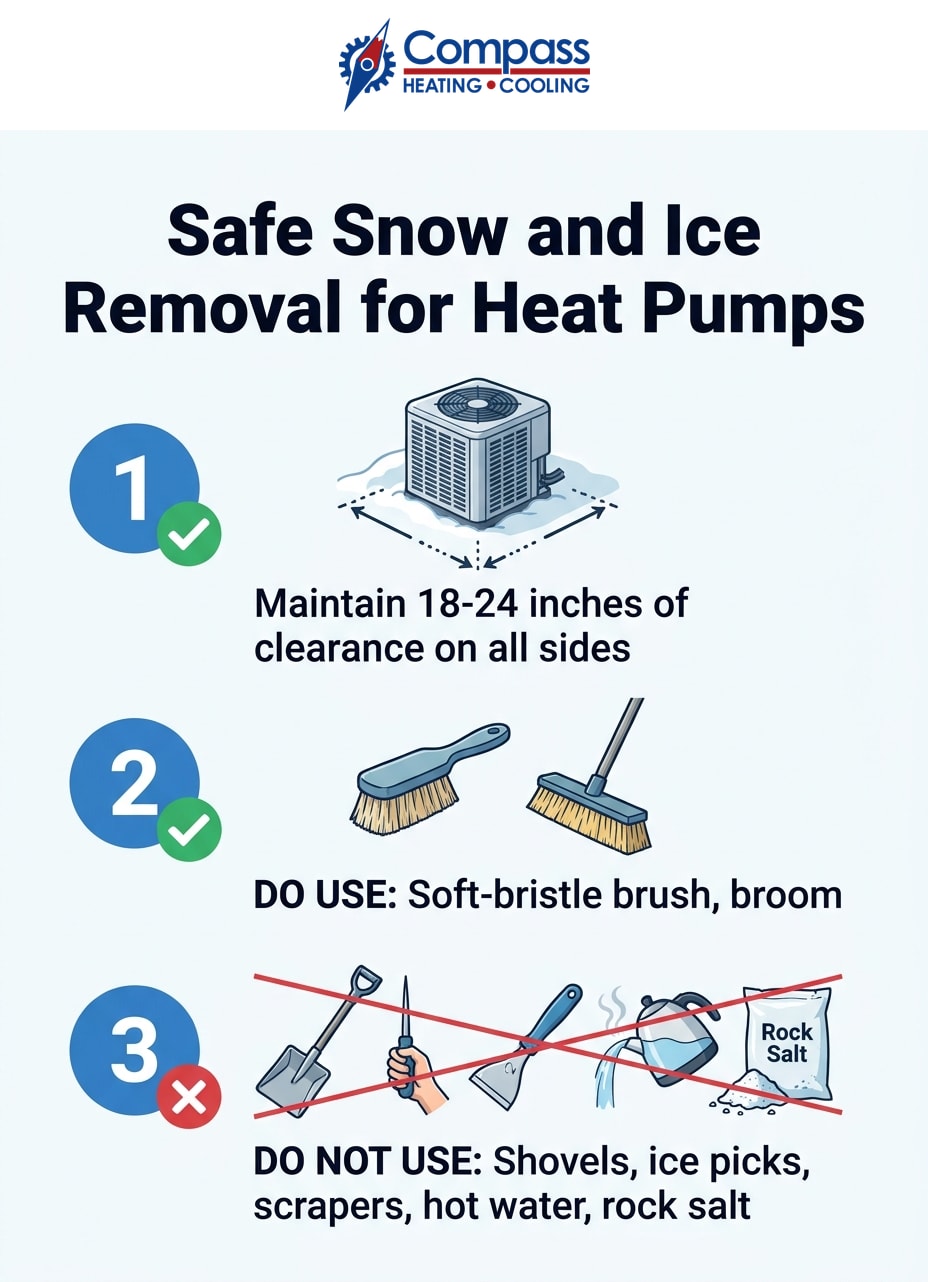
2. Use the right tool: Grab a soft-bristle brush or a standard household broom. Gently sweep the snow off the top of the unit first, then carefully brush downward along the sides. Never brush side-to-side across the fins, as they bend easily.
3. Clear the surrounding perimeter: Shovel or sweep a full 18 to 24-inch radius around the entire base of the heat pump. When the system eventually runs its defrost cycle, that melted water needs a clear path to drain away from the unit so it doesn't freeze into a solid base of ice.
4. Check the exhaust grille: Ensure the top fan grille is completely clear of heavy, wet snow. The system must be able to exhaust cold air upward without restriction. If the top is blocked, the expelled air will recirculate, drastically dropping the system's efficiency.
5. Inspect overhead drainage: Look at the gutters and roofline directly above the unit. Ensure that melting roof snow or overflowing gutters aren't dripping water directly onto the heat pump, which will quickly turn into an ice block overnight.
Costly Mistakes to Avoid When Removing Ice
While clearing loose snow is a simple task, dealing with ice requires extreme caution. Frustrated homeowners often take matters into their own hands when they see their unit frozen over, leading to catastrophic equipment damage. If you live in Loveland CO or the surrounding areas, avoid these dangerous DIY removal methods at all costs:
• Using sharp tools: Never take an ice pick, screwdriver, snow shovel, or scraper to your outdoor unit. The copper refrigerant lines hidden just beneath the aluminum fins are highly pressurized. A single slip with a sharp tool can puncture a line, venting all your refrigerant and requiring a highly expensive repair.
• Causing thermal shock: It is incredibly tempting to boil a pot of hot water and pour it over a frozen unit. Do not do this. Pouring boiling water over freezing-cold metal components causes rapid thermal expansion. This sudden shock can instantly crack the fan blades, warp the coil, or shatter internal plastic housings.
• Applying salt or chemicals: Never use rock salt, sidewalk melt, or chemical de-icers anywhere near your heat pump. These harsh chemicals cause rapid galvanic corrosion. They will literally eat away the delicate aluminum fins and copper tubing, destroying the unit's ability to transfer heat and significantly shortening its lifespan.
• Chipping solid ice blocks: If the unit is encased in a solid, thick block of ice, a gentle broom will not work. Do not attempt to chip or hammer the ice away. The ice is bonded directly to the fins; if you pull the ice off, the metal fins will tear off right along with it.
When to Rely on Professional Heating Technicians
There is a distinct line between proactive homeowner maintenance and a situation that requires a licensed expert. If you have gently brushed away the loose snow but the unit remains completely encased in a solid block of ice, it is time to call for help. Similarly, if your system has triggered an emergency lockout and refuses to reset even after the exterior is clear, internal components may be frozen or damaged.
Internal ice buildup requires specialized, safe thawing techniques that only licensed professionals should perform. Technicians use controlled, low-heat methods and specialized equipment to safely melt internal ice without risking thermal shock or component damage. Homeowners should never attempt to open the exterior cabinet, bypass safety switches, or perform internal repairs themselves. Doing so is incredibly dangerous and will void your manufacturer warranty.
This is where local Northern Colorado HVAC expertise becomes invaluable. Experienced Loveland heating technicians understand exactly how the Front Range's intense sun and rapid temperature drops specifically stress these outdoor units. They don't just thaw the ice; they diagnose why the defrost cycle failed to keep up in the first place, ensuring your system is ready to handle the rest of the winter reliably.
Frequently Asked Questions About Winter Heat Pump Care
Should I clear snow off my heat pump?
Yes, maintaining 12-24 inches of clearance around your outdoor unit is vital for proper airflow. If snow piles up against the sides or blocks the top exhaust, the system cannot pull in enough air to heat your home. Use a soft broom to gently sweep away loose snow after every major November early-winter snowstorm.
Can a heat pump get snowed in?
Yes, heavy drifts and blowing snow can completely bury the outdoor unit. When this happens, the snow smothers the air intake and easily overwhelms the system's automatic defrost cycle. If left buried, the system will eventually trigger an emergency lockout to protect the compressor from failing.
How do you get ice off a heat pump safely?
You should only ever use a soft-bristle brush or broom to remove loose snow and light ice. Never use sharp tools, scrapers, or hot water, as these will cause permanent damage to the delicate fins and pressurized refrigerant lines. If the unit is encased in a solid block of ice, turn the system off and call a professional for safe thawing.
Is it normal for a heat pump to have frost on it?
Yes, a light coating of white, fuzzy frost on the side coils is entirely normal during freezing weather. Your system is equipped with an automatic defrost cycle that will periodically reverse the refrigerant flow to warm the outdoor coil and melt this light frost away automatically.
Should I build a shelter over my heat pump?
You should only build a shelter if it maintains the strict clearance requirements set by the manufacturer, particularly for upward exhaust air. Improperly designed shelters, awnings, or solid covers trap cold exhaust air and force the system to recirculate it. This drastically reduces the unit's efficiency and can actually cause more ice to form.
Ensure Reliable Heating Before the Next Storm Hits
Proactive exterior maintenance is the easiest way to prevent unnecessary emergency calls during the coldest months of the year. By making it a habit to gently clear your outdoor unit after every major November early-winter snowstorm, you ensure your system has the airflow it needs to keep your family comfortable. If you notice persistent ice buildup or if your system is struggling to keep up with the cold, do not wait for a complete lockout. Reach out for professional heating repair to get clear, actionable guidance and ensure your equipment is fully prepared for whatever the winter weather brings.
hear what our satisfied clients have to say
Our clients consistently praise our exceptional service and attention to detail. They appreciate the personalized approach we take to meet their unique needs, ensuring satisfaction every step of the way.
