


Diagnosing Fall Furnace Startup Symptoms: When to Get an HVAC Second Opinion
Is Your Heating System Failing, or Just Waking Up for Winter?
Are you frantically searching for home maintenance tips and troubleshooting advice because your furnace just filled the hallway with a burning smell? You are not alone. Here at Compass Heating & Cooling, our team fields dozens of these exact calls every October as the first Loveland freeze approaches. After sitting idle for months, your heating system has to wake up and immediately perform. That initial startup often comes with strange odors, unsettling noises, and irregular running cycles that can make you wonder if your equipment is on the verge of a total breakdown.
Understanding what is happening inside your system is the key to protecting your home and your wallet. The transition into colder weather brings a critical decision point: distinguishing between harmless seasonal startup quirks and real mechanical risks that require professional attention. Pausing to evaluate these symptoms calmly can prevent unnecessary panic and keep you from agreeing to a premature replacement. If you are ever in doubt, relying on professional HVAC services ensures your home remains safe and comfortable.
Comparing Normal Startup Quirks to Genuine Mechanical Threats
In our years of servicing Front Range homes, we've learned that not every strange sound or smell means your furnace is failing. However, ignoring the wrong symptom can leave you without heat during the October first freeze. Knowing exactly what to look for helps you decide when to wait it out and when to call for a comprehensive heating system evaluation.
Harmless Odors vs. Dangerous Smells
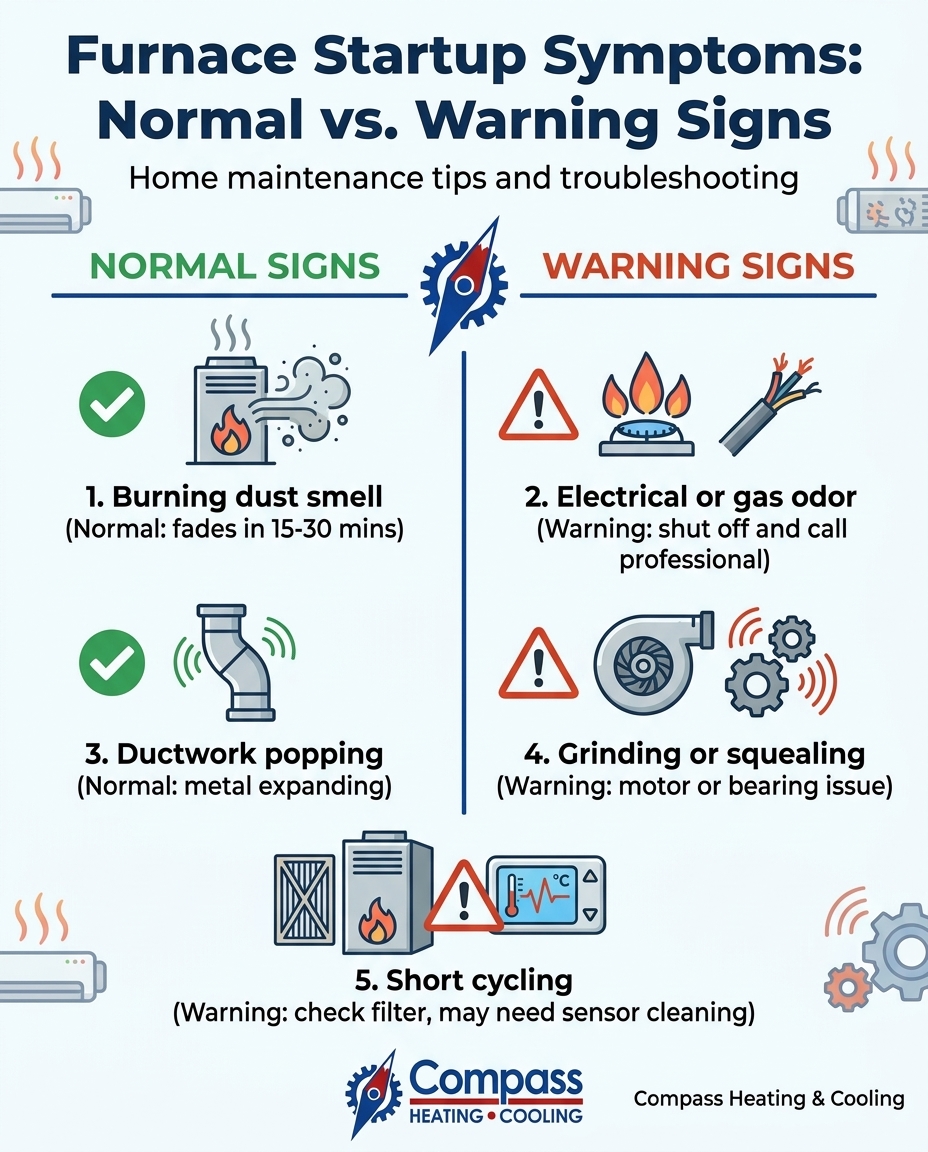
The burning dust smell: This is the most common fall startup symptom our team encounters. Over the summer, dust settles on the heat exchanger. When the burners ignite for the first time, that dust burns off, creating a distinct, smoky odor. This is completely normal and usually dissipates within 15 to 30 minutes. Opening a few windows will help clear the air quickly.
The warning signs: If you smell rotten eggs, sulfur, or a sharp electrical burning odor, shut your system down immediately. A rotten egg smell indicates a gas leak, while an electrical odor points to melting wires or a failing motor. These are severe safety hazards that require immediate professional intervention.
Startup Noises: Settling vs. Struggling
Normal ductwork expansion: As hot air rushes through cold metal ducts for the first time in months, the metal expands. This causes popping, pinging, or light banging sounds. These noises are harmless and simply a byproduct of temperature changes in the metal.
Mechanical failure noises: Metallic grinding, loud squealing, or violent rattling inside the furnace cabinet are not normal. These sounds typically indicate a failing blower motor bearing, a loose belt, or a damaged inducer motor.
• Odors — Normal Quirk: Burning dust that fades within 30 minutes — Actionable Warning Sign: Persistent electrical burning or rotten egg gas smells
• Noises — Normal Quirk: Pinging or popping from expanding metal ductwork — Actionable Warning Sign: Squealing, grinding, or loud rattling from the cabinet
• Cycling — Normal Quirk: Running slightly longer to overcome a cold house — Actionable Warning Sign: Short-cycling (turning off and on rapidly without heating)
• Airflow — Normal Quirk: Brief draft of cool air before the burner fully heats up — Actionable Warning Sign: Weak airflow or persistently cold air blowing from vents
A critical safety note on short-cycling: If your furnace turns on for a minute and then shuts off repeatedly, it is short-cycling. This is often caused by a clogged air filter or a dirty flame sensor. While changing an air filter is a simple task, you should never open the furnace cabinet to clean burners or sensors yourself. Handling gas and electrical components without a license poses extreme safety risks to you and your home.
How Front Range Weather Tricks Your Heating System
The environment around your home plays a massive role in how your heating equipment behaves. As a locally owned team serving Loveland and the Colorado Front Range, we know firsthand how our specific climate challenges directly impact your furnace's fall startup.
The impact of dry summers: Our region is known for its arid climate and powerful Chinook winds. Throughout the long summer, these high winds push fine dust, pollen, and outdoor debris right into your home. Even if you keep your windows closed, this particulate matter finds its way into your ductwork and settles heavily inside idle HVAC units.
Exacerbated startup symptoms: Our technicians frequently see that because of this heavy summer accumulation, the burning dust smell during your first fall startup is often much stronger here than in other parts of the country. Fort Collins homeowners frequently report intense odors that trigger false alarms. Additionally, that same dust coats sensitive internal components, like the flame sensor. A dust-coated sensor cannot detect the burner flame, causing the system to shut down protectively—a classic cause of short-cycling.
The strain of abrupt temperature drops: The Front Range is notorious for wild temperature swings. We can experience a warm afternoon followed by a sudden, biting freeze overnight. This abrupt drop forces your heating system to work incredibly hard immediately after sitting dormant for half the year. This sudden heavy load can make motors sound louder and ductwork pop more aggressively. Recognizing these environmental factors helps you understand that many alarming symptoms are simply your system reacting to our unique local weather, rather than a sign of total equipment failure.
The Risk of Early-Season Misdiagnoses and Pressure Tactics
The anxiety of the first cold snap creates a vulnerable situation for homeowners. Unfortunately, some companies use the urgency of falling temperatures to push unnecessary sales. Understanding how these situations unfold is your best defense against fear-based decisions.
Leveraging minor issues: A very common pattern our Compass Heating & Cooling technicians see involves a simple, fixable problem—like the dirty flame sensor mentioned earlier. A technician arrives, diagnoses the system as "unsafe," and immediately pivots to a high-pressure pitch for a full system replacement. What could have been a routine cleaning suddenly turns into a massive proposed project.
The stakes of a premature replacement: Replacing a heating system is a major commitment. When a system is condemned prematurely, you face significant and unnecessary financial stakes. Beyond the expense, there is a heavy psychological toll when you feel forced to make a massive purchasing decision while your house is freezing.
The value of local transparency: This is where the source of your diagnostics matters. Aggressive national-chain sales tactics often prioritize moving new equipment over repairing existing units. In contrast, locally owned companies prioritize honest diagnostics. A transparent evaluation focuses on finding the root cause of the startup symptom. If a part can be safely repaired or cleaned, we believe that should always be the first recommendation. Honest technicians want to protect your home and extend the life of your equipment, not pressure you into a sale before the snow flies.
Clear Signs It Is Time for an HVAC Second Opinion
If you have had a technician look at your furnace and you feel uneasy about their findings, you have every right to pause. We always advise our customers that getting another expert perspective is a smart, protective measure, especially as the October first freeze approaches. Here is how to know when you need another set of eyes on your system.
Verifying a Condemned System
1. Lack of verifiable evidence: If a technician condemns your system on the first visit, they must provide proof. For example, if they claim the heat exchanger is cracked, they should be able to show you the crack via a combustion analyzer reading or a clear visual inspection with a specialized camera. If they refuse to show you the evidence or offer vague explanations, it is time to call someone else.
2. Pushing replacement on a young unit: Most modern furnaces are built to last well over a decade with proper care. If your system is relatively young, has been well-maintained, and is suddenly declared a total loss over a minor startup issue, that is a massive red flag. Always verify before replacing.
3. Fear-mongering and artificial urgency: Be wary of technicians who use extreme language about your family's safety without explaining the exact mechanical failure. Similarly, if you are offered a massive discount that is "only good for today," that is a pressure tactic designed to stop you from researching your options. A genuine safety hazard will still be a hazard tomorrow; you always have time to get a second opinion.
4. Unexplained diagnostic jumps: If the technician arrived to investigate a strange smell and suddenly claims your entire ductwork system and furnace must be ripped out, the math does not add up. If you want to know what to expect when getting a second opinion on a condemned AC or furnace, expect a thorough, step-by-step explanation of what failed and why.
Securing Your Heating System Before the Deep Freezes Hit
In our experience keeping Loveland homes comfortable, the best way to handle fall startup anxiety is to prevent it entirely. The narrow window between the first crisp nights and the harsh winter weather is the ideal time to verify your equipment's health.
The power of proactive care: Transitioning from reactive troubleshooting to proactive care changes how you experience winter. A comprehensive proactive maintenance plan addresses the dust accumulation, sensor issues, and motor lubrication before you ever touch the thermostat. By cleaning the system thoroughly, our technicians eliminate the burning smells and short-cycling risks that cause so much early-season stress.
Long-term benefits: Properly maintained equipment does more than just turn on reliably. It lasts significantly longer, operates more safely, and dramatically improves your indoor air quality by removing the summer dust buildup from Loveland and the Colorado Front Range. A clean system also runs more efficiently, which keeps your monthly energy usage in check.
Efficiency upgrades: If your second opinion confirms that it truly is time for a replacement, upgrading to a high-efficiency system offers long-term benefits. General energy rebates or federal tax credits may be available for qualifying efficiency upgrades, which can help offset the initial investment. We always advise checking with your local utility providers or a tax professional for the most current details on available incentive programs.
Frequently Asked Questions About Fall Furnace Diagnostics
Why does my heater smell like burning dust when I turn it on?
The burning dust smell happens because dust and debris settle on your furnace's heat exchanger during the idle summer months. When the burners ignite for the first time in the fall, this accumulated dust burns off quickly. The odor is completely normal and should dissipate within 15 to 30 minutes of running the system. If the smell persists for hours or smells like melting plastic, shut the system off and call a professional.
Why is my furnace short cycling during the first fall use?
Short cycling—where the furnace turns on and off rapidly without heating the home—is often caused by a lack of airflow or a dirty sensor. A clogged air filter restricts air, causing the system to overheat and shut down protectively. Alternatively, summer dust can coat the flame sensor, preventing it from detecting the burner flame. Both issues require prompt attention to prevent permanent motor damage.
Is it normal for a heater to make popping noises on startup?
Yes, light popping or pinging noises are generally normal during the first few weeks of heating season. These sounds occur because the metal ductwork expands as hot air rushes through it, and then contracts as it cools down. However, if you hear loud metallic grinding, squealing, or violent rattling from the furnace cabinet itself, that indicates a mechanical problem with a motor or blower wheel.
When should I call a professional for my furnace?
You should call a professional if your furnace produces electrical burning smells, rotten egg gas odors, or loud grinding noises. You also need an expert if the system short-cycles repeatedly, blows cold air, or fails to raise the indoor temperature after running for an hour. Never attempt to open the furnace cabinet to clean internal gas or electrical components yourself.
Should I get an HVAC second opinion on a furnace replacement?
Getting a second opinion is highly recommended if a technician condemns your system without showing you clear, verifiable evidence of the failure. It is also a smart move if your system is relatively young, or if you feel pressured by aggressive sales tactics and "today only" deals. Another expert can provide peace of mind and often reveals less drastic repair options.
How can I tell if a furnace diagnosis is accurate?
An accurate diagnosis is transparent, educational, and backed by visible proof. The technician should take the time to explain exactly what part failed, why it failed, and how it impacts the rest of the system. They should be willing to show you diagnostic readings or physical damage, such as a cracked heat exchanger, rather than expecting you to take their word for it blindly.
Verify Your Furnace's Health with Confidence
Navigating the first cold snap in Loveland and the Colorado Front Range does not have to be a stressful experience. By understanding the difference between normal startup symptoms and genuine warning signs, you empower yourself to make calm, informed decisions about your home's safety.
Remember that a second opinion is a smart, protective measure against unnecessary expenses and aggressive sales tactics. If your system is making strange noises, emitting persistent odors, or if you simply feel unsure about a recent diagnosis, reach out to a trusted local expert like the team at Compass Heating & Cooling. Taking action now ensures you have reliable, safe heat long before the harsh winter weather arrives.
hear what our satisfied clients have to say
Our clients consistently praise our exceptional service and attention to detail. They appreciate the personalized approach we take to meet their unique needs, ensuring satisfaction every step of the way.
.png)