


Home Maintenance Tips and Troubleshooting: When to Get an HVAC Second Opinion This Fall
Is Your Heating System Ready for the First Fall Cold Snap?
Are you looking for reliable home maintenance tips and troubleshooting before you switch your thermostat to "heat" for the first time? Have you turned on your system yet, or are you holding out until the house gets uncomfortably chilly? The initial furnace startup of the season often brings a mix of relief and anxiety. You want your home to be warm, but you might also be dreading the strange smells or odd noises that sometimes accompany that first cycle.
Here on the Front Range, the weather does not always transition smoothly. In our years of providing HVAC services at Compass Heating & Cooling, we have seen how sudden Chinook winds can cause rapid, drastic temperature drops, meaning your heating system needs to work perfectly at a moment's notice. When the October first freeze in Colorado arrives, you do not want to be left wondering if your furnace is safe to operate. Reliable heating is not just about comfort; it is a matter of safety for your property and your family.
The core dilemma most homeowners face during this time is distinguishing between harmless system quirks and genuine safety hazards. A slight odor might just be dust burning off, or it could be a sign of a failing electrical component. While careful observation is highly encouraged, it is critical to know where to draw the line. You should monitor your system from the outside, checking filters and thermostat settings. However, opening the furnace cabinet to attempt DIY repairs on internal components is dangerous and strictly prohibited without proper licensing. If you notice persistent issues, securing comprehensive HVAC services from a certified professional is the only safe path forward.
• Listening for unusual noises from outside the unit — Licensed Professional Required (Do Not Attempt): Removing access panels to inspect moving parts
• Replacing the disposable air filter — Licensed Professional Required (Do Not Attempt): Cleaning the flame sensor or internal burners
• Checking that supply and return vents are open — Licensed Professional Required (Do Not Attempt): Testing the heat exchanger for carbon monoxide leaks
• Verifying the thermostat is set to "heat" — Licensed Professional Required (Do Not Attempt): Resetting internal safety limit switches
Why Does My Furnace Smell Like Burning on the First Startup?
One of the most common concerns we hear on early fall service calls is a distinct burning odor coming from the vents. If you live in Loveland and the Front Range, you are familiar with our dry, semi-arid summers. This climate allows a significant amount of airborne dust and particulate matter to circulate through your home. Over the long months when your heating equipment sits idle, this dust settles heavily directly onto the furnace's heat exchanger and burners.
When you finally call for heat, those components reach extremely high temperatures almost instantly. The settled dust incinerates, sending a noticeable smell through your ductwork. Understanding the difference between this normal process and a dangerous situation is the key to operating your system safely.
The Harmless Dust Burn-Off
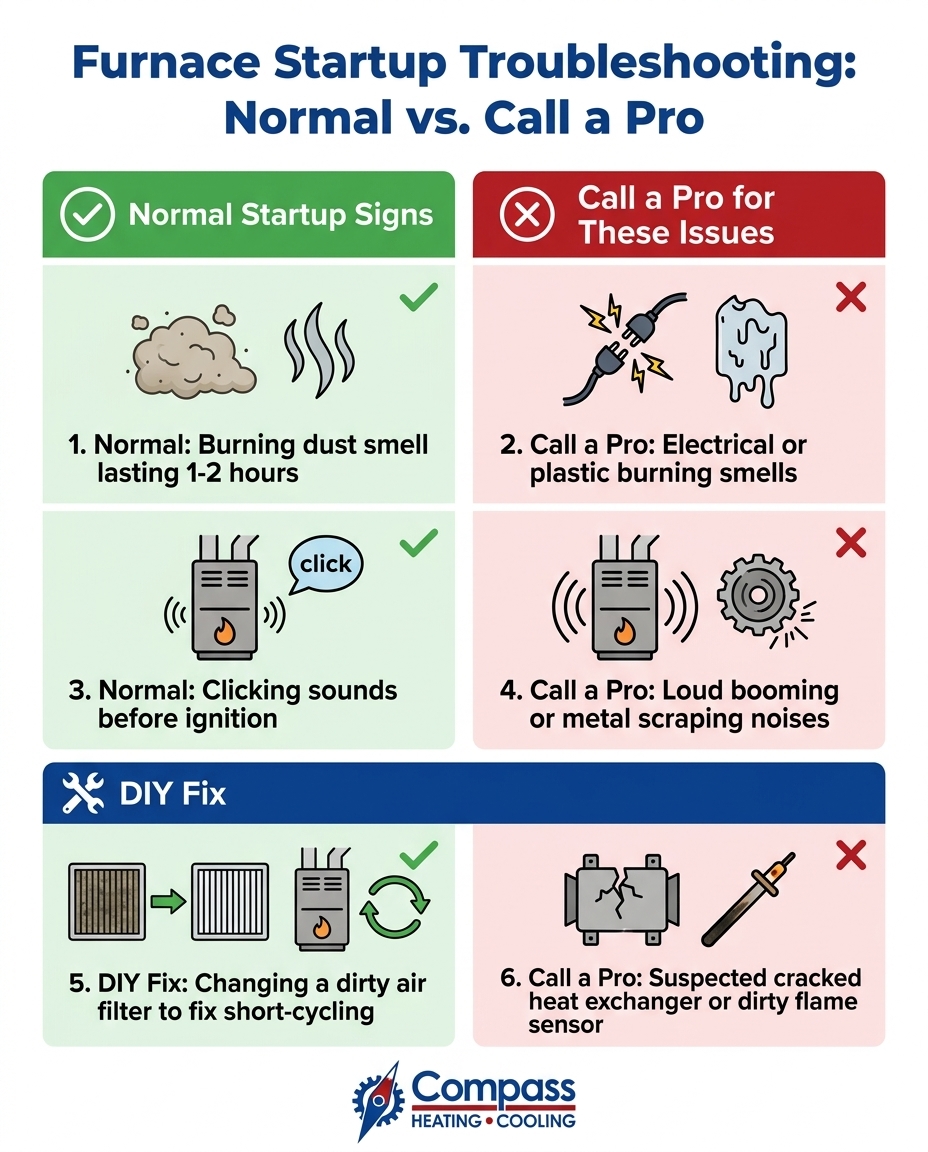
The standard "dust burn-off" smell is often described as smelling like a hot clothes iron or toasted dust. This is a completely normal part of the seasonal transition. Typically, this odor will dissipate entirely within one to two hours of the system's first full heating cycle.
Pro tip for the first startup: Our technicians always recommend that, if the weather allows, you open a few windows to provide good ventilation during that first hour. This helps clear the smell from your living spaces faster and reduces the chance of setting off sensitive smoke detectors. If the smell fades away and the system heats your home evenly, your furnace is likely operating exactly as it should.
Warning Signs of Electrical Issues
While burning dust is normal, other odors require immediate action. If you detect an acrid, metallic, or wire-burning smell, you are likely dealing with an electrical failure. Similarly, the smell of melting plastic or a persistent, heavy exhaust odor (like a running vehicle) points to severe mechanical or venting issues.
The quick fix: If you smell burning plastic, electrical ozone, or heavy exhaust, go to your thermostat immediately and turn the system off. Do not wait to see if the smell goes away. These odors indicate that wiring is overheating, a motor is seizing, or exhaust gases are not venting properly outdoors. Leave the system off and contact a licensed technician to diagnose the root cause before attempting to run the heat again.
Troubleshooting Unusual Furnace Noises Before Winter
Your ears are often your best diagnostic tool when evaluating your heating system. Just as you might monitor your system for strange noises that require air conditioning repair and replacement during the summer months, your furnace requires the same auditory vigilance as the weather cools. Knowing what your system normally sounds like makes it much easier to identify when something goes wrong.
A healthy furnace follows a specific sequence of operations, and each step has a corresponding sound. When our team performs a fall tune-up, we listen closely for these cues: first, you will hear a soft click from the thermostat, followed by the low hum of the draft inducer motor. Next comes a series of rapid clicks as the igniter sparks, followed by a distinct "whoosh" as the gas burners light. Finally, after a brief delay to let the air warm up, you will hear the main blower fan engage and push air through your vents.
Abnormal sounds, however, should never be ignored. If you hear a loud booming or banging sound when the system tries to start, you are likely experiencing delayed ignition. This happens when gas builds up in the combustion chamber before igniting all at once. Delayed ignition is a serious safety hazard that can crack your heat exchanger over time.
Other concerning noises include metal-on-metal scraping, which usually indicates a failing blower motor bearing or a loose blower wheel. A high-pitched squealing sound often points to a worn-out fan belt or an unlubricated motor shaft. If you notice these sounds during the October first freeze in Colorado, do not ignore them. We always reiterate the golden rule to our customers: listen carefully from the outside of the unit, note exactly when the sound occurs during the heating cycle, but never remove the access panels to investigate moving parts yourself.
What Causes a Furnace to Short Cycle During Early Fall?
Short-cycling occurs when your furnace turns on, runs for a very brief period, and then shuts off before the house reaches the temperature set on your thermostat. This rapid on-and-off behavior is incredibly hard on the equipment. It forces the motors to start repeatedly, wastes a massive amount of energy, and leaves your home feeling chilly and uncomfortable.
For many Loveland homeowners, short-cycling is the first sign that the heating system needs attention. In our daily fieldwork, we find that while some causes are complex, the most frequent culprit is something you can fix yourself in just a few minutes.
Checking Your Air Filter and Vents
The most common, easily fixable cause of short-cycling is a severely clogged air filter. Your furnace needs a constant, unrestricted flow of air to keep its internal components cool. If the filter is packed with summer dust, pet dander, and debris, the airflow is choked off. The heat exchanger will rapidly overheat, tripping an internal safety limit switch that shuts the furnace down to prevent a fire.
To troubleshoot this, locate your air filter compartment (usually between the main return duct and the furnace cabinet). Pull the filter out and hold it up to a light. If you cannot see light passing through the material, it is time for a replacement. Additionally, walk through your home and ensure all return and supply vents are fully open and unblocked by rugs, curtains, or heavy furniture.
When to Suspect Sensor or Switch Failures
If you have installed a fresh filter and the system continues to short cycle, you are likely dealing with a failed internal component. Over the summer, the flame sensor inside the burner assembly can become coated with dust and light corrosion. When the furnace fires up, a dirty sensor cannot detect the flame. As a safety precaution, the system will shut the gas valve off within seconds, causing a short cycle.
Thermostat malfunctions or a permanently weakened high-limit safety switch can also cause this rapid cycling. Because cleaning delicate sensors or testing high-voltage switches carries significant risk of injury or equipment damage, our team stresses that this level of troubleshooting is strictly a job for a certified HVAC technician. Ignoring short-cycling will drastically reduce your heating efficiency and drive up your utility bills as the colder months set in.
The Value of an HVAC Second Opinion for Major Diagnoses
Fall maintenance checks are an excellent way to prepare for winter, but they can sometimes bring stressful news. If a technician inspects your system and condemns the furnace—claiming you have a cracked heat exchanger or a failing blower motor—it is entirely normal to feel overwhelmed. A cracked heat exchanger is a legitimate safety hazard that can leak carbon monoxide into your home, but a full system replacement is a major decision.
Unfortunately, some national chains use the anxiety of the first fall startup as a scare tactic. They may pressure you into premature, expensive replacements without providing clear evidence of the failure. We have seen this pattern too often in Loveland, and you should never feel rushed into replacing your entire heating system based on a quick visual glance or a high-pressure sales pitch.
This is where the value of a trusted second opinion becomes clear. As a locally owned authority, our team at Compass Heating & Cooling believes in transparent diagnostics. A trustworthy assessment involves concrete proof. The technician should use a combustion analyzer to measure the exact gas levels in your exhaust. They should use a specialized inspection camera to show you the exact location of the crack or rust hole on a screen. There should be zero pressure to sign a contract on the spot.
If you are unsure about a diagnosis, the process is very similar to what to expect when getting a second opinion on a condemned AC—you have the right to see the evidence. Empower yourself to protect your investment. By verifying major repair quotes before committing, you ensure that you are only paying for the services your home truly needs during the October first freeze in Colorado.
Frequently Asked Questions About Fall Furnace Startups
Why does my heater smell like burning dust when I turn it on?
Your heater smells like burning dust because airborne particles settle on the heat exchanger and burners while the system sits idle during the summer. When the furnace fires up for the first time in the fall, these high-temperature components incinerate the accumulated dust. This creates a distinct, temporary odor that travels through your ductwork. The smell is completely normal and should dissipate within one to two hours of steady operation.
How do I know if my furnace is safe to turn on for the winter?
You can verify your furnace is safe for an initial test by checking the area around the unit, ensuring the air filter is clean, and listening closely to the first cycle. A safe furnace will start with a smooth sequence of clicks and a steady "whoosh" of the burners, without loud bangs or heavy exhaust smells. If the system runs smoothly, heats the house evenly, and the initial dust smell fades quickly, it is generally safe. However, the only way to be completely certain that there are no hidden carbon monoxide leaks is to schedule a professional inspection.
What causes a furnace to short cycle?
A furnace short cycles when it overheats and triggers an internal safety switch, most commonly due to a clogged air filter restricting airflow. When the heat exchanger cannot shed its heat, the system shuts down rapidly to prevent damage. Other common causes include a dirty flame sensor that fails to detect the burner flame, a malfunctioning thermostat, or blocked return vents inside the home. If changing the air filter does not resolve the rapid on-and-off behavior, professional diagnostics are required.
When should I call a professional for furnace maintenance?
You should call a professional for maintenance early in the fall season, ideally before the first hard freeze arrives. Scheduling a tune-up in September or October ensures your system is clean, calibrated, and safe to operate when you need it most. You should also call a professional immediately if you notice warning signs like electrical burning smells, loud booming noises during startup, or persistent short-cycling that a new filter does not fix.
How do I know if my heat exchanger is cracked?
You cannot definitively diagnose a cracked heat exchanger on your own, as the component is hidden deep inside the furnace cabinet. Warning signs include a strong, persistent exhaust smell in your home, soot buildup around the furnace, or a burner flame that flickers and turns yellow instead of burning a steady blue. Because a cracked heat exchanger can leak deadly carbon monoxide, a licensed technician must use a combustion analyzer and an inspection camera to confirm the diagnosis safely.
Is it worth getting a second opinion on a furnace replacement?
Yes, it is absolutely worth getting a second opinion if a technician tells you your furnace is condemned and requires a full replacement. Major diagnoses like a cracked heat exchanger or a seized motor are significant investments, and unfortunately, misdiagnoses or aggressive sales tactics do happen. A reputable second opinion provides peace of mind by offering transparent, camera-backed evidence of the failure, ensuring you only replace the equipment when it is genuinely necessary.
Secure Your Comfort Before the Winter Weather Hits: Home Maintenance Tips and Troubleshooting
Understanding the basic mechanics of your heating system keeps you comfortable and safe as the seasons change. Knowing the difference between the harmless smell of dust burn-off and the dangerous signs of a failing electrical component empowers you to make smart decisions for your home. By addressing short-cycling, unusual noises, and airflow restrictions early, you protect your equipment from unnecessary wear and tear.
Do not wait until the October first freeze in Colorado leaves you shivering in your living room. If your system is exhibiting strange symptoms, or if you have recently received a major repair quote that does not sit right with you, take action now. Reach out to schedule a second opinion and let our honest, transparent team at Compass Heating & Cooling give you the clarity you need before winter weather fully takes hold.
hear what our satisfied clients have to say
Our clients consistently praise our exceptional service and attention to detail. They appreciate the personalized approach we take to meet their unique needs, ensuring satisfaction every step of the way.
.png)