


When to Get an HVAC Second Opinion After a Fall Furnace Scare
Is That Burning Smell Normal, or Do You Need a Second Opinion?
If you are searching for common homeowner questions answered about that alarming burning smell during your first fall heating cycle, you are not alone. Are you dealing with a severe hazard, or is your system just shaking off the summer dust? It is a scenario that plays out in homes across the region during the mid-fall / October heating startup. You bump the thermostat up, hear the blower motor roar to life, and within minutes, a distinct, acrid odor wafts through your vents. Panic often sets in immediately. Do you shut the system down right away, or do you let it run? Is your entire heating system compromised, requiring an emergency replacement?
Before you make a rushed decision, it is crucial to understand when to step back and seek out professional HVAC services for a second look, and when you might just be dealing with a normal seasonal occurrence. Determining whether you actually need a complete heating system repair or replacement requires knowing the precise difference between a harmless nuisance and a true safety hazard. Making this distinction protects your home, your family, and your wallet from unnecessary spending.
The Science Behind the Mid-Fall Furnace Odor
To understand why your furnace emits a strange odor during the mid-fall / October heating startup, you have to look at what the system has been doing for the previous half of the year: absolutely nothing. While your air conditioner handled the summer heat, the internal heating components sat dormant. Explaining the mechanics behind this seasonal phenomenon helps demystify the experience and reduces unnecessary alarm.
Why Dust Becomes a Nuisance
Northern Colorado's dry climate can significantly exacerbate indoor dust accumulation during the summer months. Because the air lacks moisture to weigh down particulate matter, dust circulates freely and settles deep inside your ductwork and furnace cabinet. When you finally call for heat, here is exactly what happens mechanically:
1. The Dormancy Period: For five to six months, dust, pet dander, and microscopic airborne particles settle directly onto the furnace's heat exchanger—the metal component that gets incredibly hot to warm your home's air.
2. The Initial Ignition: When the thermostat signals the furnace to turn on, the burners ignite, and the heat exchanger rapidly rises in temperature.
3. The Flash Burn-Off: The accumulated layer of dust on the heat exchanger is instantly scorched by the sudden heat.
4. The Distribution: Your blower motor then pushes the newly heated air across that scorched dust, carrying the resulting odor through your ductwork and out of every vent in the house.
This predictable physical reaction is not inherently a sign of a broken system. In most cases, this normal dust burn-off will completely dissipate within 15 to 30 minutes of continuous operation. However, you can significantly reduce the severity of this startup dust burn-off by keeping up with a routine HVAC maintenance plan, which ensures the internal components are professionally cleaned before they ever ignite.
Comparing Normal Dust Burn-Off to Dangerous Heating Hazards
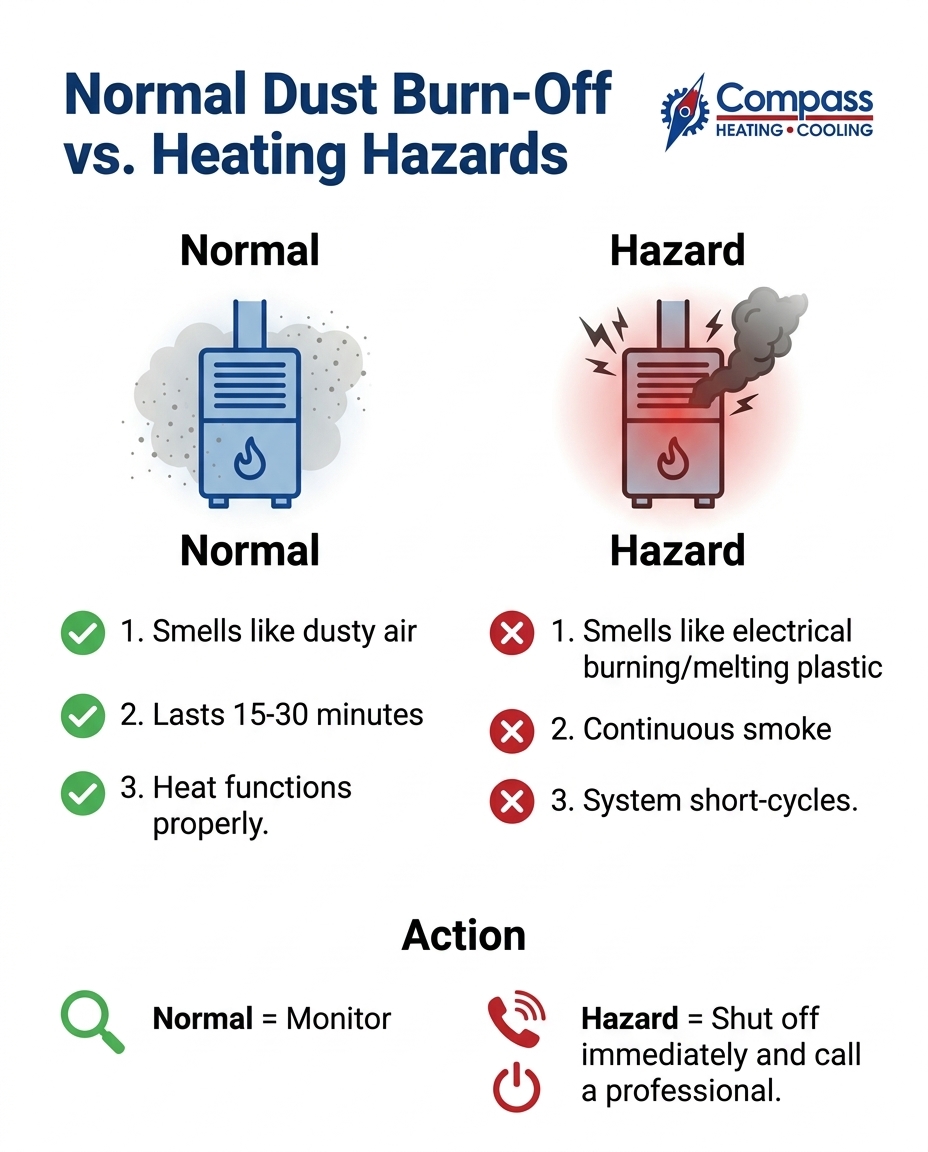
While a dusty odor is generally harmless, other smells indicate a severe mechanical or electrical failure. Providing a definitive safety boundary helps you evaluate your system's symptoms without resorting to risky, do-it-yourself diagnostics. If you live in Loveland CO and experience anything outside the realm of normal burn-off, you must act quickly to secure your home.
Never attempt to open the furnace cabinet, test electrical components, or bypass safety switches yourself. Heating systems utilize high-voltage electricity and combustible gases; interacting with them requires specialized training and licensing. Use the following diagnostic boundaries to determine your next steps.
• Odor Profile — Normal Seasonal Burn-Off: Smells like dusty, stale air or slightly singed dirt. — Dangerous Heating Hazard: Smells like melting plastic, sharp electrical ozone, or raw gas.
• Duration — Normal Seasonal Burn-Off: Fades steadily and completely disappears within 15 to 30 minutes. — Dangerous Heating Hazard: Persists, grows stronger over time, or occurs every time the system runs.
• Visual Signs — Normal Seasonal Burn-Off: No visible smoke or soot anywhere near the vents or the unit itself. — Dangerous Heating Hazard: Continuous smoke from vents, soot buildup, or visible scorching on the cabinet.
• System Performance — Normal Seasonal Burn-Off: The home warms up normally, and the airflow remains strong and consistent. — Dangerous Heating Hazard: The system short-cycles, trips the electrical breaker, or blows cold air.
• Required Action — Normal Seasonal Burn-Off: Monitor the system for half an hour while keeping the area ventilated. — Dangerous Heating Hazard: Immediately shut off the thermostat and contact a licensed expert.
Beware of the Panic Pitch: When to Question a Furnace Condemnation
A scary symptom does not always mean a dead unit, but some companies exploit the alarm of a burning smell to push high-pressure, immediate unit replacements. Sudden, extreme temperature drops in mid-fall often cause homeowners to feel rushed into accepting the very first replacement quote they receive, simply because they are terrified their family will freeze overnight.
The Cracked Heat Exchanger Scare Tactic
One of the most common scenarios during the mid-fall / October heating startup involves a technician arriving, smelling the burn-off, opening the cabinet, and immediately declaring that you have a "cracked heat exchanger." A cracked heat exchanger is indeed a highly dangerous situation that leaks carbon monoxide, and it does require replacing the part or the entire furnace. Because it is so dangerous, it is the perfect leverage for a predatory sales pitch.
The problem arises when a technician condemns the furnace without showing you clear, verifiable diagnostic proof. Aggressive, quota-driven upselling is unfortunately common with some larger national chains that rely on seasonal panic to meet sales goals. This contrasts sharply against the value of honest, local Loveland diagnostics, where the goal is to build a long-term relationship rather than secure a quick, one-time sale.
If a technician tells you your system is dead and must be replaced today, but refuses to show you the crack with a digital inspection camera or provide combustion analysis readings, you should pause. Tell them you need to think about it, pay the diagnostic fee, and seek another perspective. The process is very similar to what to expect when getting a second opinion on a condemned AC. Taking a breath and getting a second set of eyes on the equipment is your best defense against the panic pitch.
The Financial and Safety Benefits of an HVAC Second Opinion
Detailing the tangible reasons why pausing for a second assessment is the smartest move for a homeowner reveals just how much you have to gain. When your system is acting up, the instinct is to fix it as fast as possible, but speed should never come at the expense of accuracy.
• Discovering Minor Repair Solutions: An HVAC second opinion frequently uncovers minor, highly repairable issues that were misdiagnosed as catastrophic failures. A failing capacitor, a dirty flame sensor, or a heavily clogged air filter can all cause a furnace to behave erratically or shut down entirely. A thorough technician might resolve the issue with a simple part swap instead of a total system replacement.
• Protecting Your Financial Investment: Heating systems represent a massive investment in your Loveland CO home. Taking a deep breath and getting a second quote ensures you are not spending a large sum of money prematurely. Even if the system does need to be replaced, comparing multiple bids ensures you receive fair, transparent terms.
• Verifying Safety Claims: If a technician claims your system is leaking carbon monoxide or poses an electrical fire risk, a secondary diagnostic check verifies those claims. You gain the peace of mind knowing that your home is actually protected from hazards, backed by verified data rather than just a salesperson's word.
• Comprehensive System Evaluation: A thorough second look applies across all your home comfort systems. The same rigorous standards that apply to a furnace emergency should also apply to air conditioning diagnostics, ensuring your entire HVAC infrastructure is treated with honesty and expertise.
How to Identify an Honest Heating Diagnostic Assessment
Equipping yourself with the criteria for trusting a second opinion provider ensures you do not end up in the exact same high-pressure situation twice. Local, community-based teams prioritize long-term trust and accurate diagnostics over quick, seasonal sales, especially during the hectic mid-fall / October heating startup.
When the second technician arrives, look for these hallmarks of an honest assessment:
• Visual and Digital Evidence: A trustworthy technician will use modern digital tools, such as an inspection camera, to look deep inside the heat exchanger. They will provide visual evidence—photos or video—of the failed component so you can see the damage for yourself.
• Separation of Safety and Efficiency: Honest assessments clearly separate an immediate safety hazard from a long-term efficiency recommendation. They will tell you exactly what is broken right now versus what might save you energy next year.
• Respect for Your Timeline: A reliable professional will respect your decision-making timeline. They will avoid using "today-only" high-pressure discounts designed to force you into signing a contract before you can weigh your options.
• Clear Explanations: They will clearly explain the difference between a system that is genuinely unsafe to operate and one that is simply aging and becoming less efficient. You should never feel confused about why a specific recommendation is being made.
Frequently Asked Questions About Furnace Smells and Second Opinions
When homeowners face sudden heating issues, they often turn to search engines for immediate guidance. We have compiled these common homeowner questions answered to provide clarity and reinforce the safety boundaries between normal dust and severe electrical hazards. If you live in Loveland CO, keep these guidelines in mind during the colder months.
Is it normal for a furnace to smell when first turned on?
Yes, it is entirely normal for a furnace to emit a dusty, burning odor during the first use of the season. As the heat exchanger warms up after months of inactivity, it burns off settled dust, pet dander, and airborne particles. This is a standard physical reaction and not necessarily a sign of equipment failure.
How long does the burning smell last when you turn on the heater?
Normal dust burn-off typically lasts between 15 and 30 minutes. Once the initial layer of debris is scorched away, the smell should fade completely. If the odor persists longer than half an hour, grows stronger, or is accompanied by visible smoke, you should shut the system down immediately and call a professional.
Should I get a second opinion on a cracked heat exchanger?
Absolutely. A cracked heat exchanger is a serious safety hazard that leaks carbon monoxide, but it is also an expensive repair that often leads to full system replacement. A second opinion verifies the diagnosis with visual proof, such as digital camera footage or combustion analysis, before you commit to a major financial decision.
Can a furnace catch on fire?
While rare, severe electrical faults, compromised gas components, or blocked venting can pose a fire risk. This is exactly why unusual odors like melting plastic, sharp electrical ozone, or continuous smoke require immediate professional attention. Never ignore signs that fall outside the boundaries of normal seasonal dust burn-off.
How do I know if my furnace is safe?
A safe furnace operates without tripping electrical breakers, emitting electrical odors, or triggering your home's carbon monoxide alarms. The most reliable way to guarantee ongoing safety is through annual professional inspections, where a licensed technician tests all safety switches, verifies gas pressure, and inspects the heat exchanger for structural integrity.
What are the signs of a predatory HVAC replacement quote?
Red flags include high-pressure "today only" pricing, a refusal to show you the broken part, and using fear tactics without offering a clear, verifiable explanation of the mechanical failure. If a technician condemns your unit but cannot provide photographic evidence or technical readings to back up their claim, you should seek another assessment.
Get a Trustworthy Assessment for Your Home's Heating System
Navigating the colder months in Loveland CO requires a reliable heating system, but a burning smell on the first chilly day does not automatically mean you need a new furnace. By understanding the mechanics of seasonal burn-off and knowing how to identify aggressive sales tactics, you can prioritize your family's safety while protecting your wallet from rushed decisions. If you are ever in doubt, getting common homeowner questions answered by a trusted, local professional is the best way to secure an honest, transparent evaluation of your home's comfort system.
hear what our satisfied clients have to say
Our clients consistently praise our exceptional service and attention to detail. They appreciate the personalized approach we take to meet their unique needs, ensuring satisfaction every step of the way.
.png)