



Why Is My Furnace Burning? When to Worry and When to Get an HVAC Second Opinion
Why Does My House Smell Like Burning When the Heat Kicks On?
Is your house supposed to smell like a campfire the first time you turn on the heat, or is a major breakdown about to happen? When the late fall weather brings that inevitable November first freeze to Northern Colorado, thousands of residents switch their thermostats to "heat" and are immediately greeted by an alarming odor. In fact, one of the most common homeowner questions answered during this time of year is whether that sudden burning smell means the house is in danger. The moment you switch the thermostat to heat for the first time, a sudden burning odor can cause immediate anxiety. Homeowners are faced with a rapid decision: let the system run and hope it clears, or shut it down completely and call for emergency help.
Understanding the source of the smell is the first step in protecting your home and avoiding unnecessary panic right as the cold weather sets in. Whether you need basic HVAC services or a comprehensive diagnostic, knowing what is normal helps you make informed choices. Partnering with a trusted provider of professional HVAC services ensures that any true hazards are handled safely, without pushing you into rushed decisions.
The 15-to-30 Minute Rule: Understanding Normal Dust Burn-Off
Before you panic and shut down your heating system, it helps to understand exactly what happens inside your furnace during the long off-season. During summer dormancy, your heating equipment sits completely idle. Over those warmer months, dust naturally settles on the furnace burners, the heat exchanger, and the surrounding internal components.
The Impact of Local Weather on Your Furnace
Here in Loveland, CO, our specific climate plays a major role in this process. Loveland's famous Chinook winds and dry summer conditions constantly kick up fine dust and particulate matter. Even if you keep a pristine home, your HVAC system's blower pulls this dry, dusty air through the ductwork all summer long while running the air conditioning. A fine layer of this dust coats the heating elements that haven't been used since the previous spring.
What Happens During Ignition
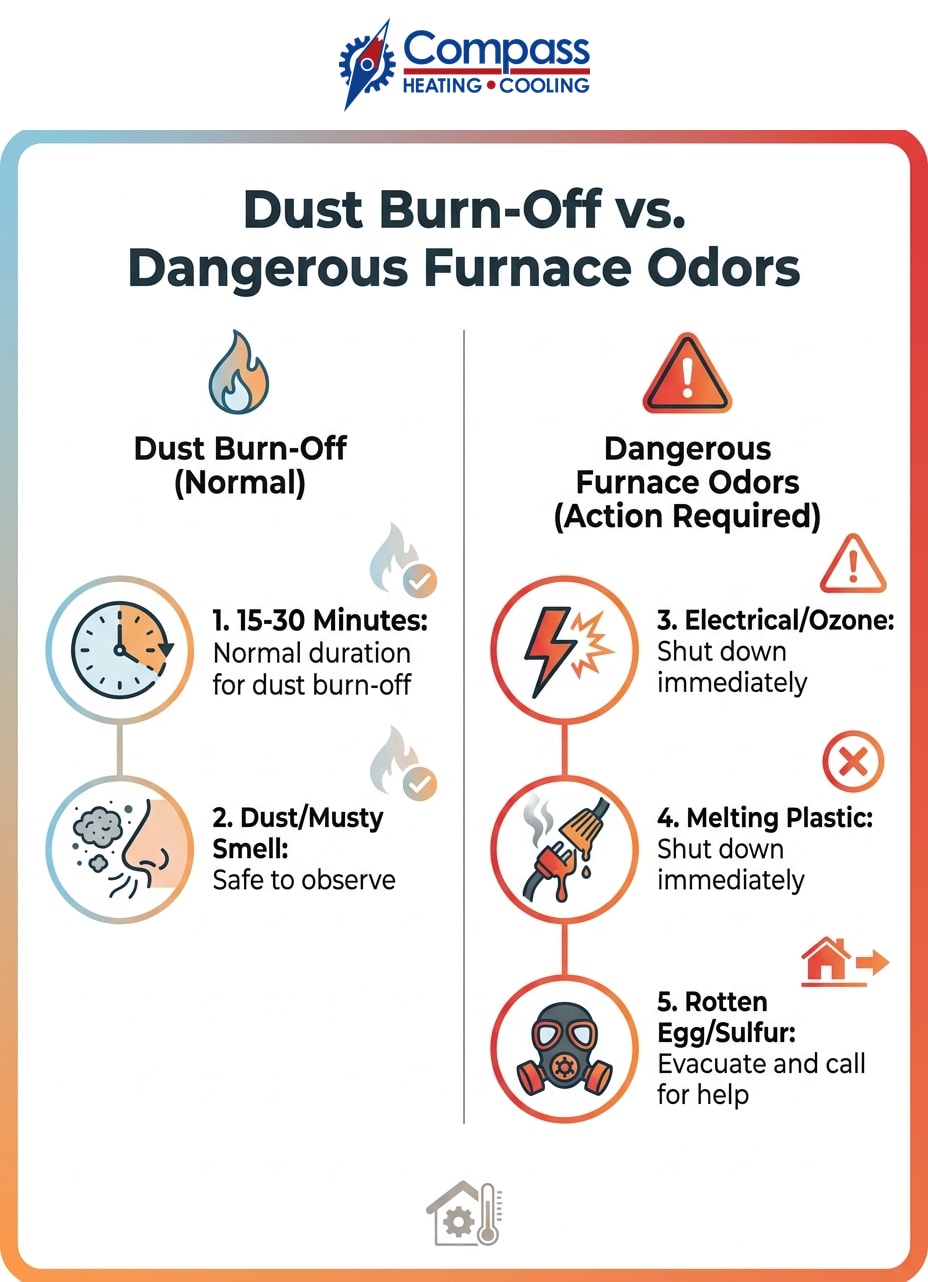
When the system ignites for the first time in late fall, the heat exchanger rapidly warms up to temperatures high enough to incinerate that accumulated dust. This harmless dust burns off, creating a distinct, temporary odor that often smells like singed hair or warm, dusty air. It is a completely normal mechanical process.
The quick fix: This harmless smell typically dissipates within 15 to 30 minutes of continuous operation. Opening windows briefly can help clear the air while the system completes its initial cycle. If the weather is mild enough during the day, you might even consider running the heater for the first time with the windows cracked specifically to vent this odor before the freezing night temperatures arrive.
• Warm, dusty, or musty odor — Typical Cause: Normal summer dust accumulation burning off the heat exchanger — Duration: 15 to 30 minutes — Action Required: Monitor the system; open a window to ventilate.
• Faint singed hair smell — Typical Cause: Pet dander or hair caught on the heating elements — Duration: 15 to 30 minutes — Action Required: Monitor the system; ensure air filters are clean.
• Persistent dusty smell — Typical Cause: Extremely clogged air filter or dirty ductwork — Duration: Continuous — Action Required: Replace the air filter; schedule professional cleaning.
If the smell persists beyond this 30-minute window, or if it grows significantly stronger instead of fading, it elevates from a normal occurrence to a diagnostic concern. At that point, the system is no longer just burning off surface dust.
Red Alert Odors: When to Shut Down Your System Immediately
While dust burn-off is harmless, other odors are massive red flags. If you smell anything outside of a standard dusty odor during that November first freeze, you need to take immediate action. Certain smells indicate severe mechanical failure or dangerous safety hazards that require an emergency shutdown.
Identifying Dangerous Smells
• Electrical or ozone smells: A sharp, metallic, or "fishy" electrical odor usually indicates overheating wires, failing blower motors, or a seized bearing. This means a component is drawing too much amperage and beginning to melt its protective insulation.
• A melting plastic odor: This distinct, toxic smell suggests a foreign object (like a child's toy or a piece of construction debris) has fallen into the ductwork near the heat source, or internal plastic components like wire casings and capacitors are actively melting.
• A rotten egg smell: This is the universal warning sign of a dangerous gas leak. Natural gas is odorless, but utility companies add a chemical called mercaptan to give it that distinct sulfur or rotten egg smell so leaks can be detected early.
If any of these red alert odors occur, turn off the system immediately at the thermostat. If you suspect an electrical issue, flip the breaker to the furnace as well. If you smell rotten eggs, evacuate the house immediately and call your gas provider or emergency services from outside.
Never attempt DIY internal inspections or open the furnace cabinet yourself to find the source of a burning plastic or electrical smell. Modern furnaces contain high-voltage components, complex circuit boards, and active combustion chambers. These situations require a licensed professional with the proper diagnostic tools.
The 'Condemned' Furnace: Beware of High-Pressure Sales Tactics
The sudden panic of a burning smell during a cold snap creates a vulnerable situation for homeowners. Unfortunately, the HVAC industry is not immune to bad actors who exploit this anxiety. Some contractors use the panic of a sudden burning smell to rush homeowners into immediate, unnecessary system replacements.
The Rush Decision Trap
When you call for help because your house smells like burning plastic, you want a solution fast. A less-than-reputable technician might arrive, perform a hasty inspection, and claim a minor issue is a catastrophic failure. They might tell you the heat exchanger is cracked beyond repair, or that the electrical system is a massive fire hazard, effectively condemning the furnace on the spot. They will often follow this up with a high-pressure pitch for a brand-new system, claiming it must be installed tomorrow to keep your family safe.
Rushed decisions made during a cold snap often lead to buyer's remorse and unnecessary expenses. While safety is absolutely paramount, and a cracked heat exchanger is a genuine hazard that requires shutting down the equipment, you never have to sign a replacement contract on the very same day under duress.
Protecting Yourself Through Knowledge
Understanding why it is important to get a second opinion on HVAC work can save your perfectly functional system from the scrap heap. A true professional will explain the diagnostic process clearly, rather than relying on fear. They will use combustion analyzers, digital manometers, and inspection cameras to show you exactly what is wrong. If they find a crack or a dangerous electrical fault, they will safely disable the unit, explain the findings, and give you time to consider your options.
Securing an HVAC Second Opinion for Major Diagnostics
If a technician tells you your system is unsafe or requires a full replacement after you call about a burning smell, you have the right to pause. Unless there is an active gas leak or a fire (which emergency services should handle), you can simply leave the unit turned off and call for another look.
What a Fresh Perspective Looks Like
An HVAC second opinion provides a fresh, unbiased look at the exact same components. When you bring in a different set of eyes, you remove the pressure of the initial emergency. Trusted local technicians focus on accurate diagnostics rather than meeting sales quotas. They want to find the root cause of the burning smell, not just sell you a new box to put in your basement.
Working with a locally-owned company means you get honest expertise focused on accurate diagnostics and long-term solutions, contrasting sharply with the high-pressure sales tactics often driven by the corporate quotas of national chains. Bringing in Loveland HVAC experts ensures your system is evaluated for the specific demands of the local climate. We understand how the dry air, heavy dust, and sudden November temperature drops affect this specific equipment.
A second look often reveals that a simple repair, a replaced capacitor, or a thorough internal cleaning is all that is needed to eliminate the burning smell and restore safe operation. Even if the second opinion confirms the original diagnosis, you gain the peace of mind knowing you made an informed decision rather than a panicked one.
Preventing Startup Odors Before the Next Freeze
The best way to handle furnace odors is to prevent them from happening in the first place. You don't have to wait for the first freezing night in Loveland, CO, to find out if your heater is going to smell like a campfire. Taking proactive steps in late summer or early fall can eliminate the guesswork and stress of the first cold night.
Your Pre-Winter Checklist
1. Replace your air filter: Before switching the system to heat for the first time, put in a brand-new, high-quality pleated filter. A dirty filter restricts airflow, causing the furnace to run hotter than normal, which exacerbates burning smells and stresses the blower motor.
2. Clear the mechanical room: Ensure the area around the furnace is completely clear of stored items, boxes, and debris. Furnaces require a minimum three-foot clearance for safe operation and proper combustion airflow. Items stored too close can heat up and create dangerous melting or burning odors.
3. Clean your floor vents: Take a flashlight and look down into your floor registers. Summer is a prime time for pet hair, dust bunnies, and small toys to fall into the ductwork. Vacuuming these out prevents them from becoming a smelly hazard when the hot air starts blowing.
4. Schedule a professional tune-up: Bring in a technician in early fall to clean internal components safely. They will clean the burners, inspect the heat exchanger, and remove the heavy summer dust buildup before you ever turn the system on.
Enrolling in a structured program like the Compass Club Maintenance Plan ensures these checks happen automatically. Proactive care means a professional has already verified the safety and cleanliness of your system long before the snow starts falling.
Frequently Asked Questions About Furnace Smells and Diagnostics
How do I know if my furnace burning smell is dangerous?
Dangerous smells include electrical burning, melting plastic, or the rotten egg scent of natural gas. If you detect any of these specific odors, you should turn the system off immediately at the thermostat and breaker. If the smell is just a dusty, warm odor but lasts longer than 30 minutes, it also requires a professional diagnostic to ensure the system is not overheating.
How long does furnace dust burn-off last?
Normal dust burn-off typically lasts 15 to 30 minutes after the first time you turn on the heat for the season. The smell should steadily decrease in intensity during this time as the dust is incinerated off the heat exchanger. Opening a few windows can help clear the harmless odor from your home more quickly.
Should I get a second opinion if told my furnace is unsafe?
Yes, always get a second opinion before agreeing to a major replacement, especially if you feel pressured or rushed during a cold snap. A reputable company will respect your decision to seek a secondary diagnostic and will happily leave the unit safely disabled while you gather more information. Honest technicians want you to feel confident in your decision.
Can I inspect the furnace myself to find the source of the smell?
No, opening the furnace cabinet involves high voltage and serious combustion hazards. Only licensed professionals should perform internal inspections of the blower compartment, wiring, or heat exchanger. Your safest action is to turn the system off and wait for a qualified technician to arrive with the proper testing tools.
Is a burning plastic smell ever normal for a heater?
No, a plastic smell is never normal and indicates a foreign object in the ductwork or a failing internal electrical component. Shut the system down immediately if you detect this odor. Continuing to run a system that smells like melting plastic can lead to toxic fumes in your home or a serious electrical fire.
Get the Honest Answers You Deserve Today
Don't spend the first cold night of the year worrying about your safety or stressing over strange odors coming from your vents. If you have noticed an unusual smell, or if you've been told you need a sudden, expensive replacement by another company, pause and protect your home by seeking a trustworthy evaluation.
Reach out to our local Loveland team for an honest, accurate evaluation of your heating system. We prioritize clear answers and safe, long-term solutions over high-pressure sales. Book your diagnostic or second opinion today and enjoy true peace of mind all winter long.
hear what our satisfied clients have to say
Our clients consistently praise our exceptional service and attention to detail. They appreciate the personalized approach we take to meet their unique needs, ensuring satisfaction every step of the way.
