



Furnace Smells Like Burning? When to Monitor and When to Get an HVAC Second Opinion
Why Does My Heating System Smell Like Burning When Turned On?
If you are searching for common homeowner questions answered because your house suddenly smells like smoke after turning on the heat, you are certainly not alone. It happens every year: you switch the thermostat to the heating mode for the first chilly October evening, and within minutes, an alarming odor fills the hallways. Is the unit actually failing, or is this just a normal part of seasonal maintenance? Before you panic and assume the worst, it helps to understand exactly what is happening inside the metal cabinet.
For comprehensive support across all your home comfort needs, explore our professional HVAC services.
The anxiety of smelling something burning coming from your air vents is entirely justified. Heating equipment involves high temperatures, high-voltage electricity, and often combustible natural gas. Deciding whether to let the furnace continue running to burn off the summer dust or to shut it down immediately is a stressful decision point for any family. However, the exact phrase "furnace smells like burning when turned on" remains the single most frequent search pattern our team at Compass Heating & Cooling sees from Loveland homeowners every early fall. Understanding your system's normal operational phases can save you from rushing into an unnecessary emergency service call. Let's break down exactly what causes this odor, how to monitor it safely, and when you truly need a professional diagnosis.
The Front Range Factor: Why Summer Dust Causes Fall Furnace Odors
To understand the source of the smell, you have to look at the surrounding environment. The semi-arid climate of the Colorado Front Range / Loveland area means our summers are notoriously dry and dusty. In our experience servicing local homes, when your heating equipment sits idle from May to September, the internal components act as a magnet for airborne particulate matter.
Here is exactly what happens mechanically inside your system:
1. Dust accumulation during idle months: Throughout the summer, dry winds increase the amount of dust, agricultural particles, pet dander, and microscopic debris circulating in your home. Even with a high-quality air filter in place, some of this material inevitably settles directly onto the cold heat exchanger inside the furnace cabinet.
2. The first seasonal ignition: When the outdoor temperature drops and your thermostat sends the first signal for heat, the gas burners or electric heating elements ignite for the first time in several months.
3. Instant singeing of debris: The heat exchanger rapidly warms up to hundreds of degrees. The thin layer of settled summer dust instantly singes and burns off the metal surface.
4. Distribution through the home: The main blower fan then pushes that warm, singed-dust air through your ductwork, distributing a distinct, temporary odor into every room of the house.
Our technicians routinely remind customers that because of our dry summer climate, this particulate buildup is often heavier here than in more humid, coastal regions. The resulting smell can be surprisingly strong, leading many to fear a fire. This is a normal operational phase, not a mechanical failure. If you are ever in doubt, having qualified Loveland HVAC technicians inspect the unit before the freezing weather sets in is the smartest proactive step you can take.
How Long Should the Dust Burn-Off Smell Last?
Knowing that dust burn-off is a normal process is only half the battle; knowing how long it should last is what keeps your home safe. When a homeowner searches "furnace smells like burning when turned on," the next immediate question is always about the timeline. Setting clear diagnostic criteria helps you monitor the situation without unnecessary stress.
The 30-to-60 Minute Window
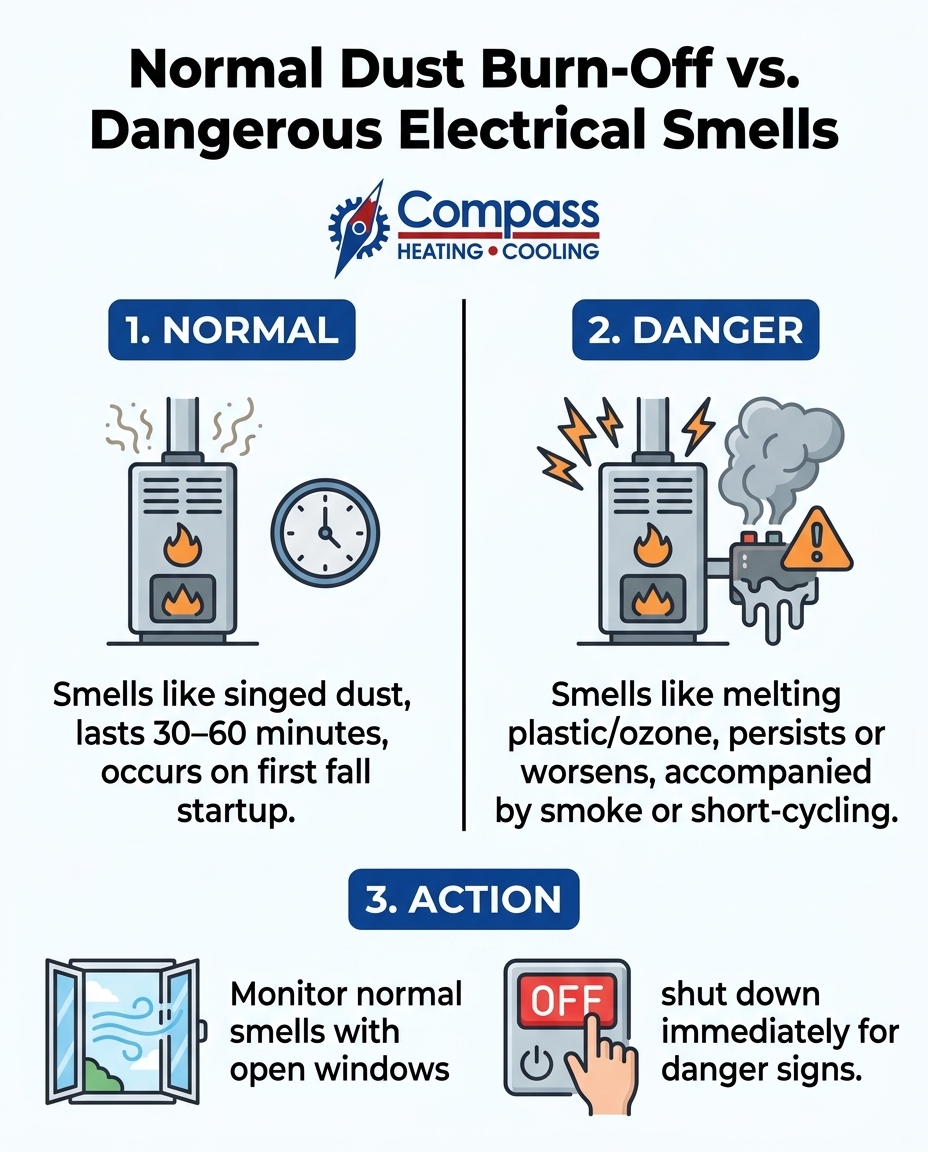
Based on the hundreds of pre-winter inspections our team performs, normal dust burn-off odors typically dissipate within 30 to 60 minutes of continuous operation. The smell is usually strongest during the first ten to fifteen minutes and then steadily fades as the heat exchanger is cleared of debris. If your system has been sitting idle for an unusually long time, or if you recently completed dusty home renovations like drywall sanding or floor refinishing, the odor might lean closer to the full hour.
Safe Monitoring Practices
While the system runs its initial heating cycle, we always recommend opening a few windows to allow fresh air circulation. This helps clear the indoor air and makes it much easier to tell if the odor is actually fading or if it is continually being produced by the equipment. Keep a close eye on the supply vents and the area immediately surrounding the utility closet or basement where the unit is housed.
When the Timeline Expires
If the smell completely fades within this 60-minute window, the system is likely functioning safely and the summer dust is gone. However, a lingering smell that persists beyond this timeframe, or one that seems to grow stronger rather than weaker, warrants professional attention. Do not continue to run the equipment indefinitely hoping it will eventually resolve itself.
Red Flags: When to Shut Down Your Heating System Immediately
While a temporary dusty odor is harmless, certain smells and sounds indicate a serious mechanical or electrical fault. Unlike a minor air conditioning repair that you might safely put off for a few days in the mild spring weather, our emergency dispatchers will tell you that heating electrical smells require immediate action to protect your home and family from serious hazards.
If you notice any of the following warning signs, turn your thermostat to the "off" position immediately:
• Ozone or electrical odors: A smell resembling melting plastic, burning rubber, or overheated wire casing is never normal. This indicates an electrical component, such as a failing blower motor, a seized bearing, or a shorting circuit board, is actively overheating.
• Visible smoke or haze: Dust burn-off might produce a very faint, nearly invisible haze in a dusty utility closet, but thick, visible smoke coming from the vents or the cabinet is a severe fire hazard that requires immediate shutdown.
• Loud banging or booming sounds: A loud boom when the unit kicks on indicates delayed gas ignition. Gas is pooling in the combustion chamber before igniting, creating a small explosion that can easily crack the heat exchanger over time.
• Rapid short-cycling: If the unit repeatedly turns on, runs for just a minute or two, and shuts down while emitting an odor, the internal safety limit switches are likely tripping to prevent a catastrophic overheating event.
• Chemical or metallic smells: Odors that sting the eyes, smell like formaldehyde, or carry a sharp metallic tang can indicate a cracked heat exchanger leaking dangerous combustion gases directly into your breathing air.
Safety must always come first. If any of these abnormal signs accompany the initial startup smell, shut the unit down at the thermostat and switch off the dedicated electrical breaker until a professional can thoroughly evaluate the system.
Avoiding Panic: The Value of an Honest HVAC Second Opinion
In our years of working in the local HVAC industry, we've seen how the anxiety of a potential breakdown makes homeowners incredibly vulnerable to poor decision-making. When it is freezing outside and your house smells like an electrical fire, it is easy to fall victim to high-pressure scare tactics from less scrupulous contractors who prioritize sales over service.
The Danger of Rushed Decisions
A minor lingering smell should not automatically result in a quote for a full system replacement. Just as you might seek a thorough cost analysis of AC repairs before replacing a compressor in the heat of summer, getting a secondary evaluation on a condemned heating unit is standard, sensible practice. Unfortunately, some technicians use the fear of carbon monoxide or fire hazards to pressure homeowners into signing same-day replacement contracts without fully explaining the root cause of the failure.
Empowering the Homeowner
You always have the right to pause, safely shut down the unit, and seek a trustworthy second look if a technician recommends drastic, expensive measures based on a simple diagnostic visit. A blown capacitor, a failing inducer motor, or a dirty flame sensor can often cause alarming symptoms and strange odors, but they are highly repairable components that do not require throwing away the entire system.
Our Diagnostic Approach
This is where our commitment at Compass Heating & Cooling to honest, transparent diagnostics without aggressive, high-pressure sales tactics makes a profound difference. We believe in showing you exactly what failed, explaining why it failed, and offering repair options whenever safely possible. An honest second opinion protects your household budget and ensures you are only replacing equipment when it is genuinely at the end of its functional lifespan.
Safe Monitoring vs. Unsafe DIY Furnace Inspections
When dealing with persistent odors, we know it is a natural instinct to want to investigate the cause yourself. However, our technicians want to stress that modern heating equipment is highly complex and potentially dangerous to navigate without proper training. Clarifying what you can safely do as a homeowner versus what requires a licensed professional is critical for your safety.
Attempting DIY electrical or gas appliance work can void your manufacturer warranties, violate local building codes, and put your property at severe risk of fire or gas leaks. The safest way to resolve persistent odors is always to schedule a professional heating system diagnosis.
• Changing the air filter: Replacing a clogged filter improves airflow and reduces strain on the blower motor. — Unsafe DIY Actions (Requires a Licensed Pro): Opening the cabinet: Removing access panels to expose high-voltage wiring or gas valves.
• Monitoring the thermostat: Observing cycle lengths and shutting the system off if it short-cycles. — Unsafe DIY Actions (Requires a Licensed Pro): Cleaning the burners: Attempting to vacuum or scrub the burner assembly or flame sensor.
• Checking the exterior vents: Ensuring PVC exhaust pipes outside the home are clear of snow or debris. — Unsafe DIY Actions (Requires a Licensed Pro): Inspecting the heat exchanger: Trying to visually identify microscopic cracks in the metal combustion chamber.
• Testing carbon monoxide detectors: Pushing the test button to ensure fresh batteries are functioning. — Unsafe DIY Actions (Requires a Licensed Pro): Testing electrical components: Using a multimeter on control boards, capacitors, or blower motors.
By sticking exclusively to the safe homeowner column, you protect your family from immediate danger while providing valuable, accurate information to the technician who eventually inspects the unit.
Frequently Asked Questions About Fall Furnace Odors and Diagnostics
How long does the furnace burn off smell last?
In our experience, normal dust burn-off smells usually last between 30 to 60 minutes of continuous operation. The exact duration depends on how much dust settled on the heat exchanger over the idle summer months. If the odor continues past an hour or grows noticeably stronger, shut the system down and contact a professional.
Should I turn off my furnace if it smells like burning?
Our experts advise leaving the furnace on if the odor smells like dusty burn-off and you are running it for the very first time this season. However, you must turn it off immediately if the odor smells like melting plastic, ozone, or electrical wiring. When in doubt about the safety of the smell, shutting it off at the thermostat is always the best precaution.
What does an electrical fire smell like in a furnace?
An electrical fire in a furnace produces a sharp, acrid odor similar to melting wire casing, burning rubber, or hot plastic. This is distinctly different from the mild, earthy smell of singed household dust. It is often accompanied by a chemical tang that irritates the nose and throat.
Can a furnace catch fire from dust?
It is highly unlikely for a modern furnace to catch fire from normal household dust, as they are equipped with multiple safety switches that shut the system down if internal temperatures rise too high. However, thick dust buildup restricts airflow and forces the unit to work harder, which is why professional cleaning is required to ensure long-term efficiency and safety.
When should I get a second opinion on a condemned furnace?
You should get a second opinion if a technician uses scare tactics over a minor smell or pressures you into a same-day replacement without showing you the exact failure. If you are not provided with a clear, understandable explanation of the mechanical issue, pausing to get another expert's evaluation is a smart financial decision.
Get Peace of Mind with a Professional Heating Diagnosis
Understanding the difference between normal dust burn-off and a genuine mechanical failure empowers you to make calm, informed decisions about your home comfort. The first chilly evening of the season does not have to end in panic. By knowing what to monitor, when to open the windows, and what red flags to look for, you can confidently navigate the seasonal transition without unnecessary stress.
However, if you ever have doubts about a lingering smell, a strange noise, or a recent expensive replacement quote from another contractor, a secondary evaluation is your right as a consumer. You deserve a clear, reassuring breakdown of what is happening inside your equipment. Schedule an honest, transparent evaluation with our local Compass Heating & Cooling experts today, and ensure your system is ready to keep you safe and warm all winter long.
hear what our satisfied clients have to say
Our clients consistently praise our exceptional service and attention to detail. They appreciate the personalized approach we take to meet their unique needs, ensuring satisfaction every step of the way.
