



Recharging Refrigerant vs Finding the Leak: A Cost Analysis for Aging ACs
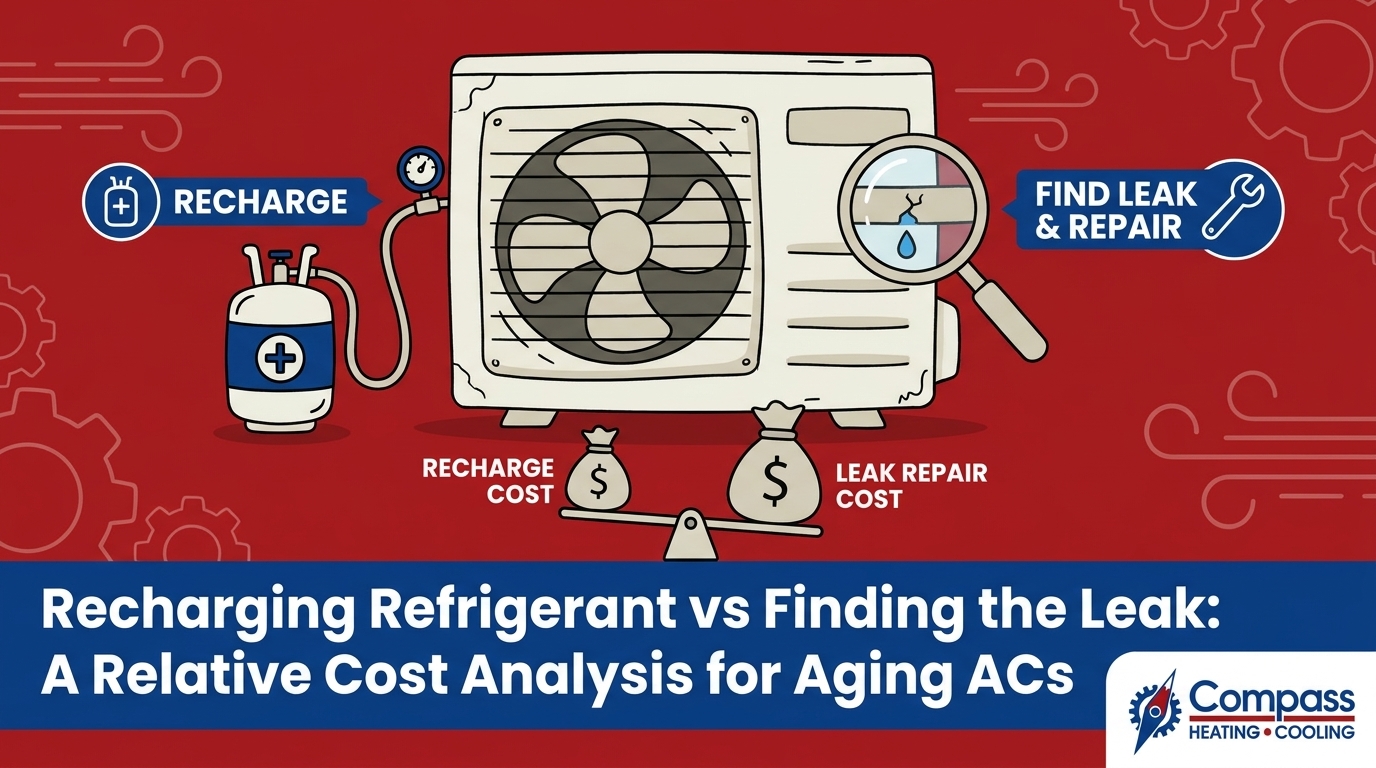
Is It Better to Top Off Your AC or Fix the Underlying Leak?
Is your air conditioner running nonstop, but the house still feels uncomfortably warm? Are you tired of scheduling repeated service calls just to keep your home comfortable during the peak July summer heat? If you are caught in this cycle of temporary fixes, understanding recharging refrigerant vs finding the leak: a cost analysis for aging ACs is the critical first step toward a permanent solution. Many homeowners mistakenly believe that air conditioners naturally consume or "burn up" refrigerant over time, much like a car consumes gasoline. In reality, your cooling equipment operates as a strictly closed-loop system.
If your system is low on refrigerant, there is absolutely a leak somewhere in the line set, the evaporator coil, or the condenser. When evaluating air conditioning systems, deciding between a quick recharge and a permanent repair requires looking past the immediate relief of a top-off. You must weigh the short-term benefit against long-term reliability and the compounding cumulative costs of repeated professional AC repair visits. For an aging R-22 or early R-410A system, repeatedly adding refrigerant without sealing the breach is a failing strategy that masks deeper mechanical distress.
The Myth of the "Top-Off"
A typical pattern we see involves homeowners requesting a seasonal top-off to get through the hottest months, assuming it is just routine maintenance. However, refrigerant does not evaporate or dissipate on its own. When a technician adds refrigerant to your unit, they are essentially pouring resources into a leaking bucket. Over time, the size of the micro-leak will inevitably grow due to vibration, corrosion, and pressure fluctuations. What starts as a minor seasonal inconvenience quickly escalates into a mid-summer emergency when the system completely loses its charge.
The Phasedown Reality: Why Old Refrigerants Are a Sinking Ship
The decision to repair or recharge is heavily influenced by strict federal regulations regarding the type of chemical coolant your system utilizes. The landscape of residential cooling has shifted dramatically, making the continued maintenance of obsolete equipment an increasingly poor financial strategy.
The R-22 Production Ban
If you operate an aging R-22 or early R-410A system, you are directly impacted by environmental legislation. In 2020, the Environmental Protection Agency (EPA) officially banned the production and import of R-22 (commonly known as Freon) due to its ozone-depleting properties. Because no new R-22 is entering the market, the industry relies entirely on recovered, recycled, and stockpiled supplies. As these finite reserves dwindle, the laws of supply and demand have driven the relative cost of R-22 to astronomical heights. Paying to pump a scarce, banned substance into a leaking system yields severe diminishing returns.
The AIM Act and the Future of R-410A
Even if your system uses R-410A (Puron), which replaced R-22, you are not immune to these regulatory shifts. Under the American Innovation and Manufacturing (AIM) Act, R-410A and other hydrofluorocarbons (HFCs) are currently undergoing a strict, phased reduction. The goal is to drastically reduce HFC production over the next decade to combat global warming potential. As the phasedown accelerates, R-410A will follow the exact same trajectory as R-22: dwindling supplies, restricted availability, and sharply increasing relative costs. Continuously investing in these older refrigerants is akin to investing in a sinking ship; the underlying value of the equipment simply does not justify the escalating cumulative expense of repeated recharges.
Hidden Costs of Ignoring an AC Refrigerant Leak
When an air conditioner operates with a low refrigerant charge, the consequences extend far beyond a slightly warmer living room. The lack of proper coolant triggers a chain reaction of mechanical and electrical distress throughout the entire system. Here are the hidden, compounding costs of ignoring a leak:
• Drastic drops in energy efficiency: An undercharged system cannot absorb and release heat effectively. To compensate, the unit must run significantly longer to achieve the temperature set on your thermostat, leading to heavily increased utility consumption and wasted energy.
• Continuous running and extended cycles: Because the air coming from the vents is not cool enough to satisfy the thermostat, the system rarely shuts off. This continuous operation accelerates the wear and tear on blower motors, fans, and electrical contactors.
• Frozen evaporator coils: In Northern Colorado's dry summer climate, combined with peak July heat, a low charge causes the pressure inside the evaporator coil to drop. This pressure drop forces the coil's temperature below freezing. Any moisture in the air condenses and instantly freezes on the coil, creating a solid block of ice that completely halts the cooling process when you need it most.
• Severe compressor wear and tear: The compressor is the heart of your air conditioner, and it relies on a steady flow of cool refrigerant to prevent it from overheating. When the charge is low, the compressor runs too hot and works too hard, risking complete, catastrophic, and permanent failure.
• Contaminated refrigerant lines: When a leak exists, it allows refrigerant to escape, but it also allows outside air and moisture to be sucked into the system. Moisture mixing with refrigerant creates corrosive acids that eat away at the internal components from the inside out.
The Permanent Fix: Locating and Repairing the Leak
If you choose to step off the treadmill of seasonal top-offs, the next logical step is a permanent repair. Locating a microscopic leak in a vast network of copper tubing requires specialized diagnostic tools, patience, and professional expertise.
How Professionals Pinpoint the Problem
Because refrigerant is a colorless gas, finding a leak is rarely as simple as looking for a puddle. Technicians utilize advanced methods to isolate the breach. Electronic leak detectors (often called "sniffers") are highly sensitive devices that detect the specific chemical signature of refrigerants in the air. Technicians slowly run the wand over the coils, joints, and line sets until the device alerts them to a concentration of gas. Alternatively, a technician may inject a specialized UV dye into the system. As the AC runs, the dye circulates with the refrigerant and seeps out at the site of the leak, illuminating brightly under a specialized ultraviolet flashlight.
Evaluating the Scope of the Repair
Once the leak is found, the relative ROI of the repair depends entirely on its location. A leak located at a Schrader valve (the access port where technicians attach their gauges) is often a straightforward fix requiring a relatively minor part replacement. However, if the leak is buried deep within the delicate aluminum fins of the indoor evaporator coil or the outdoor condenser coil, patching it is often impossible. In these scenarios, the only permanent solution is replacing the entire coil assembly. When considering AC repair in Loveland, paying once for a permanent fix makes the most sense if the unit is relatively young, utilizes a modern refrigerant, and is otherwise in excellent mechanical condition.
The Tipping Point: When Replacement Offers the Best ROI
At a certain stage in a system's lifecycle, sinking more resources into an aging unit becomes financially illogical. Providing an objective framework for this decision helps homeowners avoid the trap of the "sunk cost fallacy." When evaluating an aging R-22 or early R-410A system, you must compare the cumulative burden of frequent breakdowns against the upfront investment of a modern replacement.
Comparing Your Options
• Long-Term Reliability — Repairing the Old Unit: Low. Fixing one leak does not prevent another aging component from failing next month. — Upgrading to a New System: High. Brand new components engineered to work together flawlessly.
• Energy Efficiency — Repairing the Old Unit: Continues to operate at older, less efficient SEER ratings, keeping utility bills high. — Upgrading to a New System: Modern high-efficiency technology drastically reduces monthly energy consumption.
• Refrigerant Availability — Repairing the Old Unit: Subject to severe scarcity and escalating relative costs due to EPA phasedowns. — Upgrading to a New System: Utilizes current, environmentally compliant, and readily available coolants.
• Incentives & Rebates — Repairing the Old Unit: None available for repairing obsolete, low-efficiency equipment. — Upgrading to a New System: Generic federal tax credits or local utility incentives may apply to qualifying high-efficiency installations.
• Peace of Mind — Repairing the Old Unit: Stressful. Always wondering if the system will survive the next major heatwave. — Upgrading to a New System: Maximum. Protected by comprehensive, multi-year manufacturer warranties.
The Takeaway: Modern high-efficiency units offer far more than just reliable cooling; they provide improved indoor air quality (IAQ), consistent temperature control, and whisper-quiet operation. Furthermore, homeowners should always check with their utility provider or a tax professional, as various generic federal tax credits and local energy rebates frequently apply to qualifying high-efficiency heat pump or air conditioning installations, significantly improving the overall return on investment.

Why You Should Always Get a Second Opinion on Major Repairs
When a technician informs you that your system has a massive leak, a failed compressor, or requires a complete replacement, it is completely natural to feel overwhelmed. Because HVAC systems represent a significant investment in your home's infrastructure, advocating for your own protection is vital. Misdiagnosing a leak or a failing compressor can lead to unnecessary financial strain and the premature disposal of a repairable system.
Protecting Yourself from Misdiagnosis
During the intense heat of summer, technicians are often rushed, and overlapping symptoms can sometimes lead to an inaccurate diagnosis. For example, a system that appears to have a failed compressor might actually just be suffering from a faulty capacitor or a severe electrical voltage drop caused by a frozen coil. We strongly encourage homeowners to seek out transparent, honest financial breakdowns of repair versus replace scenarios. At Compass Heating & Cooling, our commitment to providing transparent, honest financial breakdowns ensures you have the objective data needed to avoid sinking resources into obsolete equipment unnecessarily.
A second set of eyes can sometimes find a simpler, more cost-effective solution that the first technician missed. If you are facing a massive repair quote in Loveland CO, getting a second opinion on major HVAC repairs is the smartest move you can make. A trustworthy, professional technician will always prioritize the long-term health of your system and your home's comfort over securing a quick sale.
Protecting Your Investment Through Proactive Care
The absolute best way to handle a refrigerant leak is to prevent it from causing catastrophic damage in the first place. Transitioning from a reactive mindset (waiting for the system to break) to a proactive mindset (maintaining the system to prevent failure) is the key to maximizing the lifespan of your cooling equipment. Routine maintenance acts as an early warning system for your air conditioner.
The Preventative Maintenance Checklist
When a professional performs a comprehensive tune-up, they are actively hunting for the small issues that evolve into major mid-summer breakdowns. A proper inspection includes:
• Checking refrigerant pressures: Verifying that the system is operating at the exact factory-specified charge levels. Catching a micro-leak early prevents the system from running dry and destroying the compressor.
• Deep-cleaning the evaporator and condenser coils: Dirt and debris act as an insulator on the coils, trapping heat and causing pressure fluctuations that stress the copper joints. Clean coils maintain proper pressure and prevent freezing.
• Inspecting electrical components: Testing capacitors, contactors, and wiring for signs of heat damage or excessive electrical draw.
• Clearing the condensate drain: Ensuring that the moisture pulled from your home's air can flow freely outside, preventing water damage and excessive indoor humidity.
• Lubricating moving parts: Reducing friction in the blower motor and condenser fan to preserve energy efficiency and prevent premature motor burnout.
By keeping the internal components clean and operating within strict manufacturer tolerances, proactive care extends the overall lifespan of the equipment. Enrolling in a preventative maintenance plan is the ultimate defense against unexpected failures during the peak July summer heat.
Frequently Asked Questions
Is it worth finding a refrigerant leak on an older AC?
If your older AC uses R-22 or is an aging R-410A model, finding and fixing a leak is rarely a sound long-term investment. The scarcity of older refrigerants makes top-offs incredibly expensive, and an aging unit is likely to develop additional leaks or mechanical failures shortly after the repair. In most cases, the resources spent tracking down and patching a leak on an obsolete system are better applied toward a modern, highly efficient replacement.
What happens to the compressor if I just keep topping off my AC?
Continuously topping off your AC without fixing the leak forces the compressor to operate under severe strain. The compressor relies on a precise volume of refrigerant to keep itself cool during operation; when that charge is low, the compressor overheats. Over time, this chronic overheating breaks down the internal lubricants and wiring, inevitably leading to a complete and permanent compressor burnout.
Why does an AC leak cause the system to freeze up?
An AC leak causes the system to freeze up because a lower volume of refrigerant results in a significant pressure drop inside the indoor evaporator coil. When the pressure drops, the temperature of the copper coil plummets below the freezing point of water. As warm, humid air from your home blows across this super-chilled coil, the condensation instantly turns to ice, eventually encasing the entire unit in a solid block.
How long will an AC run after a recharge?
The length of time an AC will run after a recharge depends entirely on the size and severity of the underlying leak. A system with a microscopic pinhole leak might hold a charge for several months or an entire cooling season, while a system with a severe breach might lose all its newly added refrigerant in a matter of days. Because leaks naturally expand over time due to pressure and vibration, each subsequent recharge will last for a shorter duration.
Can you just add freon to a leaking AC?
While a technician can physically add refrigerant to a leaking AC, doing so without addressing the root cause is highly discouraged and financially wasteful. Continuously venting chemical refrigerants into the atmosphere is environmentally harmful, and the escalating relative cost of replacement coolant makes it an unsustainable strategy. Professional technicians strongly advise locating and sealing the leak to protect the integrity of the entire cooling system.
Making the Right Call for Your Home's Comfort
Deciding how to handle a struggling, aging air conditioner doesn't have to be a guessing game. By weighing the compounding hidden costs of repeated top-offs against the long-term reliability of a permanent repair or a high-efficiency replacement, you can make a confident, financially sound decision. Stop paying for temporary band-aids; secure an objective evaluation today to ensure your home remains consistently comfortable through the worst of the summer heat.
hear what our satisfied clients have to say
Our clients consistently praise our exceptional service and attention to detail. They appreciate the personalized approach we take to meet their unique needs, ensuring satisfaction every step of the way.
.png)