


Repair or Replace? Heating Options Comparisons for Homeowners Facing Fall Breakdowns
Facing a Fall Heating Failure? The October Repair vs. Replace Dilemma
Are you turning on your furnace for the first time this fall only to be met with lukewarm air or strange noises, leaving you searching for clear options comparisons for homeowners facing a major breakdown? You are not alone. At Compass Heating & Cooling, we see this exact scenario play out every October. The pre-winter heating startup is notorious for revealing hidden equipment failures that developed over the long summer downtime. When you expect a rush of warm air but instead get a system that struggles to run, you are immediately thrust into a frustrating situation just as the seasonal temperatures begin to drop.
The most pressing decision you face right now is whether to invest in a pre-winter repair to patch up your current system or to opt for a full system replacement before the freezing weather arrives. Making this choice early in the fall is the best way to prevent an emergency total breakdown during the first major freeze of the year. Waiting until the system fails completely in the middle of a winter night limits your choices and drastically increases your stress levels.
To navigate this dilemma, you need a solid framework that goes beyond just looking at the immediate repair bill. A balanced decision involves evaluating several non-financial criteria, including the actual age of your equipment, its recent history of reliability, and the overall safety of the unit. By stepping back and looking at the big picture, you can make an informed choice. Working with a team like ours that provides professional HVAC services ensures you have the accurate diagnostic information needed to weigh these factors properly.
The core elements of a smart decision include:
• System age and expected lifespan: Knowing where your unit sits in its lifecycle.
• Safety and combustion risks: Identifying hazards that cannot be patched.
• Long-term reliability: Assessing the likelihood of future breakdowns.
• Efficiency and performance: Understanding how a new system impacts your daily comfort and energy use.
Evaluating System Age and Tracking Past Performance
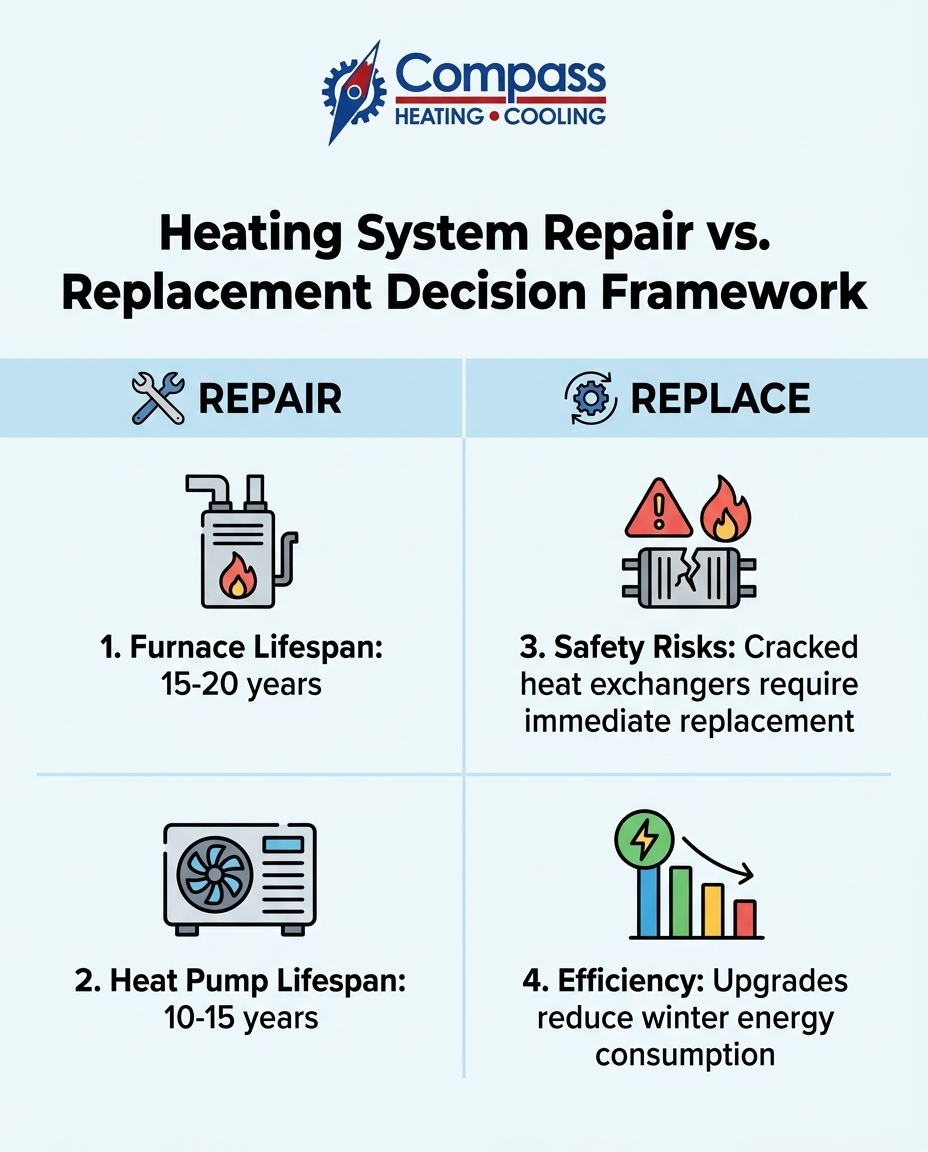
The foundation of any repair versus replacement decision rests on the age of your equipment and its historical performance. Most standard residential furnaces are engineered to provide reliable heating for 15 to 20 years, provided they receive consistent annual maintenance. Heat pumps, which run year-round for both heating and cooling, typically have a slightly shorter expected lifespan of 10 to 15 years. In our years of servicing Loveland CO neighborhoods, we've found that if your heating system is approaching or has surpassed these benchmarks, the math begins to shift heavily toward replacement.
Age alone is not the only metric; the frequency of past breakdowns is equally telling. If you find yourself calling for service every single fall or mid-winter, your system is signaling that its major components are reaching the end of their usable life. Furthermore, the expiration of the manufacturer's warranty significantly alters the viability of continuing to repair an older unit. Once you are paying entirely out of pocket for both parts and labor on a system that is past its prime, a replacement often becomes the more logical path forward.
• System Age — Repair Makes Sense: Under 10 years old (well within expected lifespan) — Replacement is Recommended: Over 15 years old (approaching or past expected lifespan)
• Breakdown Frequency — Repair Makes Sense: First major issue in several years — Replacement is Recommended: Multiple service calls required over the last two seasons
• Warranty Status — Repair Makes Sense: Major components are still fully covered — Replacement is Recommended: Warranty has expired; all parts and labor are out of pocket
• Overall Performance — Repair Makes Sense: Heats the home evenly and efficiently — Replacement is Recommended: Struggles to maintain temperature; noticeable hot/cold spots
The 15-Year Rule for Heating Systems
Our technicians often show homeowners how, as a heating system ages, its overall efficiency naturally decreases due to wear and tear on the blower motor, burners, and heat exchanger. Even if a 15-year-old furnace is still running, it is likely consuming significantly more energy to produce the same amount of heat it did when it was new. Additionally, as manufacturers phase out older models, replacement parts become increasingly difficult to source. A simple repair can turn into a multi-day waiting game for a proprietary control board or specialized motor to ship, leaving your home without heat during a critical weather shift.
When Repairs Become a Band-Aid
We frequently warn our customers about the distinct cycle of diminishing returns when it comes to frequent HVAC fixes. Fixing one failing component on an aging system often places additional hidden stress on the remaining old parts. For instance, installing a brand-new blower motor might restore airflow, but the increased pressure could highlight weaknesses in an aging heat exchanger or ductwork system. Identifying this cycle early helps you avoid throwing good money after bad, allowing you to invest those funds into a reliable, long-term upgrade instead.
Safety First: When a Heating Repair is No Longer a Viable Option
While age and efficiency are important factors, safety is the one non-negotiable metric that immediately tips the scale from repair to replacement. Heating systems rely on controlled combustion or high-voltage electrical components to generate warmth. When the structural integrity of these components fails, the system becomes a hazard to your home and your family. In these scenarios, a repair is no longer a viable option, and a full replacement becomes an urgent necessity.
As local Loveland residents ourselves, our team knows firsthand that Northern Colorado's extreme temperature swings mean a condemned HVAC system is an urgent safety issue; losing heat during a rapid temperature drop is dangerous. The weather can shift from a mild autumn afternoon to a freezing blizzard in a matter of hours. If your heating system is red-tagged and shut down due to a critical safety failure during an October pre-winter heating startup, you must secure a safe, reliable heating source immediately. Patching a condemned system is never an acceptable solution, as temporary fixes on compromised combustion equipment carry severe risks.
Contrasting the anxiety of nursing a failing unit with the peace of mind provided by a new, safe system is a major part of the decision process. Knowing that your furnace will operate flawlessly and safely through the darkest, coldest nights of the year offers a level of comfort that goes far beyond just the temperature of the air coming out of the vents.
Carbon Monoxide and Combustion Risks
The most severe safety risk in a gas furnace is a cracked heat exchanger. The heat exchanger is the metal shield that separates the toxic combustion gases (like carbon monoxide) from the clean air that is circulated into your living spaces. Over years of expanding and contracting with heat, the metal can fatigue and crack. If this happens, carbon monoxide can leak directly into your home's airflow. Because carbon monoxide is colorless and odorless, this presents a life-threatening situation. When our technicians identify a cracked heat exchanger, standard options comparisons for homeowners go out the window—the system must be replaced immediately to protect the household.
Validating the Diagnosis: The Role of an HVAC Second Opinion
If you are told that your heating system requires a massive repair or a complete replacement, it is completely reasonable to seek a second evaluation. A secondary diagnostic check provides clarity and confidence, ensuring that the options comparison you are building is based on accurate, verified facts. This is especially true if an unexpected replacement quote is handed to you during what was supposed to be a routine fall tune-up.
Not all HVAC companies operate with the same level of integrity. Some national chains rely heavily on aggressive sales tactics, pushing replacements even when a straightforward repair would suffice safely and effectively. In contrast, at Compass Heating & Cooling, we pride ourselves on being a locally-owned Loveland company that ensures you receive honest, transparent evaluations. Our reputable local professionals will take the time to show you exactly what has failed, explain the physical evidence, and lay out all safe options without pressuring you into a corner. If you feel rushed or if a technician cannot clearly explain the root cause of the failure, that is a strong indicator of why it is important to get a second opinion on HVAC work before making a final commitment.
Spotting Aggressive Sales Tactics
Recognizing artificial urgency is a key skill for any homeowner. If a technician claims your system is dangerous but cannot show you the crack in the heat exchanger with a camera, or if they offer a "today only" discount that forces an immediate signature, you should pause. Genuine safety concerns are absolute and verifiable. A trustworthy technician will clearly separate a true safety hazard from a system that is simply old and inefficient, providing a no-pressure explanation of all available paths forward so you can make the right choice for your home.
Comparing Long-Term Benefits: Efficiency, Reliability, and Incentives
Our installation team always advises that when weighing a major repair against a replacement, it is vital to look forward at the long-term benefits of upgrading rather than just the short-term nature of patching an old system. A new heating installation is an investment in your home's future comfort, energy consumption, and overall value. Modern heating technology has advanced significantly over the last two decades, offering features and efficiencies that simply were not available when your current unit was manufactured.
Upgrading to a high-efficiency system reduces winter energy consumption by utilizing fuel or electricity much more effectively. Variable-speed blower motors and multi-stage gas valves allow the system to run at lower, quieter speeds most of the time, providing even, consistent heat without the massive energy spikes associated with older, single-stage units. Furthermore, replacing the heating unit often presents an ideal opportunity to evaluate the cooling side of your equipment for whole-home efficiency. Upgrading both sides simultaneously ensures the indoor and outdoor units communicate perfectly.
To evaluate the long-term benefits during an October pre-winter heating startup, follow these steps:
1. Assess current efficiency: Compare your current system's AFUE (Annual Fuel Utilization Efficiency) rating to modern standards.
2. Factor in reliability: Consider the peace of mind that comes with a brand-new factory warranty covering major components.
3. Evaluate whole-home comfort: Note if a new system will resolve ongoing issues like cold spots or excessive operational noise.
4. Review compatible upgrades: Determine if this is the right time for an air conditioning replacement to achieve maximum year-round synergy.
Understanding Generic Energy Incentives
One factor that often makes upgrading more attractive is the availability of generic energy rebates and tax credits. Federal tax credits and various generic utility rebates frequently apply to qualifying high-efficiency installations, such as advanced heat pumps or high-tier gas furnaces. These incentives are designed to encourage homeowners to adopt greener, more efficient technology, and they can help offset the initial investment of a new system. Because these programs change frequently and vary by region, it is always recommended that homeowners consult a tax professional or check with their local utility provider to maximize these benefits and understand exactly what applies to their specific situation.
Whole-System Synergy
Your furnace and your air conditioner share the same indoor blower motor and ductwork. When you replace an aging furnace but leave an old AC coil in place, you miss out on the full efficiency potential of the new blower motor. Matching a new heating unit with a compatible cooling replacement ensures that the entire HVAC ecosystem operates at peak performance, delivering superior humidity control, better air filtration, and optimal year-round comfort.
Your Next Steps Before the First Colorado Freeze
As the autumn days grow shorter, the window to make a calculated, unhurried decision begins to close. Summarizing the core criteria—age, safety, reliability, and efficiency—will help you finalize your path forward. If your system is old, frequently breaking down, or showing any signs of combustion risk, holding onto it through another harsh winter is a gamble that rarely pays off.
When our technicians perform fall maintenance, we always encourage homeowners to review their reports carefully. Look at the technician's notes regarding the heat exchanger, the blower motor amp draw, and the overall cleanliness of the burners. If the report indicates mounting wear and tear, it is time to act.
• Gather your records: Pull the installation date and any recent repair invoices for your current system in Loveland CO.
• Review the diagnostics: Read through the specific failure points identified during your fall startup check.
• Schedule an evaluation: Reach out to trusted Loveland HVAC professionals for a comprehensive, no-pressure consultation.
• Plan the installation: If replacement is the best route, schedule the work before the deep winter freeze sets in to avoid emergency scheduling delays.
Frequently Asked Questions About Heating Options Comparisons
When should I replace my furnace instead of repairing it?
You should strongly consider replacing your furnace when it passes the 15 to 20-year age mark, especially if it requires frequent repairs. If a technician identifies a severe safety hazard, such as a cracked heat exchanger, replacement is mandatory. Additionally, if the cost of a repair is excessively high on an out-of-warranty system, investing those funds into a new, efficient unit is the wiser long-term choice.
Is it worth fixing an old heating system?
Fixing an old heating system often yields diminishing returns, as replacing one part does not stop other aging components from failing shortly after. Once a system is past its expected lifespan, repairs essentially become temporary band-aids. The ongoing costs of multiple service calls and reduced energy efficiency usually outweigh the benefits of keeping an obsolete unit running.
Should I get a second opinion on HVAC replacement?
Yes, you should always get a second opinion if you feel pressured by a technician or if the initial quote lacks a clear, verifiable explanation of the problem. A secondary diagnostic check from a reputable, local company validates the diagnosis and ensures you are not being pushed into an unnecessary replacement. It provides the clarity needed to make a fact-based decision.
What are my options if my furnace fails a fall inspection?
If your furnace fails an October pre-winter inspection, your immediate options are to assess the viability of a safe repair versus planning a swift upgrade. If the failure is a simple, inexpensive sensor, a repair makes sense. However, if the failure involves major components or safety risks, your best option is to schedule a full system replacement before the severe winter weather arrives.
How do generic tax credits affect options comparisons for homeowners?
Generic tax credits and utility rebates can make high-efficiency upgrades much more viable by helping to offset the initial setup investment. When comparing a basic repair to a full replacement, these potential incentives often tip the scales toward upgrading. Homeowners should consult with a tax professional to see how these programs apply to their specific equipment choices.
Make a Confident Decision for Your Home's Comfort
Navigating a sudden heating failure in Loveland CO doesn't have to be an overwhelming experience. By relying on a clear, non-financial framework to evaluate your options, you can cut through the stress and make a choice that serves your home well for years to come. Taking the time to understand the safety, reliability, and efficiency of your current equipment leads to better, more sustainable outcomes than simply reacting to the immediate breakdown.
We know that deciding between a repair and a replacement is a significant step for any homeowner. You deserve a transparent, honest assessment of your system without high-pressure sales tactics. If you are unsure about the true condition of your furnace, reach out to our team for a professional heating system evaluation today, and let Compass Heating & Cooling help you map out the most reliable path forward before winter truly sets in.
hear what our satisfied clients have to say
Our clients consistently praise our exceptional service and attention to detail. They appreciate the personalized approach we take to meet their unique needs, ensuring satisfaction every step of the way.
