


The Seasonal Home Maintenance Checklist: When to Seek an HVAC Second Opinion on Furnace Startups
The Myth of the Dying Furnace: Don't Panic During the First Cold Snap
Here at Compass Heating & Cooling, one of the most common panicked calls we receive in October is about a sudden burning smell during the first fall heating cycle. When you are checking off your seasonal home maintenance checklist, that initial blast of warm, dusty air often sends homeowners into a panic. You might assume the worst, thinking the entire unit is overheating or on the verge of a catastrophic breakdown. In reality, an October heating startup almost always produces some level of odor, and in our experience, it rarely means your equipment has reached the end of its lifespan.
During the long spring and summer months of inactivity, environmental debris naturally settles within the internal compartments of your heating system. Dust, pet dander, and microscopic airborne particles coat the heat exchanger and burner assemblies. When the system fires up for the first time in months, these settled particles are subjected to intense heat and rapidly burn away. This creates a distinct, temporary odor that travels through your ductwork and into your living spaces.
The critical decision point for any homeowner is learning how to differentiate between this harmless seasonal burn-off and a genuine mechanical or safety failure. Normal operational odors fade quickly, while a true mechanical issue will persist and often introduce unusual noises or performance drops. Understanding the basic mechanics of your system empowers you to make informed decisions rather than reacting out of fear. If you ever feel uncertain about what you are smelling or hearing, reaching out for professional HVAC services is the safest way to verify the health of your equipment without jumping to premature conclusions about needing a replacement.
Understanding the Furnace Ignition Sequence
Before you can accurately diagnose a startup issue, our technicians find it helps to explain exactly what happens inside the cabinet when your thermostat calls for heat. Modern heating systems follow a strict, automated sequence of events designed to prioritize safety above all else. If any step in this sequence fails, the system is programmed to shut down completely to prevent dangerous gas buildup or electrical hazards.
1. The Call for Heat: You adjust the thermostat, which sends a low-voltage electrical signal to the furnace control board requesting warm air.
2. Draft Inducer Activation: The control board powers up a small ventilation fan to clear out the combustion chamber.
3. Ignitor Warm-Up: Once the chamber is clear, the system activates the ignition source, preparing to light the incoming fuel.
4. Gas Valve Opening: Fuel is released into the burner assembly only after the ignitor is fully ready.
5. Flame Proving: A dedicated sensor confirms that a stable flame is present before allowing the main blower fan to distribute warm air into your home.
This precise timing ensures that unburned fuel never accumulates inside the unit. If you are facing a scenario that points toward a full heating system replacement, a technician will typically analyze this specific sequence to determine exactly where the communication breakdown is occurring.
The Role of the Draft Inducer Motor
The draft inducer motor is the very first component to activate during the ignition sequence. Its primary job is to create a safe, upward draft that pushes residual gases out of the heat exchanger and safely through the exhaust flue. Because it spins up before anything else happens, it is often the source of the initial mechanical noise you hear when the system starts. If the control board does not detect the proper draft pressure—usually monitored by a small pressure switch—the sequence halts immediately, and the burners will not ignite.
Ignition and Flame Proving
Once the draft inducer establishes a safe airflow, the system moves to ignition. Depending on the age and model of your equipment, this might involve a glowing hot surface ignitor or a rapid clicking spark ignitor. The gas valve opens only after this ignition source is confirmed active. Immediately following ignition, the flame sensor steps in. This small metal rod sits directly in the path of the burner flame. If the sensor does not detect a steady, consistent flame within a few seconds, it signals the control board to abruptly shut the gas valve. This automatic safety lockout prevents raw gas from flooding your basement or utility closet.
Normal Dust Burn-Off vs. Mechanical Failure: A Side-by-Side Comparison
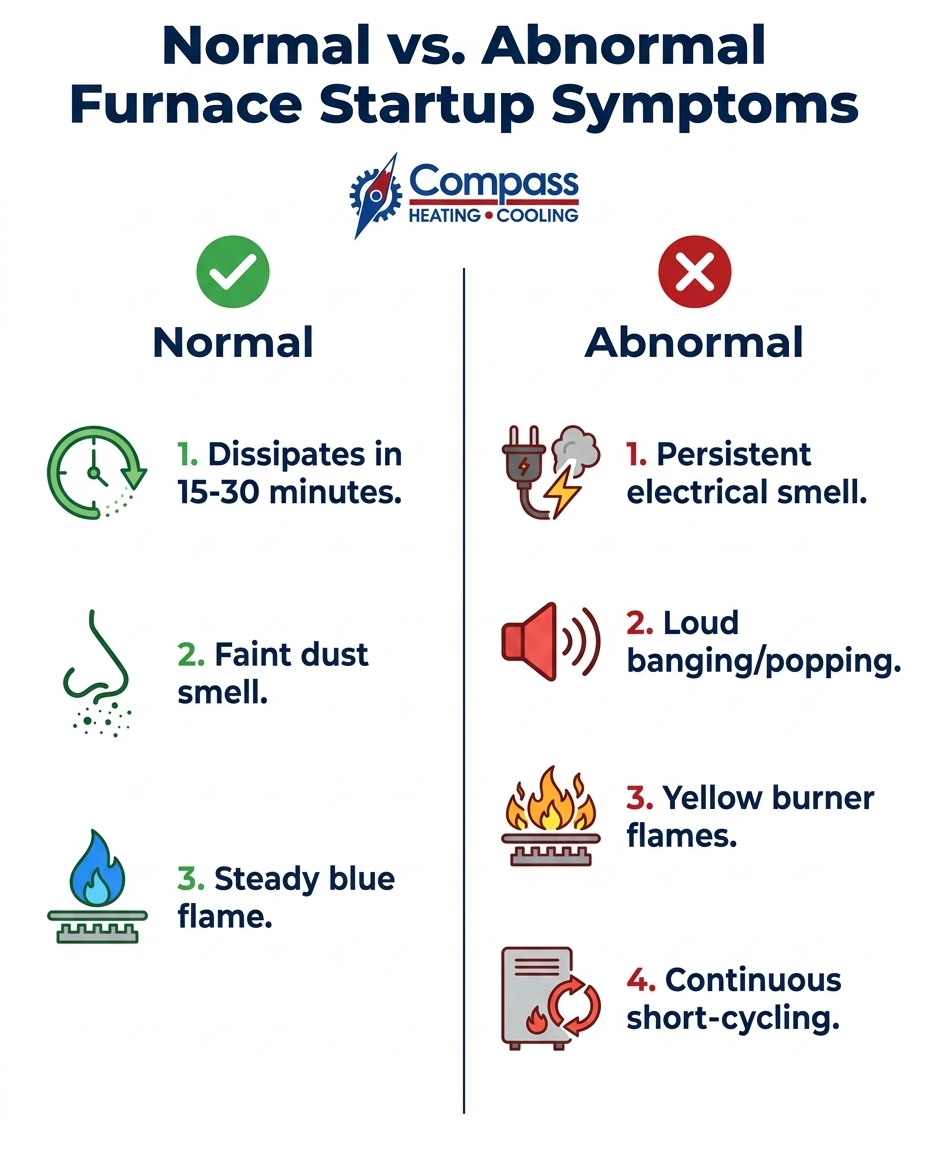
Knowing what to look for—and what to smell for—can save you from unnecessary stress during the first cold snap of the year. Normal dust burn-off is a brief, expected event. The scent is often described as slightly dusty or similar to a warm toaster, and it typically dissipates entirely within 15 to 30 minutes of the first heating cycle. You should never see smoke, and the system should run quietly and consistently once the main blower engages.
In our years serving Loveland, we've seen how our local Chinook winds and dry climate significantly increase summer dust accumulation in ductwork and internal equipment cabinets. Because our region experiences such dry, dusty conditions throughout the warmer months, the resulting burn-off smells during the first major temperature drop can be far more pronounced than in more humid climates. This intense but temporary odor is exactly why our team at Compass Heating & Cooling always emphasizes understanding the difference between a dirty system and a broken system.
Abnormal symptoms require immediate attention. Persistent electrical burning smells (like melting plastic or ozone), loud banging or popping noises from the metal cabinet, continuous short-cycling (turning on and off every few minutes), or yellow, wavering burner flames indicate a serious problem. One of the most severe mechanical failures is a compromised heat exchanger. The heat exchanger is the metal shield that separates the toxic combustion gases from the clean air blowing into your home. If this component cracks due to age or overheating, it can introduce dangerous carbon monoxide into your living spaces. Verifying a cracked heat exchanger is not a visual guessing game; it requires a licensed professional utilizing digital combustion analysis or specialized inspection cameras.
• Odor Profile — Normal Startup (Dust Burn-Off): Faint dusty or "warm air" smell. — Abnormal Startup (Potential Failure): Sharp electrical, melting plastic, or sulfur smells.
• Duration — Normal Startup (Dust Burn-Off): Dissipates within 15 to 30 minutes. — Abnormal Startup (Potential Failure): Persists throughout the entire heating cycle.
• Visual Signs — Normal Startup (Dust Burn-Off): Steady, bright blue burner flames. — Abnormal Startup (Potential Failure): Yellow, lazy, or wavering burner flames; visible soot.
• Auditory Signs — Normal Startup (Dust Burn-Off): Standard fan hum and smooth ignition. — Abnormal Startup (Potential Failure): Loud banging, booming, or persistent clicking.
• System Behavior — Normal Startup (Dust Burn-Off): Completes a full heating cycle smoothly. — Abnormal Startup (Potential Failure): Short-cycles repeatedly without warming the home.
Integrating Heating Checks into Your Seasonal Home Maintenance Checklist
Preparing your home for winter involves more than just sealing windows and cleaning gutters. Your heating equipment requires specific attention before it takes on the heavy workload of the colder months. Homeowners can safely perform several non-technical checks to ensure their system is ready to operate efficiently, without ever needing to open the main mechanical cabinet or handle electrical components.
• Change the HVAC air filter: A clogged filter restricts airflow, forcing the blower motor to work harder. This restriction can cause the heat exchanger to overheat, triggering safety lockouts. Always start the season with a fresh, clean filter.
• Clear all supply and return vents: Walk through every room and ensure that rugs, furniture, and heavy curtains are not blocking the floor or wall registers. Restricted airflow imbalances the system and reduces overall efficiency.
• Test the thermostat early: Do not wait for the first freezing night to switch your thermostat to heating mode. Test the system on a mild afternoon. Let it run for a full cycle to ensure the burners ignite and the warm air reaches your target temperature.
• Check the outdoor exhaust flues: If you have a high-efficiency system, inspect the PVC exhaust pipes on the exterior of your home. Ensure they are free of leaves, insect nests, or debris that could block the safe venting of combustion gases.
• Schedule a professional evaluation: Enrolling in a comprehensive preventative maintenance plan ensures a licensed technician cleans the flame sensor, tests the electrical draw, and verifies the integrity of the heat exchanger before the heavy winter usage begins.
The Danger of Misdiagnosis and Aggressive Sales Tactics
The first major freeze of the season triggers a massive influx of service calls across the region. Homeowners who skipped their early maintenance checks often turn on their systems only to encounter strange smells or startup failures. This sudden surge in demand can stretch service companies thin, sometimes leading to rushed technician visits. When schedules are overloaded, the time spent meticulously diagnosing a complex ignition failure often shrinks, increasing the risk of a misdiagnosis.
We've seen a common pattern during this busy season: the mischaracterization of minor, easily resolvable issues. For example, our technicians frequently find that a dirty flame sensor will cause a system to shut down immediately after ignition, perfectly mimicking a major catastrophic failure. A rushed or inexperienced technician might interpret this safety lockout as a dying control board or a failing gas valve. The real danger arises when these rushed diagnostics are paired with high-pressure sales tactics. Some large national chains use this seasonal panic to demand immediate, on-the-spot replacement of the entire system, claiming it is too dangerous to operate.
Working with a locally-owned company like ours at Compass Heating & Cooling provides a crucial layer of protection against these aggressive strategies. A locally rooted approach prioritizes honest, transparent diagnostics over quick sales. If a critical component like a heat exchanger is truly condemned, a trustworthy technician will not just tell you it is broken—they will physically show you the crack using a specialized inspection camera or provide concrete readings from a combustion analyzer. Transparency is the only way to ensure you are replacing a system because it has genuinely failed, not because it was simply misunderstood.
When to Seek an HVAC Second Opinion
Facing a major repair bill or a recommendation for total system replacement is stressful, especially when temperatures are dropping. However, you are never obligated to sign a contract on the spot. Knowing when to pause the process and request another expert's evaluation is a vital part of protecting your home and your budget. Clear, objective criteria can help you determine if a second opinion is warranted.
The Problem: You are told your system is a severe safety hazard and must be replaced immediately, but the technician cannot provide visual evidence or specific technical data to back up the claim.
The Cause: High-pressure sales environments often train technicians to condemn older units based strictly on age or minor wear and tear, rather than actual mechanical failure. They leverage the homeowner's fear of carbon monoxide or freezing pipes to force a quick decision.
The Solution: Demand to see the evidence. If a heat exchanger is cracked, ask to see the camera footage. If a motor is dead, ask to see the multimeter readings. If the technician becomes defensive or refuses to explain the exact nature of the failure, halt the work and schedule a second opinion with a different, reputable company. Note that complex diagnostics require precision, whether transitioning from late-season cooling issues requiring air conditioning repair or addressing early heating failures. A true professional will always welcome a second set of eyes on a major condemnation, as their diagnosis should easily stand up to scrutiny.
You should also seek a second opinion if the proposed solution involves a full system replacement for a unit that is relatively young (under ten years old). While premature failures can happen, they are rare, and a major component failure on a newer unit should often be covered by a manufacturer warranty. Always verify the warranty status before agreeing to buy brand-new equipment.
Navigating the Repair vs. Replace Decision
If a second opinion confirms that your system does indeed have a significant mechanical failure, you are faced with the classic repair versus replace dilemma. This decision is rarely black and white; it requires a careful evaluation of your equipment's age, the cost of the proposed repair, and the overall safety implications of keeping the unit running.
Age and Repair Costs: A general industry guideline is to consider replacement if the cost of the repair multiplied by the age of the unit exceeds the cost of a new system. Pouring extensive funds into a fifteen-year-old unit is generally a poor investment, as other major components are likely nearing the end of their operational lifespan.
Safety Considerations: Safety must always be the primary driver of your decision. If a heat exchanger is compromised, the risk of carbon monoxide exposure is simply too high to ignore. While a heat exchanger can technically be replaced, the labor involved is extensive, making it cost-prohibitive on older units.
Efficiency and Incentives: When our team walks a customer through this choice, we always point out that modern, high-efficiency systems offer significant energy savings compared to units built just a decade ago. When calculating the long-term costs, factor in the monthly reduction in utility usage. Additionally, various generic energy rebates, federal tax credits, or local utility incentive programs may apply to qualifying high-efficiency installations. These programs can offset the initial investment, making a new installation more financially viable. Understanding how these incentives factor into the AC repair vs replace decision—as well as heating decisions—can drastically alter your final calculation. Always advise with your utility provider or a tax professional to verify current, active programs before making your final choice.
Frequently Asked Questions About Furnace Startups and Second Opinions
How long should a furnace smell like burning when first turned on?
A normal dust burn-off smell should dissipate within 15 to 30 minutes of the first heating cycle. This brief odor is simply the result of dust and debris that settled on the heat exchanger over the summer burning away. If the smell persists for hours, smells like melting plastic, or is accompanied by smoke, shut the system down and contact a professional immediately.
How do I know if my furnace ignitor is bad?
If your ignitor is failing, you will typically hear the draft inducer motor start, followed by a click, but no warm air will be produced. The system will usually attempt this sequence a few times before entering a safety lockout mode. A technician can test the electrical resistance of the ignitor to confirm if it has burned out and requires replacement.
What are the signs of a cracked heat exchanger?
Signs of a cracked heat exchanger include persistent strange odors, soot buildup around the burners, yellow or dancing burner flames, and carbon monoxide detectors sounding alarms. Because the heat exchanger is hidden deep inside the cabinet, a definitive diagnosis always requires a professional using a combustion analyzer or an inspection camera.
When should I get a second opinion on HVAC repair?
You should seek a second opinion anytime a technician condemns your system without showing you concrete, visual, or measured evidence of the failure. It is also wise to get another perspective if you feel pressured to sign a replacement contract immediately, or if the repair quote seems exceptionally high for a relatively young piece of equipment.
Should I get a second opinion on furnace replacement?
Yes, replacing a heating system is a major financial investment, and getting a second opinion ensures you are making the right choice. A second professional can verify the diagnosis, offer alternative repair options if viable, and provide competing installation estimates to ensure you are receiving fair market value.
Is it normal for a furnace to short-cycle during the first fall startup?
No, short-cycling—where the system turns on and off rapidly without reaching the target temperature—is never a normal startup symptom. It usually indicates a restricted airflow issue, a dirty flame sensor, or a thermostat miscommunication, all of which require attention to prevent long-term damage to the blower motor and heat exchanger.
Get an Honest Assessment for Your Heating System
Knowing the distinct difference between normal seasonal startup quirks and genuine mechanical failures brings immense peace of mind. You do not have to navigate unusual smells, strange noises, or aggressive sales tactics alone. Having a trusted, local expert verify the health of your equipment ensures your home remains safe and comfortable all winter long. If you are in Loveland CO and need a transparent, no-pressure evaluation or a second opinion on a recent diagnosis, reach out for an honest assessment today.
hear what our satisfied clients have to say
Our clients consistently praise our exceptional service and attention to detail. They appreciate the personalized approach we take to meet their unique needs, ensuring satisfaction every step of the way.
