

Troubleshooting Winter Heating Issues: When to Get an HVAC Second Opinion
Facing Early-Winter Heating Interruptions
Your furnace kicks on, runs for a few minutes, and shuts down—long before the living room actually feels warm. When you are caught in this exact situation, finding reliable home maintenance tips and troubleshooting becomes an urgent priority. Discovering that your heating system is inconsistent right as the weather turns freezing is incredibly stressful. You rely on that equipment to keep your household safe, comfortable, and protected from the elements, and sudden interruptions disrupt your entire daily routine.
The critical decision point you face right now is determining whether that cold house is due to a simple airflow restriction you can fix yourself, or a complex mechanical failure that requires a licensed expert. Addressing these performance gaps early is essential. When November early winter cold snaps hit the area, a struggling system will only degrade further as the season progresses. In our experience at Compass Heating & Cooling, ignoring a minor hiccup today almost always leads to a total system breakdown when you need your heat the most.
Before you panic about a massive repair bill, there is a clear roadmap for safely evaluating the situation. By systematically ruling out basic external factors, you can either restore your comfort immediately or gather the right information to hand over to a professional. If you determine that the issue goes beyond a dirty filter or a blocked vent, reaching out for professional HVAC services is the smartest way to protect your home before deep winter arrives.
Safe Homeowner Checks Before Calling a Professional
When your heating equipment starts acting up in the Loveland and Northern Colorado region, it is crucial to understand the strict boundaries between safe homeowner maintenance and dangerous DIY repairs. You should never attempt to open the furnace cabinet to tinker with electrical wiring, gas valves, or internal mechanical components. Doing so is incredibly dangerous, risks carbon monoxide exposure, and will almost certainly void your manufacturer warranty. However, our team typically sees that many service calls can be avoided by performing several completely safe, external checks to rule out basic airflow and communication issues.
• Verify thermostat settings: Double-check that your thermostat is actually set to "Heat" and that the target temperature is higher than the current room temperature. This sounds overly simple, but accidental bumps or digital programming errors are incredibly common.
• Replace thermostat batteries: If your screen is blank or flashing, swap out the batteries. A weak battery can cause the thermostat to lose its connection to the furnace, resulting in intermittent heating.
• Inspect your air filters: Pull out your current furnace filter and hold it up to a light. If you cannot see light passing through the material, it is entirely clogged with dust, pet dander, and debris. Replacing a dirty, clogged air filter is the single most effective way to improve airflow and prevent the system from overheating.
• Unblock return and supply vents: Walk through every room in your house and ensure that no heavy furniture, thick rugs, or heavy curtains are blocking your air registers. Your furnace relies on a balanced intake and output of air to function correctly.
If you have completed this checklist and your home is still freezing, it is time to schedule a heating system evaluation to accurately pinpoint the underlying malfunction.
The Impact of Air Filters on System Performance
Most homeowners severely underestimate how much damage a clogged air filter can do. According to data from the U.S. Department of Energy, replacing a dirty filter with a clean one can significantly improve your system's energy efficiency while protecting internal components. When airflow is restricted, the blower motor has to work twice as hard to pull air through the home. More importantly, the heat exchanger inside the furnace cannot shed the heat it produces. This causes the internal temperature of the furnace to spike, triggering an automatic safety shutdown to prevent a fire. If your system is constantly overheating and shutting down, we always advise our customers that a fresh filter is your first line of defense.

Symptoms That Demand Professional HVAC System Diagnostics
Once you have ruled out the basic airflow restrictions, any persisting issues usually point to internal mechanical stress. Transitioning from safe DIY checks to a professional diagnosis is necessary when your system exhibits specific warning signs. One of the most glaring symptoms is short-cycling, where the furnace turns on, runs for a brief period, and then shuts off rapidly without ever reaching your desired thermostat setting. This rapid on-and-off behavior is a major red flag that something inside the cabinet is failing, overheating, or miscommunicating.
Uneven heating is another strong indicator of a deeper problem. If you have verified that all your vents are open and your filter is clean, but certain rooms remain freezing while others are sweltering, our technicians frequently find that you likely have an issue with your ductwork, a failing blower motor, or an improperly sized system. These imbalances become incredibly obvious during November early winter cold snaps, when the system is suddenly forced to run for longer, sustained cycles.
Listen and smell for danger:
• Banging or booming noises: A loud boom when the furnace ignites often indicates delayed gas ignition, which is a serious safety hazard.
• Squealing or grinding: High-pitched squeals usually point to a failing blower motor belt or worn-out bearings that require immediate replacement.
• Acrid or burning odors: While a brief dusty smell is normal the very first time you turn the heat on for the season, persistent burning plastic or electrical odors mean you should turn the system off immediately at the breaker.
It is also important to note that the diagnostic needs of traditional gas furnaces differ greatly from other equipment. If your home utilizes heat pump systems, the troubleshooting process involves checking refrigerant levels, reversing valves, and outdoor defrost controls—all of which strictly require specialized gauges and a licensed technician to handle safely.
Understanding Short-Cycling During Extreme Temperature Swings
To truly understand why your furnace is struggling, you have to look at the environment it is operating in. Short-cycling is the term used when a heating system prematurely shuts down its heating cycle and then restarts just minutes later. This constant rebooting is incredibly damaging to heating equipment. Every time a furnace starts up, it draws a massive amount of energy and puts heavy mechanical stress on the ignition components and the blower motor. When it does this dozens of times an hour, the wear and tear accelerates exponentially.
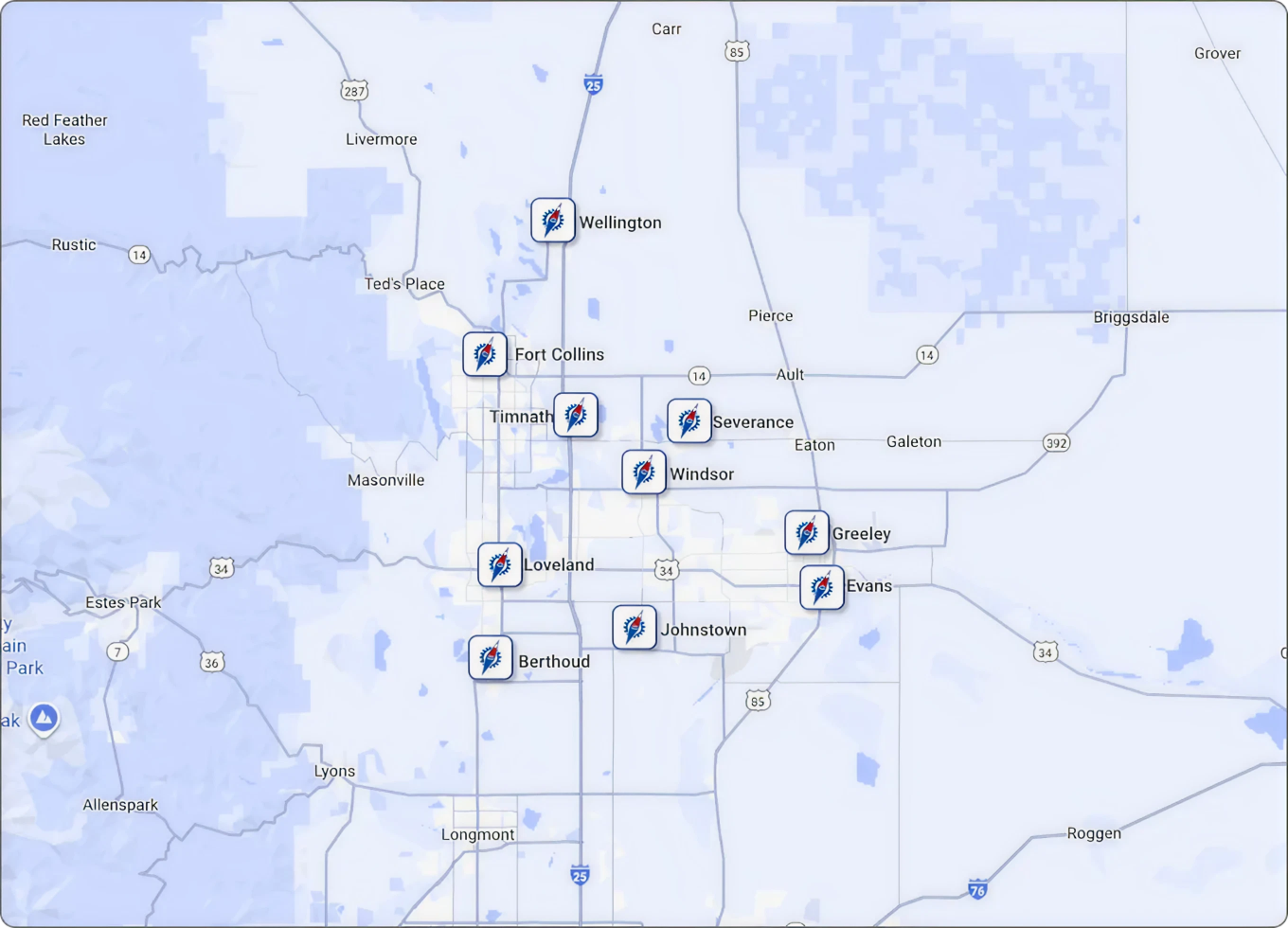
In the Loveland and Northern Colorado region, unpredictable fall temperature swings put unique rapid-cycling stress on residential heating systems. A pattern we see often is that daytime temperatures can be relatively mild, only to see the thermometer plummeting into the 20s during November evenings. These sudden, extreme drops in outdoor temperature aggressively expose underlying airflow and sizing issues that might go completely unnoticed during milder weather.
• Cycle Duration — Normal Furnace Cycle: 10 to 15 minutes of steady heating — Short-Cycling Furnace: 1 to 3 minutes before abruptly shutting off
• Temperature Consistency — Normal Furnace Cycle: Reaches the thermostat set point evenly — Short-Cycling Furnace: Never reaches the set point; house stays cold
• Energy Consumption — Normal Furnace Cycle: Efficient, steady energy usage — Short-Cycling Furnace: High energy spikes from constant restarting
• Component Wear — Normal Furnace Cycle: Standard, expected degradation over years — Short-Cycling Furnace: Accelerated wear on igniters and blower motors
When the temperature outside drops rapidly, the heat loss of your home increases. Your furnace has to work harder to compensate. If the system is oversized for the home, it will blast the area with heat, satisfy the thermostat too quickly, and shut down, only to realize the house is still cold a few minutes later. If it is undersized, it will run constantly and overheat. Correcting short-cycling before the first deep freeze of the year is an absolute necessity to prevent a catastrophic breakdown mid-winter.
Navigating Diagnostics: When to Seek an HVAC Second Opinion
Facing a major furnace repair or being told you need a full system replacement is a daunting experience. Homeowners are often caught off guard when a routine service call turns into a massive proposed project. It is vital to remember that minor airflow issues—like a severely clogged secondary heat exchanger or a dirty flame sensor—are sometimes misdiagnosed as catastrophic, unfixable failures by inexperienced or aggressive technicians. You always have the right to pause and seek further clarification.
Understanding why getting a second opinion on HVAC work is important can save you from making a rushed, expensive decision. In fact, our team frequently encounters situations where a second diagnostic visit completely changes the outcome for a homeowner. Paying a modest diagnostic fee to have a fresh set of expert eyes look at your system is a small price to pay to verify whether a total replacement is actually necessary, or if a specific, targeted repair will safely restore your heat.
Red flags during a diagnostic visit:
• High-pressure tactics: If a technician tells you that you must sign a contract today or the price will double tomorrow, that is a manufactured emergency.
• Refusal to explain the failure: A true professional will gladly show you the exact broken component, explain how it failed, and answer all your questions clearly.
• Vague terminology: Be wary of technicians who say the system is "just old and tired" without pointing to a specific mechanical breakdown or failed safety test.
If you find yourself in this situation during the November early winter cold snaps, ask the first technician for a detailed, written breakdown of their findings. Request the exact name of the failed part, the model number of your furnace, and any specific measurements they took (like carbon monoxide readings or electrical voltage drops). Having this documentation ready to share with a second company ensures a completely transparent and accurate follow-up evaluation.
Choosing Honest Local Expertise Over High-Pressure Tactics
When your heating system is compromised, the company you choose to invite into your home matters just as much as the brand of equipment you operate. The HVAC industry unfortunately has its share of aggressive sales strategies, often employed by large national chains that prioritize commission-based sales over accurate, methodical diagnostics. Working with technicians who prioritize honesty over quotas completely changes the repair experience.
At Compass Heating & Cooling, our honest, transparent approach as a locally owned company means we focus on empowering homeowners rather than pushing unnecessary replacements. Based on our years of serving the community, we firmly believe that an educated homeowner is our best client. When our technicians arrive, they bring a deep local knowledge of regional climate challenges. They understand exactly how the Loveland and Northern Colorado region's rapid temperature swings impact ductwork, insulation, and furnace performance, allowing for a much more accurate diagnostic process.
A transparent, no-pressure diagnostic process should always begin with listening to your specific concerns. The technician should perform a comprehensive inspection, clearly explain what they found, and present you with all available options. If a repair can safely extend the life of your system, that option should be on the table. Reassuring homeowners that an honest evaluation focuses on extending system life safely whenever possible is the cornerstone of genuine local service. If you need reliable HVAC services in Loveland, choosing a team that values long-term relationships over quick sales is the best way to protect your home.
Frequently Asked Questions About Heating Diagnostics
Why is my furnace running but the house is cold?
A furnace running without producing heat usually indicates a severe airflow restriction or a failed ignition sequence. When the air filter is completely clogged, the blower motor circulates ambient air but cannot pull enough air over the heat exchanger to actually warm it. Additionally, if the burners fail to ignite due to a dirty flame sensor or a blocked gas valve, the system will blow unheated air through your ductwork. If replacing your filter and checking your thermostat does not solve the problem during November early winter cold snaps, this symptom requires a professional diagnosis to inspect the heating elements.
What causes a furnace to short cycle?
Short-cycling is most commonly caused by the furnace overheating and triggering its internal safety limit switch. This overheating is frequently the result of a clogged air filter trapping heat inside the cabinet, or blocked return vents starving the system of air. Faulty thermostats that misread the room temperature, or an oversized furnace that heats the space too rapidly, can also cause the system to turn on and off continuously. Because short-cycling causes immense wear and tear on the blower motor and igniter, ignoring it during the winter is highly dangerous and can lead to premature system failure.
When should I call a professional for furnace repair?
You should call a licensed professional immediately after basic homeowner checks—like replacing the air filter, opening all vents, and verifying thermostat batteries—fail to restore your heat. The threshold for professional intervention is crossed the moment you suspect an internal mechanical, electrical, or gas-related failure. If you hear loud banging noises upon startup, smell persistent burning odors, or notice the system constantly short-cycling, these are safety concerns that require specialized diagnostic tools and expert knowledge to resolve safely.
What furnace maintenance can I do myself?
Safe homeowner maintenance is strictly limited to external checks that do not require opening the sealed furnace cabinet. You can and should regularly replace your air filters, clear any furniture or rugs away from your supply and return vents, and replace the batteries in your digital thermostat. Keeping the area immediately surrounding your furnace clean and free of stored boxes or flammable materials is also a vital DIY task. However, any internal mechanical adjustments, electrical testing, or gas valve inspections firmly require a licensed professional to ensure your home remains safe.
How do I know if my furnace needs a professional diagnosis?
Your furnace needs a professional diagnosis when its performance drops significantly despite having a brand-new air filter and clear ductwork. Routine maintenance involves simple cleaning and filter changes, whereas diagnostic troubleshooting is required when the system refuses to ignite, blows cold air, or makes unusual grinding noises. If you find yourself constantly adjusting the thermostat just to maintain a baseline level of comfort, an expert needs to evaluate the blower motor, the heat exchanger, and the system's overall airflow balance.
Is it worth paying for an HVAC second opinion?
Yes, paying a secondary diagnostic fee is absolutely worth the investment when you are facing a massive repair bill or a recommendation for a full system replacement. The return on investment for a second opinion is enormous if it reveals that a simple, targeted repair can safely fix a problem previously diagnosed as a total failure. A transparent second look provides incredible peace of mind, ensuring you are not falling victim to high-pressure sales tactics and that your final decision is based on verified, accurate mechanical facts.
Secure Your Winter Comfort with an Honest Evaluation
Addressing heating inconsistencies early in the season is the only reliable way to ensure your home remains warm and safe through the harshest months. When you experience sudden drops in performance, understanding the strict boundary between safe, DIY airflow checks and the need for professional mechanical diagnostics protects both your property and your wallet. In the Loveland and Northern Colorado region, ignoring a struggling furnace is simply not an option.
If you have checked your filters and vents but your system is still failing to keep up, do not wait for a total breakdown. You deserve an accurate, transparent assessment of your equipment without the stress of aggressive sales quotas. Reach out to a local expert today to schedule a thorough, no-pressure inspection, and secure your winter comfort with a team that truly has your best interests in mind.
hear what our satisfied clients have to say
Our clients consistently praise our exceptional service and attention to detail. They appreciate the personalized approach we take to meet their unique needs, ensuring satisfaction every step of the way.