



Common HVAC Sizing Mistakes We Find in Windsor New Construction Homes
Why Your Brand-New Windsor Home Is Struggling to Stay Cool
Your air conditioner is running constantly, but the master bedroom still feels like an oven. When you purchase a freshly built property, you naturally assume it features a perfectly calibrated cooling setup. Unfortunately, one of the most common HVAC sizing mistakes we find in Windsor new construction homes is equipment that is poorly matched to the actual thermal needs of the house. In reality, the intense heat of the August late-summer cooling season exposes underlying flaws in how the equipment was selected and installed. As the Compass Heating & Cooling team has seen across countless local developments, Windsor's rapid temperature shifts and 95-degree days put maximum stress on cooling equipment, revealing builder shortcuts that prioritize speed over precise scientific measurements. You might assume your unit is simply working hard to combat the heat, but physical symptoms like uneven cooling and high indoor humidity usually point to a fundamental sizing error.
If you are tired of battling uneven temperatures, the first step to true comfort is ensuring every component of your HVAC system is correctly matched to your home, which is why getting a professional assessment before committing to an AC installation in Windsor is so important.
The Hidden Flaws in Builder-Grade Installations
In our experience working with Northern Colorado homeowners, many are surprised to learn that passing a municipal building inspection does not guarantee an air conditioner is the right size for the home. Local building codes primarily focus on basic safety and minimum energy efficiency standards, not optimal indoor comfort or precise load matching. During the construction phase, developers are managing dozens of contractors and tight deadlines. In this rushed environment, the exact science of calculating how much heating and cooling a specific home needs often takes a back seat to getting equipment ordered and installed as quickly as possible. As a result, our dispatchers constantly receive late-summer service calls from homeowners left dealing with systems that struggle to manage the indoor climate once the extreme summer temperatures arrive.
The Reality of Rapid-Build Subdivisions: Rule of Thumb vs. Exact Science
In many of the Windsor rapid-build new construction developments popping up across the region, we consistently see developers still relying on outdated "rule of thumb" calculations to select equipment. This flawed method simply takes the total square footage of the house and assigns a specific tonnage of cooling capacity based on broad averages. While this might have been an acceptable shortcut decades ago, it is completely inadequate for modern construction.
Today's homes are built with advanced energy-efficient windows, superior spray-foam insulation, and tightly sealed building envelopes. These modern building materials drastically reduce the amount of heat that enters the home from the outside. Because the home retains its internal temperature so well, it actually requires a smaller, more precisely calibrated air conditioner than an older, draftier home of the exact same size. When builders use outdated square-footage rules, they inevitably install equipment that is far too large for the home's actual thermal load.
The Industry Standard: ACCA Manual J
The actual industry standard for determining correct equipment capacity is the ACCA Manual J load calculation. Our team relies on this exact science, which takes dozens of unique variables into account to determine exactly how much cooling power your home requires. When you skip these proper calculations, the result is equipment that is completely mismatched to the home's thermal envelope. If you are looking for reliable Windsor HVAC services, you should always verify that a full load calculation is performed before any equipment is swapped out.
• Rule of Thumb — How It Works: Bases AC tonnage solely on total square footage. — Accuracy Level: Very Low — Common Outcome in New Builds: Oversized equipment, high humidity, short-cycling.
• Manual J Calculation — How It Works: Measures windows, insulation, house orientation, and local climate data. — Accuracy Level: Very High — Common Outcome in New Builds: Perfectly matched equipment, optimal dehumidification, even temperatures.
Bigger Isn't Better: The Oversized AC Dilemma
The Problem: A common misconception among homeowners we speak with is that a larger capacity air conditioner will cool a house better, faster, and more efficiently. In reality, an oversized air conditioner is one of the worst things you can have installed in a modern, tightly sealed home. When a unit has too much cooling capacity for the space, it cools the air too quickly and shuts off before it has a chance to complete a full, healthy cycle.
The Cause: This phenomenon leads to short-cycling AC run times (turning on and off rapidly). To understand why this is detrimental, you have to look at how an air conditioner manages moisture. An AC unit does not just lower the temperature; it also dehumidifies the air. However, the dehumidification process takes time. The indoor coil must get cold enough to extract moisture from the air passing over it. When a massive, oversized unit blasts the house with cold air, the thermostat reaches its target temperature in just ten or fifteen minutes. The system shuts down long before it has had enough time to pull the latent humidity out of the indoor air.
The Long-Term Damage of Short-Cycling
The Solution: The only permanent fix for an oversized system is replacing it with a properly sized unit based on a scientific load calculation. Ignoring the problem leads to severe mechanical consequences. Short-cycling places immense stress on the system's most expensive components. Every time an air conditioner starts up, it draws a massive surge of electricity to get the compressor and blower motor spinning.
• Premature Compressor Failure: The compressor is the heart of the system. Constant starting and stopping causes it to overheat and wear out years before its expected lifespan.
• Worn Contactors and Capacitors: The electrical components that manage the power surges take a beating during short-cycling, leading to frequent breakdowns.
• Spiking Energy Bills: Because air conditioners use the most power during startup, a system that turns on and off ten times an hour will consume significantly more electricity than a properly sized unit that runs for longer, steady cycles.
Starved for Air: Recognizing Undersized Return Ducts
Proper cooling requires a perfectly balanced volume of air entering and exiting the equipment. Your air conditioner needs to pull in just as much warm air from the house as it pushes out in cold air. Unfortunately, ductwork sizing shortcuts are incredibly common in Windsor rapid-build new construction developments. In our years of inspecting these properties, we frequently find builders installing undersized return air ducts to save space and material costs, effectively starving the HVAC system of the air it needs to breathe.
When the return ducts are too small, the blower motor has to work much harder to pull air through the restricted space. This creates high static pressure inside the ductwork, which is essentially the resistance to airflow. Think of it like trying to breathe heavily through a tiny cocktail straw—your lungs have to work incredibly hard to get enough oxygen. Your HVAC system experiences the exact same strain when the return vents are undersized.
Physical Symptoms of High Static Pressure
You do not need specialized diagnostic tools to notice the physical signs of starved returns. If you know what to listen and look for, the symptoms of builder-grade corner-cutting become very clear. Recognizing these signs of an undersized AC unit or restricted ductwork can save you from a major system failure.
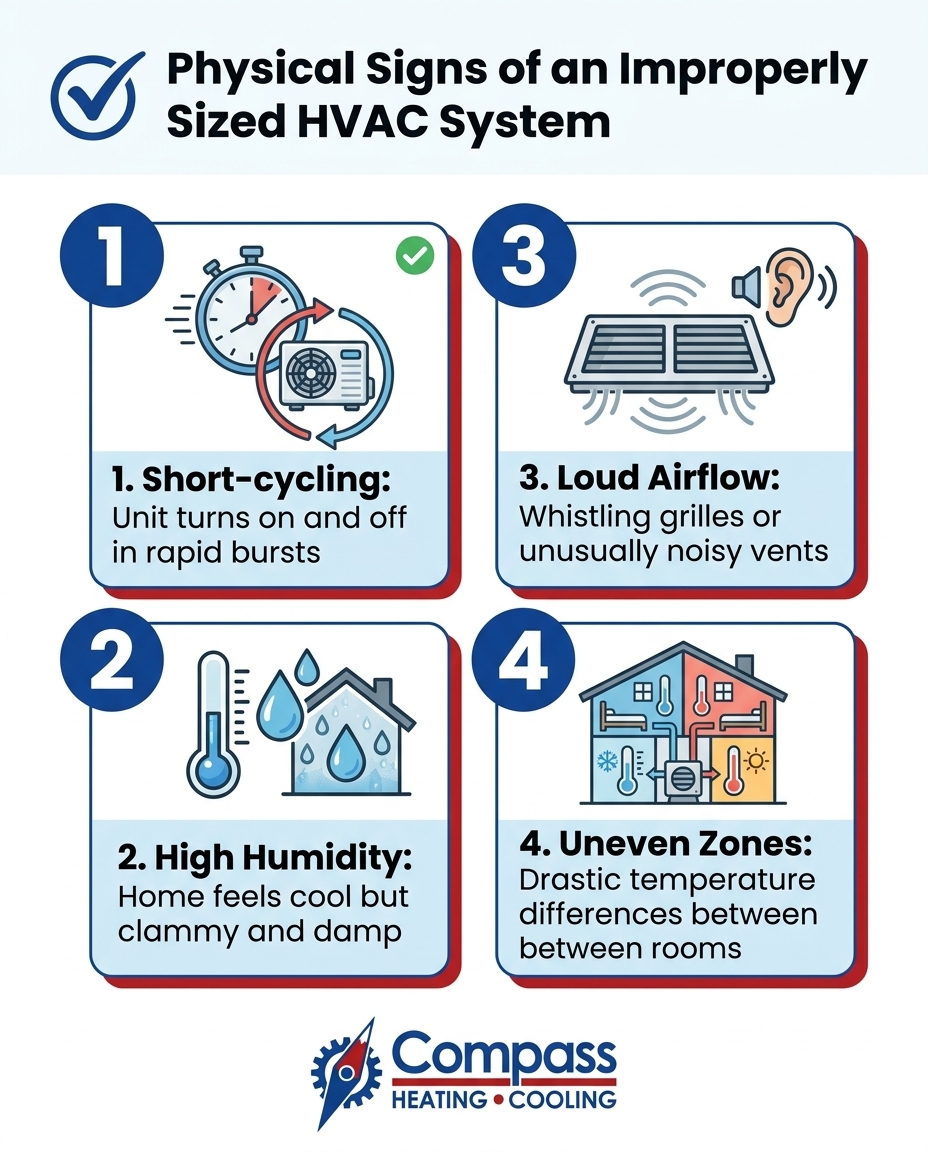
1. Whistling Grilles: If you hear a high-pitched whistling or whining sound coming from your large metal return grilles, the system is trying to pull more air through the opening than the grille can handle.
2. Loud, Rushing Airflow: A properly sized duct system should be relatively quiet. If your vents sound like a jet engine when the system kicks on, the air velocity is too high due to restricted duct size.
3. Doors Pulling Shut: If interior doors slam shut on their own when the AC turns on, or if you feel strong resistance when trying to open a door near a return vent, there is a severe pressure imbalance in the home.
4. Overheating Blower Motors: While you cannot see this symptom directly, restricted airflow causes the indoor blower motor to run dangerously hot, often leading to premature failure.
Late-Summer Humidity and Uneven Temperature Zones
The mechanical issues of oversizing and short-cycling directly translate to the physical discomfort you experience in your living spaces. During the August late-summer cooling season, the intense heat makes these specific humidity and zoning flaws impossible to ignore. A pattern we see often as kids head back to school is homes with oversized air conditioners feeling cold but uncomfortably clammy. Because the unit shuts off before removing the humidity, your skin feels sticky, and the air feels heavy, even when the thermostat reads 70 degrees.
This rapid cycling also creates drastic temperature imbalances throughout the house. Second-story bedrooms or rooms located furthest from the indoor blower often remain stubbornly warm, while the rooms closest to the equipment turn into iceboxes. These hot and cold spots are a direct result of the system failing to circulate air long enough to mix the temperatures evenly across the entire home.
The Challenge of Thermal Stratification
Heat naturally rises, meaning the upper levels of your home will always carry a heavier thermal load than the basement or main floor. To combat this, a properly sized air conditioner must run in long, steady cycles to push the heavy, conditioned air all the way up to the second-story bedrooms. When short-cycling AC run times (turning on and off rapidly) plague the system, the blower simply does not run long enough to force the cold air upstairs. The thermostat downstairs quickly registers that the main floor is cool and shuts the entire system down, leaving the upstairs bedrooms completely starved of conditioned air right when you need it most.
How Builder-Grade Equipment Impacts Overall Airflow
While we often focus on the outdoor AC compressor when discussing summer cooling, the indoor air handler or furnace plays an equally vital role. The indoor blower fan is entirely responsible for moving cooled air throughout the house during the summer. Even if you have a top-of-the-line outdoor unit, our technicians routinely find that a mismatched or basic builder-grade indoor unit can ruin the entire cooling process.
Many rapid-build homes are outfitted with basic, single-stage blower motors. These motors only operate at one speed: 100% capacity. They blast air through the ductwork at full force, which exacerbates the airflow restrictions caused by poor duct design and contributes to loud, noisy vents. If your home has undersized ductwork, forcing a single-stage blower to push maximum air through tight spaces guarantees high static pressure and uneven cooling.
Variable-Speed Technology for Superior Cooling
To achieve optimal summer dehumidification and quiet airflow, modern homes benefit greatly from variable-speed blower technology. We highly recommend variable-speed motors because, unlike single-stage models, they can adjust their airflow output based on the exact needs of the home at any given moment. They can run at lower, quieter speeds for longer periods, which allows the indoor coil to extract significantly more humidity from the air without overcooling the house. While the blower is technically part of your heating systems, its ability to manage airflow is what makes or breaks your summer comfort.
• Single-Stage (Builder-Grade) — Airflow Delivery: On or Off (100% capacity only) — Dehumidification Capability: Poor (short run times) — Noise Level: Loud and forceful
• Variable-Speed — Airflow Delivery: Adjusts continuously to demand — Dehumidification Capability: Excellent (long, slow cycles) — Noise Level: Whisper quiet
Getting a Second Opinion: The Value of a Professional Load Calculation
You should never assume your new build's system is inherently correct just because the house is brand new. If you are experiencing short-cycling, high humidity, or whistling vents in your Windsor rapid-build new construction developments, it is time to get a professional second opinion from a team that knows local building styles inside and out. Diagnosing static pressure and duct sizing is a critical step before you ever consider replacing or modifying any equipment. Guessing at the problem will only lead to more wasted money and continued discomfort.
Working with an experienced local professional means getting an honest assessment based on building science, not guesswork. At Compass Heating & Cooling, our deep local experience providing honest second opinions and accurate load calculations for Northern Colorado homeowners ensures you get the exact right solution for your unique floor plan. We take the time to measure your windows, evaluate your insulation, check the orientation of your home to the sun, and map out your ductwork.
What a Diagnostic Assessment Entails
A true professional load calculation goes far beyond looking at the square footage on a blueprint. When our Compass Heating & Cooling technicians perform a comprehensive diagnostic visit, we evaluate the total thermal envelope of your home. This proactive assessment prevents long-term damage to the compressor and blower motor by identifying static pressure bottlenecks before they cause a catastrophic breakdown. We measure the actual airflow at your return and supply vents to see exactly where the system is choking, allowing us to recommend precise duct modifications or equipment adjustments to restore balance to the home.
Frequently Asked Questions About New Home Air Conditioning
How do I know if my new home HVAC is oversized?
The most obvious sign our technicians look for is short-cycling AC run times (turning on and off rapidly). If your air conditioner blasts cold air for just ten minutes and then shuts off, it is likely too large for your home's thermal load. You will also notice that the house feels cold but clammy, as the system does not run long enough to properly dehumidify the indoor air. Frequent hot and cold spots between different rooms are also a strong indicator.
Why is my AC short cycling in late summer?
During the August late-summer cooling season, your system is under maximum stress. Short-cycling happens when an oversized unit cools the immediate area around the thermostat too quickly, shutting down the cycle prematurely. It can also be triggered by severe airflow restrictions, such as an incredibly dirty air filter or undersized return ducts, which cause the internal safety switches to shut the equipment down to prevent overheating.
What happens if my return air ducts are undersized?
Undersized return ducts starve your HVAC system of the air it needs to operate, creating high static pressure. This forces your indoor blower motor to work significantly harder, leading to premature wear and tear, higher electricity consumption, and loud whistling noises at the grilles. Over time, restricted airflow can cause the indoor evaporator coil to freeze solid, completely shutting down your cooling capabilities.
Do builder-grade AC units use more electricity?
Yes, in our experience, basic builder-grade units generally consume more electricity than higher-tier, variable-speed models. They typically feature single-stage compressors and blowers that only run at 100% capacity, drawing maximum power every time they turn on. When paired with the outdated sizing methods used in many Windsor rapid-build new construction developments, these oversized, single-stage units start and stop constantly, causing massive electrical surges that drive up your monthly utility bills.
Can an oversized air conditioner cause high indoor humidity?
Absolutely. An air conditioner removes humidity by passing warm indoor air over a cold indoor coil, which extracts the moisture. This process takes time. Because an oversized unit cools the air so rapidly, it reaches the target temperature and shuts off long before it has had a chance to pull the latent moisture out of the air, leaving your home feeling cool but uncomfortably damp.
How long should a properly sized AC run during a hot day?
On a hot, 95-degree late-summer day, a perfectly sized air conditioner should run almost continuously, operating in long, steady cycles of 30 to 45 minutes or more. This continuous operation is actually the most efficient way for the system to run, as it avoids the massive power surges of constant startups while providing excellent, whole-home dehumidification and perfectly even temperatures across every room.
Secure Your Comfort with a Professional System Assessment
Recognizing the physical signs of improper sizing—like loud whistling vents and short-cycling AC run times (turning on and off rapidly)—is the very first step to achieving true indoor comfort. If your brand-new home is struggling to manage the August late-summer cooling season, you do not have to settle for clammy air and hot upstairs bedrooms. Actionable solutions exist once a proper, scientifically backed diagnosis is made. By scheduling an expert evaluation with Compass Heating & Cooling to correct builder-grade shortcuts, you will gain clear, non-technical indicators to help verify if your system is mis-sized, and the peace of mind knowing that a professional load calculation will properly diagnose and correct the flaws in your home's thermal design.
hear what our satisfied clients have to say
Our clients consistently praise our exceptional service and attention to detail. They appreciate the personalized approach we take to meet their unique needs, ensuring satisfaction every step of the way.
.png)