



How to Get a Permit for AC Replacement in Northern Colorado
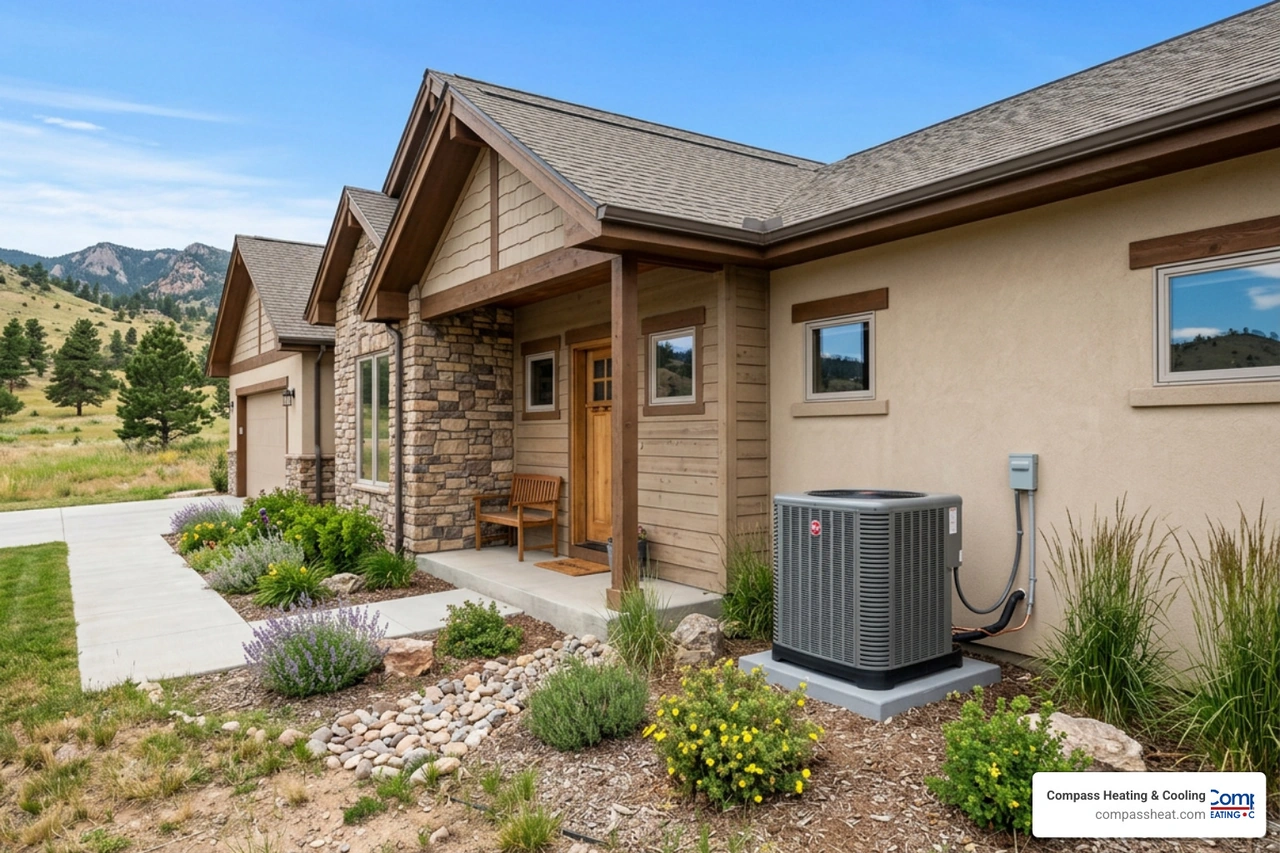
Does Replacing an AC Unit in Northern Colorado Require a Permit?
If you're wondering do you need a permit to replace AC in Northern Colorado, the short answer is yes — in virtually every case. Whether you're in Fort Collins, Loveland, or Greeley, replacing a central air conditioning system is classified as mechanical work and requires a permit before the job begins.
Quick answer for Northern Colorado homeowners:
• Fort Collins - Yes, a mechanical permit is required for all AC replacements
• Loveland - Yes, mechanical permit required; no exemption for like-for-like swaps
• Greeley - Yes, mechanical permit required under the 2021 International Mechanical Code
• Larimer County and Weld County - Yes, permits are required throughout both counties
• Portable or window AC units - Generally exempt; no permit needed
Skipping the permit process can lead to real problems — denied insurance claims, complications when selling your home, and work that doesn't meet current safety standards. The good news is that the process is straightforward when you know what to expect.
This guide walks you through exactly what's required, city by city, so you can move forward with confidence.
Do You Need a Permit to Replace AC in Northern Colorado?
When the summer sun beats down on the Front Range, a functioning air conditioning system isn't a luxury — it’s a necessity. However, before you swap out an old, struggling unit for a modern, energy-efficient system, you must address the local regulatory requirements.
In Larimer County and Weld County, local building departments view central air conditioners not as simple plug-and-play appliances, but as complex mechanical systems. Because of this, obtaining a mechanical permit is a mandatory step in the replacement process.
To understand the broader context of these requirements, you can read our guide on Do I Need Permits for Installing HVAC. Whether you reside in Fort Collins, Loveland, Windsor, or any of our other AC Service Areas, local building divisions enforce these rules to protect homeowners and maintain high standards of structural and electrical safety.
Why do you need a permit to replace AC in Northern Colorado?
Permitting is not just about municipal paperwork; it is primarily about safety, system performance, and consumer protection. When our team installs a new cooling system, we are working with several critical elements that require careful oversight:
• Safety Standards: Air conditioners rely on high-voltage electrical connections. An improperly wired system poses a serious fire hazard or risk of electrical shock.
• Electrical Connections: A new, highly efficient AC unit may draw a different electrical load than your old one. Inspectors verify that your home’s electrical panel, wiring, and outdoor disconnect box can safely handle the load.
• Refrigerant Handling: Modern cooling systems use advanced, environmentally friendly refrigerants. Proper handling, line set insulation, and leak prevention are critical to environmental safety and system longevity.
• System Sizing: A system that is too large or too small will short-cycle, waste energy, and fail prematurely. Permitting processes often require proof that the system has been engineered specifically for your home's unique layout and local altitude.
Are any cooling systems exempt from local permits?
While permanent home comfort upgrades require official oversight, certain minor projects and temporary cooling solutions do not require a mechanical permit:
• Portable Units: Free-standing portable air conditioners that vent through a window do not require a permit.
• Window ACs: Standard window-mounted units that plug into existing electrical outlets are exempt.
• Minor Repairs: Routine maintenance, replacing a fan motor, swapping a capacitor, or cleaning coils do not trigger permit requirements.
• Thermostat Swaps: Upgrading to a smart thermostat using existing low-voltage wiring does not require a permit.
However, if your project involves opening refrigerant lines, modifying ductwork, or running new electrical circuits, you will need to secure a permit.
Local Permitting Rules Across Northern Colorado Municipalities
Different jurisdictions across the Front Range have unique processes, building codes, and utility partnerships. Navigating these rules depends entirely on your specific municipality.
• Fort Collins — Primary Permit Required: Mechanical Permit (includes basic electrical) — Key Governing Code: 2026 Amended Building Codes — Inspection Portal / System: Citizen Access Portal (Accela)
• Loveland — Primary Permit Required: Mechanical & Electrical Permits — Key Governing Code: International Mechanical Code (with local amendments) — Inspection Portal / System: Loveland Building Services Portal
• Greeley — Primary Permit Required: Mechanical Permit — Key Governing Code: 2021 International Mechanical Code — Inspection Portal / System: City of Greeley Online Permit Center
If you are planning an upgrade in the Larimer County area, review our dedicated page on AC Replacement Fort Collins CO to see how local regulations shape the installation process. If you are starting from scratch with a brand-new system, check out our guide on AC Installation Fort Collins CO.
Fort Collins mechanical permit requirements
In Fort Collins, the municipal government manages a highly streamlined digital permitting system. All mechanical permit applications are processed online through the Citizen Access Portal.
There are several unique local factors to keep in mind for Fort Collins properties:
• Altitude Considerations: Fort Collins sits at an elevation of over 5,000 feet. While altitude de-rating is primarily a concern for fuel-burning heating appliances (which must be de-rated to account for thinner air), cooling systems must also be carefully sized using local high-altitude design data to ensure efficient operation.
• 2026 Building Codes: Fort Collins adopted updated building and energy codes that went into effect on April 1, 2026. This transition updated the standards for energy efficiency, duct sealing, and structural safety.
• Active Stock Plans: For newer subdivisions or standardized home layouts, any active stock plans filed prior to the code transition have expired. All new AC installations must be individually submitted and compliant with the updated 2026 code standards.
Loveland and Greeley HVAC regulations
If you live in Loveland or Greeley, the local rules have their own specific nuances:
• Loveland Water and Power Coordination: Unlike communities served by national utilities, Loveland operates its own municipal utility, Loveland Water and Power (LWP). Replacing your AC with an energy-efficient heat pump requires coordinating with LWP to ensure your system qualifies for local rebates and aligns with municipal grid standards.
• Radon Zone 1 Considerations: Larimer County is designated as a Zone 1 radon area, meaning there is a high administrative focus on preserving the integrity of your home’s envelope. Any penetrations made through your foundation or exterior walls for refrigerant lines must be meticulously sealed and fire-blocked to prevent radon gas entry.
• Greeley and Weld County Rules: Inside Greeley city limits, the City of Greeley Building Division manages all mechanical permits under the 2021 International Mechanical Code. If your home sits outside city limits in unincorporated Weld County, your permit will be handled directly by the Weld County Building Department.
How to Apply for and Obtain an HVAC Permit
Securing a permit involves gathering technical data to prove the new system will run safely and efficiently. If you choose to work with a professional contractor, they will typically handle this entire administrative process for you. You can learn more about selecting the right partner in our guide on How to Hire an HVAC Technician: A Guide for Homeowners.
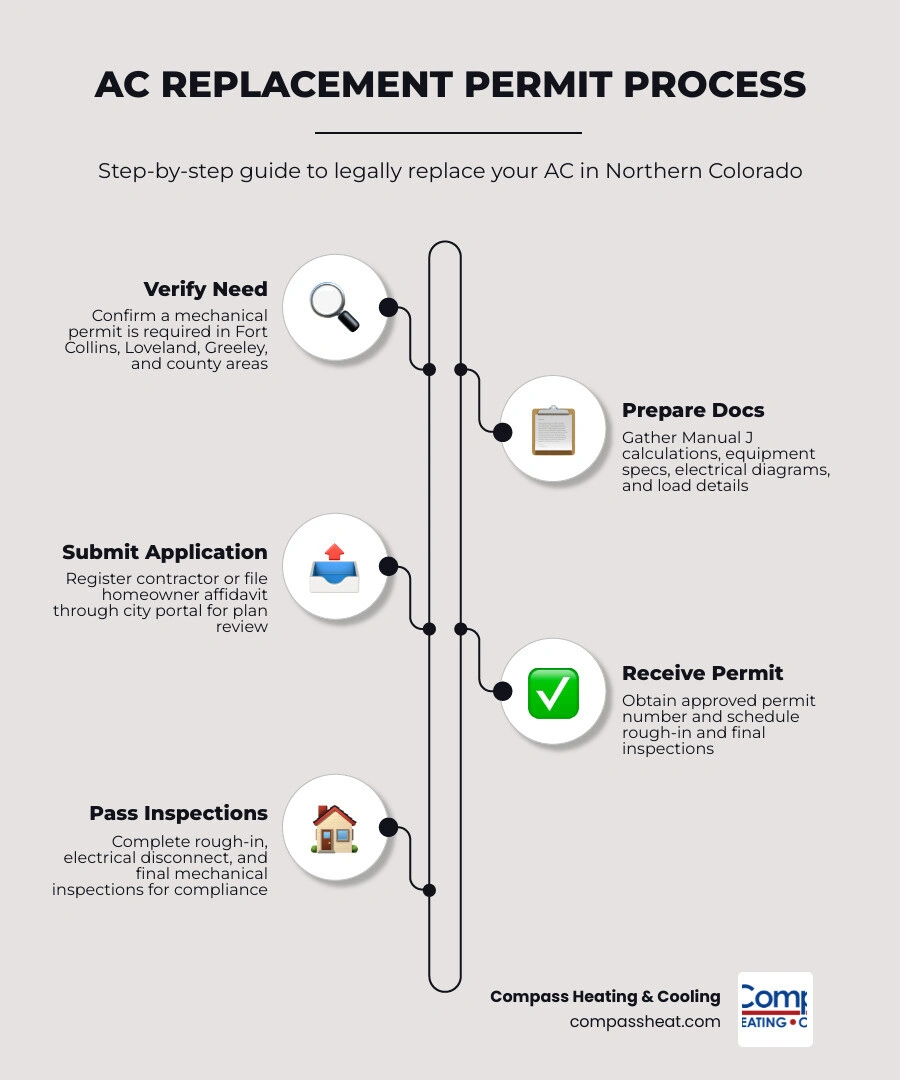
The step-by-step application process
To pull a mechanical permit for an air conditioner replacement, the applicant must submit a complete packet of technical documentation:
1. Manual J Load Calculations: This calculation determines the exact cooling load of your home based on square footage, insulation levels, window orientation, and local climate data. This ensures your new AC is sized correctly.
2. Equipment Cut Sheets: Technical specification documents from the manufacturer showing the model numbers, SEER2 efficiency ratings, electrical requirements, and refrigerant type.
3. Electrical Diagrams: A simple schematic showing how the unit will connect to the home’s electrical panel, including the wire gauge and circuit breaker size.
4. Homeowner Affidavit: If you are a homeowner attempting to pull the permit yourself for your primary residence, you must sign an affidavit taking full legal responsibility for code compliance.
5. Contractor Registration: If a professional is doing the work, they must be actively registered and licensed with the local municipality (such as Fort Collins or Loveland) and hold the appropriate local business licenses.
Once submitted, local plan examiners review the files. For standard, straightforward residential replacements, online approvals are often granted within a few business days.
Required inspections after pulling a permit
The permit process isn't complete when the paperwork is issued; it requires a physical inspection after the installation is finished. For a standard AC replacement, a municipal inspector will visit your home to verify the following:
• Electrical Disconnect: The inspector will check that a weatherproof electrical disconnect box is installed within a direct, unobstructed line-of-sight of the outdoor condenser unit. This allows a technician to safely cut power during future maintenance.
• Refrigerant Line Protection: They will ensure the refrigerant line sets are fully insulated, properly supported, and that wall penetrations are sealed against pests, moisture, and air leaks.
• Condensate Drainage: The inspector will verify that the condensation produced by your indoor evaporator coil drains safely to an approved location without risking water damage to your home’s structure.
• Clearance and Support: The outdoor unit must sit on a stable, level pad with adequate clearance from walls and landscaping to allow proper airflow.
What Happens If You Replace an AC Without a Permit?
In the middle of a hot summer, it can be tempting to hire an unlicensed "handyman" who promises a quick, cheap installation without "bothering" with municipal permits. However, skipping this step carries significant risks:
• Retroactive Permitting: If the city discovers unpermitted work, they can issue a stop-work order or require you to pull a retroactive permit. This often involves paying double the standard permit fees, and you may have to open up finished walls or ceilings so the inspector can verify the hidden wiring and ductwork.
• Home Resale Issues: During a home sale, buyers' home inspectors and title companies routinely cross-reference the home's physical systems with municipal permit records. If they discover an unpermitted AC unit, it can stall the sale, force you to get retroactive permits under tight deadlines, or require you to pay for a complete re-installation.
• Insurance Claim Denials: If an unpermitted electrical connection causes a fire or a faulty condensate line causes major water damage, your homeowner's insurance carrier has the legal right to deny your claim because the work was performed without a permit and inspection.
• Voided Manufacturer Warranties: Major HVAC manufacturers require professional installation and compliance with local building codes to keep their parts warranties active. An unpermitted installation can void your warranty, leaving you responsible for future repair bills.
If you are trying to decide whether to repair your current aging system or move forward with a permitted replacement, consult our AC Repair vs Replace Decision Guide for Northern Colorado.
Frequently Asked Questions About Northern Colorado AC Permits
Do you need a permit to replace AC in Northern Colorado if it is a like-for-like swap?
Yes. Many homeowners assume that if they are replacing an old air conditioner with a new one of the exact same size, in the exact same location, no permit is required. However, local building departments do not recognize a "like-for-like" exemption for permanent mechanical equipment.
Even if the physical footprint is identical, safety codes, electrical standards, and environmental regulations regarding refrigerants have likely changed since your old system was installed. A permit and safety inspection ensure your new unit complies with current codes.
Can a homeowner pull their own HVAC permit in Colorado?
In most Northern Colorado municipalities, a homeowner is legally allowed to pull a mechanical permit for their own single-family, owner-occupied primary residence. However, doing so means you assume all legal liability for the safety and code compliance of the installation.
Furthermore, federal environmental law requires anyone handling, charging, or recovering chemical refrigerants to hold an active EPA Section 608 Certification. Even if you pull the permit yourself, you cannot legally connect and charge the refrigerant lines without this certification. For this reason, almost all homeowners find it safer and easier to have a licensed, professional HVAC contractor pull the permits and manage the installation.
How do energy codes and SEER ratings affect the permitting process?
Local building departments enforce the International Energy Conservation Code (IECC). In Climate Zone 5B (which covers Northern Colorado), any new air conditioning system must meet strict minimum energy efficiency standards, measured in SEER2 (Seasonal Energy Efficiency Ratio 2).
When you apply for a permit, you must submit manufacturer specifications proving your new system meets these minimum efficiency thresholds. Additionally, choosing a high-efficiency system or converting to a cold-climate heat pump can make you eligible for valuable utility rebates from providers like Fort Collins Utilities or Loveland Water and Power.
Get Professional Support for Your AC Replacement
Navigating building codes, filing load calculations, and coordinating inspections can feel overwhelming. At Compass Heating & Cooling, we make the process entirely stress-free by handling every single step of the permitting process for you.
Our experienced, licensed technicians serve homeowners across Fort Collins, Loveland, Windsor, Wellington, Severance, Timnath, Johnstown, Greeley, Berthoud, and Evans. We ensure your new air conditioning system is perfectly sized, fully code-compliant, and safely installed.
Beyond managing the paperwork, we specialize in maximizing your savings by coordinating utility rebates that can save you thousands of dollars on high-efficiency equipment. Plus, with our priority maintenance plan, you will receive ongoing support, seasonal tune-ups, and exclusive discounts to keep your system running beautifully for years to come.
Ready to upgrade your home comfort with total peace of mind?
Schedule your professional AC replacement with Compass Heating & Cooling
hear what our satisfied clients have to say
Our clients consistently praise our exceptional service and attention to detail. They appreciate the personalized approach we take to meet their unique needs, ensuring satisfaction every step of the way.
.png)