



How to Diagnose AC Contactor Failure in Front Range Heat
AC Contactor Burned Out Symptoms and Causes in Front Range Heat: What You Need to Know
AC contactor burned out symptoms and causes in Front Range heat are something every Northern Colorado homeowner should recognize before a small, inexpensive part turns into a compressor replacement.
Here are the most common symptoms of a burned-out AC contactor:
• AC won't turn on — outdoor unit is completely silent despite a cooling call from the thermostat
• Loud humming or buzzing — the unit tries to start but the compressor never kicks on
• Chattering or clicking sounds — rapid on-off cycling from the contactor struggling to hold position
• AC won't shut off — contacts are welded closed, keeping the compressor running continuously
• Warm air from vents — the indoor fan runs but the outdoor unit isn't receiving power
• Burning smell near the outdoor unit — scorched contacts or melted insulation
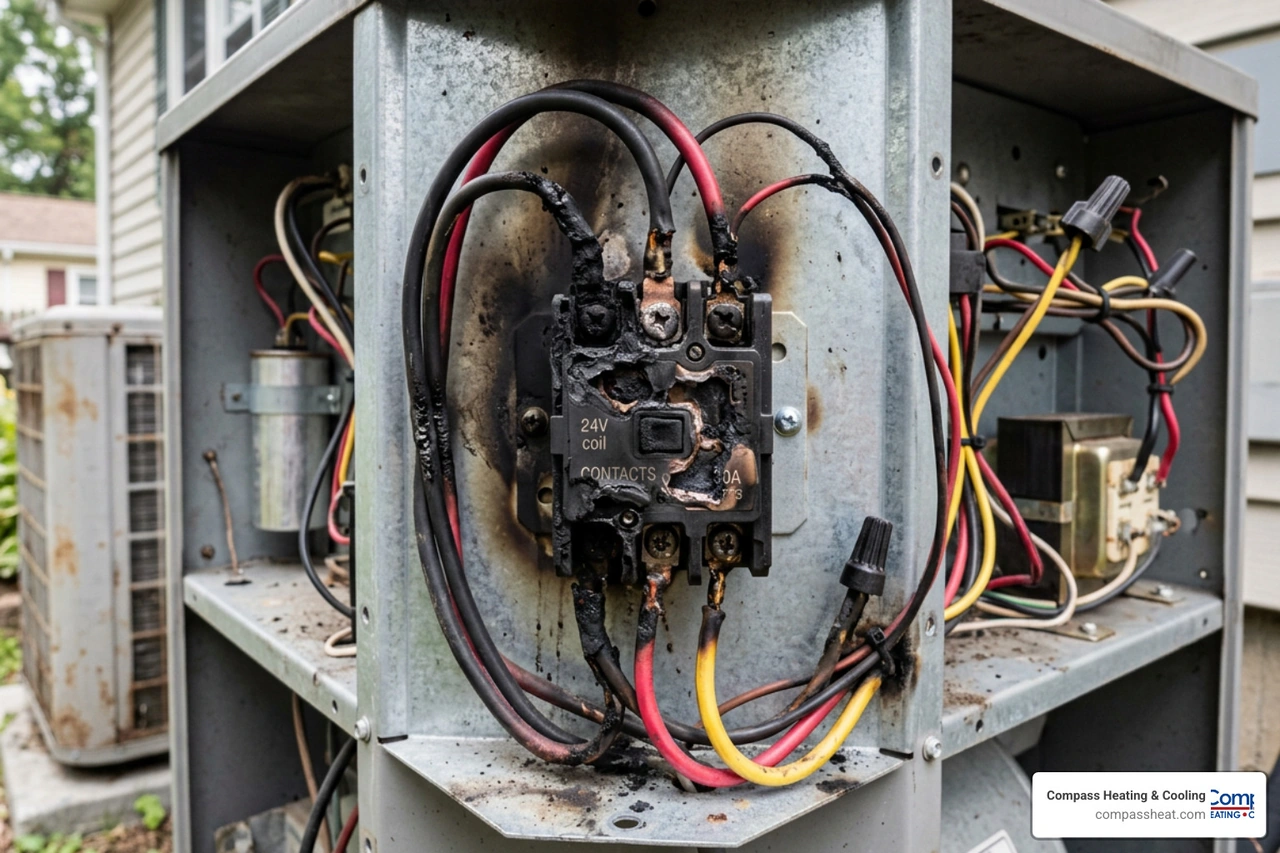
• Visible burn marks or pitting — dark, cratered contact surfaces inside the electrical compartment
And the most common causes in Colorado's Front Range climate include:
1. Voltage fluctuations and power surges during summer storm season
2. June startup stress after months of winter inactivity
3. Short cycling that accelerates contact erosion
4. Wind-driven dust and debris from the plains clogging the condenser
5. Freeze-thaw cycles silently degrading components between October and March
6. Insects nesting inside the contactor housing
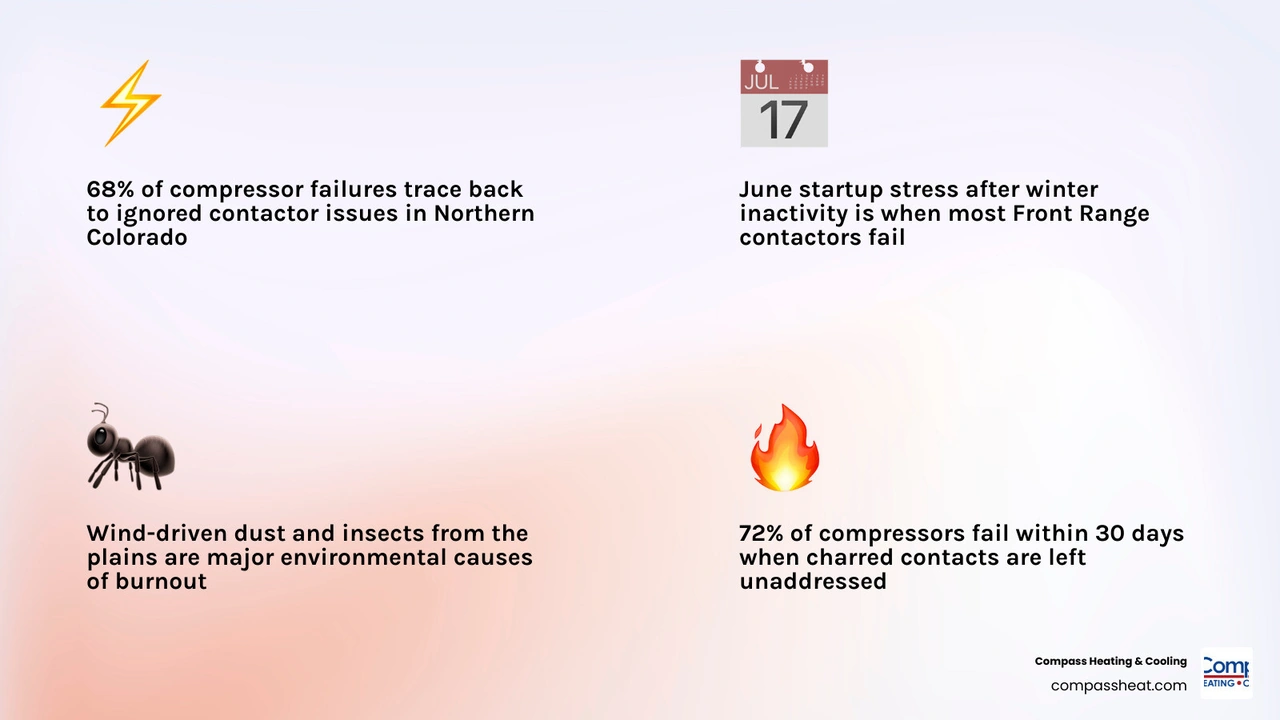
When the first real heat wave rolls through the Front Range — often in June, not August — your AC goes from months of sitting idle to running at full load overnight. That sudden demand is exactly when a weakened contactor gives out. And if it's ignored, research shows 68% of compressor failures trace back to contactor issues, with 72% of compressors failing within 30 days of charred contacts going unaddressed.
What Is an AC Contactor and How Does It Work?
Before diving into why these components fail in the intense Colorado climate, it is essential to understand what an AC contactor actually does.
Think of the contactor as the heavy-duty gatekeeper of your air conditioner's outdoor condensing unit. It is an electromechanical switch that controls the flow of high-voltage electricity to your system's two most power-hungry components: the compressor and the condenser fan motor.
To understand the broader context of this process, you can read more about How Does an Air Conditioner Work. In short, the system relies on two separate electrical circuits:
• The Low-Voltage Circuit (24V): When your home's thermostat detects that the temperature has risen above your set limit, it sends a low-voltage 24-volt signal down to the outdoor unit. This signal travels directly to a small wire coil wrapped around an iron core inside the contactor.
• The High-Voltage Circuit (240V): The 24-volt signal energizes the coil, creating an electromagnetic field. This magnetic force pulls down a spring-loaded metal plunger (or armature). Attached to this plunger are conductive metal contacts. When the plunger is pulled down, these contacts meet, completing the heavy-duty 240-volt circuit and allowing raw power to rush into your compressor and fan motor.
Because central air conditioners cycle on and off dozens of times a day — performing between 1,500 and 3,000 cycles per cooling season — the contactor is one of the most mechanically active parts of your entire HVAC system. Over an average service life of 8 to 12 years, a contactor will endure over 50,000 individual switching events, with every single connection creating a microscopic electrical arc.
AC Contactor Burned Out Symptoms and Causes in Front Range Heat
When June heat waves roll off the Rockies and temperatures spike across Fort Collins, Loveland, and Greeley, your air conditioner is suddenly forced to work overtime. If your system is struggling to keep up or won't kick on at all, you might be dealing with a failed contactor.
If you are currently asking yourself Why Isn't My AC Working, checking the contactor is a great place to start. To help you identify whether your electrical switch is on its last legs, we have compiled a quick-reference guide comparing normal operation to common failure symptoms:
• Healthy / Normal — What You Hear: A single, solid "click" when the cooling cycle starts, followed by smooth running. — What You See: Clean, smooth silver-alloy contact points; no discoloration on the plastic housing. — System Performance: Quick startup, reliable cooling, and normal cycle lengths.
• Pitted / Failing — What You Hear: Loud humming, intermittent buzzing, or rapid chattering sounds. — What You See: Small dark craters or carbon buildup on the contact faces; slight yellowing of plastic. — System Performance: Delayed startups, short cycling, or occasional warm air blowing indoors.
• Burned Out / Dead — What You Hear: Complete silence from the outdoor unit, or a continuous, strained hum with no fan movement. — What You See: Heavy black scorch marks, melted plastic housing, or swarming insects inside. — System Performance: The outdoor unit will not turn on at all, while the indoor blower fan blows warm room-temperature air.
• Welded Closed — What You Hear: The outdoor unit continues to run even when the indoor thermostat is switched off. — What You See: Contact points fused together; plunger stuck in the downward position. — System Performance: Continuous cooling or a completely frozen outdoor unit covered in ice.
Let's look closer at the three primary categories of ac contactor burned out symptoms and causes in front range heat that you are likely to experience.
Auditory Red Flags: Humming, Chattering, and Buzzing
Your ears are often the first diagnostic tool when a contactor begins to fail. Because the contactor relies on electromagnetism to function, physical or electrical wear changes the sounds your outdoor unit makes.
• The Chattering Contactor: If you hear a rapid clicking or "chattering" sound when the AC tries to turn on, the low-voltage control circuit is struggling to hold the plunger down. This usually happens because of voltage drops or a weak magnetic coil. The plunger rapidly bounces up and down, creating a severe electrical arcing hazard that can quickly burn out the switch.
• The Loud Buzzing or Humming: A continuous, loud buzz indicates that the contactor's electromagnetic coil is receiving power but cannot mechanically pull the plunger down. This can be caused by pitted contact faces that are physically misaligned, dirt and debris wedged in the mechanism, or a coil that has partially shorted out.
If your outdoor unit is making these alarming noises, it is crucial to schedule professional AC Repair immediately before the unstable power flow permanently damages your compressor.
Physical Signs of AC Contactor Burned Out Symptoms and Causes in Front Range Heat
If you or a professional technician opens up the electrical panel of your outdoor condenser, the physical state of the contactor will tell the real story.
Every time the contactor closes and opens, a tiny spark jumps across the gap. Over time, this arcing vaporizes microscopic amounts of the silver-alloy coating on the contact points. This process, known as arc erosion, leaves behind dark, cratered pits. As pitting worsens, electrical resistance across the contacts increases. This resistance generates extreme heat — sometimes exceeding 400°F — which can melt the surrounding plastic housing, scorch the wiring insulation, and leave behind a distinct, acrid burning smell.
Additionally, our technicians in Northern Colorado frequently find environmental physical blockages. Insects, particularly earwigs and ants, are naturally attracted to the electromagnetic fields generated by the contactor coil. They crawl inside the narrow gaps between the contacts and get crushed when the switch closes. This creates a layer of organic debris that prevents the metal points from making electrical contact, completely disabling your system.
If you suspect environmental debris is causing electrical issues in your system, a comprehensive AC Service Fort Collins visit can safely clear out the electrical bay and restore reliable connections.
System Performance Issues: Warm Air and Constant Running
A bad contactor directly impacts how your air conditioner performs inside your home. Depending on how the contactor fails, you will generally experience one of two extremes:
• The AC Blows Warm Air: If the contactor coil has failed completely (an open circuit), the switch will never close. High-voltage electricity cannot reach the compressor or the outdoor fan. However, your indoor furnace blower will continue to run, blowing uncooled room-temperature air through your vents.
• The AC Won't Shut Off: When contacts become severely pitted, the extreme heat can actually weld the metal points together. When this happens, the contactor is physically stuck in the closed position. Even if your thermostat is satisfied and stops calling for cooling, 240V power continues to flow to the outdoor unit. This causes the compressor to run continuously, which can lead to liquid refrigerant flooding back into the compressor, freezing your indoor evaporator coil, and causing catastrophic mechanical failure.
If your system has run continuously to the point of mechanical breakdown, you may need to consult our AC Replacement Fort Collins page to explore modern, energy-efficient options for your home.
What Causes an AC Contactor to Burn Out in Colorado?
While normal wear and tear will eventually claim any electrical component, Colorado's unique climate and geography significantly accelerate contactor failure.
Our high altitude, intense summer sun, dry winds, and rapid temperature swings create a harsh operating environment for residential HVAC systems.
Environmental Factors and AC Contactor Burned Out Symptoms and Causes in Front Range Heat
Northern Colorado's climate presents several unique challenges that directly impact the lifespan of your air conditioner's electrical components:
• Wind-Driven Dust and Debris: Communities along the Front Range, particularly near agricultural hubs like Greeley and Windsor, experience high winds that carry fine dust, dirt, and agricultural debris. This dust settles inside the outdoor condenser cabinet, coating the contactor. When the contacts arc during normal cycling, this fine dust is baked into a carbonized, insulating layer on the metal points, rapidly increasing resistance and heat.
• Freeze-Thaw Cycles: From October to March, Northern Colorado experiences dramatic freeze-thaw cycles. Moisture from melting snow can seep into the outdoor electrical compartment. When temperatures plummet overnight, this moisture freezes and expands, cracking plastic housings, loosening electrical terminals, and degrading the insulation on the contactor's low-voltage coil.
• Pest Intrusion: As spring turns to summer, local pests like earwigs seek out warm, sheltered spaces. The electrical disconnect and contactor housing of an AC unit are prime real estate.
To protect your system from these localized environmental threats, reviewing our Seasonal HVAC Maintenance Tips can help you keep your outdoor cabinet clear and secure throughout the year.
The June Startup Surge vs. Peak Summer Stress
Many homeowners assume that air conditioners break down most often during the hottest days of July and August. In reality, our dispatch center sees a massive spike in emergency repair calls in June. In fact, June repair calls across the Front Range typically triple compared to May.
This dramatic surge is caused by startup stress. After sitting completely idle for six months through the cold Colorado winter, your air conditioner is suddenly forced to run at 100% capacity during the first 90°F heat wave of June.
During months of inactivity, the run capacitor (which stores electrical energy to help start the compressor) can silently lose its charge capacity. When the system finally kicks on in June, a weakened capacitor forces the contactor to handle a much higher "inrush current" than it was designed for. This excessive amperage creates massive electrical arcs that instantly pit, burn, or weld the contactor points.
Scheduling professional AC Maintenance in April or May ensures that weakened capacitors and worn contactors are identified and replaced before they are subjected to this intense startup stress.
The Danger of Ignoring a Bad Contactor: Compressor Damage
An AC contactor is a relatively small and simple component, but ignoring the warning signs of a failing contactor is one of the most expensive mistakes a homeowner can make.
According to industry data, 68% of all compressor failures trace back to contactor issues. Furthermore, 72% of compressors fail within 30 days if charred or severely pitted contacts are left unchecked.
When a contactor's points are pitted or covered in carbon buildup, they create electrical resistance. This resistance drops the voltage flowing to your compressor. When a motor receives less voltage than it needs, it must draw more amperage to do the same amount of work. This high amperage generates intense heat within the compressor's internal motor windings, eventually melting the protective varnish on the copper wires and causing a permanent electrical short (a "burned-out" compressor).
Additionally, faulty electrical contacts are highly unstable. They contribute to 15-20% of AC-related electrical fires due to the extreme heat generated by loose terminal connections and continuous arcing.
If you are trying to decide whether to repair your current system or invest in a new one, our AC Repair vs Replace Decision Guide provides an honest, step-by-step breakdown to help you make the right choice for your budget.
How to Prevent Contactor Burnout in Northern Colorado
The good news is that contactor burnout is entirely preventable. By taking a proactive approach to your home's cooling system, you can avoid emergency breakdowns during the hottest weeks of the summer.
1. Schedule Annual Spring Maintenance: Before the summer heat arrives, have a professional technician inspect your entire electrical bay. A technician will measure the microfarads of your capacitor, test the low-voltage coil resistance (which should typically read between 8 and 20 ohms), and check for any voltage drops across the contact points.
2. Clean the Condenser Coils: A fouled, dirty condenser coil forces your compressor to work 15-20% harder to release heat, which increases the operating temperature and electrical load on your contactor. Regularly washing away dust, cottonwood seeds, and grass clippings keeps your system running cool.
3. Tighten Electrical Connections: Vibration from the compressor can slowly loosen the screw terminals on your contactor over time. Loose wires create high electrical resistance and localized heating, which can melt the contactor terminals. Technicians will check and tighten all high- and low-voltage connections during a routine tune-up.
4. Keep a Clear Zone Around the Unit: Trim back bushes, weeds, and long grass at least two feet away from your outdoor unit. This improves airflow and reduces the number of insects and pests that crawl into your electrical cabinet.
Just like your cooling system, your home's heating equipment benefits from regular professional attention. You can read our guide on how to Reduce Repair Costs with Consistent Furnace Maintenance to keep your entire HVAC system in peak condition. If your heating system is also getting up there in age, it might be worth asking: Is It Time for a New Furnace?
When choosing a service provider for these critical maintenance tasks, our guide on How to Hire an HVAC Technician will help you find a trustworthy professional. And if you've received a massive repair estimate from another company, find out Why It Is Important to Get a Second Opinion on HVAC Work before signing any contracts.
Frequently Asked Questions about AC Contactors
Can I run my AC with a bad contactor?
No, you should never run your air conditioner if you suspect the contactor is failing. A bad contactor delivers unstable, fluctuating electrical power to your compressor and fan motor. This can permanently damage the motor windings of your compressor within a matter of days. Furthermore, pitted or welded contacts are a severe fire hazard, as they can reach temperatures over 400°F and ignite nearby wire insulation. If you notice chattering, buzzing, or a burning smell, shut down your system at the thermostat and the main breaker immediately.
Why does my AC make a loud buzzing sound when starting?
A loud buzzing sound usually indicates that the contactor's electromagnetic coil is energized but is failing to mechanically pull the plunger down to close the high-voltage circuit. This is commonly caused by a weak or failing low-voltage transformer, pitted or misaligned contact faces, or physical debris (like dead insects or dirt) wedged inside the plunger mechanism. It can also be a sign of a failing run capacitor that is unable to provide the necessary electrical boost to start the compressor motor.
How often should my AC contactor be inspected?
Your AC contactor should be professionally inspected at least once a year during your spring AC tune-up. Because contactors undergo thousands of cycles every season and are exposed to harsh outdoor elements, checking them annually allows technicians to catch minor pitting, weak capacitors, or loose connections before they cause a system-wide breakdown. For older systems (over 8 years old), replacing the contactor proactively during a routine capacitor service is a highly recommended preventive measure.
Keep Your Cool with Compass Heating & Cooling
When the summer sun beats down on the Front Range, you need an air conditioning system you can rely on. At Compass Heating & Cooling, we are dedicated to keeping our neighbors comfortable across Northern Colorado, including Fort Collins, Loveland, Windsor, Wellington, Severance, Timnath, Johnstown, Greeley, Berthoud, and Evans.
We make professional service simple and stress-free. Our expert technicians are highly trained to diagnose and repair complex electrical issues safely, ensuring your system runs at peak efficiency all summer long. Plus, we specialize in helping our clients maximize their savings by handling complex utility rebates up to $8,000+.
To protect your home from unexpected breakdowns, ask about our comprehensive maintenance plan, which features priority service, exclusive discounts, and regular precision tune-ups.
Don't wait for a minor contactor issue to turn into an expensive emergency. Contact us today to ask a question, or Schedule professional AC Repair to keep your home cool, safe, and comfortable all season long.
hear what our satisfied clients have to say
Our clients consistently praise our exceptional service and attention to detail. They appreciate the personalized approach we take to meet their unique needs, ensuring satisfaction every step of the way.
.png)