


How to Prepare Your HVAC for Wildfire Smoke in Northern Colorado
Why Northern Colorado Homeowners Need to Prepare Their HVAC for Wildfire Smoke Season
Knowing how to prepare your HVAC for wildfire smoke season in Northern Colorado could be one of the most important things you do for your family's health this summer. Colorado's wildfire season typically runs from May through September — and in recent years, smoke from fires across the region has pushed Front Range air quality into dangerous territory. In 2025 alone, the Front Range exceeded federal ozone limits on 23 days, with wildfire smoke playing a significant role. And here's the part most homeowners miss: closing your windows is not enough. The total air leakage in a typical house is roughly equivalent to leaving a window open year-round, meaning smoke finds its way in no matter what.
Here is a quick overview of the key steps to protect your home:
1. Upgrade your filter to MERV 13 or higher before smoke season starts
2. Close your fresh air intake or switch your HVAC to recirculate mode during smoke events
3. Run your HVAC fan continuously to keep air moving through your filter
4. Seal gaps around doors, windows, and ductwork to reduce smoke infiltration
5. Shut off or cover your swamp cooler during heavy smoke — it pulls outdoor air directly inside
6. Stock extra filters so you can replace them quickly when they load up with ash
7. Schedule a pre-season HVAC tune-up to make sure your system can handle the extra demand
8. Add a portable HEPA purifier in rooms where your family spends the most time
9. Replace your filter immediately after a smoke event ends
10. Consider a whole-home air purifier if smoke is a recurring problem for your household
The sections below walk through each of these steps in detail, covering everything from filter selection to post-event cleanup.
Understanding the Threat: Wildfire Smoke and Northern Colorado Air Quality
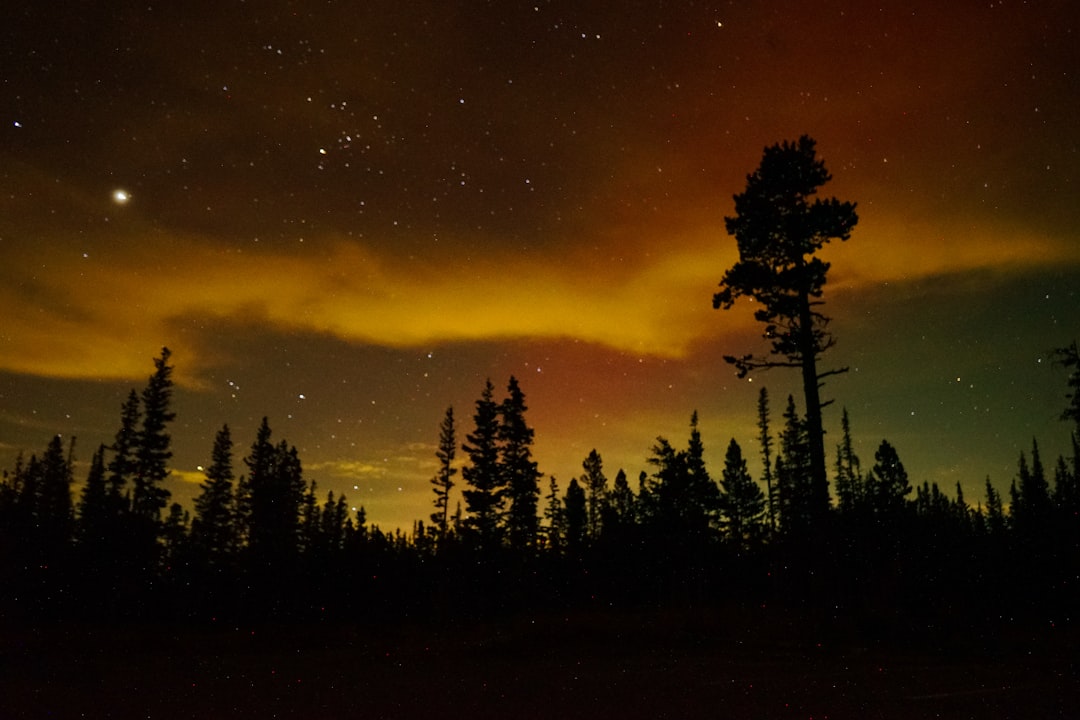
When wildfire smoke rolls into Northern Colorado, it paints our beautiful skies a dusty orange and brings a campfire smell that is far from cozy. This smoke is a complex, hazardous cocktail of gases, volatile organic compounds (VOCs), and microscopic debris. The single biggest threat to human health in this mixture is fine particulate matter, specifically PM2.5.
These microscopic particles are less than 2.5 microns in size — so tiny that roughly 30 of them could fit across the width of a single human hair. Wildfire smoke contains an estimated 90% PM2.5 particles by total mass. Because they are so small, our bodies’ natural defenses (like nasal hairs and mucus) cannot trap them. Instead, they travel deep into our lungs and can even pass directly into our bloodstream.
The health risks associated with breathing PM2.5 are severe. According to medical research, wildfire-specific PM2.5 is associated with increases in respiratory hospitalizations up to 10 times higher than those linked to fine particles from other pollution sources like car exhaust. This particulate matter can trigger asthma attacks, worsen chronic bronchitis, increase the risk of heart attacks and strokes, and cause headaches, burning eyes, and respiratory fatigue.
While poor air quality affects everyone, certain high-risk populations are exceptionally vulnerable:
• Children, whose lungs are still developing and who breathe more air per pound of body weight than adults.
• Older adults, who may have undetected heart or lung issues.
• Pregnant individuals, as systemic inflammation from smoke can impact fetal health.
• Anyone with pre-existing respiratory or cardiovascular conditions, such as asthma or COPD.
In places like Fort Collins, Loveland, and Greeley, our high altitude already means the air is thinner, making our respiratory systems work just a little bit harder on a normal day. When you add heavy wildfire smoke to the mix, the physical strain increases. To understand the full scope of how these outdoor pollutants affect your indoor living spaces, read our detailed guide on How Wildfire Smoke Can Impact Your Indoor Air Quality.
How to Prepare Your HVAC for Wildfire Smoke Season in Northern Colorado
Living along the Front Range means accepting that wildfire smoke is an annual reality. Preparing your home's mechanical systems before the skies turn gray is the best way to ensure your indoor air remains safe, clean, and breathable. Waiting until an active fire is burning nearby often means facing long wait times for professional service and finding empty shelves where high-efficiency air filters used to be.
Pre-season preparation is all about ensuring system readiness. When your HVAC system is forced to filter out heavy smoke and fine ash, it works much harder than it does during a clear spring day. If your system is already struggling with a worn-out blower motor, dirty coils, or restricted airflow, the added stress of heavy smoke filtration can lead to system failures right when you need cooling the most.
We highly recommend scheduling professional maintenance in the early spring. A certified technician can check your system's static pressure, clean internal components, and verify that your system can safely handle upgraded filtration without overheating. To keep your home comfort systems running smoothly all year long, consult our Seasonal HVAC Maintenance Tips Calendar.
Step-by-Step: How to Prepare Your HVAC for Wildfire Smoke Season in Northern Colorado
To make sure you aren't caught off guard when the first smoke plume appears over the mountains, follow this handy pre-season checklist:
• Locate Your Fresh Air Intake: Many modern homes in Northern Colorado have a mechanical fresh air intake vent that pulls outdoor air directly into the return ductwork to keep the home ventilated. Find this intake hood on the exterior of your home and locate the manual damper or control switch inside so you know exactly how to close it when smoke arrives.
• Stock Up on Filters: Do not buy just one filter. During a heavy smoke event, filters clog rapidly. Purchase a three-to-four-month supply of high-efficiency filters (MERV 13 or higher) in late spring.
• Test Your System's Airflow: Put in your upgraded filter and run the system for a few hours on a warm day. Listen for any unusual whistling, and feel the air coming out of the registers. If the airflow feels significantly weaker, your system may struggle with the thicker filter, and you should consult a professional.
• Schedule an HVAC Tune-Up: A professional inspection ensures that your blower motor is lubricated, electrical connections are tight, and coils are clean. This keeps your system running efficiently under heavy filtration loads. If you are wondering whether this step is truly necessary, read our article: Do I Really Need a Furnace Tune-Up.
Choosing the Right Filter: MERV vs. HEPA for PM2.5
When it comes to filtering out microscopic smoke particles, not all air filters are created equal. You will primarily hear about two standards: MERV and HEPA.
MERV (Minimum Efficiency Reporting Value) ratings range from 1 to 16 for residential systems. Standard fiberglass filters (MERV 1 to 4) are designed solely to protect your HVAC equipment from large dust bunnies and pet hair; they do absolutely nothing to filter out smoke.
• MERV 8 filters capture large dust and pollen but let fine smoke pass right through.
• MERV 11 filters offer moderate protection, capturing some larger smoke particles.
• MERV 13 is the baseline recommendation for wildfire smoke, capturing a significant portion of fine PM2.5.
• MERV 14 is even better. A MERV 14A filter captures an average of 90% of particles between 1.0 and 3.0 microns, which is 55% to 70% higher than a MERV 8A filter, which only captures 20% to 35% of those same particles.
HEPA (High-Efficiency Particulate Air) filters are the gold standard of air filtration. A true HEPA filter has a minimum particle capture efficiency of 99.97% on particles as small as 0.3 microns. While this sounds perfect for wildfire smoke, there is a catch: true HEPA filters are incredibly dense. If you try to slide a standard HEPA filter directly into a typical residential furnace slot, it will severely restrict airflow. This restriction can choke your system, cause your air conditioner's evaporator coil to freeze, or overheat your blower motor.
• MERV 1-4 (Basic) — PM2.5 Capture Efficiency: < 10% — Best Use Case: Protecting HVAC equipment from large dust — Airflow Impact: Extremely Low
• MERV 8 (Standard) — PM2.5 Capture Efficiency: 10% - 20% — Best Use Case: Normal household dust and pet dander — Airflow Impact: Low
• MERV 11 (Upgraded) — PM2.5 Capture Efficiency: 50% - 65% — Best Use Case: Mild allergy relief, light pet dander — Airflow Impact: Low to Moderate
• MERV 13 (Recommended) — PM2.5 Capture Efficiency: > 85% — Best Use Case: Minimum level for wildfire smoke protection — Airflow Impact: Moderate
• MERV 14-16 (Premium) — PM2.5 Capture Efficiency: > 90% — Best Use Case: High-level smoke and allergen filtration — Airflow Impact: Moderate to High
• True HEPA — PM2.5 Capture Efficiency: 99.97% — Best Use Case: Dedicated whole-home purifiers or portable units — Airflow Impact: Extremely High (Not for standard slots)
Upgrading your filtration rating requires balancing smoke capture with system performance. To learn more about how air filtration choices impact your system's overall performance and energy bills, check out our guide on HVAC Energy Efficiency.
Sealing Your Home and Ductwork Against Infiltration
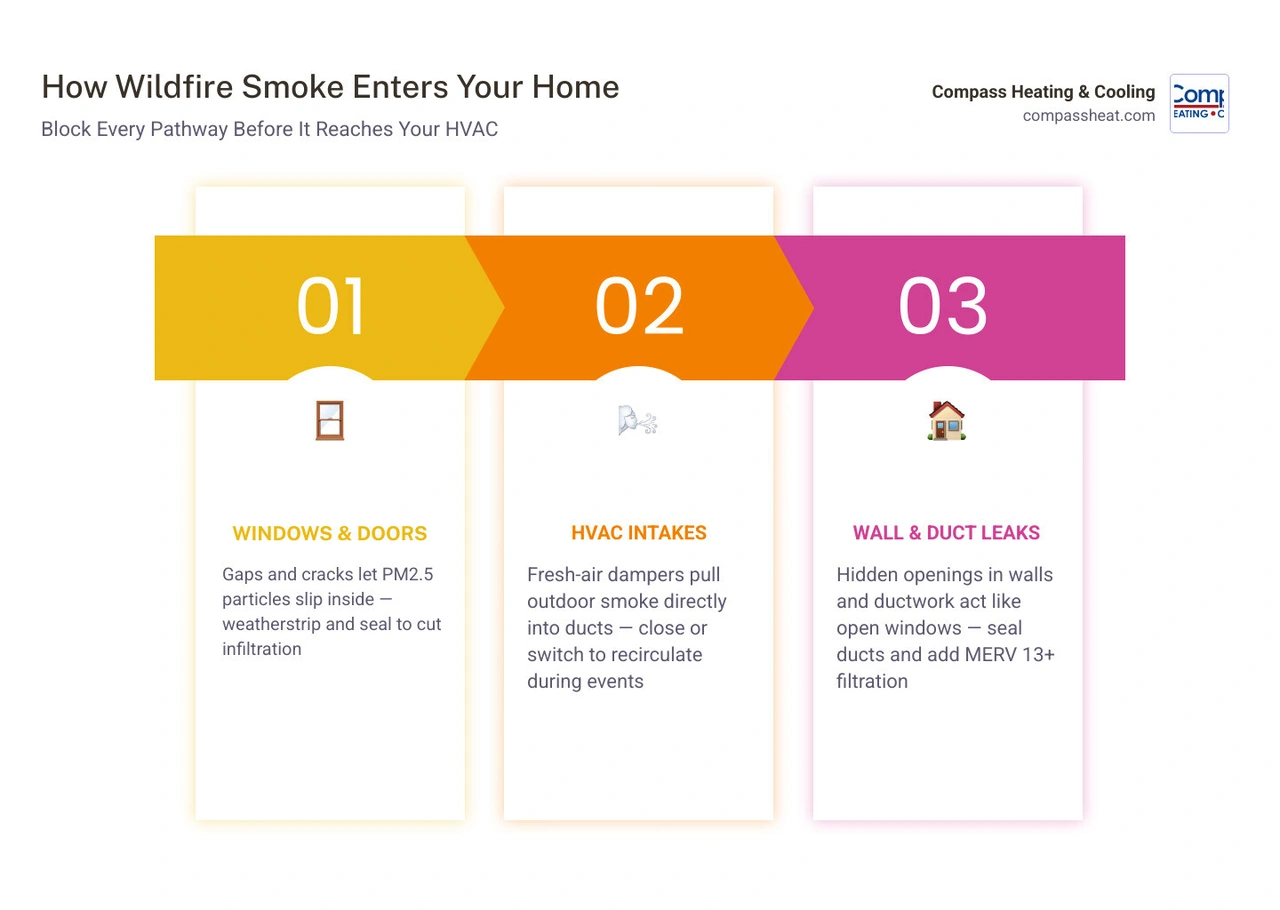
Even if you have the best HVAC filter on the market, it won't do much good if smoke bypasses your system entirely. Air leakage in a typical house is equivalent to leaving a window wide open year-round. Smoke infiltrates your living space through tiny cracks and gaps in your home's envelope.
To seal your home against smoky drafts:
1. Weatherstrip Doors and Windows: Check the seals around your exterior doors and windows. If you can see light peaking through or feel a draft, replace the weatherstripping or apply temporary caulking.
2. Seal Ductwork: Leaky air ducts in unconditioned spaces like attics, crawlspaces, or unfinished basements can pull smoke directly into your ventilation system. Sealing these ducts with mastic sealant or professional foil tape ensures that only filtered indoor air is recirculated.
3. Address Plumbing and Electrical Penetrations: Use expanding foam or silicone caulk to seal gaps around outdoor pipes, electrical conduits, and outdoor vents.
4. Close Fireplace Dampers: When your fireplace is not in use, keep the damper tightly closed to prevent soot and outdoor odors from falling down the chimney.
Taking these steps not only protects your air quality during a fire, but it also reduces your overall heating and cooling costs. For more tips on keeping your system running smoothly and avoiding unexpected breakdowns, take a look at our article on how to Reduce Repair Costs with Consistent Furnace Maintenance Tips.
Active Smoke Event: How to Run Your HVAC to Keep Smoke Out
When a wildfire active smoke event hits your town — whether you are in Fort Collins, Loveland, Windsor, or Greeley — your immediate priority is isolating your indoor air from the hazardous outdoors. This requires changing how you run your central Air Conditioning or heating system.
Recirculation Mode and Managing Fresh Air Intakes
Standard central air conditioners and modern Heat Pump systems do not naturally pull fresh air from the outside to cool your home; they simply recirculate and cool the air already inside. However, many homes equipped with mechanical ventilation systems or fresh air intakes will actively draw in outdoor air to meet building ventilation standards.
During a wildfire smoke event, you must stop this outdoor air exchange:
• Close the Fresh Air Damper: Locate the ventilation control panel or manual damper lever on your HVAC return duct and set it to the "closed" or "off" position. This stops outdoor smoke from being vacuumed directly into your home.
• Set Thermostat to Recirculate: If your smart thermostat has a "recirculate" or "clean air" setting, activate it. This setting ensures the system focuses entirely on filtering and moving the air that is already inside your clean envelope.
Running Your HVAC Fan Continuously: Pros and Cons
On a typical summer day, your HVAC fan only runs when the system is actively cooling or heating (the "Auto" setting). However, during a wildfire smoke event, you should switch your thermostat's fan setting from "Auto" to "On".
The Pros:
• Continuous Filtration: Running the fan continuously keeps air constantly moving through your upgraded MERV 13+ filter, stripping out PM2.5 particles as they sneak inside.
• Even Air Distribution: It prevents stagnant pockets of dirty air from forming in unused rooms.
The Cons:
• Increased Energy Consumption: Running a blower motor 24/7 will slightly increase your electricity bill.
• Blower Motor Wear: Continuous operation puts more mileage on your system's motor, making pre-season lubrication and maintenance vital.
• Faster Filter Loading: Your filter will clog much faster, requiring you to monitor it closely and change it more frequently.
For most families, the health benefits of breathing clean, filtered air far outweigh the minor increase in utility costs during a brief smoke event.
The Danger of Swamp Coolers During Smoke Events
Evaporative coolers, commonly known as swamp coolers, are very popular in dry Northern Colorado climates like Wellington, Severance, and Evans. They work by pulling hot, dry outdoor air through water-saturated pads, cooling the air through evaporation, and blowing it into the home.
During a wildfire smoke event, running a swamp cooler is highly dangerous to your indoor air quality. Because swamp coolers rely entirely on pulling massive volumes of outdoor air inside, they act as direct delivery systems for wildfire smoke, filling your home with ash, PM2.5, and strong odors in a matter of minutes.
Mitigation Strategies:
• Turn It Off: The safest action is to turn off your swamp cooler completely during heavy smoke events. Use ceiling fans, portable fans, and close your blinds to keep the house cool.
• Use Temporary Filtration (If Essential): If you absolutely must run the cooler to prevent heat illness, you can buy thick, 4-inch MERV 13 filter pads designed to fit over the cooler's intake grates. However, these will reduce the unit's cooling efficiency and must be replaced frequently as they quickly clog with ash.
Post-Smoke Restoration: Cleaning and Recovering Your Indoor Air
Once the winds shift, the fires are contained, and the blue skies return to Northern Colorado, your job isn't quite finished. The smoke may have cleared outside, but ash, soot, and chemical odors can linger inside your home and HVAC system for weeks. Restoring your indoor environment requires a thorough cleanup. To explore our full suite of indoor comfort and air quality solutions, visit our Services page.
When to Add Whole-Home Air Purifiers or Portable HEPA Units
Even with a MERV 13 filter in your furnace slot, you might find that you need extra help keeping the air clean, especially if you have sensitive family members. This is where dedicated air purifiers come in.
• Portable HEPA Units: These plug-in units are excellent for target areas. Place them in high-use rooms like bedrooms or family rooms. For maximum efficiency, look for units that pair a true HEPA filter with an activated carbon layer, which is essential for trapping the gaseous VOCs and chemical odors that standard particulate filters miss.
• Whole-Home Air Purifiers: Installed directly into your central ductwork, these advanced systems work alongside your heating and cooling equipment. They often utilize electronic media, polarized filtration, or UV Lights to neutralize microscopic contaminants, viruses, and odors without restricting your system's airflow. This is the ultimate long-term solution for homeowners looking to protect their indoor space year after year.
Restoring Your System: Post-Event Filter Changes and Maintenance
Once the outdoor air quality index (AQI) returns to normal, you should take immediate steps to restore your HVAC system:
1. Replace Your Filter Immediately: Do not wait for your standard 90-day replacement window. Your filter is likely caked with fine ash, soot, and dust from the smoke event. Leaving a heavily loaded filter in place restricts airflow, reduces your system's efficiency, and can cause unnecessary wear and tear. If your system is older and struggling to recover from the strain, it might be time to ask: Is It Time for a New Furnace?
2. Wipe Down Surfaces Near Vents: Vacuum and wipe down the areas around your supply and return registers with a damp cloth to capture any settled ash before it can be kicked back up into the air.
3. Inspect Your Outdoor AC Condenser: Wildfire ash and soot can settle on the outdoor condensing unit's metal fins, blocking heat transfer and forcing your air conditioner to run hotter and less efficiently. Gently rinse the outdoor unit with a garden hose (do not use a pressure washer, as this can bend the delicate aluminum fins).
4. Consider Professional Duct Cleaning: If you notice a persistent campfire smell whenever your system kicks on, or if you see dark rings forming around your return vents, smoke residue has likely coated the inside of your ductwork. A professional duct cleaning can thoroughly remove this odor-causing debris.
Frequently Asked Questions About Wildfire Smoke and HVAC Systems
How to Prepare Your HVAC for Wildfire Smoke Season in Northern Colorado?
Preparing your system involves upgrading your filter to a MERV 13 or higher, locating and learning how to close your system's fresh air intake, sealing gaps around doors and windows, stocking up on spare filters, and scheduling a professional pre-season maintenance tune-up to ensure your blower motor can handle the increased resistance of a thicker filter.
Can I run my air conditioner when it is smoky outside?
Yes, you can safely run a standard central air conditioner or heat pump during a smoke event. These systems do not pull air from the outside to cool your home; they simply recirculate and cool the air already inside. Just make sure your system's fresh air intake damper is closed and your thermostat is set to recirculate mode with a clean, high-efficiency filter installed.
How often should I change my HVAC filter during wildfire season?
Under normal conditions, high-efficiency filters last 60 to 90 days. However, during active wildfire smoke events, you should check your filter every two weeks. Heavy ash and soot loads can clog a filter in a matter of days. If the filter looks dark gray, black, or if you notice a drop in airflow, replace it immediately.
Conclusion: Partner with Compass Heating & Cooling for Clean Air
Preparing your home for wildfire smoke season doesn't have to be a stressful DIY project. At Compass Heating & Cooling, we are proud to serve our neighbors across Northern Colorado, including Fort Collins, Loveland, Windsor, Wellington, Severance, Timnath, Johnstown, Greeley, Berthoud, and Evans.
As a local, family-focused team, we understand the unique climate challenges of the Front Range. We are here to help you select the perfect filtration upgrades, install advanced whole-home air purifiers, and keep your cooling systems in peak condition. Plus, we specialize in helping homeowners secure valuable utility rebates up to $8,000+ to make home comfort and air quality upgrades incredibly affordable.
To ensure your home is fully prepared before the smoke rolls in, consider joining our Maintenance Plan. Members receive priority service, exclusive discounts, and the peace of mind that comes with regular, professional care. Ready to breathe easier this summer? Contact us today to schedule your indoor air quality assessment or seasonal Air Conditioning tune-up!
hear what our satisfied clients have to say
Our clients consistently praise our exceptional service and attention to detail. They appreciate the personalized approach we take to meet their unique needs, ensuring satisfaction every step of the way.
.png)