



The Complete Guide to Protecting HVAC from Hail
Why Colorado's Climate Is One of the Toughest Tests for Commercial Rooftop HVAC Equipment
How colorado hail and snow affect commercial rooftop hvac equipment is one of the most pressing concerns for commercial property owners and facility managers across the Front Range. Colorado sits squarely in "Hail Alley," and the combination of baseball-sized hailstones, heavy wet snow, dramatic temperature swings, and intense high-altitude UV exposure creates a uniquely punishing environment for rooftop mechanical systems. The 2017 Denver hailstorm alone generated $2.3 billion in insured losses, with widespread damage to commercial rooftop equipment. In May 2024, another round of Colorado hailstorms caused an estimated $2 billion in damages across the state.
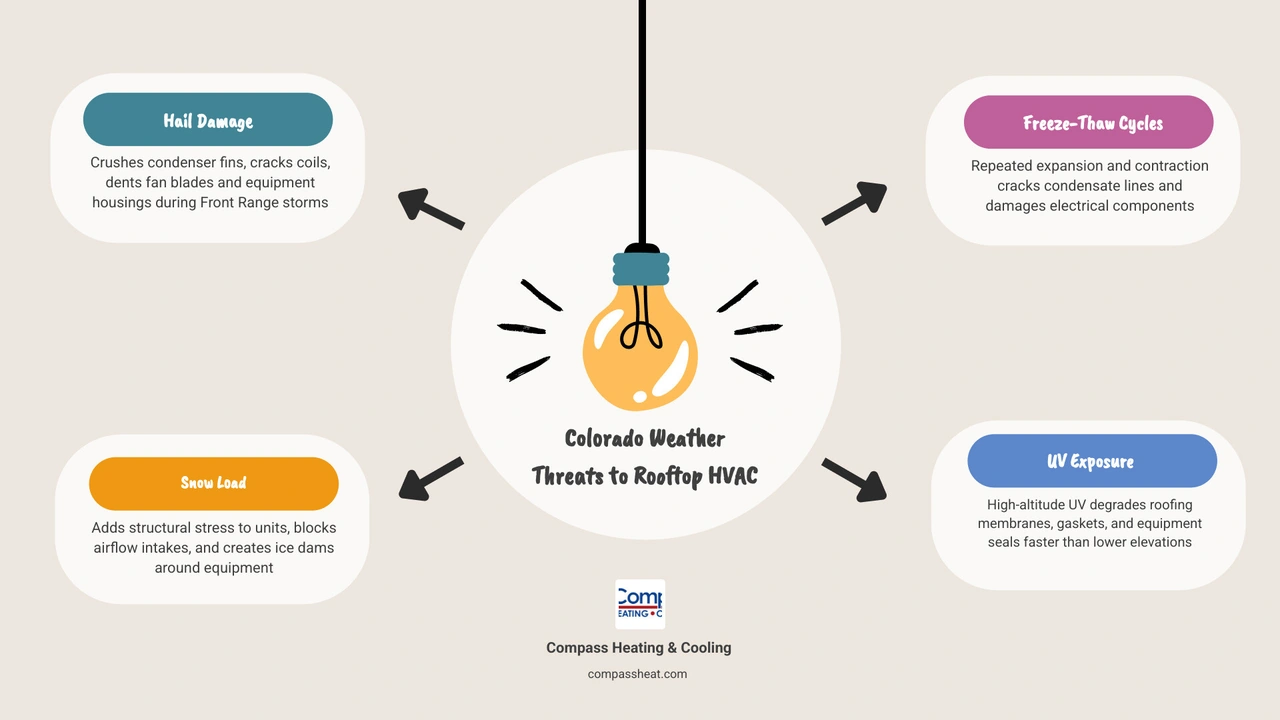
Here is a quick summary of the primary ways Colorado weather damages commercial rooftop HVAC systems:
• Hail - Bends and crushes condenser fins, cracks coil panels, dents fan blades and equipment housings, and loosens protective covers
• Snow load - Adds structural stress to rooftop units and curbs, blocks airflow intakes and exhausts, and contributes to ice dam formation around equipment
• Freeze-thaw cycles - Cracks condensate lines, stresses refrigerant connections, and damages electrical components through repeated expansion and contraction
• High-altitude UV exposure - Degrades roofing membranes, gaskets, and equipment seals faster than at lower elevations
• Wind and hail-driven debris - Punctures roof membranes near equipment curbs and clogs drainage systems, leading to ponding water
When hail strikes a commercial roof, the rooftop HVAC units are often the first things it hits — not the membrane itself. Damaged components can then create secondary problems, including debris that blocks drains and metal fragments that puncture the surrounding roof surface. Snow compounds the issue by adding weight, restricting airflow, and setting the stage for freeze-thaw damage that worsens quietly over the winter months.
This guide walks through every major threat Colorado weather poses to commercial rooftop HVAC systems, along with practical strategies to protect your equipment and extend its lifespan.
How Colorado Hail and Snow Affect Commercial Rooftop HVAC Equipment
Commercial rooftop units, commonly known as RTUs, are highly self-contained, efficient systems. However, their position on flat or low-slope roofs leaves them completely exposed to the elements. In Northern Colorado communities like Fort Collins, Loveland, and Greeley, storm systems moving off the Rocky Mountains can change rapidly, dropping heavy precipitation in minutes.
When we evaluate how colorado hail and snow affect commercial rooftop hvac equipment, we look at physical impacts. During the catastrophic Front Range storms of May 2024, many commercial properties reported severe mechanical failures within hours of a storm passing. This wasn't always due to water leaks; in many cases, the physical impact of hail on the mechanical components of the HVAC units caused immediate system shutdowns.
How Colorado hail and snow affect commercial rooftop hvac equipment: The Hail Threat
Hail is arguably the most violent weather event an HVAC system can face. The delicate aluminum fins on condenser coils are designed to maximize surface area for heat exchange, which means they are incredibly thin and easily deformed.
When hail strikes these fins, the damage is immediate:
• Bent and Crushed Fins: Hailstones flatten the aluminum fins, blocking the critical airflow required to reject heat. Even moderate hail can reduce a system's efficiency by restricting air movement, forcing the compressor to work harder and run hotter.
• Micro-channel Coil Vulnerability: Modern high-efficiency systems often use micro-channel coils. Unlike older, traditional tube-and-fin designs, micro-channel coils cannot be combed or straightened easily if they are severely impacted. A bad storm often means the entire coil must be replaced.
• Fan Blade and Motor Damage: Large hailstones can pass through top discharge grilles, denting or fracturing condenser fan blades. A misaligned or unbalanced fan blade will quickly destroy the fan motor bearings, leading to a complete system failure.
• Dented Cabinetry and Loose Panels: While cosmetic dents on the cabinet might seem harmless, they can break watertight seals, allowing rain and melting snow to penetrate electrical compartments and control boards.
How Colorado hail and snow affect commercial rooftop hvac equipment: The Snow Threat
While hail causes sudden, dramatic damage, snow is a slow and heavy stressor. Northern Colorado winters bring dry, powdery snow, but they also bring heavy, wet spring snows. Wet snow can weigh roughly 20 pounds per cubic foot, creating immense physical and operational pressure on rooftop systems.
• Airflow Blockage: Rooftop units require a constant supply of fresh air for ventilation and combustion. Heavy drifting snow can bury air intakes and exhaust vents. When intakes are blocked, the system's static pressure increases, choking the airflow and causing the unit to shut down on safety limits.
• Structural Stress: The added weight of accumulated snow around the unit puts stress on the roof curb—the structural frame that supports the RTU. If the curb or the surrounding roof structure is compromised, it can lead to shifting, causing refrigerant leaks or electrical disconnects.
• Ice Dams and Drainage Failures: As heat radiates naturally from the building and the HVAC unit, snow melts around the base of the machine. If this meltwater cannot drain quickly because of blocked roof drains, it pools and refreezes into ice dams. This ice can back up under the unit's flashing, pushing water directly into the building's envelope.
• Frozen Condensate Lines: High-efficiency gas furnaces and cooling systems produce acidic condensate. If these drain lines are not insulated or run with heat tape, they will freeze solid in freezing weather, causing water to back up into the furnace cabinet and trigger safety switches.
Environmental Stressors: Freeze-Thaw Cycles, UV Exposure, and High Winds
Beyond the immediate impact of storms, the everyday climate of the Colorado Front Range subjects HVAC systems to constant wear and tear.
Daily temperature swings in our service areas—such as Wellington, Windsor, and Severance—can exceed 40 to 50 degrees in a single day. A freezing night can rapidly transition into a sunny, warm afternoon. This dramatic thermal cycling causes materials to expand and contract at different rates.
• Condenser Coils — UV Degradation Impact: Minimal direct damage, but solar heat gain increases system operating pressures. — Freeze-Thaw Impact: Expands trapped moisture, cracking copper tubes and weakening aluminum solder joints.
• Gaskets & Seals — UV Degradation Impact: Dries out, cracks, and degrades rubber and neoprene seals, leading to water leaks. — Freeze-Thaw Impact: Causes materials to shrink and expand, breaking watertight seals around doors and panels.
• Condensate Lines — UV Degradation Impact: Embrittles PVC and plastic lines, making them prone to cracking under physical stress. — Freeze-Thaw Impact: Freezes standing water inside the lines, causing them to split and leak into the roof structure.
• Roofing Membrane (Curb) — UV Degradation Impact: Accelerates aging of TPO/PVC membranes, making them brittle near hot HVAC exhausts. — Freeze-Thaw Impact: Traps melting snow in microscopic cracks, widening them as the water expands into ice.
• Electrical Wiring — UV Degradation Impact: Degrades wire insulation, exposing copper conductors and causing short circuits. — Freeze-Thaw Impact: Stresses electrical conduit connections as the building and unit shift slightly.
High-altitude UV exposure is another silent killer. At 5,000+ feet above sea level, solar radiation is significantly more intense than at sea level. This constant radiation breaks down plastic components, wire insulation, and elastomeric sealants.
When you combine this with the high winds typical of the Palmer Divide and the northern plains, loose panels, flying debris, and gravel from ballasted roofs can become airborne missiles, puncturing coils and tearing up the protective roofing membranes around your equipment. This is why having comprehensive Services in place to inspect and protect these assets is so critical.
Best Practices for Protecting Rooftop HVAC Systems
Protecting your commercial mechanical systems requires a proactive defense. You do not have to leave your expensive equipment vulnerable to the next storm.
When designing a protection plan for your rooftop equipment, consider these industry best practices:
1. Install Heavy-Duty Hail Guards: Hail guards are metal screens or louvered panels installed over the condenser coils. They are designed to deflect hailstones while maintaining the required airflow. These are the single most effective defense against coil damage.
2. Utilize Snow Hoods and Shields: Installing manufactured snow hoods over fresh air intakes prevents drifting snow from entering the filter racks and choking the system's airflow.
3. Elevate Equipment on Proper Roof Curbs: Ensure your units are mounted on curbs that raise them well above the local design snow-depth level. This keeps the electrical and mechanical compartments clear of standing water and drifting snow.
4. Ensure Proper Roof Slope and Drainage: A flat roof is rarely perfectly flat; it should have a slight slope toward drains. Keep the area around your HVAC units clear of debris to ensure meltwater can escape quickly, preventing ice damming.
5. Select High-Quality Roofing Membranes: Work with your roofing contractor to ensure the area around your HVAC units is protected by durable, impact-resistant membranes like thick, fleece-backed TPO or PVC. These materials handle the heavy foot traffic of HVAC technicians and resist punctures from wind-blown debris.
Maintenance and Inspection Strategies for Colorado Commercial HVAC
A properly installed commercial air handler should last 15 to 20 years with regular maintenance. However, poor installation, coupled with severe weather damage from hail and snow, can lead to major, expensive problems within the first few years.
To keep your systems running efficiently and avoid premature failure, we recommend a robust RTU Maintenance: Preventive Care Guide approach.
• Spring Inspections: Before the cooling season and hail season arrive (typically April through September in Colorado), have a technician inspect your condenser coils, check refrigerant charges, and install or secure hail guards.
• Fall Inspections: Before the snow flies, verify that your gas heaters or heat pumps are operating safely. Check that condensate lines are clear, insulated, and equipped with functioning heat tape. Ensure all access panels are tightly sealed.
• Post-Storm Checks: After any major weather event in Northern Colorado, perform a visual check of your roof. Look for bent fins, loose panels, standing water, or debris blocked around the units. Catching small punctures or dented components early prevents water from seeping in and destroying expensive electronics.
Frequently Asked Questions About Rooftop HVAC Weather Protection
What is the most durable roofing material to protect HVAC infrastructure in Colorado?
Single-ply membranes like PVC and TPO are highly popular for flat commercial roofs because of their excellent reflectivity and resistance to UV radiation. PVC offers superb chemical resistance, which is helpful if your HVAC units occasionally drip oil or condensate. For areas directly surrounding heavy mechanical equipment, thick, impact-rated membranes or metal roofing panels provide the best protection against hail punctures and the heavy foot traffic of maintenance crews.
How do insurance claims compare for hail versus snow damage on commercial HVAC?
Hail claims are typically filed as "sudden and accidental" losses, which are generally covered by commercial property policies, though high deductibles in hail-prone states like Colorado can still result in significant out-of-pocket expenses.
Snow damage, on the other hand, can be harder to claim if the insurer determines the failure was due to "wear and tear" or a lack of maintenance (such as allowing ice dams to build up or failing to clear blocked drains). Industry data shows that up to 39% of evaluated HVAC equipment losses are tied to excluded causes like deferred maintenance, making routine inspections financially vital.
Can hail-damaged condenser coils be repaired, or do they require full replacement?
It depends on the severity of the damage and the type of coil. Traditional copper-tube, aluminum-fin coils can often be combed out using a specialized fin comb if the damage is light to moderate. However, if the fins are torn or the tubes themselves are punctured, the coil must be replaced. High-efficiency micro-channel coils have incredibly small passages and cannot be combed; they almost always require a full coil replacement after a direct hail hit.
Secure Your Commercial HVAC Systems Against Colorado's Toughest Weather
Protecting your building's comfort and your mechanical investments starts with choosing the right partner. At Compass Heating & Cooling, we specialize in helping businesses across Northern Colorado—including Fort Collins, Loveland, Windsor, Wellington, Severance, Timnath, Johnstown, Greeley, Berthoud, and Evans—keep their systems running perfectly in every season.
We understand the unique demands of our local climate. Whether you need heavy-duty hail guards installed, seasonal maintenance to prepare for a freezing winter, or a complete system replacement, our team is here to help. We make upgrading your business's comfort easy by handling utility rebates up to $8,000+ on your behalf, and we offer a comprehensive maintenance plan that features priority service and exclusive discounts.
Don't wait for the next major Front Range storm to test your rooftop equipment. Contact us today to learn more about our Light Commercial HVAC services and schedule your preventive weather-protection assessment.
hear what our satisfied clients have to say
Our clients consistently praise our exceptional service and attention to detail. They appreciate the personalized approach we take to meet their unique needs, ensuring satisfaction every step of the way.
.png)