



How to Check Permit Requirements for Mini Splits in Colorado
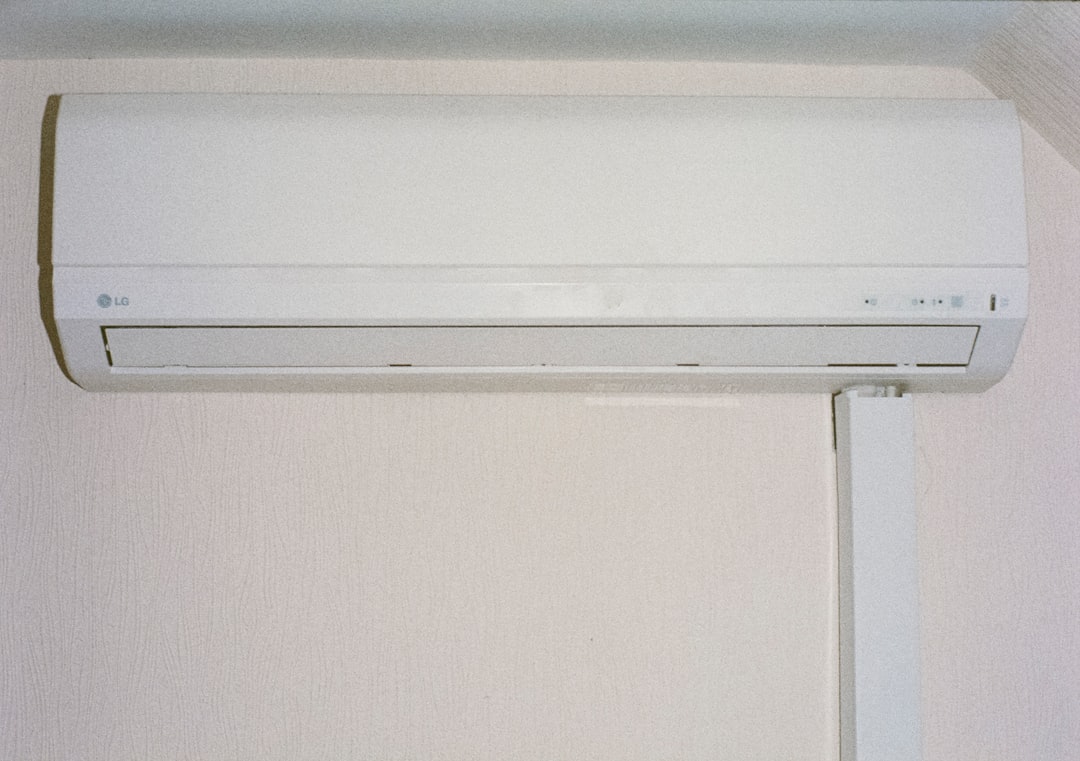
Do You Need a Permit to Install a Mini Split in Colorado?
Do you need a permit to install a mini split in Colorado? Yes — in virtually every Colorado city and county, a permit is required before installing a ductless mini split system. Here's the short version:
Quick Answer:
• Mechanical permit — required for refrigerant line installation, condensate drainage, and equipment mounting
• Electrical permit — required for the dedicated 240V circuit and outdoor disconnect switch
• Building permit — may be required for wall penetrations and structural modifications
• Who issues them — your local city or county building department (e.g., Pikes Peak Regional Building Department in Colorado Springs, or the city building office in Fort Collins or Denver)
• Who can apply — a licensed contractor or, in many jurisdictions, the homeowner themselves for their primary residence
• What happens without one — fines, insurance claim denials, and serious complications when selling your home
If you're a Northern Colorado homeowner planning to add a mini split for better comfort and lower energy bills, skipping the permit step is one of the costliest mistakes you can make. Mini splits are classified as permanent HVAC installations under both the International Mechanical Code and the National Electrical Code — which means they fall squarely under local building department oversight, no matter how straightforward the installation looks.
The rules aren't always the same from one Colorado city to the next. What's required in Denver may differ from Fort Collins or Colorado Springs. This guide walks you through exactly what to expect so you can move forward with confidence.
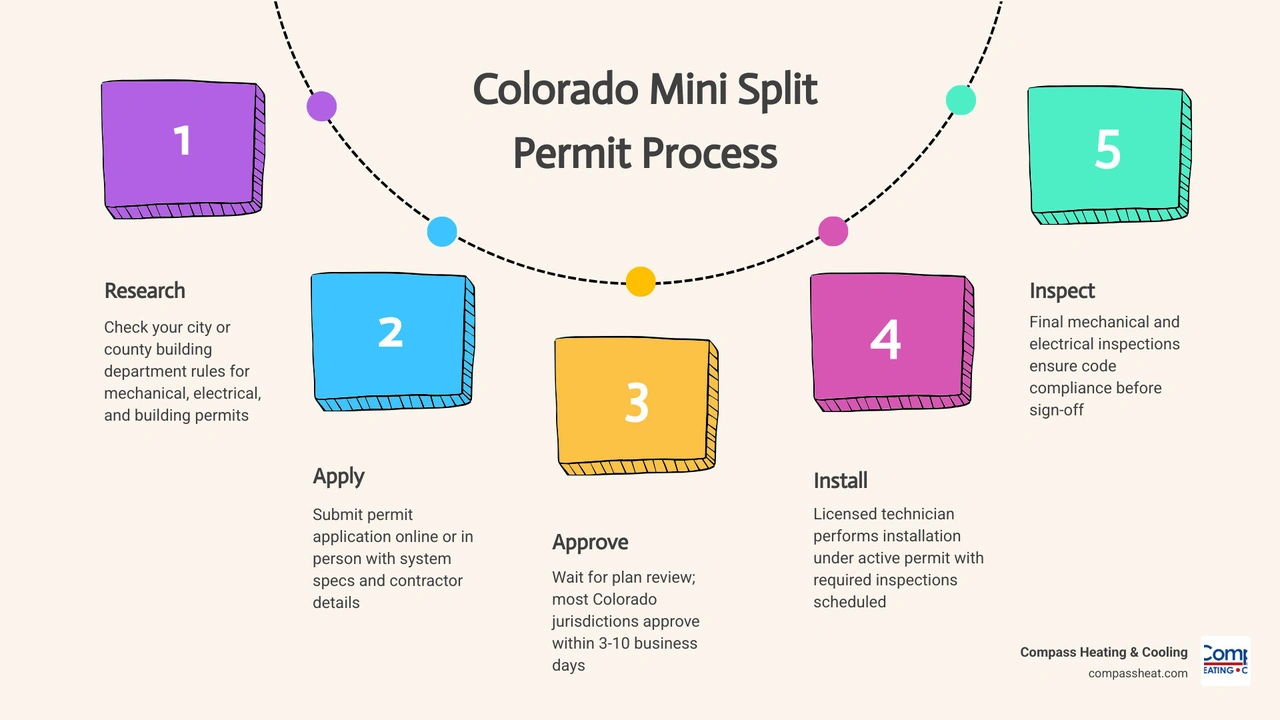
Why Do You Need a Permit to Install a Mini Split in Colorado?
When you look at a ductless mini split, it might seem like a simple appliance. You mount an indoor head, place a compressor outside, run some lines through a small hole in the wall, and plug it in, right?
In reality, a mini split is a highly sophisticated, permanent HVAC system. Because it is a permanent addition to your home's structural, electrical, and mechanical systems, it is heavily regulated. Under the International Mechanical Code (IMC) Section 106.1, a permit is required for any permanent mechanical installation. Additionally, the National Electrical Code (NEC) Article 440 strictly governs the electrical connections for air conditioning and heat pump equipment.
Permits exist to protect your safety, your property, and your wallet. They ensure that:
• The electrical circuit can handle the system's power draw without overloading your electrical panel or causing a fire.
• The refrigerant lines are safely run, pressurized, and sealed to prevent toxic leaks.
• The outdoor unit is secured properly, keeping it safe from strong Colorado winds and heavy winter snow.
• The wall penetrations are sealed correctly to maintain your home's insulation and prevent moisture or pests from getting inside.
To understand more about why local municipalities require oversight for these projects, you can read our detailed guide on Do I Need Permits for Installing HVAC.
Local Jurisdiction Rules: Denver, Fort Collins, and Colorado Springs
Permit enforcement in Colorado is handled entirely at the local level. This means your city or county building department has the final say on what permits you need, how much they cost, and what the inspection process looks like.
While major metro areas outside our immediate service territory like Denver and Colorado Springs (which operates under the Pikes Peak Regional Building Department) have their own strict timelines, our local Northern Colorado municipalities maintain rigorous standards of their own.
In Fort Collins, the building department requires a combined mechanical and electrical permit for any ductless heat pump installation. They pay close attention to energy efficiency ratings and outdoor unit placement.
In Greeley and Loveland, the local building departments require explicit documentation showing that any electrical modifications comply with the latest NEC standards.
Even smaller communities like Windsor, Wellington, Severance, Timnath, Johnstown, Berthoud, and Evans require homeowners or contractors to register the project before any tools touch the walls. In Northglenn, for example, mini split units are explicitly listed alongside traditional central air conditioners under "Projects That Require a Permit."
No matter where you live along the Front Range, assuming you can bypass local building codes is a major risk.
Types of Permits Required for Colorado Ductless Installations
When addressing the question, do you need a permit to install a mini split in colorado, it helps to understand that a mini split installation is actually three projects in one: a mechanical project, an electrical project, and a minor structural modification.
Because of this, you will typically need multiple types of permits (or a combined master permit) to complete the job legally.
• Mechanical Permit — What It Covers: Refrigerant lines, condensate drainage, indoor and outdoor unit mounting — Key Code Compliance Focus: IMC Section 106.1, proper line-set insulation, secure wall brackets
• Electrical Permit — What It Covers: New dedicated 240V circuit, disconnect switch, panel load calculations — Key Code Compliance Focus: NEC Article 440, weather-resistant outdoor wiring, proper grounding
• Building Permit — What It Covers: Cutting through exterior walls, structural support, property setbacks — Key Code Compliance Focus: Wall sleeve sealing, vapor barrier maintenance, property-line clearances
These requirements ensure your system operates at peak efficiency. For more on the benefits of these systems, check out our article on Why Mini Split Systems Are a Great Choice for Your Home.
Mechanical Permits
The mechanical permit is the foundation of your mini split project. Under the IMC, any system that circulates refrigerant and alters the indoor climate requires mechanical approval.
During the mechanical permit review, the building department will look at:
• The Line-Set Routing: The lines carrying the refrigerant must be properly insulated and protected.
• Condensate Drainage: The system must drain water safely away from your home's foundation to prevent mold and water damage.
• Equipment Sizing: The system must be sized appropriately for the space to prevent short-cycling and energy waste.
If you are curious about the mechanical components of these systems, you can learn more on our Ductless Mini Split page.
Electrical Permits
You cannot simply plug a high-capacity mini split into a standard living room outlet. These systems require a dedicated electrical circuit—typically a 240-volt line—run directly from your main electrical panel to an outdoor disconnect box.
The electrical permit ensures that:
• A dedicated breaker is installed in your panel with the correct amperage.
• An outdoor, weatherproof electrical disconnect switch is mounted within sight of the outdoor condenser (as required by NEC Article 440).
• All wiring run along the exterior of your home is housed in protective conduit.
• Your home's electrical panel has the spare capacity to handle the new load without risking an electrical fire.
Key Building Codes and Installation Triggers in Colorado
Understanding what triggers a permit is essential for staying compliant. In Colorado, specific physical actions during the installation process automatically trigger the legal requirement for building department oversight.
Electrical and Mechanical Triggers: Do You Need a Permit to Install a Mini Split in Colorado?
If your project involves any of the following actions, do you need a permit to install a mini split in colorado? Absolutely.
1. Installing New Electrical Wiring: Any time you run new wire through your walls or install a new breaker, an electrical permit is triggered.
2. Cutting Into the Building Envelope: Drilling the three-inch hole through your home’s exterior wall to run the refrigerant and condensate lines triggers a building or mechanical permit. This hole must be sealed with fire-rated, weatherproof materials to maintain your home's fire barrier and insulation integrity.
3. Handling Refrigerant: Federal law under EPA Section 608 requires anyone opening or charging a refrigerant circuit to be certified. Local building departments enforce this by requiring proof of certification or licensing before issuing mechanical permits for systems that are not pre-charged.
Cold Climate Considerations and Outdoor Unit Placement
Colorado’s unique climate brings special installation challenges that are closely monitored by local code inspectors.
Because we experience heavy snow and freezing temperatures in areas like Fort Collins, Loveland, and Greeley, ground-mounted outdoor units cannot simply sit on a plastic pad on the dirt.
• Frost-Protected Foundations: In cold climates, ground-mounted condensers must be elevated above the local snow line (typically 12 to 18 inches) and anchored to a concrete pad or mounted on heavy-duty wall brackets. This prevents snow from blocking airflow and keeps the unit safe from freezing meltwater.
• Property Line Setbacks: Most Northern Colorado municipalities have strict zoning laws regarding how close an outdoor condenser can be to your property line (often a minimum of 36 inches) and how close it can be to bedroom windows or fresh air intakes.
Consequences of Installing a Mini Split Without a Permit
It can be tempting to hire an unlicensed "handyman" or attempt a DIY installation over the weekend without pulling permits. However, the consequences of unpermitted work in Colorado are severe and long-lasting.
Insurance and Liability Risks
The single greatest financial risk of unpermitted work is the impact on your homeowner's insurance.
If an unpermitted electrical connection overheats and causes a fire, your insurance provider has the legal right to deny your claim entirely. They will argue that the damage was caused by faulty, uninspected work that did not comply with local building codes.
Furthermore, major mini split manufacturers will void your equipment warranty if the system was not installed by a licensed professional with the proper permits and inspections. If your compressor fails a year after installation, you could be left paying for a replacement entirely out of pocket.
Resale and Code Enforcement Issues
Unpermitted work has a way of catching up with homeowners when they decide to sell.
During a home sale, the buyer's home inspector will easily spot a mini split system. They will cross-reference the installation with city or county permit records. If no permit is on file, the home sale can be stalled or cancelled.
To salvage the sale, you may be forced to apply for an "after-the-fact" permit. Local building departments often charge double or triple the standard fee for these retroactive permits. Even worse, the inspector may require you to tear open finished drywall so they can inspect the hidden wiring and wall penetrations, turning a simple check into a costly home renovation project.
Frequently Asked Questions About Colorado Mini Split Permits
Can homeowners pull their own mini split permits in Colorado?
In many Northern Colorado jurisdictions, homeowners are allowed to pull "owner-builder" permits for mechanical and electrical work, provided they own and reside in the home as their primary residence.
However, pulling the permit yourself means you assume 100% of the legal and physical liability for the installation. You must personally perform the work to code and pass all inspections.
Additionally, even if you pull the permit, you cannot legally handle or charge refrigerant lines unless you hold an EPA Section 608 certification. This is why most homeowners choose to hire a licensed contractor to handle the entire process.
How long does the mini split permit process take in Colorado?
Thanks to modern online permit portals used by cities like Fort Collins and Loveland, the permit approval process is faster than ever.
For simple residential mechanical and electrical permits, approval is often granted within 1 to 3 business days. Once the work is completed, scheduling the rough-in and final inspections typically takes another 2 to 5 business days, depending on how busy local inspectors are.
Do HOA rules affect mini split permit requirements in Colorado?
Yes, but they operate on a different level. While a Homeowners Association (HOA) cannot override city safety codes, they can add strict aesthetic guidelines.
An HOA may require you to submit an application to their architectural review committee before installing the outdoor condenser. They often enforce rules regarding:
• Where the outdoor unit can be placed (e.g., hidden from street view).
• The color and style of the line-set covers (which protect the lines running down the side of your house).
• Sound levels of the outdoor unit.
Always secure both your municipal permits and your HOA approval before starting your installation.
Conclusion
When planning a ductless home upgrade, navigating building codes, electrical requirements, and municipal paperwork can feel overwhelming. But you don't have to do it alone.
At Compass Heating & Cooling, we serve homeowners across Northern Colorado, including Fort Collins, Loveland, Windsor, Wellington, Severance, Timnath, Johnstown, Greeley, Berthoud, and Evans. We take the stress out of the process by handling every step of the permitting and inspection process on your behalf.
Our expert team ensures your new system is fully code-compliant, perfectly sized for our Colorado climate, and safely installed. Plus, we specialize in helping you maximize your savings by handling utility rebates up to $8,000+ directly on your invoice. To keep your system running beautifully for decades, we also offer a comprehensive maintenance plan featuring priority service and exclusive discounts.
Ready to upgrade your home comfort without the regulatory headaches? Explore our Services, learn more about Heat Pump Installation, or visit our Mini Split page to get started today!
hear what our satisfied clients have to say
Our clients consistently praise our exceptional service and attention to detail. They appreciate the personalized approach we take to meet their unique needs, ensuring satisfaction every step of the way.
.png)