


The Reality of End-of-Season AC Discounts in Northern Colorado
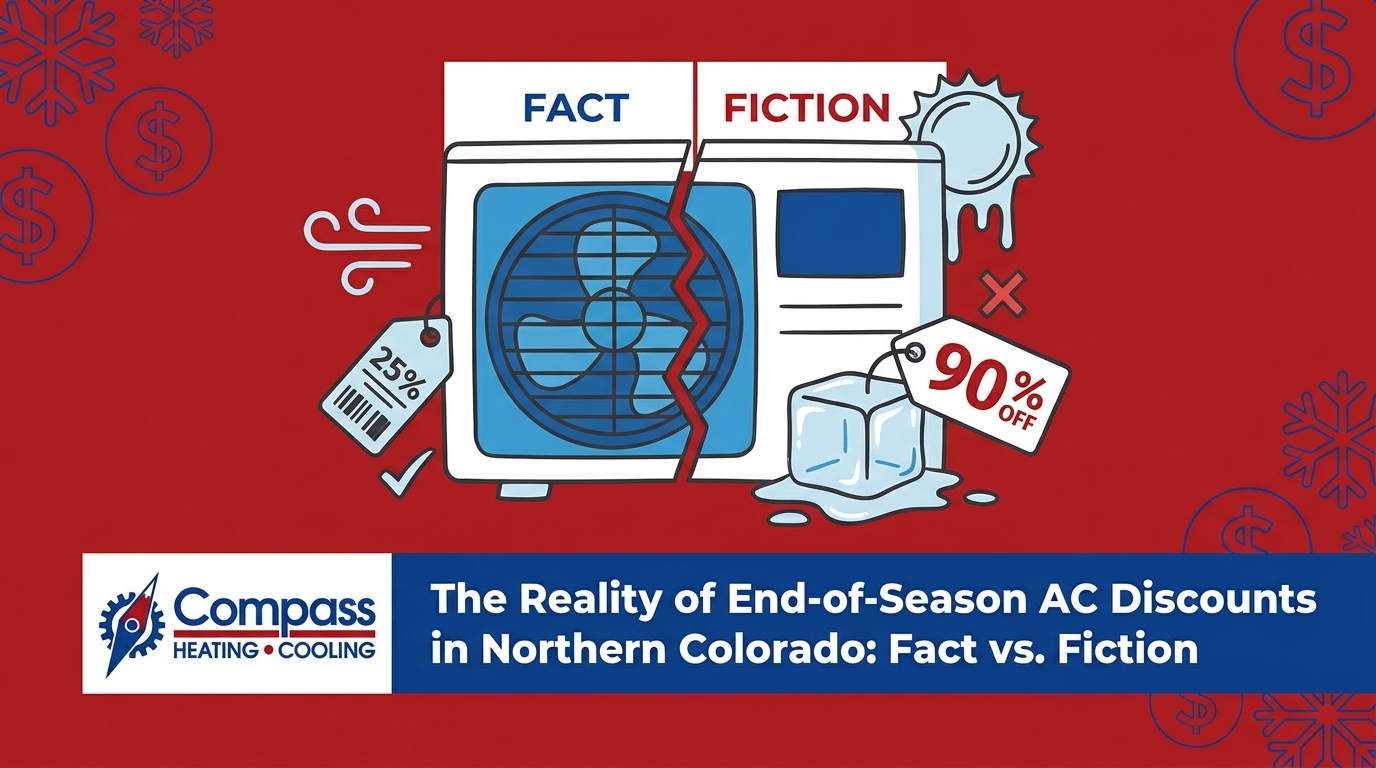
The Late-Summer Cooling Dilemma: Replace Now or Wait for Fall?
The reality of end-of-season AC discounts in Northern Colorado is a topic that surfaces every year as the August back-to-school transition brings a mix of busy schedules and lingering summer heat. Your air conditioner has been working overtime since June, and now, it is showing serious signs of struggling. The house feels warm, the compressor is making unusual noises, and you are left facing a frustrating decision. Do you cross your fingers, hope the failing unit limps through the next few weeks, and wait for promised fall sales? Or do you replace the system immediately to restore your family's comfort?
This is a common crossroads for homeowners, and making the right call requires separating marketing hype from actual industry mechanics. To fully understand your options, it is critical to reach out for professional air conditioning services. A thorough evaluation of your current system will tell you whether a repair can safely bridge the gap or if a new AC installation is the only reliable path forward.
The Mental Math of Late-Summer Replacements
Most homeowners naturally want to maximize their investment. When you hear advertisements teasing massive fall clearance events, the temptation to delay a major purchase is strong. However, waiting carries its own set of risks. If you decide to push a failing system to its absolute limits, you are gambling against the weather. An abrupt breakdown on a ninety-degree afternoon leaves you without cooling when you need it most, forcing a rushed decision rather than a thoughtful upgrade.
On the other hand, moving forward with an installation right now ensures your home remains comfortable during the chaotic back-to-school weeks. The key is understanding how seasonal pricing actually works. By pulling back the curtain on late-summer inventory transitions and generic manufacturer incentives, you can make an educated choice that balances immediate comfort with long-term financial wisdom.
Decoding the Mechanics of End-of-Season HVAC Inventory
To understand whether holding out for a fall sale is truly beneficial, you have to look at how the HVAC supply chain operates behind the scenes. Unlike retail clothing stores that slash prices to clear out last season's swimsuits, air conditioning equipment does not expire. However, the industry does operate on distinct shoulder seasons—the transitional periods between peak summer cooling and peak winter heating.
How the Supply Chain Shifts
As the intense heat begins to taper off, manufacturers and local distributors in Loveland and Northern Colorado must adjust their focus. This transition involves several key logistical steps:
1. Factory Production Cycles: HVAC manufacturers plan their production schedules months in advance. By late summer, factory lines are already pivoting away from cooling equipment to prioritize furnaces and heat pumps for the impending winter demand. This shift naturally alters what is actively shipping to regional warehouses.
2. Warehouse Reallocation: Local distributors only have so much square footage. To make room for bulky heating equipment, they need to move their remaining stock of air conditioners. While this equipment is still perfectly relevant and top-of-the-line, the logistical need to free up physical space creates a unique inventory dynamic in our specific region.
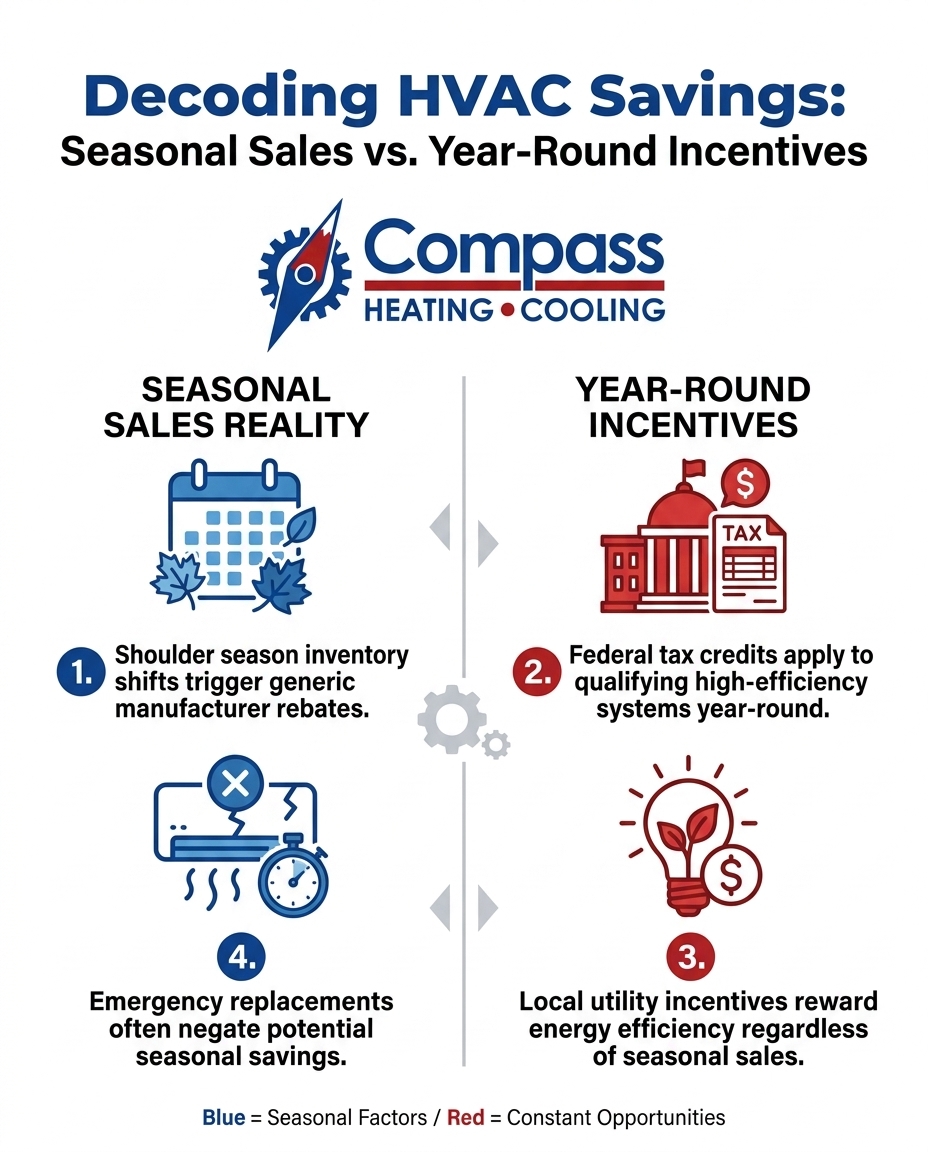
3. The Introduction of Generic Incentives: Because distributors need to move units to make room for furnaces, manufacturers often step in to help stimulate off-peak demand. They do this by releasing generic manufacturer rebates. These factory-backed incentives are designed to encourage homeowners to purchase cooling equipment during a time when the general public is starting to think about turning on their heat.
Understanding this process clarifies that "clearance" in the HVAC world is less about getting rid of obsolete technology and more about managing physical warehouse space and maintaining steady installation schedules.
Manufacturer Rebates vs. Dealer Marketing Gimmicks
As the August back-to-school transition gets underway, your mailbox and social media feeds will likely fill with advertisements promising unbelievable end-of-summer savings. The challenge is distinguishing between legitimate factory incentives and deceptive sales tactics designed to pressure you into a quick signature.
Spotting the Illusion of Savings
A common pattern we see in the industry involves inflating the base price of a system only to "discount" it back to its normal market value. This creates the illusion of a massive sale without actually saving the homeowner any money. True savings come from generic manufacturer rebates—factory-backed incentives that are passed directly to the consumer during seasonal transitions.
• Source of Savings — Genuine Manufacturer Rebate: Backed by the equipment manufacturer (the factory). — Dealer Marketing Gimmick: Created by the local dealer, often by artificially inflating the starting price.
• Transparency — Genuine Manufacturer Rebate: Clearly itemized on your estimate as a separate line-item deduction. — Dealer Marketing Gimmick: Hidden within a "lump sum" quote where the original price is obscured.
• Pressure Level — Genuine Manufacturer Rebate: Available for a set promotional period, allowing time to make a decision. — Dealer Marketing Gimmick: "Sign today or the deal is gone" high-pressure tactics.
• Equipment Focus — Genuine Manufacturer Rebate: Typically applies to high-efficiency, premium systems to encourage upgrades. — Dealer Marketing Gimmick: Often used to push older, lower-tier models that the dealer wants to offload.
At Compass Heating & Cooling, we believe that an educated homeowner is our best customer. That is why our honest, transparent pricing model is central to how we operate. We provide straightforward estimates that clearly outline the cost of equipment, the cost of labor, and any applicable factory incentives. You will never have to guess if a discount is real. We encourage you to review current HVAC promotions and rebates with a critical eye, ensuring that any offer you accept is a legitimate factory incentive rather than a smoke-and-mirrors sales pitch.
The Hidden Risks of Waiting for Fall in Our Region
While the prospect of waiting for a fall sale might seem financially prudent on paper, it often ignores the physical realities of the climate in Loveland and Northern Colorado. Our region is known for rapid, unpredictable temperature swings in late summer and early fall. You might experience a sweltering ninety-degree afternoon followed by a sudden cold front that drops overnight temperatures into the forties.
Problem: The Late-Summer Breakdown
If your air conditioner is already struggling, pushing it through another heatwave is incredibly risky. Older components that are failing have to work twice as hard to achieve the temperature set on your thermostat. This excessive strain dramatically increases the likelihood of a catastrophic failure—such as a seized compressor or a blown motor—right when you need the system to perform.
Cause: Competing Seasonal Demands
When you wait until September or October to replace a failing unit, you are not just dealing with cooling issues. Because of the rapid temperature swings in our area, local HVAC technicians are suddenly inundated with emergency furnace repair calls from homeowners turning their heat on for the first time. This dual demand puts an enormous strain on scheduling.
Solution: Proactive Replacement
An emergency breakdown eliminates your ability to thoughtfully shop for equipment, compare efficiency ratings, or take advantage of planned sales. You are forced into a reactive decision just to make your home livable again. Furthermore, scheduling an AC replacement in Loveland becomes significantly more difficult when local crews are swamped with heating emergencies. Weighing the potential, generic savings of waiting against the immediate, highly probable risk of a total system failure usually reveals that proactive replacement is the safer, more comfortable route.
Year-Round Savings: Tax Credits and Utility Incentives
One of the biggest misconceptions about HVAC upgrades is that you have to wait for a fall sale to get a good deal. In reality, some of the most substantial financial incentives available to homeowners are not tied to the season at all. They are tied to energy efficiency.
The Truth About Energy Efficiency Incentives
Upgrading to a high-efficiency air conditioning system or a modern heat pump often qualifies you for generic federal tax credits. These federal programs are designed to encourage homeowners to reduce their carbon footprint and lower overall energy consumption. The eligibility for these credits is dictated by strict energy efficiency standards—specifically SEER2 and HSPF2 ratings—not by the month in which you purchase the equipment. Whether you install a qualifying system in the heat of August or the chill of November, the federal tax credit remains exactly the same.
Beyond federal programs, homeowners in Loveland and Northern Colorado can often take advantage of programs designed to relieve stress on the local energy grid. Utility providers frequently offer generic rebates for installing high-efficiency cooling equipment. These local utility AC rebates are typically available year-round, provided funding remains in the program.
Important reminder: Always verify current generic programs, eligibility requirements, and application deadlines with your specific utility provider or a qualified tax professional. Assuming you must wait for a fall seasonal sale to access these substantial incentives is a common mistake that can leave you sweating through the end of summer unnecessarily.
How to Evaluate a Late-Summer AC Replacement Estimate
If you decide to explore replacing your system during the August back-to-school transition, it is vital to know how to read and evaluate the quotes you receive. The transitional season can bring out aggressive sales tactics, so knowing what to look for will protect your investment.
Your Late-Summer Quote Checklist
When reviewing an estimate for a new air conditioning system, ensure the contractor provides the following:
• A Comprehensive Load Calculation: Never accept a quote from a contractor who simply looks at your old unit and guesses the size of the replacement. A proper load calculation measures your home's square footage, window placement, insulation levels, and ductwork to determine the exact cooling capacity required. Oversized units cycle too quickly, while undersized units run constantly.
• Itemized Transparency: The estimate should clearly separate the cost of the physical equipment, the labor required for installation, and any generic manufacturer rebates being applied. If the quote is just a single, lump-sum number, it is impossible to verify if you are actually receiving a seasonal discount.
• Clear Efficiency Ratings: The proposal must state the SEER2 rating of the new equipment. This rating is crucial not only for projecting your future monthly energy savings but also for verifying your eligibility for year-round federal tax credits and utility incentives.
• Verified Equipment Availability: Ask direct questions about warehouse stock. During seasonal transitions, a dealer might promise a specific model at a great price, only to attempt a "bait-and-switch" on installation day because the promised unit is suddenly stuck in a supply chain bottleneck. Insist on written confirmation that the quoted equipment is available locally.
By demanding this level of detail, you take control of the process, ensuring that your late-summer replacement is a carefully planned upgrade rather than a rushed reaction to a failing system.
Frequently Asked Questions
Is it cheaper to replace an AC unit in the fall?
It can be, but it is not a guarantee. Fall is considered a shoulder season in the HVAC industry, meaning manufacturers may offer generic rebates to stimulate demand as cooling season ends. However, if your current AC breaks down completely while waiting for fall, the cost of emergency repairs or a rushed replacement can easily erase those potential savings. It is often better to replace a failing unit proactively rather than gambling on a slight seasonal discount.
Are end of summer HVAC sales worth it?
They are worth it if the sale involves genuine, factory-backed manufacturer rebates rather than dealer marketing gimmicks. Some companies inflate their base prices to make end-of-summer discounts look massive, which offers no real savings to the homeowner. Always demand an itemized quote to ensure the discount is a legitimate reduction on a properly priced, high-efficiency system.
What month is best to buy an HVAC system?
The transitional months of March, April, September, and October are generally considered ideal times to buy an HVAC system. During these shoulder seasons, technicians are typically less overwhelmed with extreme weather emergencies, making scheduling easier. Additionally, this is when manufacturers are most likely to introduce generic rebates to help clear warehouse space for incoming seasonal inventory.
Do AC units go on clearance at the end of summer?
HVAC equipment does not go on "clearance" in the same way retail goods do, because the technology remains current and relevant. Instead, local distributors need to free up physical warehouse space to stock furnaces and heat pumps for the winter. To facilitate this movement, manufacturers provide generic incentives to encourage late-summer and early-fall cooling purchases.
How can I tell a real manufacturer rebate from a dealer gimmick?
A real manufacturer rebate is a factory-backed incentive that should be clearly listed as a separate line item on your estimate. It usually applies to specific, high-efficiency models and is available for a set promotional period without high-pressure tactics. If a dealer refuses to itemize the quote or pressures you to sign immediately to secure a "special" price, you are likely dealing with a marketing gimmick.
Should I wait to replace my AC if it is currently struggling to cool my home?
If your system is actively struggling, waiting is highly risky. Pushing a failing compressor or motor during late-summer heatwaves dramatically increases the chance of a total, catastrophic breakdown. Proactive replacement ensures your home remains comfortable and allows you to thoughtfully evaluate efficiency ratings and year-round tax credits without the stress of an emergency situation.
Making the Right Choice for Your Comfort
Navigating the reality of end-of-season AC discounts does not have to be overwhelming. By understanding how generic manufacturer rebates and year-round energy incentives actually work, you can confidently evaluate your options. If your system is struggling, do not wait for a breakdown to force your hand. Reach out for a straightforward, honest assessment today, ensuring your home stays comfortable no matter what the late-summer weather brings.
hear what our satisfied clients have to say
Our clients consistently praise our exceptional service and attention to detail. They appreciate the personalized approach we take to meet their unique needs, ensuring satisfaction every step of the way.
.png)