


Preparing for Winter Natural Gas Rates with a Dual-Fuel HVAC System
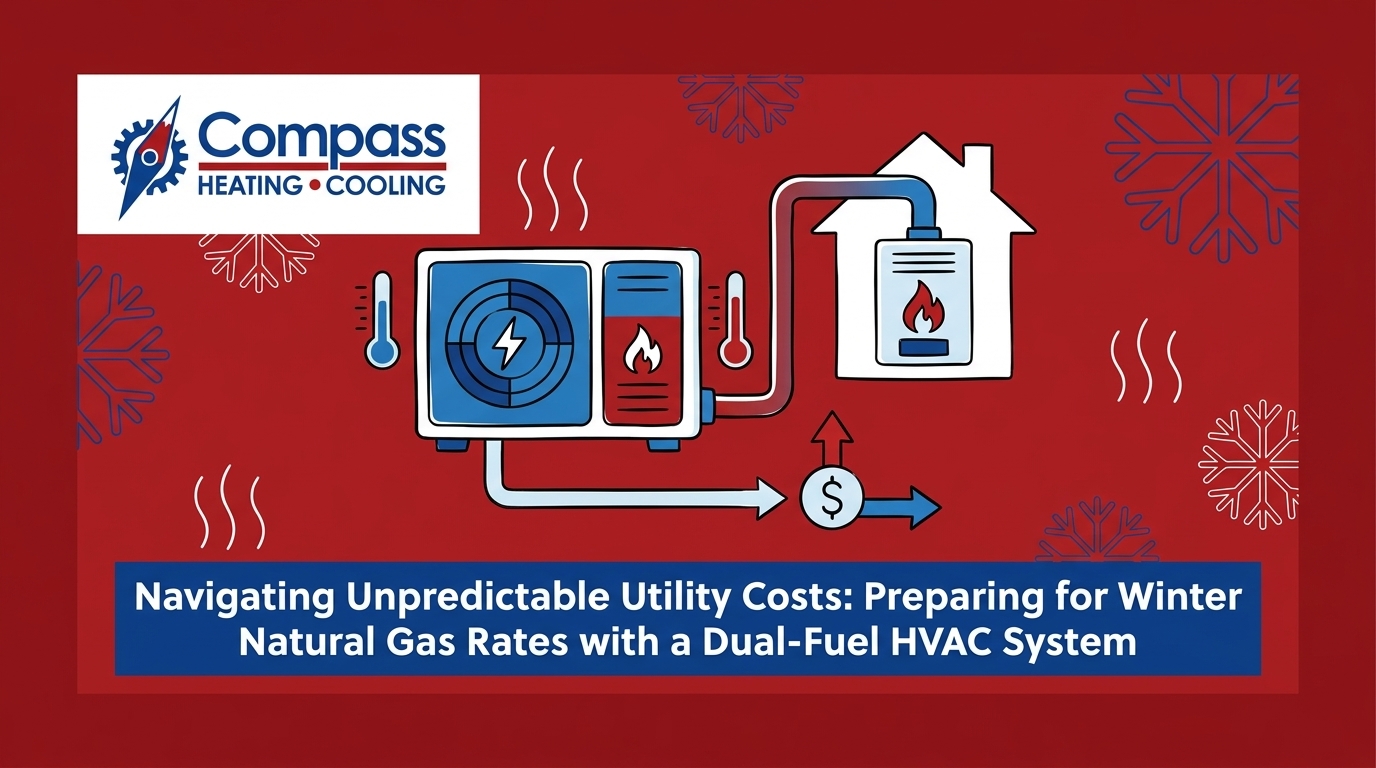
Facing the Chill: The Challenge of Unpredictable Winter Energy Costs
As evening temperatures begin to drop, that familiar dread often sets in for homeowners: wondering just how high the utility bills will climb, and whether preparing for winter natural gas rates with a dual-fuel HVAC system is the smartest move you can make this year. If you live in Loveland, CO, you already know that heating your home through a long, unpredictable winter can feel like a financial guessing game. When you rely solely on a traditional standalone gas furnace, you are entirely at the mercy of fluctuating natural gas prices and peak-season demand.
The short answer is that you do not have to be trapped by these unpredictable spikes. You are currently facing a critical decision point before the freezing weather settles in: stick with your aging, single-fuel gas furnace, or take control of your energy strategy by upgrading to a dual-fuel setup. A dual-fuel system is the strategic pairing of an electric heat pump with a high-efficiency gas furnace, giving your home two distinct ways to generate warmth.
By understanding local utility dynamics, you can proactively defend your household budget. When you explore modern heating systems, you discover that flexibility is the ultimate defense against volatile energy markets. You have the power to choose how your home is heated based on what makes the most economic sense on any given day.
How Local Utility Rate Structures Impact Your Winter Heating Strategy
Local utility rate structures, particularly those managed by providers like Xcel Energy, are heavily influenced by supply and demand. Historically, as the temperature drops and everyone in the Loveland, CO area turns up their thermostats, natural gas demand skyrockets. This surge often triggers peak-season rate structures, meaning you pay a premium for the fuel precisely when you need it the most.
Relying on a single fuel source leaves you highly vulnerable to these unpredictable rate shifts. If natural gas prices spike during a January cold snap, a standalone furnace forces you to absorb that cost entirely. You have no alternative way to heat your home. True energy efficiency is not just about using less energy overall; it is about using the right type of energy at the exact right time.
Having a flexible heating strategy is essential to navigating complex rate structures effectively. A dual-fuel system allows you to sidestep peak natural gas pricing during milder weather by utilizing electricity instead. By the time the deep freezes arrive and you actually need the raw power of gas, you have already optimized your energy usage through the entire early-winter period.
• Standalone Gas Furnace — Fuel Source Vulnerability: 100% dependent on natural gas supply. — Utility Rate Impact: Fully exposed to peak winter gas rate spikes.
• Standalone Heat Pump — Fuel Source Vulnerability: 100% dependent on electricity supply. — Utility Rate Impact: May struggle or draw excessive power in sub-zero extremes.
• Dual-Fuel HVAC System — Fuel Source Vulnerability: Flexible: Uses electricity or natural gas. — Utility Rate Impact: Optimizes usage to avoid the highest rate penalties of either fuel.
Homeowners throughout the Loveland area are discovering that this adaptability is the key to long-term comfort. You are no longer locked into a single utility's pricing model for the entire six-month heating season.
The Mechanics of a Dual-Fuel Setup: Synergy Between Electric and Gas
To fully appreciate how this system protects you from utility spikes, you need to understand the mechanics behind it. A dual-fuel system is not just two separate units working independently; it is a highly synchronized team. The synergy between the electric heat pump and the gas furnace provides a seamless blanket of comfort across every temperature extreme Loveland, CO experiences.
The most significant advantage is the automated nature of the system. You do not need to manually flip a switch or monitor the weather forecast to decide which unit should run. A smart thermostat handles the transition flawlessly, communicating with both the heat pump and the furnace to determine the most efficient path forward. If you are curious about the specific refrigeration cycle that makes this possible, learning how a heat pump works for heating and cooling in Colorado reveals just how versatile this technology has become.
Mild Weather Efficiency with an Electric Heat Pump
During the early fall and mild winter days, the electric heat pump takes the lead. Heat pumps are incredibly efficient in these conditions because they do not burn fuel to create heat; instead, they extract ambient heat from the outside air and transfer it inside your home. Even when it feels chilly outside, there is still thermal energy present in the air.
The efficiency factor: This process is measured by the Coefficient of Performance (COP). In simple terms, a heat pump with a COP of 3.0 produces three units of heat for every one unit of electricity it consumes. This makes it vastly more efficient than burning natural gas during milder weather, allowing you to minimize your gas usage and bypass early-season rate increases.
Deep Freeze Power with a Gas Furnace
While heat pumps are remarkably efficient, extreme cold can eventually diminish their heating capacity. When the temperature plummets into the single digits, extracting heat from the outdoor air requires more electrical energy, which lowers the COP.
This is where the gas furnace steps in as your heavy-duty secondary heating source. Gas furnaces excel at generating intense, rapid heat regardless of how cold it is outside. By reserving your natural gas usage exclusively for these deep-freeze periods, you ensure maximum comfort and reliability without wasting expensive gas on mild 45-degree afternoons.
Mastering the System Balance Point for Northern Colorado Winters
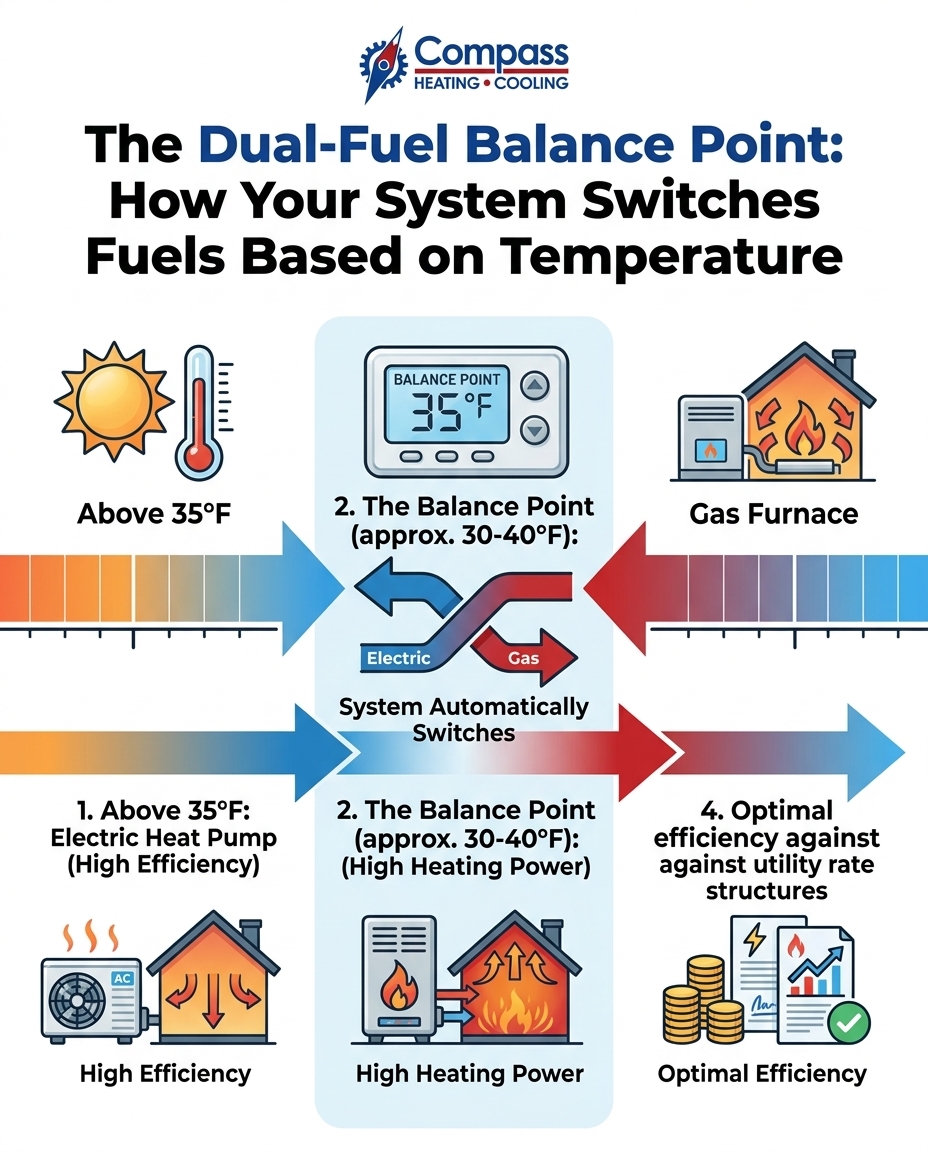
The secret to unlocking the true value of a dual-fuel setup lies in a concept known as the "balance point." The balance point is the specific outdoor temperature at which your smart thermostat automatically switches the heating load from the electric heat pump over to the gas furnace. Getting this number right is the most critical step in optimizing your system.
Northern Colorado's fluctuating shoulder seasons make the electric heat pump highly efficient in early fall, while deep freezes require the gas backup. The balance point bridges these two extremes. There are actually two types of balance points to consider:
• The Thermal Balance Point: The temperature at which the heat pump can no longer produce enough heat to match your home's heat loss.
• The Economic Balance Point: The temperature at which it becomes financially cheaper to burn natural gas rather than use electricity to run the heat pump.
Local experts calibrate this economic balance point to perfectly align with Xcel Energy's specific rate structures. Because our team has deep local expertise in navigating Xcel Energy rate structures, we can optimize this balance point for maximum homeowner ROI in Loveland, CO. We analyze the current cost of electricity versus the cost of natural gas to find the exact degree where switching fuels saves you the most energy.
The risk of poor calibration: If the balance point is set too low, your heat pump will run constantly in extreme cold, driving up your electric bill. If it is set too high, your furnace will fire up during mild weather, wasting natural gas. Proper calibration prevents the system from running the heat pump when it's too cold or the furnace when it's too mild, ensuring you always use the most cost-effective fuel.
Maximizing Your Investment with Qualifying Utility Rebates
Upgrading your HVAC system is a significant investment in your home's infrastructure, but you do not have to shoulder the entire cost alone. Because dual-fuel systems dramatically reduce fossil fuel consumption during mild weather, they are heavily incentivized by government and utility energy efficiency initiatives.
Upgrading to a high-efficiency dual-fuel system often qualifies for various energy incentives designed to offset the initial upgrade costs. While programs frequently change, federal tax credits and local utility rebates may apply to qualifying heat pump installations. These generic rebate programs are specifically structured to encourage homeowners to adopt hybrid heating technologies that lower the overall strain on the utility grid.
Navigating the paperwork for these incentives can be complex. You must ensure that the specific equipment combination—the heat pump, the furnace, and the indoor coil—meets strict efficiency ratings to qualify. This is why you should always consult with local HVAC experts who understand the paperwork, the required AHRI matching certificates, and the qualifications for these programs.
For Fort Collins homes and properties throughout Loveland, CO, leveraging our deep local expertise in guiding homeowners toward qualifying generic utility rebates for dual-fuel upgrades ensures you do not leave any available incentives on the table. We make sure your system is designed from day one to meet the necessary efficiency tiers.
Why the September Pre-Heating Season Transition is the Time to Act
Timing is everything when it comes to major home improvements. Waiting until your old furnace breaks down during the first deep freeze often leads to rushed decisions, limited equipment availability, and emergency installation fees. If you want to maximize your comfort and your financial return, the September pre-heating season transition is the absolute best time to make this upgrade.
Here is why early fall provides the perfect window for a dual-fuel installation:
1. Ideal Weather Conditions: The September fall-to-winter transition provides the perfect weather window for installation without disrupting your home comfort. Your house won't freeze while the technicians have the system offline for a few hours.
2. Immediate Shoulder-Season Savings: Upgrading now allows you to immediately benefit from the heat pump's efficiency during the mild shoulder season. You can heat your home through October and November using highly efficient electricity before ever needing to ignite the gas furnace.
3. Proactive Calibration: Installing in September gives your technician ample time to test and fully calibrate the balance point before peak winter gas rates take effect. You enter the coldest months fully prepared.
4. Better Equipment Availability: Supply chains and local warehouses are fully stocked in early fall. Once the first major snowstorm hits, demand surges, and you may find yourself waiting weeks for the exact dual-fuel model your home requires.
By scheduling a proactive heat pump installation during this transition period, you secure your equipment, optimize your balance point, and insulate yourself against the upcoming winter utility spikes before they even begin.
Frequently Asked Questions About Hybrid Heating Strategies
At what temperature should a dual fuel system switch to gas in Colorado?
The exact switchover temperature varies based on your home's insulation levels and current utility rates, but it typically falls between 30°F and 40°F. In Loveland, CO, local experts calibrate this balance point to ensure the heat pump runs as long as it is economically viable. Once the temperature drops below that calibrated threshold, the system automatically engages the gas furnace for maximum heating power.
How does a dual fuel heat pump optimize utility costs?
A dual fuel system optimizes costs by utilizing the cheapest available energy source based on real-time outdoor temperatures. During mild weather, it uses highly efficient electricity to transfer heat, which is far less expensive than burning fuel. When extreme cold makes the heat pump less efficient, it switches to natural gas, protecting you from the high electrical costs of running a heat pump in sub-zero weather.
Is a dual fuel heat pump worth it in cold climates?
Yes, a dual fuel setup is exceptionally valuable in cold climates like Northern Colorado. It provides the incredible energy efficiency of a heat pump for a large portion of the year, including the long fall and spring shoulder seasons. At the same time, it retains the reliable, heavy-duty heating power of a gas furnace for the absolute coldest days of winter, giving you the best of both worlds.
How does a dual fuel HVAC system work automatically?
The entire process is managed by a smart thermostat that constantly monitors the outdoor temperature. You simply set your desired indoor temperature, and the thermostat seamlessly switches between the heat pump and the gas furnace at the pre-set balance point. You never have to manually adjust settings or switch fuels; the system handles the transition invisibly to maintain continuous comfort.
Can I add a heat pump to my existing gas furnace?
Often yes, provided your existing gas furnace is compatible with modern heat pump technology and smart thermostat controls. A technician will need to evaluate your current blower motor, ductwork, and indoor coil to ensure they can properly integrate with a new exterior heat pump. If compatible, retrofitting a heat pump to your existing furnace is an excellent way to create a dual-fuel system.
Take Control of Your Winter Comfort and Energy Usage
Navigating winter utility costs doesn't have to be a source of constant stress. A dual-fuel system offers the absolute best of both worlds: mild-weather efficiency that keeps your early-season bills low, combined with deep-freeze reliability that keeps your family safe and warm during the harshest storms.
This hybrid strategy optimizes your energy usage against local rate structures without forcing you to abandon the proven power of gas heating entirely. You gain the flexibility to adapt to whatever the winter weather—and the energy market—throws your way.
Don't wait for the first blizzard to realize your old furnace is going to cost a fortune to run this year. Take advantage of the September pre-heating season transition to evaluate your home's compatibility. Reach out to a local HVAC expert today to discuss how a dual-fuel upgrade can transform your winter comfort and protect your household budget.
hear what our satisfied clients have to say
Our clients consistently praise our exceptional service and attention to detail. They appreciate the personalized approach we take to meet their unique needs, ensuring satisfaction every step of the way.
.png)