



How the R-410A Refrigerant Phase-Out Impacts Your Next AC Purchase
Facing a Failing AC in Late Summer: The Refrigerant Dilemma
Your AC is running nonstop, but the house still feels warm, leaving you to wonder exactly how the R-410A refrigerant phase-out impacts your next AC purchase if the system finally quits. Dealing with a struggling cooling system is always frustrating, but it becomes particularly stressful when it happens right at the peak of late-summer heat. You are suddenly forced to make a major decision about your home comfort, and rumors about new environmental regulations only add to the confusion.
As our technicians at Compass Heating & Cooling look at the reality of August 2026 end-of-season cooling, we see homeowners facing a very specific dilemma. Should you replace your failing system right now with current technology, or should you try to limp through the rest of the season to wait for next year's models? With Northern Colorado's intense late-summer heat, high-altitude UV exposure, and unpredictable temperature spikes, "waiting it out" with a broken system is a risky gamble for your indoor comfort.
The rumors circulating about the EPA refrigerant changes are making this decision much harder than it needs to be. Much of the information floating around is alarmist and designed to pressure you into a quick sale. The truth is far less intimidating. By understanding the facts, you can weigh your options based on your actual comfort needs and the true lifespan of your equipment. For comprehensive support navigating these choices, exploring professional air conditioning services is the best first step toward a reliable solution.
Understanding the EPA AIM Act and the R-410A Phase-Down
To make an informed decision, you first need to understand what the regulations actually mean. The changes we are seeing in the HVAC industry are driven by the American Innovation and Manufacturing (AIM) Act. This legislation directs the Environmental Protection Agency (EPA) to orchestrate a phasedown of hydrofluorocarbons (HFCs)—the class of chemicals that includes the current standard refrigerant, R-410A.
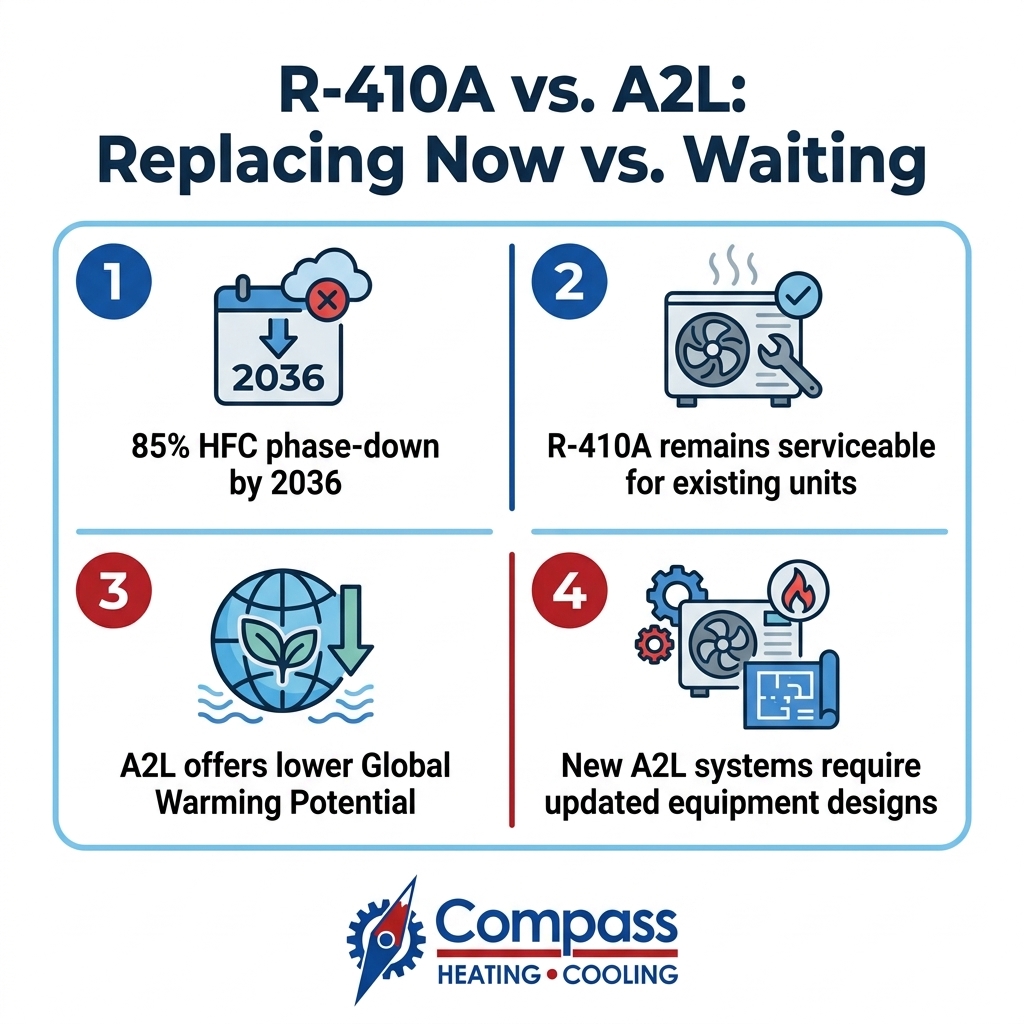
The mandate requires an 85% reduction in HFC production and consumption by the year 2036. The industry is moving away from these refrigerants because they have a high Global Warming Potential (GWP). If these chemicals leak into the atmosphere, they trap significantly more heat than carbon dioxide. By transitioning to new alternatives, the goal is to drastically reduce the environmental impact of residential and commercial cooling.
However, the most critical fact to remember is that this regulatory shift applies primarily to the manufacturing of new equipment. It does not criminalize the ownership, operation, or servicing of existing residential units. You are not going to be forced to tear out a working air conditioner just because the calendar flips to a new year.
What 'Phase-Down' Actually Means for Homeowners
A phase-down is very different from an immediate ban. When comparing the current landscape of R-410A vs. A2L refrigerant systems, it helps to look at the actual timeline. The EPA is gradually reducing the amount of R-410A that can be produced or imported into the United States. This step-by-step reduction gives manufacturers, suppliers, and technicians time to adjust.
• Manufacturing bans: The most immediate deadlines apply to the factories building the units. Starting in 2025 and 2026, manufacturers must pivot to building systems that use the new, lower-GWP refrigerants.
• Service availability: The phase-down does not stop technicians from acquiring the refrigerant needed to repair your current system. Just like the previous transition away from R-22 (Freon), the industry will rely on stockpiles and reclaimed refrigerant to keep existing units running for their natural lifespan.
Meet the Next Generation: A2L Refrigerants Explained
If you are considering holding off on a replacement, you need to know what you are actually waiting for. The upcoming industry standard relies on a new class of refrigerants known as A2Ls.
The underlying issue: The traditional R-410A refrigerant, while excellent at cooling your home, has a high Global Warming Potential. As environmental regulations tighten, the HVAC industry can no longer rely on it for future manufacturing.
The driving cause: The EPA requires a massive reduction in HFC production to meet environmental targets, forcing manufacturers to completely redesign how air conditioners operate and handle thermal transfer.
The industry solution: Enter A2L refrigerants, such as R-454B and R-32. These alternatives offer a significantly lower environmental impact while actually providing exceptional energy efficiency and heat transfer capabilities.
One detail that often causes hesitation is the classification of A2Ls as "mildly flammable." While this sounds alarming, the reality is highly reassuring. The "2L" designation means these chemicals are incredibly difficult to ignite. They require a highly concentrated leak in a confined space and a direct, sustained ignition source to catch fire. To ensure complete safety, manufacturers have spent years redesigning the new equipment. When our team installs these next-generation systems, we appreciate the advanced safety features like thicker coils, integrated leak detection sensors, and automatic shut-off valves that prevent any risk to your home.
Waiting for these new systems means you will be investing in the most modern, environmentally friendly technology available. However, it also means navigating the early stages of a massive industry transition. The first generation of any new technology often comes with a learning curve for supply chains and installations. If you want to explore the full spectrum of what is currently available, researching top AC replacement options can help you compare the proven reliability of current models against the upcoming tech.
The Reassurance: Long-Term Serviceability for R-410A Systems
The biggest fear most homeowners have is that if they buy an R-410A system today, it will become an unfixable paperweight tomorrow. Let's put that fear to rest: servicing existing R-410A systems remains completely legal, and it will stay that way for the foreseeable future.
If you live in Loveland, CO, and install an R-410A air conditioner today, you will still be able to get it repaired five, ten, or even fifteen years down the road. In our years of serving the local community, our team has been through this exact scenario before. When the older R-22 refrigerant was phased out, many people panicked. Yet, years after the final production ban, our technicians were still easily servicing R-22 units using stockpiled supplies and aggressively reclaimed, cleaned, and recycled refrigerant.
The supply chain for R-410A will operate the same way. As older units are retired, their refrigerant is safely extracted, purified at specialized facilities, and resold for repairs. You will not be left stranded without support.
At Compass Heating & Cooling, we believe in providing transparent, no-pressure advice. Working with a trusted local expert means you have a partner dedicated to supporting your system for its entire lifespan, regardless of which refrigerant runs through its lines. The best way to protect your investment and avoid major repairs is through proactive upkeep. Scheduling regular AC maintenance ensures your system runs efficiently and minimizes the chance of ever needing a major refrigerant recharge in the first place.
Pros and Cons: Replacing Now vs. Waiting for A2L
When you are staring down a struggling air conditioner, you need a clear breakdown of your options. Deciding between installing a current model or waiting for the new A2L systems comes down to balancing immediate comfort against future technology.
• Replace Now (R-410A) — Primary Advantages: Immediate relief from the heat; highly proven, heavily tested technology; avoids early-adoption supply chain issues. — Potential Disadvantages: The refrigerant will eventually be phased out of production, relying on reclaimed supplies for future major repairs.
• Wait for Next Year (A2L) — Primary Advantages: Future-proofed technology; lower environmental impact; potentially higher baseline energy efficiency. — Potential Disadvantages: Suffering through current heat waves; potential delays or adjustments as the industry adapts to new equipment designs.
Benefits of Acting Now
Choosing to replace your system immediately restores your home comfort right when you need it most. You eliminate the stress of wondering if your old unit will survive the next heatwave. Furthermore, current R-410A systems represent the absolute peak of that technology's development. They are incredibly reliable, highly efficient, and every technician in the field knows exactly how to install and service them flawlessly.
Reasons to Wait
If your current system only requires a minor, highly reliable repair to survive the rest of the season, waiting might be a viable strategy. Holding out for an A2L system aligns your home with the newest environmental standards. When comparing R-410A vs. A2L refrigerant systems, the newer models are designed from the ground up to meet strict new efficiency and safety mandates. If you decide that immediate action is the best route for your family's comfort, securing professional AC replacement in Loveland ensures the job is done right.
Your Go/No-Go Decision Framework for End-of-Season Replacements
Making a major home investment shouldn't be based on panic over regulatory deadlines. It should be based on a logical assessment of your home's needs. If you are dealing with an August 2026 end-of-season cooling failure, use this practical framework to decide your next steps.
1. Assess the current system's age and overall condition. Is your air conditioner facing a minor, routine fix like a failed capacitor, or a catastrophic failure like a dead compressor? In our experience evaluating end-of-life systems across Loveland, if the unit is over 12 years old and requires a major repair, pouring money into it just to "limp through" a few more weeks is rarely a wise investment.
2. Evaluate your household comfort levels. Can your family safely and comfortably tolerate the remaining late-summer heat if the system fails entirely? High-altitude UV and temperature spikes in Northern Colorado demand a reliable cooling solution right now. If waiting puts your family's health or comfort at risk, the decision is made for you: replace it now.
3. Consider the immediate efficiency gains. A new R-410A system installed today will still be vastly more efficient than a struggling 15-year-old unit. You don't have to wait for next year's models to see a significant drop in your daily energy usage.
The "math" of this decision should always focus on long-term reliability and your daily quality of life. If your system is dead and the heat is unbearable, moving forward with an AC installation today provides immediate peace of mind and a decade-plus of guaranteed comfort.
Factoring in High-Efficiency Upgrades and Generic Incentives
Whether you choose a current R-410A model or eventually transition to an A2L system, modern air conditioners offer massive leaps in energy efficiency. The standards for cooling efficiency, measured in SEER2 ratings, have increased significantly over the last decade. Upgrading an old, struggling unit in Loveland, CO, means your new system won't have to work nearly as hard to cool your home, translating to better daily performance and a more consistent indoor climate.
Beyond the immediate comfort, high-efficiency upgrades often come with additional financial perks. Generic federal tax credits and local utility rebates frequently apply to qualifying high-efficiency installations, including advanced heat pumps and top-tier air conditioners. These incentive programs are designed to encourage homeowners to reduce their energy footprint.
Because these programs change frequently and vary based on your specific utility provider, we always advise readers to consult with their installation professional during the quoting process. You should also verify current programs and eligibility requirements with your utility provider or a qualified tax professional. Taking advantage of these generic incentives makes upgrading to a highly efficient system even more rewarding.
Frequently Asked Questions About the AC Refrigerant Transition
Will R-410A be banned completely?
No, R-410A is not being banned completely for consumer use or ownership. The EPA AIM Act mandates a gradual phase-down of its production and importation, not an outright ban on operating existing systems. You will remain legally permitted to own, operate, and repair your current R-410A air conditioner for the remainder of its natural lifespan.
How long will R-410A be available for servicing my AC?
R-410A will be available for servicing existing units for many years to come. The HVAC industry relies heavily on reclaimed and recycled refrigerant to maintain older systems, much like it did during the phase-out of R-22. As long as your system is well-maintained and free of major leaks, the existing supply chain will be able to support your repair needs.
Should I buy an AC with R-410A now or wait?
You should base this decision on the current health of your air conditioner and your immediate comfort needs. If your system has suffered a major failure in the heat of summer, buying a highly reliable, proven R-410A system now is a smart, safe choice. If your current system is running perfectly fine, there is no need to replace it proactively; you can simply wait until it naturally reaches the end of its lifespan.
What is replacing R410a in 2025?
Starting in 2025 and 2026, manufacturers are transitioning to a new class of refrigerants known as A2Ls, with R-454B and R-32 being the most common replacements. These new refrigerants offer a significantly lower Global Warming Potential (GWP) and excellent energy efficiency. Because they operate differently, they require entirely new equipment designs and cannot be used in older R-410A units.
Are the new A2L refrigerants safe for residential use?
Yes, A2L refrigerants are entirely safe for residential use. While they carry a "mildly flammable" classification, they are extremely difficult to ignite and require a highly concentrated leak paired with a sustained open flame. Furthermore, manufacturers have integrated advanced safety features into the new units, such as automatic shut-off valves and leak detection sensors, to eliminate potential risks.
Make an Informed, No-Pressure Decision for Your Home
The transition away from older refrigerants is a gradual, industry-wide shift, not a reason to panic or rush into a purchase you aren't ready for. Understanding exactly how the R-410A refrigerant phase-out impacts your next AC purchase puts the power back in your hands. Whether you live in the heart of Loveland, CO, or the surrounding areas, the best choice always depends on your current system's health and your family's immediate comfort needs. If you are tired of sweating through the end of summer with a failing unit, we encourage you to seek an honest, thorough evaluation from a local professional to explore all of your options without the high-pressure sales tactics.
hear what our satisfied clients have to say
Our clients consistently praise our exceptional service and attention to detail. They appreciate the personalized approach we take to meet their unique needs, ensuring satisfaction every step of the way.
.png)