



How Does Heat Pump Defrost Mode Work in Northern Colorado Cold Snaps
How Heat Pump Defrost Mode Works During Northern Colorado Cold Snaps
Understanding how does heat pump defrost mode work during northern colorado cold snaps is simpler than it sounds — and knowing what's normal can save you a lot of worry on a cold February morning.
Here's the quick answer:
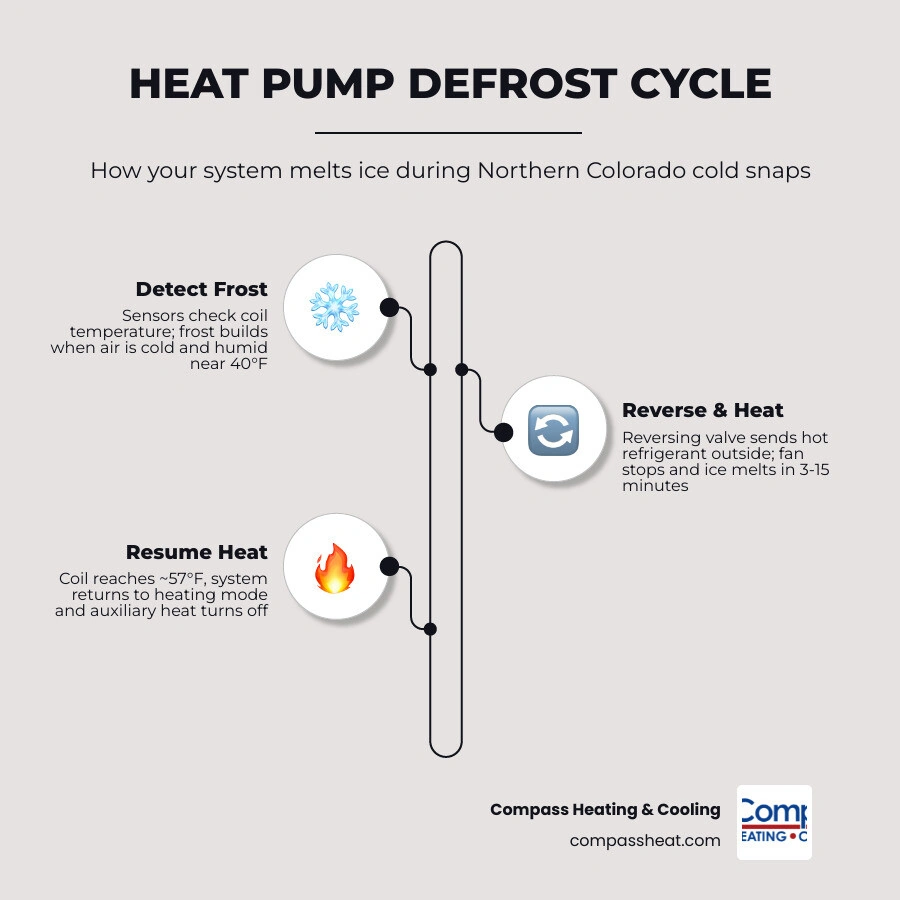
1. Frost builds on the outdoor coil when cold, humid air causes condensation to freeze on the coil fins, blocking airflow.
2. The system detects the frost using temperature sensors (or a timer on older units) and triggers defrost mode automatically.
3. The reversing valve switches the heat pump into a temporary cooling cycle, sending hot refrigerant to the outdoor coil to melt the ice.
4. The outdoor fan stops while the coil heats up and sheds ice — this is why you may see steam rising from the unit.
5. Backup heat (AUX) kicks in to keep your home warm during the short cycle, which typically lasts 3 to 15 minutes.
6. The system returns to heating mode once sensors confirm the ice has cleared, usually when the coil reaches around 57°F.
Northern Colorado's winters make this cycle especially relevant. Fort Collins, Loveland, and Greeley all see sharp temperature swings — mild afternoons followed by hard freezes overnight — that create ideal conditions for frost buildup on outdoor coils. Add in moisture from snowmelt, freezing rain, or even a foggy morning, and your heat pump may run defrost cycles more often than homeowners in drier climates expect. That's completely normal. What matters is knowing the difference between a healthy defrost cycle and a sign that something needs attention.
What Is a Heat Pump Defrost Cycle and Why Does It Happen?
To understand why your heat pump needs a defrost cycle, it helps to look at how these systems heat your home in the first place. Unlike a gas furnace, which burns fuel to generate heat, a heat pump extracts existing thermal energy from the outdoor air and transfers it indoors. If you have ever asked yourself, "Should Your Home Have a Heat Pump," the answer lies in this incredible efficiency. Even when it feels freezing to us, there is still plenty of heat energy available in the outdoor air.
However, this heat extraction process relies on physics that naturally invite frost. As the liquid refrigerant expands and moves through the outdoor coil, its temperature drops significantly. In fact, a heat pump's outdoor coil is typically 10°F to 20°F colder than the ambient outdoor air temperature.
This temperature gap is what allows the system to pull heat from the air, but it also means that whenever the outdoor temperature drops into the low 40s or below, the coil itself plunges well below freezing (32°F).
When the outdoor air temperature is cold and contains moisture, several things happen in quick succession:
• The Dew Point Factor: As air passes over the freezing-cold coil, the moisture in the air reaches its dew point and condenses into liquid water on the coil fins.
• Instant Freezing: Because the coil surface temperature is below 32°F, this condensation instantly freezes, forming a thin layer of frost.
• Airflow Restriction: As frost builds up, it acts like a thick blanket, blocking the tiny spaces between the aluminum fins.
• Efficiency Drop: With restricted airflow, the heat pump can no longer pull heat from the air efficiently. The system must work harder and run longer to deliver the same amount of warmth.
Without a built-in mechanism to melt this frost, the outdoor unit would eventually become completely encased in a block of ice, choking off all airflow and potentially damaging the compressor. That is why the defrost cycle is a vital, self-protecting feature designed to keep your system running safely and efficiently all winter long.
How Does Heat Pump Defrost Mode Work During Northern Colorado Cold Snaps?
When your heat pump decides it is time to clear the frost, it initiates a highly coordinated mechanical sequence. It essentially performs a magic trick: it temporarily acts like an air conditioner to warm itself up.
Here is exactly what happens step-by-step behind the metal cabinet of your outdoor unit:
1. The Reversing Valve Shifts: The heart of this process is the reversing valve. When defrost mode is triggered, this valve physically shifts to reverse the flow of refrigerant. Instead of sending hot refrigerant indoors to heat your home, the system directs the hot, pressurized gas straight into the outdoor coil.
2. The Outdoor Fan Shuts Down: To melt the ice quickly, the system needs to keep the outdoor coil as hot as possible. The outdoor fan motor stops spinning. By shutting off the fan, the heat pump prevents cold winter air from blowing across the coil, allowing the hot refrigerant to rapidly warm up the metal fins.
3. The Ice Melts: As the hot refrigerant flows through the outdoor coil, the temperature of the metal rises quickly. The frost and ice touching the fins melt and run down into the base pan of the unit, draining out through designated weep holes.
4. Indoor Auxiliary Heat Engages: Because the system is technically running in cooling mode to heat the outdoor coil, the indoor coil would normally start blowing cold air into your home. To prevent you from feeling a sudden chilly draft, the heat pump's control board automatically engages your backup heating source—usually electric resistance heat strips or your dual-fuel gas furnace.
5. The Cycle Terminates: Once sensors detect that the outdoor coil has warmed up to a safe temperature (usually around 57°F), indicating all ice has melted, the defrost cycle ends. The reversing valve shifts back with a distinct "whoosh" sound, the outdoor fan starts spinning again, the auxiliary heat turns off, and the system resumes normal indoor heating.
If your heat pump struggles to transition smoothly through these steps during a severe cold snap, it can lead to a sudden loss of indoor comfort. When this mechanical dance gets interrupted, scheduling professional Heat Pump Repair Fort Collins CO is the best way to get the system safely back on track.
How Heat Pumps Detect Frost: Demand Defrost vs. Timed Defrost
Not all heat pumps go about detecting frost in the same way. The technology used to trigger a defrost cycle has a massive impact on your home's energy efficiency and overall comfort during a Northern Colorado winter.
• Trigger Mechanism — Timed Defrost Systems: Fixed time intervals (30, 60, or 90 minutes) — Modern Demand Defrost Systems: Real-time temperature and pressure sensors
• Operational Logic — Timed Defrost Systems: Runs regardless of whether frost is actually present — Modern Demand Defrost Systems: Runs only when physical frost restricts airflow
• Cycle Duration — Timed Defrost Systems: Often runs for a fixed, longer duration — Modern Demand Defrost Systems: Typically lasts only 3 to 5 minutes
• Energy Efficiency — Timed Defrost Systems: Lower; wastes energy on dry, cold days — Modern Demand Defrost Systems: Higher; maximizes energy conservation
• Component Wear — Timed Defrost Systems: Higher due to unnecessary mechanical cycling — Modern Demand Defrost Systems: Lower; extends the lifespan of the reversing valve
How does heat pump defrost mode work during northern colorado cold snaps with demand sensors?
Modern, high-efficiency heat pumps utilize advanced demand defrost systems. These intelligent setups rely on a network of microprocessors and highly sensitive temperature sensors. Typically, one sensor monitors the outdoor ambient air temperature while another is attached directly to the outdoor liquid line or coil.
By constantly comparing these two temperatures, the system's control board can calculate exactly when ice is restricting heat transfer. It also monitors variable-speed compressor speeds and system pressures. Because these systems only run when absolutely necessary, they are incredibly efficient.
A demand defrost cycle is highly optimized, often lasting a mere 3 to 5 minutes before returning to normal heating. If you suspect your smart sensors are miscalibrated or failing to trigger, a professional technician can inspect and test them during a routine Heat Pump Service Fort Collins CO visit.
How does heat pump defrost mode work during northern colorado cold snaps with older timed systems?
Older or entry-level heat pumps rely on timed defrost controls. These systems use a mechanical or electronic timer that checks for frost at rigid, predetermined intervals—usually every 30, 60, or 90 minutes of cumulative compressor run time.
If the outdoor coil temperature is below freezing when the timer hits its mark, the system initiates a defrost cycle, whether there is actual ice on the coil or not. On a dry, sub-zero Northern Colorado day, there may be zero moisture in the air to create frost. Yet, a timed system will still faithfully switch into defrost mode, wasting energy by running backup electric heat indoors while cooling a perfectly clear outdoor coil.
If your older system is constantly cycling unnecessarily and driving up your winter utility bills, it might be time to explore a modern, demand-defrost Heat Pump Replacement Fort Collins CO.
What Homeowners See, Hear, and Feel During Defrost
The first time you witness your heat pump enter defrost mode, it can be a bit startling. If you do not know what to expect, you might think your system is on the verge of a major breakdown.
To keep you from panicking on a freezing winter morning, here is a breakdown of the sensory experiences that are completely normal during a healthy defrost cycle:
• The Steam Cloud (It's Not Smoke!): As the outdoor coil heats up rapidly to melt the accumulated frost, the water runoff hits the cold outdoor air and flashes into a thick cloud of white vapor. It looks exactly like smoke, but it is actually harmless steam. It should have no odor and will quickly dissipate.
• The "Whoosh" Sound: When the reversing valve shifts refrigerant direction at the start and end of the cycle, you will hear a loud "whoosh" or sighing sound coming from the outdoor unit. This is simply the sound of high-pressure refrigerant changing direction.
• A Change in Compressor Pitch: Because the outdoor fan stops spinning during defrost, you will hear the compressor running by itself. Without the fan noise, the compressor will sound louder and may make a deep, low hum or a slightly higher-pitched growl as it works to pump hot gas through the coil.
• The "AUX Heat" Indicator: If you look at your indoor thermostat during a defrost cycle, you will likely see the words "AUX Heat," "Emergency Heat," or a small flame icon flash on. This indicates that your backup electric heat strips or secondary furnace have kicked in to maintain indoor comfort.
• A Brief Shift in Air Temperature: Approximately 99% of homeowners with properly functioning backup electric heat strips experience no noticeable change in comfort during defrost cycles. However, if your backup system is slightly delayed or if you do not have backup heat installed, you may feel a brief, lukewarm or slightly cool draft from your registers for a few minutes.
Understanding these normal operational signs helps you feel confident in your system's year-round capabilities. After all, if you have ever wondered, "Can a Heat Pump Cool My House in the Summer," remembering that the system is fully capable of reversing its refrigerant flow makes both summer cooling and winter defrosting make perfect sense!
Troubleshooting Defrost Issues and When to Call a Professional
While frequent defrosting can be normal during a humid, snowy Front Range weather pattern, there is a fine line between healthy operation and a system failure. If your heat pump is struggling to clear its coil, ice will continue to accumulate, eventually turning the outdoor unit into a solid block of ice.
Here are the most common causes of defrost failures and what you can do to prevent them:
• Gutter Runoff and Roof Drip Lines: One of the most common causes of heavy ice buildup in our service area is water dripping directly onto the top of the heat pump. If your gutters are clogged or if the outdoor unit is installed directly under a roof valley, melting snow will drip onto the fan and coil, refreezing instantly. This localized water flow will quickly overwhelm even the best defrost system.
• Airflow Blockages: Your heat pump needs to breathe. If heavy winter snow drifts pack in around the base of the outdoor unit, or if autumn leaves are plastered against the metal grates, the restricted airflow will cause the coil to ice up rapidly.
• Dirty Indoor Air Filters: It might seem strange, but a clogged air filter inside your home can cause the outdoor unit to freeze up. Low indoor airflow prevents proper heat transfer, throwing off system pressures and temperatures, which can lead to rapid outdoor icing.
• Defrost Board or Sensor Failures: If a temperature sensor fails or the defrost control board malfunctions, the system may never receive the signal to start defrosting, or it may terminate the cycle too early before the ice has fully melted.
• Refrigerant Leaks: If your system is low on refrigerant, the operating pressures will drop, causing the outdoor coil to run much colder than designed. This leads to extremely rapid, heavy ice accumulation that a standard defrost cycle cannot melt.
Preventative Steps You Can Take:
1. Keep it Clear: After a heavy Front Range snowstorm, gently clear loose snow away from the sides and top of your outdoor unit, maintaining at least 18 to 24 inches of clear space around it.
2. Change Your Filters: Replace your indoor air filters every 30 to 90 days to maintain strong, steady airflow throughout your home.
3. Redirect Runoff: Ensure your gutters are clean and routing meltwater far away from your outdoor HVAC equipment.
If you notice that your heat pump is encased in a thick, solid shell of ice that does not clear after several hours, do not attempt to chip the ice off with a shovel, screwdriver, or hammer. The aluminum fins are incredibly delicate, and the copper refrigerant tubes beneath them can easily puncture, leading to an expensive repair.
Instead, switch your thermostat to "Emergency Heat" or "Auxiliary Heat" to keep your home warm using your backup system, and schedule a professional Heat Pump Maintenance Fort Collins CO visit or a comprehensive Heat Pump Tune Up Fort Collins CO to have a technician safely melt the ice and diagnose the root cause.
Frequently Asked Questions About Heat Pump Defrosting
How long does a typical defrost cycle last and how often does it occur?
A healthy defrost cycle typically lasts between 3 to 15 minutes. If you have a modern unit utilizing demand defrost technology, the cycle is highly optimized and usually finishes in just 3 to 5 minutes.
The frequency of these cycles depends entirely on outdoor weather conditions. In cold, damp conditions—such as during a light winter snowstorm or a foggy morning with temperatures between 20°F and 35°F—your system may defrost every 30 to 90 minutes. However, during dry, sub-zero cold snaps, the air holds very little moisture, meaning frost forms much slower, and the system may only need to defrost once every few hours.
Is it normal for my heat pump to blow cool air during defrost?
Ideally, you should not feel a noticeable drop in indoor comfort. Because the defrost cycle temporarily runs the system in cooling mode, your indoor blower would normally blow cold air into your living spaces.
To counteract this, the heat pump's control board automatically activates your indoor auxiliary heat (such as electric heat strips or a gas furnace). If your backup heating system is working perfectly, the air coming from your vents should remain warm. If you feel a distinct, chilly draft every time the outdoor unit enters defrost mode, it is a sign that your auxiliary heating elements may not be engaging properly, and you should have a technician inspect the system.
Should I manually clear snow or ice off my outdoor unit?
Yes, but only loose snow. It is highly recommended to gently brush drifted snow off the top and sides of the cabinet using your hands or a soft broom.
However, if you see solid, hard ice frozen to the coil fins, never attempt to pry, scrape, or chip it away with sharp tools or metal implements. Doing so can permanently flatten the aluminum fins or puncture the copper lines, causing a major refrigerant leak. You should also avoid pouring boiling water on the unit, as the extreme temperature shock can crack components or cause the water to refreeze instantly into a thicker sheet of ice.
For more tips on keeping your system running smoothly through every season, check out our Seasonal HVAC Maintenance Tips Calendar.
Conclusion
Your heat pump's defrost mode is a highly engineered, completely normal process that keeps your home warm and your system safe during our intense Northern Colorado cold snaps. Knowing what a normal cycle looks and sounds like—from the harmless white steam clouds to the sudden whoosh of the reversing valve—gives you peace of mind when the winter weather does its worst.
When you need professional support, we are here to help. At Compass Heating & Cooling, we specialize in keeping your home comfortable through every season in Fort Collins, Loveland, Windsor, Wellington, Severance, Timnath, Johnstown, Greeley, Berthoud, and Evans. Whether you need a quick repair, a seasonal tune-up, or are ready to explore a complete Heat Pump Installation Fort Collins CO, our experienced team has you covered.
We take the stress out of upgrading your comfort by handling local utility rebates up to $8,000+ directly for you. Plus, our comprehensive maintenance plan offers priority service and exclusive discounts to keep your system running at peak efficiency year-round.
Ready to experience the ultimate in home comfort and efficiency? Visit our main Heat Pump page to learn more, or contact us today to schedule your winter tune-up!
hear what our satisfied clients have to say
Our clients consistently praise our exceptional service and attention to detail. They appreciate the personalized approach we take to meet their unique needs, ensuring satisfaction every step of the way.
.png)