



The Complete Guide to Compare Heat Pump Efficiency
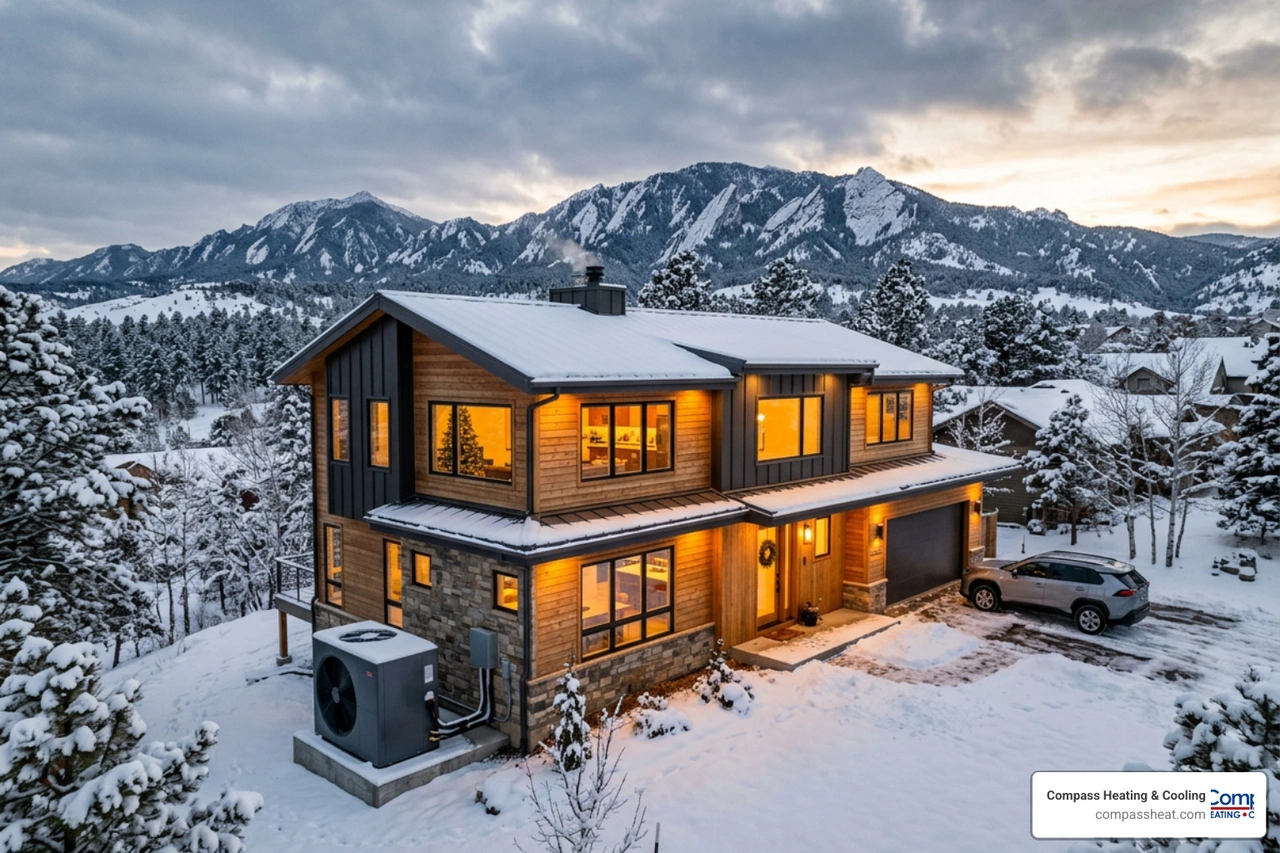
Why Comparing Heat Pump Efficiency for the Front Range Climate Is More Complex Than It Looks
Knowing how to compare heat pump efficiency for a hot summer and cold winter Front Range climate starts with understanding that no single rating tells the whole story. Here's a quick breakdown of what matters most:
Key efficiency metrics to compare for Front Range heat pumps:
• SEER2 - measures cooling efficiency across a full summer season (higher = better for hot Colorado summers)
• EER2 - measures cooling efficiency at peak conditions, like 95°F days on the Front Range
• HSPF2 - measures heating efficiency across a full heating season (look for 9.5+ for Colorado winters)
• COP at low temperatures - measures real-time heating efficiency at specific temps (e.g., COP 1.75+ at 5°F for cold-climate units)
• Minimum operating temperature - cold-climate models should operate to at least -13°F to -22°F for Denver's occasional Arctic fronts
Living on Colorado's Front Range means your HVAC system faces two very different challenges every year. Summers push outdoor temperatures above 95°F, while winters can drop well below zero — sometimes within the same week thanks to dramatic Chinook wind swings. That kind of climate demands more than a single efficiency number on a spec sheet.
Standard heat pump ratings are measured in a lab, under controlled conditions. But Denver sits at 5,280 feet, where thinner air reduces heat pump capacity by 5–8% right out of the box. Add in the Front Range's wide daily temperature swings and the occasional sub-zero Arctic front, and the gap between a heat pump's rated efficiency and its real-world performance becomes significant.
For homeowners already frustrated by high energy bills and confusing product comparisons, choosing the wrong system — or misreading the ratings — can mean years of overpaying. The good news is that modern cold-climate heat pumps have improved dramatically. Eight major manufacturers have now tested their units down to -15°F, and top models like Mitsubishi's Hyper-Heat line are rated to operate at -24°F while still delivering useful heating capacity.
This guide walks you through exactly how to read, compare, and apply heat pump efficiency ratings to the real conditions you'll face on the Front Range — season by season.
How to Compare Heat Pump Efficiency for a Hot Summer and Cold Winter Front Range Climate
When you begin shopping for a new HVAC system in Northern Colorado—whether you are in Fort Collins, Loveland, Windsor, or Greeley—you will quickly find yourself swimming in an alphabet soup of acronyms. Understanding HVAC Energy Efficiency is the first step to making an educated purchase.
To truly understand how to compare heat pump efficiency for a hot summer and cold winter Front Range climate, you must look at both sides of the seasonal coin. Heat pumps do not create heat; they transfer it. In the summer, they act as an air conditioner, extracting heat from inside your home and dumping it outdoors. In the winter, the process reverses: they extract heat from the freezing outdoor air and pump it inside.
Because of this dual role, we cannot rely on a single efficiency metric. A system that excels at cooling during a dry, 95°F July afternoon in Wellington might struggle to keep you warm during a sub-zero January blizzard in Severance.
To compare these systems accurately, we use four primary metrics: COP (Coefficient of Performance), HSPF2 (Heating Seasonal Performance Factor 2), SEER2 (Seasonal Energy Efficiency Ratio 2), and EER2 (Energy Efficiency Ratio 2).
• SEER2 — What It Measures: Seasonal cooling efficiency — Why It Matters for the Front Range: Determines your overall summer electricity bills. — Target Rating: 16 to 20+
• EER2 — What It Measures: Peak cooling efficiency at 95°F — Why It Matters for the Front Range: Measures performance during our hottest mid-summer afternoons. — Target Rating: 12+
• HSPF2 — What It Measures: Seasonal heating efficiency — Why It Matters for the Front Range: Determines your overall winter electricity consumption. — Target Rating: 9.0 to 10+
• COP — What It Measures: Real-time efficiency at specific temperatures — Why It Matters for the Front Range: Shows how hard the system works when temperatures drop below freezing. — Target Rating: 1.75+ at 5°F
Deciphering Cooling Metrics: SEER2 and EER2 for Hot Colorado Summers
When asking, "Can a Heat Pump Cool My House in the Summer," the answer is a resounding yes. In fact, a heat pump is physically identical to an air conditioner in cooling mode—it just has a reversing valve that allows it to run backward in the winter.
For summer performance, we look at SEER2 and EER2. The "2" in these ratings represents the updated testing standards implemented in 2023, which better replicate real-world duct static pressure.
• SEER2 calculated over a simulated cooling season with varying outdoor temperatures. If you live in a place like Timnath or Johnstown where summer nights cool down beautifully, SEER2 gives you a great estimate of your overall seasonal electricity usage.
• EER2 is a steady-state measurement calculated at a constant outdoor temperature of 95°F. Because Northern Colorado summers frequently bring sustained stretches of high-90s heat, EER2 is highly relevant. It tells us how efficiently the system will run when it is working at its absolute hardest on a scorching July afternoon.
In our dry, high-altitude climate, we benefit from low latent heat (humidity). This means our heat pumps do not have to spend much energy dehumidifying the air; instead, they can focus almost entirely on lowering the actual temperature (sensible cooling). This makes high-EER2 systems incredibly effective here.
Deciphering Heating Metrics: HSPF2 and COP for Cold Colorado Winters
When winter rolls around, the focus shifts to heating. If you are debating Should Your Home Have a Heat Pump, you need to look closely at HSPF2 and COP.
• HSPF2 is the seasonal heating efficiency rating. Just like SEER2, it represents the total heating output of the system over the entire winter divided by the total electrical energy consumed. For Northern Colorado, you want to target an HSPF2 of 9.0 or higher.
• COP (Coefficient of Performance) is a direct, real-time ratio of heat delivered to electricity consumed. For example, if a heat pump has a COP of 3.0, it delivers three units of heat energy for every one unit of electrical energy it consumes. That is 300% efficiency! For comparison, standard electric baseboard heaters have a COP of 1.0 (100% efficiency), and high-efficiency gas furnaces top out around 0.95 to 0.98 (95% to 98% efficiency).
As the outdoor temperature drops, the COP of a heat pump naturally decreases because there is less ambient heat available to extract. A standard heat pump’s COP might plummet below 1.5 when temperatures hit 30°F. However, cold-climate heat pumps are engineered to maintain a COP of at least 1.75 at 5°F, and they can achieve COPs of 2.0 to 3.0 when temperatures are in the 30°F to 40°F range.
Real-World vs. Lab Ratings: Altitude and Temperature Swings
One of the biggest mistakes homeowners make when comparing heat pump efficiency is assuming that the yellow EnergyGuide label tells the whole truth. Lab tests are conducted at sea level with stable, predictable temperatures. Our reality in Northern Colorado is very different.
How High Altitude Affects Heat Pump Capacity
Altitude is the silent efficiency killer for HVAC equipment. In cities like Fort Collins (5,003 feet), Loveland (4,982 feet), and Greeley (4,658 feet), the air is significantly thinner than it is at sea level.
Thin air has less mass, which means it cannot hold or transfer heat as effectively as dense sea-level air. As a rule of thumb, air-source heat pumps experience a capacity derating of approximately 3% for every 1,000 feet of elevation above sea level.
At 5,000 feet, your heat pump is operating at roughly 85% to 92% of its rated sea-level heating and cooling capacity. If a system is rated for 36,000 BTUs (3 tons) in a lab, it may only deliver around 31,000 to 33,000 BTUs of actual heating or cooling in your home. This altitude-induced capacity reduction must be factored into your system comparison and sizing calculations.
The Impact of Diurnal Temperature Swings on Seasonal Efficiency
The Front Range is famous for its rapid, dramatic temperature swings. Thanks to our high elevation, low humidity, and the occasional Chinook wind, we can experience 40-degree temperature drops in a matter of hours.
These rapid swings impact heat pump efficiency in two ways:
1. Defrost Cycles: When the outdoor temperature drops below 35°F and humidity is present, frost can build up on the outdoor coils. The heat pump must periodically reverse itself into cooling mode for a few minutes to melt the ice, using energy to heat the outdoor coil while temporarily pausing indoor heating. Systems that utilize advanced demand-frost controls (which only defrost when ice is physically detected) are vastly more efficient in Colorado than cheaper systems that run on simple time-temperature timers.
2. Capacity Matching: A single-stage heat pump is either 100% on or 100% off. During our mild spring and fall shoulder seasons, a single-stage system will constantly cycle on and off (short-cycling), which destroys its operating efficiency. Variable-speed systems, on the other hand, can dial their output down to matching the exact load of the home, maintaining peak efficiency even when the weather cannot make up its mind.
To find units that perform well under these extreme real-world conditions, we often look to the Northeast Energy Efficiency Partnerships (NEEP) cold-climate air-source heat pump database, which lists performance metrics tested at much lower temperatures than standard AHRI ratings.
Supplemental Heat and Dual-Fuel Efficiency Dynamics
Because winter temperatures on the Front Range can occasionally plunge below -10°F, every air-source Heat Pump installation needs a plan for supplemental (backup) heat. How you configure this backup heat has a massive impact on your winter energy bills.
Electric Resistance vs. Gas Furnace Backup
There are two primary ways to configure backup heat:
• All-Electric with Electric Resistance Strips: In this setup, your heat pump is paired with an indoor air handler containing electric heating coils (similar to a giant toaster). If the outdoor temperature drops below the heat pump's operational limit, or if the system cannot keep up with the heating load, these electric strips kick on. While 100% efficient (COP of 1.0), electric resistance heating consumes a massive amount of electricity. If your backup heat runs frequently, it will quickly wipe out the seasonal savings achieved by your heat pump.
• Dual-Fuel (Hybrid) Systems: A dual-fuel system pairs an outdoor heat pump with an indoor high-efficiency gas furnace. When outdoor temperatures are mild (above 20°F to 30°F), the heat pump handles all the heating. When an Arctic blast hits and temperatures drop below the economic crossover point, the system automatically shuts off the heat pump and fires up the gas furnace.
Finding the Economic Crossover Point for Front Range Homeowners
The "crossover point" is the outdoor temperature at which it becomes cheaper to heat your home with your backup gas furnace than with your electric heat pump.
This point is determined by a combination of:
1. Your heat pump's COP at low temperatures.
2. Your local electricity rates (typically charged per kilowatt-hour by providers like Xcel Energy or Poudre Valley REA).
3. Your local natural gas rates (charged per therm).
At current utility rates, the crossover point for most high-efficiency cold-climate heat pumps on the Front Range sits between 15°F and 25°F. Above 25°F, the heat pump is the undisputed champion of cost-effectiveness. Below 15°F, burning natural gas is often cheaper per BTU delivered. By utilizing a smart thermostat to manage this crossover point, dual-fuel systems offer the absolute lowest operating costs for Northern Colorado homes.
Sizing, Inverter Technology, and Brand Selection
To ensure your system operates at peak efficiency year-round, you must work with professionals who understand How Do I Get the Right HVAC Option Installed in My Home. Proper sizing and technology selection are critical.
Why Manual J Load Calculations Matter for Year-Round Comfort
Historically, old-school HVAC contractors sized heating and cooling systems using lazy rules of thumb (e.g., "1 ton of capacity for every 500 square feet"). In Colorado's unique climate, this approach is a recipe for disaster.
To size a heat pump correctly, we must perform an ACCA-approved Manual J load calculation. This calculation factors in:
• The exact R-value of your wall and ceiling insulation.
• The orientation, shading, and U-factor of your windows.
• Your home's specific air infiltration rate (how drafty it is).
• Local weather design temperatures (typically 5°F for winter heating and 90°F for summer cooling in Northern Colorado).
In our climate, a home's winter heating load is almost always significantly larger than its summer cooling load. If you size a traditional single-stage heat pump to handle the winter heating load, it will be massively oversized for summer cooling. This leads to short-cycling in the summer, which ruins dehumidification, causes uncomfortable temperature swings, and wears out the compressor prematurely.
To prevent this, Xcel Energy’s Quality Installation (QI) standards require sizing variable-speed systems specifically to the heating load, allowing the system's smart controls to throttle down during the milder cooling season.
How to Compare Heat Pump Efficiency for a Hot Summer and Cold Winter Front Range Climate Across Top Brands
Several manufacturers have designed systems specifically engineered to handle extreme cold while maintaining excellent summer efficiency. Here is how the top three cold-climate brands stack up:
• Mitsubishi Hyper-Heat (H2i): Long considered the gold standard for cold-climate ductless and ducted mini-split systems. Mitsubishi units are rated to maintain 100% of their heating capacity down to 5°F and continue operating all the way down to -24°F. They boast HSPF2 ratings up to 10.5 and SEER2 ratings that can exceed 20, making them incredibly efficient year-round.
• Bosch IDS Ultra: The Bosch Inverter Ducted Split (IDS) Ultra is a highly popular option for ducted whole-home replacements. It features a self-optimizing inverter compressor that automatically adjusts its speed to match your home's real-time heating or cooling load. The IDS Ultra is rated to provide reliable heating down to -13°F and delivers an outstanding balance of high SEER2 and HSPF2 ratings.
• Carrier Infinity with Greenspeed Intelligence: Carrier's top-tier variable-speed systems use advanced software to make tiny 1% adjustments to compressor speed. These systems can operate efficiently down to -22°F and integrate seamlessly with Carrier's advanced zoning controls.
Variable-Speed Inverter Technology vs. Single-Stage Systems
If you are comparing heat pumps, do yourself a favor and skip the single-stage models. A single-stage heat pump operates like a car that only has two accelerator pedal positions: foot-to-the-floor or off.
Variable-speed inverter-driven compressors act like a modern cruise control. They can run at any speed between 25% and 100% capacity. Because they can run continuously at lower speeds, they consume significantly less electricity, reduce indoor temperature swings to less than a single degree, and run so quietly you will barely know they are on.
Maximizing Efficiency: Installation, Rebates, and Maintenance
Selecting the right equipment is only half the battle. To ensure you actually achieve the rated efficiency of your new system, you need a high-quality installation and a commitment to ongoing care. Our team at Compass Heating & Cooling offers comprehensive Services to handle every step of this process.
Stacking Rebates and Tax Credits in Colorado for 2026
The upfront cost of a high-efficiency cold-climate heat pump is higher than a traditional furnace and AC combo. However, in 2026, the available financial incentives are larger than ever, drastically shortening your payback period.
Because we serve Northern Colorado communities like Fort Collins, Loveland, Windsor, and Greeley, we specialize in helping our customers "stack" these incentives:
1. Federal 25C Tax Credits: Homeowners can claim a federal tax credit of up to 30% of the total installation cost, capped at $2,000 for qualifying heat pumps.
2. Colorado State Tax Credits: Colorado offers a state income tax credit for qualifying heat pump installations, which is applied directly at the time of purchase by registered contractors like us.
3. Local Utility Rebates: Xcel Energy offers substantial rebates for qualifying cold-climate heat pumps. Many of our local municipal utilities (like Fort Collins Utilities and Loveland Water and Power) also offer excellent local rebate programs.
4. HEEHRA Incentives: For income-qualified households, the High-Efficiency Electric Home Rebate Act (HEEHRA) can provide up to $8,000 in point-of-sale discounts for qualifying heat pump installations.
At Compass Heating & Cooling, our unique specialty is handling all the complex utility rebate paperwork for you, ensuring you get every single dollar you are qualified to receive without the headache.
How to Compare Heat Pump Efficiency for a Hot Summer and Cold Winter Front Range Climate Through Proper Maintenance
Once your system is installed, maintaining its efficiency requires regular professional attention. Our Maintenance Plan is designed to keep your system running like new while offering you priority service and member discounts.
Key maintenance tasks that preserve heat pump efficiency include:
• Airflow Optimization: Because heat pumps move larger volumes of lower-temperature air compared to gas furnaces, proper airflow is critical. Dirty air filters or blocked return vents restrict airflow, forcing the compressor to work harder and dramatically lowering your operating COP.
• Coil Cleaning: Outdoor coils collect dust, cottonwood seeds, and debris during Northern Colorado summers. Clean coils are essential for efficient heat transfer; dirty coils can drop your system's operating efficiency by 10% to 20%.
• Refrigerant Charge Verification: A system that is even slightly undercharged or overcharged with refrigerant will struggle to heat or cool efficiently, especially during extreme temperature swings.
Frequently Asked Questions about Front Range Heat Pumps
Do cold-climate heat pumps really work in sub-zero Colorado temperatures?
Yes! While older heat pumps from the 1980s and 90s struggled when temperatures dropped below 40°F, modern cold-climate heat pumps are engineered specifically for cold environments. Thanks to variable-speed inverter compressors and advanced refrigerants, brands like Mitsubishi and Bosch can maintain high heating capacities down to -13°F or even -24°F. While their efficiency (COP) does decrease in extreme cold, they still deliver heat far more efficiently than electric resistance backup systems.
Is a dual-fuel system more efficient than an all-electric heat pump in Denver?
A dual-fuel system is often the most cost-effective option for Front Range homeowners who already have natural gas service. Because natural gas is highly cost-effective during extreme sub-zero cold snaps, switching to a gas furnace below 15°F to 20°F keeps operating costs low. However, if your home is paired with a solar panel array, an all-electric heat pump can be highly efficient and cost-effective, allowing you to offset your winter heating bills with summer solar generation.
How does Colorado's dry climate affect heat pump cooling efficiency?
Our dry climate is actually a massive advantage for heat pump cooling efficiency. In humid climates, air conditioners must spend up to 30% of their energy removing water from the air (latent cooling). Because Northern Colorado has very low summer humidity, our heat pumps can focus almost entirely on lowering the actual temperature (sensible cooling). This allows systems to achieve or even exceed their rated SEER2 performance during our hot, dry summers.
Conclusion
Comparing heat pump efficiency for our unique Northern Colorado climate requires looking past the basic numbers on the box. You must weigh summer SEER2 and EER2 against winter HSPF2 and low-temperature COP, all while accounting for our 5,000-foot altitude and dramatic temperature swings.
Ready to find the perfect, high-efficiency heating and cooling solution for your home? At Compass Heating & Cooling, we serve Fort Collins, Loveland, Windsor, Wellington, Severance, Timnath, Johnstown, Greeley, Berthoud, and Evans. We don't just install equipment; we engineer custom comfort systems tailored to our local climate, handle all of your utility rebate processing up to $8,000+, and protect your investment with our priority maintenance plans.
Contact us today to find the perfect Heat Pump for your Northern Colorado home!
hear what our satisfied clients have to say
Our clients consistently praise our exceptional service and attention to detail. They appreciate the personalized approach we take to meet their unique needs, ensuring satisfaction every step of the way.
.png)