


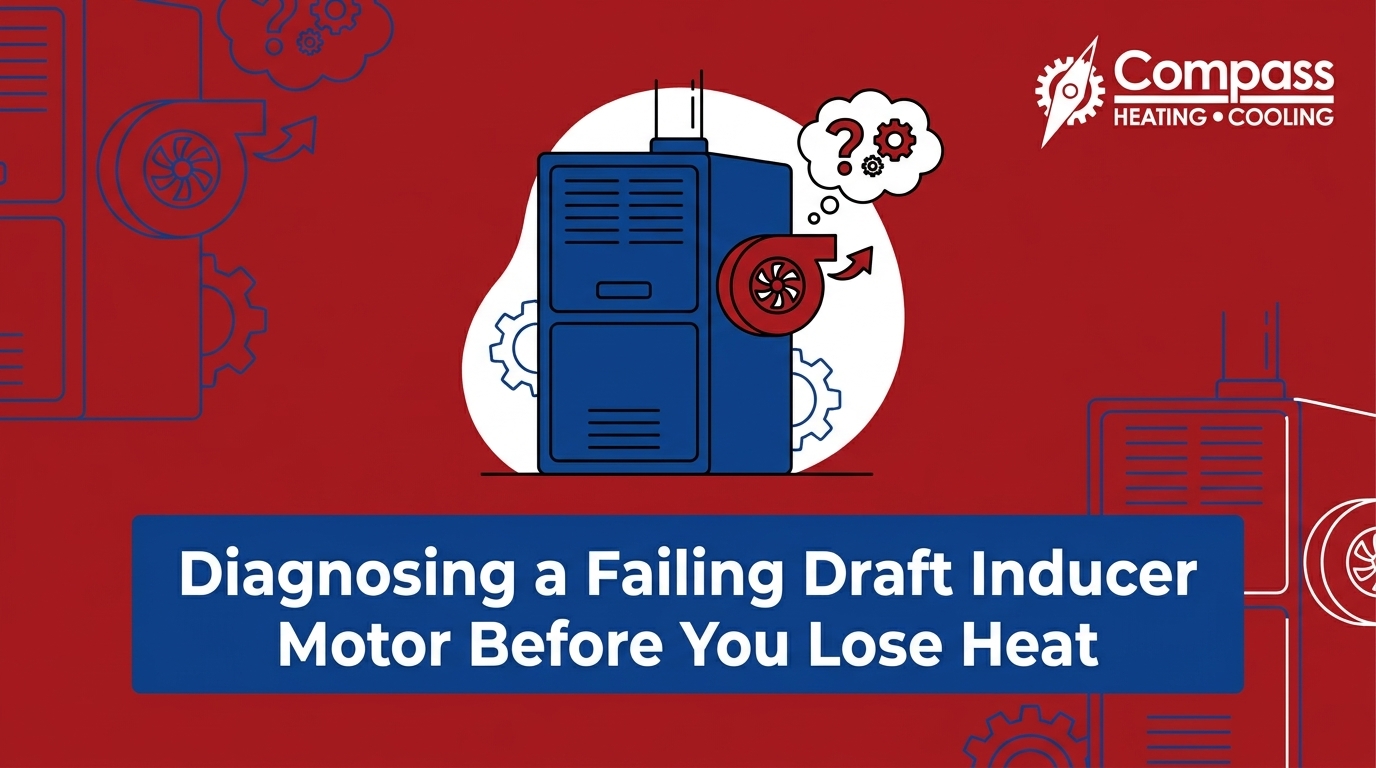
Diagnosing a Failing Draft Inducer Motor Before You Lose Heat
The Early Fall Chill and That Unmistakable Furnace Whine
The September pre-heating season is here, and the evening air is finally carrying a noticeable chill. You walk over to the thermostat, switch the system from cooling to heating for the first time in months, and wait for that familiar rush of warm air. Instead, you are greeted by a loud, high-pitched whine or a harsh rattling noise echoing from the basement or utility closet. Diagnosing a failing draft inducer motor before you lose heat is the smartest move you can make right now. Ignoring that strange mechanical sound might seem tempting, but it is the first warning sign that a critical safety component is struggling to survive.
For comprehensive care of your HVAC systems, you need reliable heating services you can trust to catch these hidden issues early.
Living along the Front Range means we experience rapid, extreme temperature drops. A sunny, mild afternoon can easily plummet into a freezing night within a matter of hours. During these sudden shifts, a functioning heating system is completely non-negotiable. That high-pitched whine you hear isn't just a nuisance; it is the sound of metal-on-metal friction as the bearings inside your furnace's inducer motor begin to seize. You now face a critical decision point: let the furnace run and hope the noise goes away, or get a professional diagnosis before the system shuts itself down completely.
The Draft Inducer Motor: Your Furnace's Primary Safety Gatekeeper
Many homeowners confuse the draft inducer motor with the main blower motor, but they serve two entirely different purposes. While the main blower pushes warm air through your home's ductwork, the draft inducer motor is a much smaller device located inside the furnace cabinet. Its primary job is exhaust management. Before your furnace even attempts to light a flame, this small motor must prove it can safely vent dangerous gases out of your Loveland Front Range area home.
The 30-to-60-Second Pre-Ignition Sequence
When your thermostat calls for heat, the very first component that activates is the draft inducer motor. You will hear it spool up and run for about 30 to 60 seconds before you hear the click of the igniter or the whoosh of the gas burners. This delay is an intentional, built-in safety purge. The motor acts like a powerful vacuum, clearing the heat exchanger of any residual, potentially combustible gases left over from the previous heating cycle.
Once the heat exchanger is purged, the inducer motor continues to run, creating a constant negative pressure draft. This draft is what pulls fresh oxygen into the burners for clean combustion and forces toxic exhaust gases—including carbon monoxide—safely up the flue pipe and out of your house. Your furnace cannot legally or safely ignite until this motor proves it is operating at full capacity. It is a safety device first, and a mechanical air mover second.
Draft Inducer Motor vs. Main Blower Motor
• Draft Inducer Motor — Primary Function: Vents exhaust gases out of the home — Timing in Heating Cycle: Starts first (pre-purge sequence) — Safety Role: Prevents carbon monoxide buildup
• Main Blower Motor — Primary Function: Circulates warm air through ductwork — Timing in Heating Cycle: Starts after heat exchanger warms up — Safety Role: Prevents the furnace from overheating
Decoding the Warning Sounds of Seizing Bearings
Furnaces make a variety of normal operational noises, but a failing inducer motor has a very distinct auditory footprint. Catching these sounds early during the September pre-heating season gives you a vital head start on repairs. Here is a breakdown of the specific noises a struggling inducer motor makes and what those sounds mean mechanically.
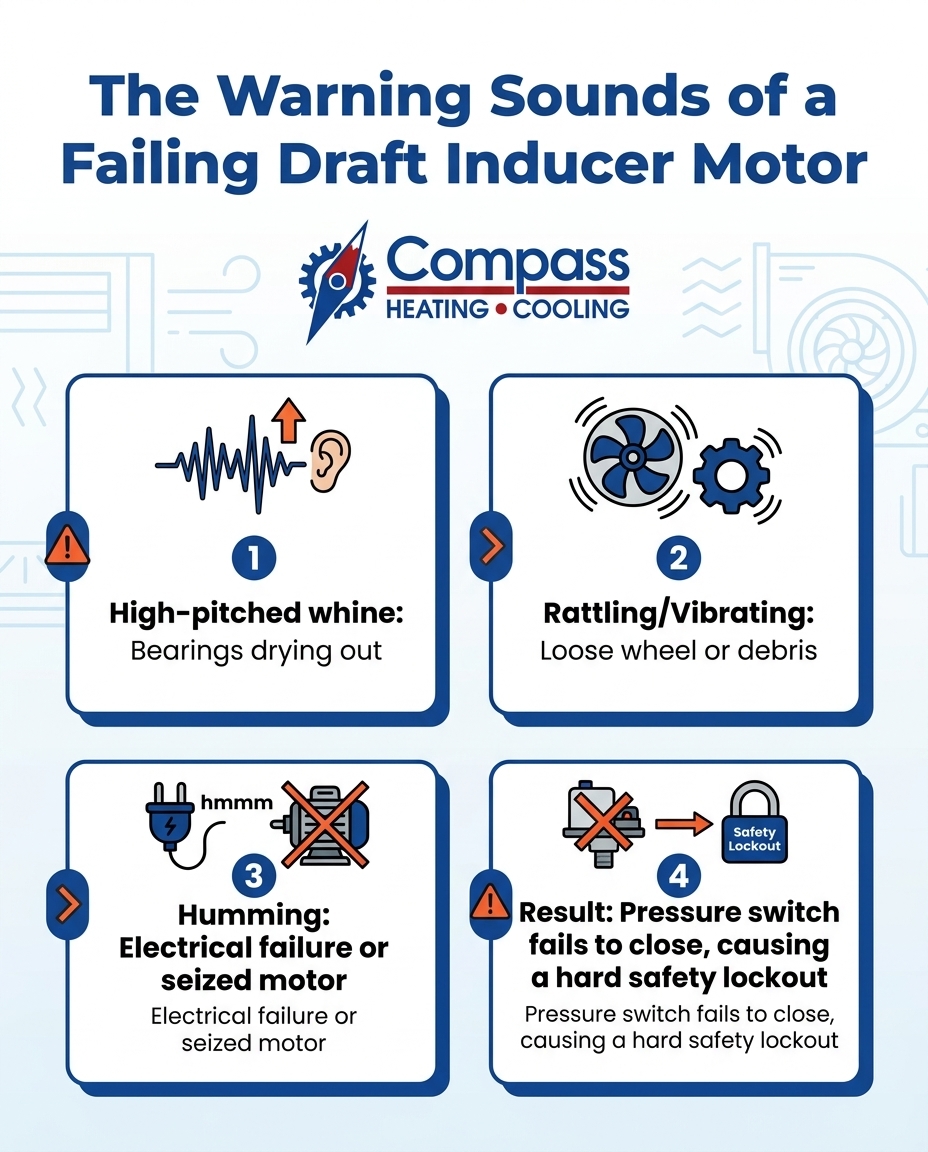
• High-pitched whining or squealing: This is the most common early warning sign. It indicates that the motor's internal bearings are drying out or beginning to seize due to age, heat, and wear. Without proper lubrication, the metal components grind against each other, creating a sound similar to a failing car alternator.
• Harsh rattling or vibrating: If the motor sounds like a washing machine off-balance, you likely have a loose blower wheel (the plastic or metal fan attached to the motor), a broken mounting bracket, or debris trapped inside the housing. Over time, this intense vibration can physically tear the motor away from the furnace frame.
• Low humming without starting: This is a sign of an electrical failure or a completely seized motor. The motor is receiving electrical power from the control board, but the physical resistance is too high for the wheel to spin. The electrical current simply hums against the frozen components.
It is important to differentiate these sounds from other common HVAC issues. For example, a squeal from the main air handler requires a different diagnostic approach, and ignoring a squealing blower motor carries its own set of expensive consequences. However, inducer motor noises specifically happen right at the very beginning of the heating cycle, before the burners ever ignite.
How a Weak Motor Triggers a Hard Safety Lockout
When your draft inducer motor begins to fail, it does not just stop spinning; it triggers a cascading series of safety protocols designed to protect your home. The furnace relies on a delicate balance of air pressure to operate safely. Here is the exact sequence of events that leads to a furnace shutting down when the inducer motor fails in the Loveland Front Range area.
1. The Pressure Switch Test: Connected to the inducer motor housing by a small rubber tube is the pressure switch. This switch is a highly sensitive diaphragm that measures the exact amount of negative pressure (vacuum) created by the spinning inducer wheel.
2. Failing to Reach Target RPMs: A failing motor with seizing bearings cannot spin fast enough to reach its target RPMs. Because it is spinning too slowly, it cannot pull enough air to create the required vacuum inside the heat exchanger.
3. The Switch Remains Open: If the vacuum is too weak, the diaphragm inside the pressure switch will not pull closed. The switch essentially sends a message to the main control board saying, "We do not have enough draft to vent the exhaust safely."
4. The Hard Lockout: The furnace control board instantly halts the ignition sequence. It intentionally disables the gas valve and the igniter to prevent raw gas from building up in the combustion chamber. If the furnace attempts this cycle multiple times and fails, it goes into a "hard lockout," shutting down completely until a technician resets it.
The silver lining: A hard lockout is incredibly frustrating when your house is freezing, but it is actually a symptom of your system working correctly. The furnace is doing exactly what it was engineered to do—sacrificing your immediate comfort to protect your home from a massive safety hazard.
The Hidden Danger of Carbon Monoxide and Improper Venting
The safety mechanisms tied to your draft inducer motor exist for one primary reason: carbon monoxide. Natural gas furnaces produce toxic exhaust gases as a normal byproduct of creating heat. Without a strong, consistent draft to push those gases out of the flue, your home is at serious risk.
ASHRAE Standards and Clean Combustion
Residential heating systems are designed around strict ASHRAE (American Society of Heating, Refrigerating and Air-Conditioning Engineers) standards regarding exhaust venting. For a furnace to achieve clean, complete combustion, it needs a precise mixture of fuel and fresh oxygen. A sluggish inducer motor disrupts this balance. When the burners are starved of oxygen, the furnace produces significantly higher levels of carbon monoxide.
The Threat of Backdrafting
If a failing inducer motor manages to limp along and close the pressure switch, but then fails mid-cycle, the results can be dangerous. The sudden loss of draft pressure can cause "backdrafting." Instead of flowing up the chimney or out the PVC exhaust pipe, the toxic exhaust gases spill backward out of the front of the furnace and directly into your living space. Catching a whining motor during the September pre-heating season prevents this exact scenario.
A vital reminder: This is why functional, unexpired carbon monoxide detectors are absolutely essential on every level of your home, especially if you are operating older heating equipment. Carbon monoxide is odorless, colorless, and tasteless. Your inducer motor is your first line of defense, but your CO detectors are your final safety net.
Why Professional Diagnostics Trump DIY Troubleshooting
Because the draft inducer motor is relatively easy to see when you take the front panel off the furnace, many homeowners are tempted to test or replace it themselves. This is a dangerous mistake. Testing and replacing this component involves high-voltage electricity, delicate safety board sequences, and precise pressure calibrations.
The Problem with DIY Electrical Testing
To accurately test an inducer motor, you have to measure the voltage coming from the control board and the amperage the motor is drawing while under load. This requires working with live high-voltage connections. Furthermore, a common DIY mistake is attempting to "jumper" or bypass the pressure switch to force the furnace to run. Bypassing a pressure switch completely disables the entire safety mechanism of the furnace, creating an immediate fire and carbon monoxide hazard.
The Cause of Improper Installations
Even if a homeowner manages to source the correct replacement motor, installing it incorrectly can lead to exhaust leaks. The motor housing must be sealed perfectly against the heat exchanger with high-temperature silicone or a specific factory gasket. A tiny gap in this seal will leak carbon monoxide directly into the blower compartment, where it will be distributed through the ductwork into every room of the house.
The Professional Solution
Only licensed professionals have the specialized tools, such as digital manometers, to verify proper draft pressure and ensure zero carbon monoxide leakage after a repair. By trusting experienced Loveland heating technicians, you guarantee that your system meets all local building codes and high-altitude venting requirements specific to the Loveland Front Range area. Compass Heating & Cooling focuses on thorough, professional diagnostics to guarantee safe exhaust venting, ensuring your family stays warm and protected without cutting corners.
Beating the First Freeze: The Importance of Proactive Maintenance
Timing is everything when it comes to furnace repairs. The average first freeze in our region typically hits by mid-October. This makes the early fall window your most critical opportunity for action. Catching a bearing failure during a September pre-heating season test run is infinitely better than discovering it during a midnight freeze when HVAC schedules are fully booked.
What Routine Inspections Actually Check
Proactive care goes beyond just changing the air filter. During a professional tune-up, technicians measure the exact electrical amperage the inducer motor is drawing. A motor that is pulling higher-than-normal amps is working too hard, indicating that the bearings are starting to fail long before they begin to whine or rattle audibly. Technicians also inspect the blower wheel for cracks, check the integrity of the high-temperature gaskets, and clear the pressure switch tubing of any blockages or moisture buildup.
Do not wait for your furnace to lock you out on the coldest night of the year. Scheduling comprehensive preventative furnace maintenance now secures your peace of mind for the upcoming winter. By addressing that unmistakable furnace whine today, you ensure your system will provide safe, reliable heat when you need it most.
Frequently Asked Questions
What does a failing inducer motor sound like?
A failing inducer motor typically produces a loud, high-pitched whine, a harsh rattle, or a low electrical hum. The high-pitched whine indicates that the internal bearings are drying out and seizing. A rattling sound usually points to a loose blower wheel or debris trapped inside the housing, while a hum means the motor is receiving power but is physically stuck.
Can a furnace run with a bad inducer motor?
No, a modern furnace will not run with a bad inducer motor. The furnace control board requires the inducer motor to create a specific amount of negative pressure before it allows the gas valve to open. If the motor fails to create this draft, the system will intentionally halt the ignition process to keep you safe.
Will a bad inducer motor cause a no-heat situation?
Yes, a bad inducer motor is a very common cause of a complete no-heat situation. Because it is the very first component to activate in the heating sequence, its failure stops the entire process in its tracks. The furnace will go into a safety lockout, preventing any heat from being produced until the motor is repaired or replaced.
Why is my furnace inducer motor humming but not starting?
If the motor is humming but not starting, it is receiving electrical voltage from the control board but cannot physically spin. This is usually caused by completely seized bearings, a jammed blower wheel, or a failed internal electrical winding. It requires a professional diagnostic to determine if the motor can be freed or if it needs full replacement.
How long does a draft inducer motor typically last?
A draft inducer motor generally lasts between 10 to 15 years, closely mirroring the average lifespan of the furnace itself. However, factors like excessive moisture, lack of maintenance, or poor initial venting design can cause the bearings to wear out much sooner. Regular inspections help maximize the lifespan of this critical component.
Is a seized inducer motor considered a heating emergency?
Yes, a seized inducer motor is considered a heating emergency, especially during periods of extreme cold weather. Because the furnace cannot produce heat without a functioning inducer motor, your home is at risk of rapidly dropping temperatures and frozen pipes. It requires prompt attention from a licensed HVAC professional to restore safe heating.
hear what our satisfied clients have to say
Our clients consistently praise our exceptional service and attention to detail. They appreciate the personalized approach we take to meet their unique needs, ensuring satisfaction every step of the way.
.png)