



The Ultimate Guide to HSPF2 and Heat Pumps in Northern Colorado
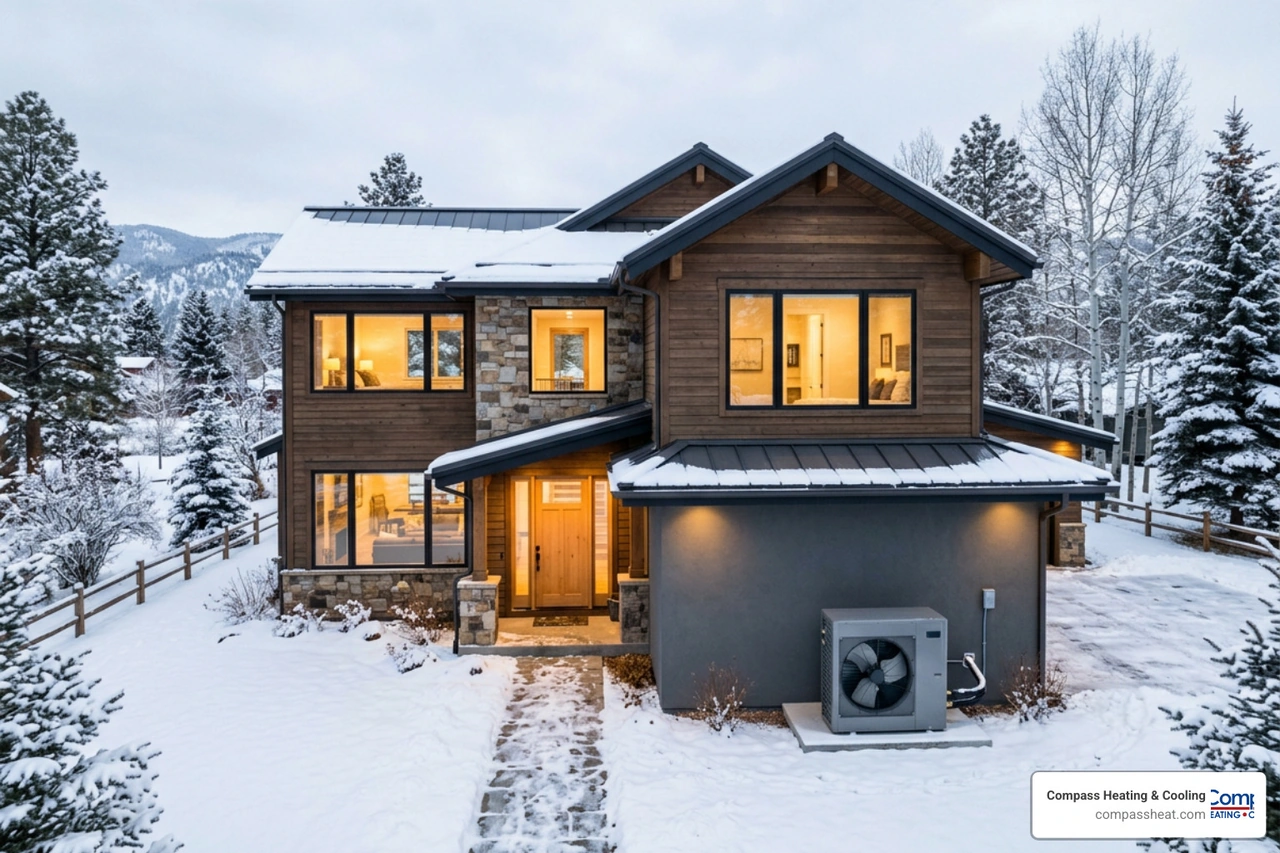
Why HSPF2 Is the Heat Pump Rating Northern Colorado Homeowners Can't Afford to Ignore
If you've been wondering what is HSPF2 and why does it matter for heat pump buyers in Northern Colorado, here's the short answer:
HSPF2 stands for Heating Seasonal Performance Factor 2. It measures how efficiently a heat pump converts electricity into heat over an entire heating season. The higher the number, the less electricity your system uses to keep your home warm.
Why it matters in Northern Colorado specifically:
• Northern Colorado winters are long and cold, with temperatures regularly dipping below 25°F — meaning your heat pump works harder and longer than in milder climates
• Heating efficiency (HSPF2) directly drives your winter energy bills more than any other rating
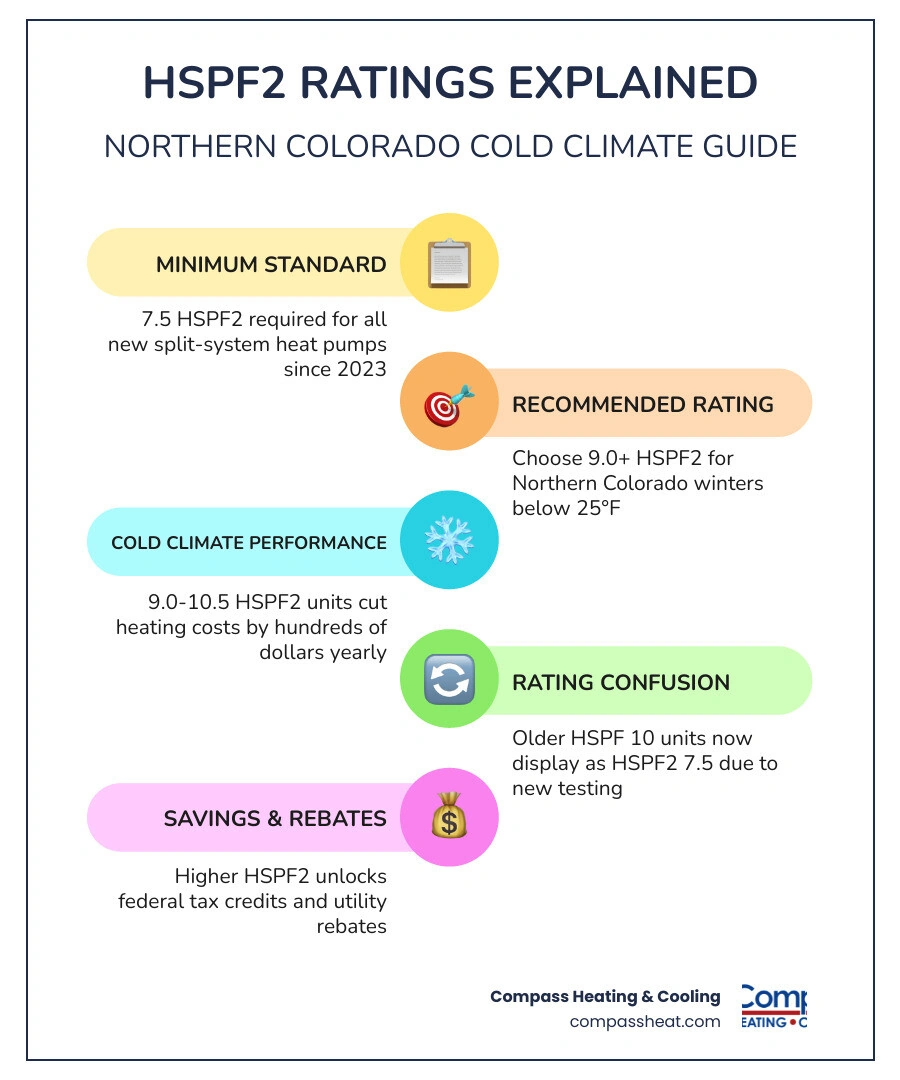
• As of January 1, 2023, the Department of Energy requires all new split-system heat pumps to carry a minimum HSPF2 of 7.5 — but experts recommend 9.0 or higher for cold climates
• Cold-climate heat pumps with HSPF2 ratings between 9.0 and 10.5 can cut annual heating costs by hundreds of dollars compared to minimum-efficiency models
• Higher HSPF2 ratings also unlock better federal tax credits and rebate eligibility
For homeowners in Fort Collins, Loveland, Johnstown, and surrounding communities, choosing the right HSPF2 rating isn't just a technical detail — it's one of the biggest decisions you'll make about your home's comfort and your monthly energy costs.
Northern Colorado's climate sits squarely in heating-dominated territory. Unlike homeowners in Phoenix or Atlanta who rarely run their heat, you're running yours from October through April. That's six months or more where heating efficiency determines whether your system is quietly saving you money or quietly draining your wallet.
The switch from the old HSPF standard to HSPF2 in 2023 also created real confusion. Ratings dropped on paper — an older unit rated HSPF 10 might only show HSPF2 7.5 under the new testing method — even though the equipment didn't change. Understanding what those numbers actually mean is the first step to making a confident, well-informed purchase.
This guide breaks it all down clearly: what HSPF2 is, how it compares to SEER2, what rating you should actually look for in Northern Colorado, and how to turn efficiency into real savings.
What Is HSPF2 and Why Does It Matter for Heat Pump Buyers in Northern Colorado?

To understand why this rating is such a big deal for our local area, we have to look at how a heat pump operates. Unlike a traditional gas furnace that generates heat by burning fuel, a heat pump doesn't actually create heat. Instead, it acts as a heat transporter. Even when it feels freezing outside in Greeley or Windsor, there is still thermal energy present in the outdoor air. The heat pump absorbs this heat and transfers it indoors.
Under ideal conditions, a heat pump is incredibly efficient, transferring up to 300% more energy than it consumes in electricity. Compare that to a brand-new, top-of-the-line gas furnace, which maxes out at around 95% efficiency (AFUE).
However, as the outdoor temperature drops, the heat pump has to work harder to extract that warmth. This is why the Heating Seasonal Performance Factor (HSPF) was created. It represents the total heating output of the heat pump during its normal annual usage period for heating (measured in British Thermal Units, or BTUs) divided by the total electric energy input (in watt-hours) during the same period.
In Northern Colorado, where winter temperatures fluctuate wildly from mild autumn afternoons to sub-zero blizzards, you need a rating system that accurately reflects real-world conditions. That is precisely where HSPF2 comes in. If you are currently weighing your options, reading up on whether Should Your Home Have a Heat Pump is a great place to start.
The Science of Heat Pump Ratings: HSPF2 vs. SEER2
When shopping for a heat pump, you will notice several different acronyms on the yellow EnergyGuide label. The two most prominent are SEER2 (for cooling) and HSPF2 (for heating).
To understand why the "2" was added to these ratings, we have to look at how the Department of Energy (DOE) tests these systems. In the past, the original HSPF and SEER ratings were calculated using laboratory testing conditions that did not accurately simulate real-world ductwork. Specifically, the old testing standard used an external static pressure of just 0.1 inches of water column (WC).
In a real home, however, ductwork is far more restrictive. To address this, the DOE implemented the "M2" testing standard, which increased the required external static pressure by five times—up to 0.5 inches of water column. Because the system has to work harder to push air through this simulated resistance, the resulting efficiency numbers dropped across the board.
• Heating Efficiency — Old Standard (Pre-2023): HSPF — New Standard (Current): HSPF2 — What Changed?: Tested at 0.5" WC static pressure (up from 0.1" WC) — Typical Rating Difference: HSPF2 ratings are roughly 11% to 15% lower
• Cooling Efficiency — Old Standard (Pre-2023): SEER — New Standard (Current): SEER2 — What Changed?: Tested at 0.5" WC static pressure (up from 0.1" WC) — Typical Rating Difference: SEER2 ratings are roughly 5% lower
Because of this testing change, a heat pump previously rated at 10 HSPF is now rated at approximately 8.5 HSPF2, even though the physical equipment is identical. When comparing different Heat Pump models, always ensure you are comparing HSPF2 to HSPF2, rather than mixing up the old and new scales.
Understanding the Basics: What Is HSPF2 and Why Does It Matter for Heat Pump Buyers in Northern Colorado?
Think of HSPF2 as the "miles-per-gallon" rating for your heating system during the winter months. To calculate this seasonal average, laboratory tests evaluate how much electricity the unit consumes across a wide range of simulated outdoor temperatures.
For a homeowner in Fort Collins or Loveland, this rating is highly relevant. If you choose a system with a low HSPF2 rating, it will consume significantly more electricity to keep your home warm when the temperature drops. Over a long Colorado winter, that extra electricity consumption translates directly into higher utility bills. Selecting a high-efficiency system during a Heat Pump Replacement Fort Collins CO is one of the most reliable ways to secure long-term utility savings.
Minimum HSPF2 Requirements for Split Systems and Packaged Units
To enforce energy conservation, the Department of Energy set strict regional minimum standards for all newly manufactured HVAC equipment.
• Split Systems: These are the most common residential setups, where an outdoor compressor unit works in tandem with an indoor air handler or furnace. All split-system heat pumps must have an HSPF2 rating of 7.5 or higher.
• Packaged Units: These are all-in-one systems where all components are housed in a single outdoor cabinet. Packaged heat pumps must meet a minimum HSPF2 rating of 6.7.
While these minimums are legal requirements for any new Heat Pump Installation, they represent the baseline of efficiency. In our cold Northern Colorado climate, opting for a system that merely meets the bare minimum will often leave you exposed to high heating costs during our coldest months.
Balancing SEER2 and HSPF2 for Year-Round Comfort
Because a heat pump provides both heating and cooling, it carries both ratings. SEER2 (Seasonal Energy Efficiency Ratio 2) measures how efficiently the system cools your home during the summer, while HSPF2 measures winter heating performance.
In milder, southern states, homeowners prioritize a high SEER2 rating because their cooling season is long and intense. However, in our region, we experience both hot summers and freezing winters. We need a balanced system.
While you want a respectable SEER2 rating to handle July and August heat, your winter heating demands are much more intense and last far longer. Therefore, you should prioritize the HSPF2 rating. If you are curious about how these systems transition between seasons, read more about Can a Heat Pump Cool My House in the Summer to see how they deliver year-round comfort.
Maximizing Real-World Efficiency in Cold Climates
While a high HSPF2 rating is a fantastic starting point, it is not a magic wand. A heat pump's real-world performance is heavily influenced by the environment in which it operates. If your home is drafty, poorly insulated, or has leaky ductwork, even a premium heat pump with an HSPF2 of 10.0 will struggle to keep your energy bills low.
To get the most out of your investment, we always recommend taking a holistic look at your home’s envelope. Ensuring your attic has adequate insulation and sealing air leaks around windows and doors prevents the warmth your heat pump generates from escaping. Additionally, regular system care is vital; scheduling professional Heat Pump Maintenance Loveland CO keeps your system running at its peak laboratory-rated efficiency year after year.
Beyond the Label: What Is HSPF2 and Why Does It Matter for Heat Pump Buyers in Northern Colorado?
In the HVAC world, there is a common saying: "Installation quality matters more than the equipment brand." This is especially true for heat pumps operating in cold climates.
If a contractor simply guesses the size of your new system without performing a proper Manual J load calculation, you could end up with an oversized or undersized unit. An oversized heat pump will "short-cycle," turning on and off rapidly, which ruins its efficiency and wears out components prematurely. An undersized unit will fail to keep up on cold nights, forcing your system to rely on expensive backup electric resistance heat (which can cost up to three times more to run).
Furthermore, leaky air ducts can lose 20% to 30% of the conditioned air before it ever reaches your living spaces. To ensure your system delivers on its efficiency promises, always partner with certified professionals for your Heat Pump Installation Fort Collins CO.
Leveraging Rebates, Tax Credits, and Incentives in Colorado
One of the best reasons to pay attention to HSPF2 ratings is that they act as the keys to unlocking massive financial savings. Because local utilities and the federal government want to encourage energy efficiency, they offer substantial incentives for high-performing systems.
1. Federal Tax Credits (Section 25C): Homeowners can claim a federal tax credit of 30% of the total cost of an eligible heat pump installation, up to $2,000. To qualify, the heat pump must meet specific ENERGY STAR requirements (typically an HSPF2 of 8.1 or higher for ducted split systems).
2. Local Utility Rebates: Utilities serving Northern Colorado—including Fort Collins Utilities, Loveland Water and Power, and Xcel Energy—offer excellent rebate programs for qualifying high-efficiency heat pumps.
3. The Compass Advantage: At Compass Heating & Cooling, we specialize in helping our customers navigate these complex programs. We handle the paperwork to help you secure utility rebates of up to $8,000+ on qualifying systems.
Before purchasing a system, scheduling a professional inspection or Heat Pump Service Johnstown CO can help determine which rebate-eligible systems are the best fit for your home.
Frequently Asked Questions about HSPF2
Navigating HVAC efficiency metrics can feel like learning a new language. Here are answers to some of the most common questions we hear from Northern Colorado homeowners.
What is a good HSPF2 rating for a cold climate like Northern Colorado?
For our climate, we highly recommend looking for a system with an HSPF2 rating of 9.0 or higher. While a system rated at the federal minimum of 7.5 is legal, cold-climate heat pumps (which are specifically engineered to maintain their heating capacity in sub-zero temperatures) typically have HSPF2 ratings between 9.0 and 10.5. These high-efficiency models will deliver the greatest energy savings and the most consistent comfort during our long winters.
Can a heat pump completely replace a furnace in Colorado?
Yes, but it depends on the type of heat pump you choose. Standard heat pumps lose a significant amount of their heating capacity when temperatures drop below 25°F. However, modern cold-climate heat pumps are designed to operate efficiently at temperatures well below zero (some even down to -23°F).
Alternatively, many Northern Colorado homeowners choose a hybrid (dual-fuel) heating system. This setup pairs an electric heat pump with a high-efficiency gas furnace. The heat pump handles the heating duties during mild spring, autumn, and winter days, and the system automatically switches over to the gas furnace when extreme sub-zero temperatures arrive.
How does altitude affect heat pump performance and HSPF2?
Living at higher altitudes in Northern Colorado means dealing with thinner air. Because air density is lower at 5,000+ feet, there are fewer air molecules passing over the heat pump's indoor and outdoor coils. This slightly reduces the system's overall heating capacity and airflow compared to sea-level ratings.
While the HSPF2 rating on the label remains the same, a professional HVAC technician must account for this altitude derating when performing load calculations to ensure your system is sized correctly for your specific elevation.
Conclusion
Understanding what is HSPF2 and why does it matter for heat pump buyers in Northern Colorado is the key to making a smart, long-term investment in your home's comfort and energy efficiency. While the minimum standard of 7.5 HSPF2 is a start, aiming for a high-efficiency or cold-climate model with a rating of 9.0+ is the best way to protect yourself against rising winter utility bills.
At Compass Heating & Cooling, we make the process of upgrading your home's comfort simple and stress-free. We proudly serve homeowners across Fort Collins, Loveland, Windsor, Wellington, Severance, Timnath, Johnstown, Greeley, Berthoud, and Evans.
Our team of experienced professionals is here to handle every detail—from performing accurate load calculations to helping you secure up to $8,000+ in utility rebates. Plus, our comprehensive maintenance plan ensures your system receives priority service and valuable discounts, keeping your heat pump running at peak efficiency for its entire 15+ year lifespan.
Ready to explore your options for a highly efficient Heat Pump? Contact us today to schedule your home comfort consultation!
hear what our satisfied clients have to say
Our clients consistently praise our exceptional service and attention to detail. They appreciate the personalized approach we take to meet their unique needs, ensuring satisfaction every step of the way.
.png)