



Why Your AC Evaporator Coil Freezes When It's 95 Degrees Outside
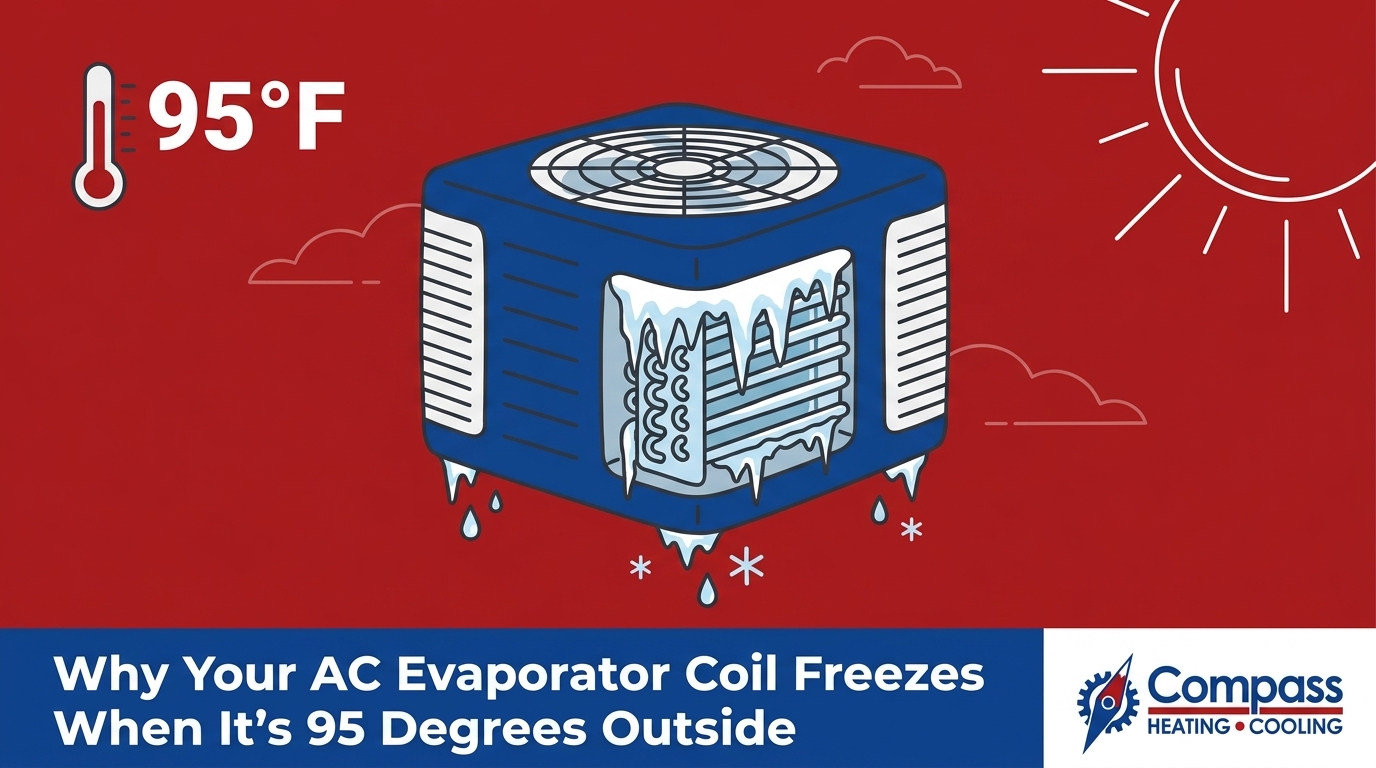
The Shock of Finding Ice on a Sweltering Summer Day
Your air conditioner is running nonstop, but the air coming out of your vents feels weak and barely cool. You walk over to check the indoor unit, expecting to hear the steady hum of a working system. Instead, you find a block of solid ice sitting right on the indoor unit. Here at Compass Heating & Cooling, explaining exactly why your AC evaporator coil freezes when it's 95 degrees outside is a conversation our technicians have almost daily during Loveland's hottest weeks. It is an issue that catches many homeowners off guard, simply because it feels completely backwards. How can literal ice form inside your house when the outdoor temperature is near the century mark?
The immediate frustration of losing your home's cooling capacity during extreme heat is stressful. Most people assume the system is simply "working too hard" to combat the heat, but that is not how air conditioning works. A frozen coil is actually a sign of a severe disruption in the system's heat absorption process. By learning what causes this sudden freeze, you can confidently determine whether you are dealing with a simple, user-serviceable fix like a dirty filter, or a complex issue that requires a professional diagnosis.
If you need immediate help restoring your home's comfort, explore our air conditioning services or reach out directly for professional AC repair.
The Counterintuitive Physics of a Freezing Evaporator Coil
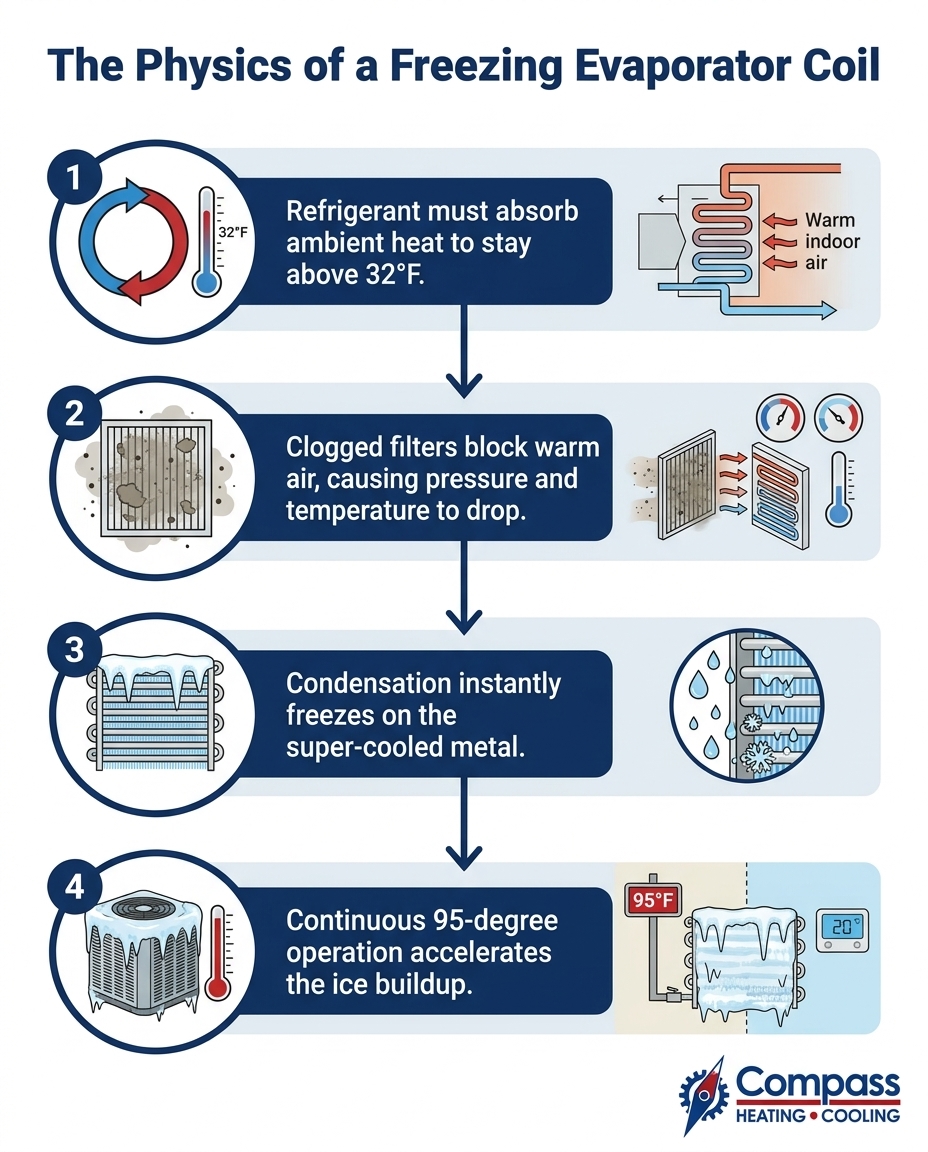
To understand why ice forms on the hottest days of the year, you have to look at how your cooling system actually operates. The basic refrigeration cycle does not involve pumping cold air into your home. Instead, it relies on a chemical refrigerant to absorb ambient heat from the air inside your house. This refrigerant flows through the copper tubes of your indoor evaporator coil at a very low temperature. As warm indoor air blows across these cold coils, the refrigerant absorbs the heat, leaving the air cooler before it circulates back into your rooms.
The pressure and temperature relationship is the critical factor here. The refrigerant needs a constant supply of warm air to absorb heat and maintain its designated temperature. If warm air does not blow over the coils, the refrigerant temperature plummets rapidly. When the temperature of the coil drops below 32 degrees Fahrenheit, the normal condensation that forms on the metal—which usually drips safely into a drain pan—instantly freezes. Because the system continues to run in an attempt to cool the house, more condensation forms and freezes, creating a thick layer of ice.
Heat Absorption vs. Cold Creation
The most important concept to grasp is that air conditioners do not "create" cold air; they actively remove heat. This is a fundamental law of thermodynamics.
• The Heat Transfer Process: The refrigerant acts as a sponge, soaking up the thermal energy from your indoor air.
• The Freezing Threshold: Without a steady supply of warm indoor air feeding that "sponge," the coil drops below the freezing point of water.
• The Compounding Effect: Once a thin layer of ice forms, it acts as an insulator. This prevents even more heat transfer, causing the ice block to grow faster and faster.
The irony is that when it hits 95 degrees outside, your system runs for longer cycles. If there is a disruption in heat exchange, these long run cycles give the ice ample time to accumulate into a massive, solid block.
Restricted Airflow: The Most Common Culprit During Peak Heat
When an air conditioner freezes, the very first thing to investigate is the airflow. An evaporator coil needs to breathe. If the volume of warm air passing over the coil is restricted in any way, the temperature of the refrigerant will drop. Here are the primary ways airflow gets choked off in a residential system:
1. Clogged air filters: This is the number one cause of restricted airflow. A dirty filter acts as a physical barrier, starving the evaporator coil of the warm air it desperately needs to function.
2. Blocked return vents: Furniture pushed up against the large return grilles in your home prevents the system from pulling in enough air to push back out.
3. Closed supply registers: Shutting vents in unused rooms increases static pressure in the ductwork and slows down the overall volume of air moving across the indoor coil.
4. Collapsed ductwork: Older, flexible ducts can sometimes collapse or become crushed, severely limiting the amount of air that makes it back to the main unit.
This problem is particularly aggressive in our region. In our years of keeping Loveland homes comfortable, our team has seen firsthand how Northern Colorado's mid-90s dry summer heat creates maximum continuous load conditions. Because the temperature stays so high, your air conditioner is forced to run constantly. This continuous operation accelerates dust buildup on the filter. Our technicians frequently find that what might have been a slightly dirty filter in June can turn into a complete, impenetrable blockage during the hottest days of summer in July. Staying ahead of this with a preventative maintenance plan ensures your filters and airflow are optimized before the peak heat arrives.
Low Refrigerant and Closed-System Pressure Drops
In our field experience, if your airflow is completely unobstructed but the coil is still turning into a block of ice, the next most likely culprit we find is a low refrigerant charge. It is vital to understand that air conditioning systems are closed loops. They do not "consume" or "burn up" refrigerant over time the way a car burns gas. If your system is low on refrigerant, it means there is a physical leak somewhere in the copper lines, the coils, or the fittings.
The science of pressure drops: When a refrigerant leak occurs, the overall pressure inside the closed system decreases. According to the basic laws of thermodynamics, pressure and temperature are directly linked. When the pressure inside the evaporator coil drops, the temperature of the refrigerant inside that coil also drops dramatically.
Because of this pressure drop, the coil becomes super-cooled. Even if your blower motor is pushing a perfect amount of warm air across the metal, the refrigerant is simply too cold. The condensation on the outside of the coil freezes solid. It is crucial to note that simply adding more refrigerant to a leaking system is a temporary and harmful band-aid. The leak itself must be located, brazed, or repaired by a licensed professional; otherwise, the pressure will just drop again, and the ice will return.
Mechanical Failures That Stop Warm Air in Its Tracks
Beyond dirty filters and refrigerant leaks, our repair crews frequently encounter several mechanical failures that stop heat transfer and cause a system freeze. These issues require a deeper look at the components inside the air handler or furnace.
Broken or failing indoor blower motors are a common mechanical cause. The blower motor is responsible for pulling warm air from your house and pushing it across the cold coils. If the motor's capacitor fails, or if the motor itself burns out, the fan stops spinning. The compressor outside continues to pump cold refrigerant into the indoor coil, but with no air moving across it, the coil freezes almost instantly.
Dirty evaporator coils create a similar problem, even if the fan is working perfectly. Over time, if a system is run without a filter or with a low-quality filter, dust, pet hair, and debris bypass the filter and stick directly to the wet evaporator coil. This layer of grime acts like a thick wool blanket, insulating the metal. The warm air blows past the coil, but the "blanket" prevents the heat from actually reaching the cold refrigerant inside.
These mechanical failures rarely happen in isolation. They often present alongside other noticeable symptoms, such as the system turning on and off rapidly without actually cooling the house. If you notice this happening, it might be related to AC short cycling in summer heat, which puts immense strain on your compressor.
Safe Thawing Steps: What to Do Right Now
If you have just discovered a frozen indoor unit, your immediate priority is to stop the cooling cycle and melt the ice safely. When Loveland homeowners call us in a panic over a frozen unit, our dispatchers always advise them to follow these immediate steps to protect their equipment from further damage:
1. Turn the thermostat from "Cool" to "Off." This stops the outdoor compressor from sending more cold refrigerant to the indoor unit, halting the freezing process.
2. Switch the fan setting from "Auto" to "On." This forces the indoor blower motor to run continuously, blowing warm indoor air over the block of ice. This is the fastest and safest way to accelerate the melting process.
3. Check the air filter. While the system is thawing, pull out the air filter. If it is caked in dust and debris, replace it immediately. Do not turn the system back on until you have a clean filter in place.
4. Monitor the drain pan. As the ice melts, a massive amount of water will flow into the condensate drain pan. Keep an eye on it to ensure the drain line isn't clogged, which could cause water to overflow and damage your ceilings or floors.
Crucial Warning: Never use sharp objects, knives, or screwdrivers to scrape or chip the ice off the coil. The metal fins and copper tubing are incredibly delicate. A single slip can puncture the coil, releasing all the refrigerant into your home and turning a simple thawing process into a catastrophic, full-system replacement.
When to Check the Filter vs. When to Call a Professional
Troubleshooting a frozen AC unit comes down to a clear decision matrix. Knowing when you can solve the problem yourself and when you need to step back is key to protecting your equipment.
• Filter is completely blocked with thick dust and pet hair. — Likely Cause: Severe airflow restriction preventing heat absorption. — Next Step: Replace filter, thaw system completely, and test operation.
• Filter is clean, but vents are blocked by furniture. — Likely Cause: Return air starvation. — Next Step: Clear all vents, open all registers, thaw system, and test.
• Filter is clean, vents are open, but ice returns after thawing. — Likely Cause: Low refrigerant pressure or failing blower motor. — Next Step: Leave system off and call for professional HVAC diagnostics.
If a dirty filter was found and replaced, your system may run perfectly normally once it is fully thawed. However, if the filter was clean, or if the unit freezes again shortly after thawing, the issue is beyond a homeowner's scope. Closed-system pressure issues and mechanical failures require specialized tools, gauges, and EPA licensing to diagnose and repair safely.
At Compass Heating & Cooling, our technicians have a deep understanding of Northern Colorado's unique climate stress. We know how to properly diagnose whether a system freezing at 95 degrees is suffering from a subtle airflow restriction or a micro-leak in the copper lines. Staying proactive with routine AC maintenance is the best way to catch these pressure drops and motor weaknesses before they turn into a block of ice.
Get Expert Help for Your Frozen AC System
Understanding the physics of a frozen coil helps you make informed, confident decisions about your home's comfort. When you know that ice is caused by a lack of heat absorption rather than the system "working too hard," you know exactly where to start troubleshooting. Always check your filter first, especially during the hottest days of summer when the system is running at maximum capacity.
If basic airflow troubleshooting doesn't solve the problem, or if your system continues to freeze up, it is time to seek a professional assessment. Don't let a minor refrigerant leak turn into a ruined compressor. Reach out to get your system evaluated, repaired, and restored to peak performance before the next heat wave hits, ensuring your home stays cool, dry, and comfortable all season long.
Frequently Asked Questions
Why does my AC freeze when it is hot outside?
Your AC freezes in hot weather because of a disruption in heat absorption, usually caused by poor airflow or low refrigerant. When the system runs continuously in the heat without enough warm air passing over the coils, the refrigerant temperature drops below freezing. This causes the normal condensation on the coils to turn into solid ice.
How do I safely unfreeze my AC coil?
The safest way to unfreeze your AC coil is to turn the thermostat's cooling function to "Off" and switch the fan setting to "On." This stops the cooling process while forcing warm indoor air over the ice to melt it naturally. Ensure you have towels ready and monitor the drain pan so the melting ice doesn't overflow and cause water damage.
Is a frozen AC coil dangerous?
While a frozen coil won't explode, it is highly dangerous to the health of your HVAC equipment. Running a frozen system forces the outdoor compressor to work against extreme pressure, which can easily cause the compressor to burn out permanently. Additionally, the rapid melting of a large ice block can cause severe water damage to your home's drywall or flooring.
Can I scrape the ice off my AC coil?
No, you should never attempt to scrape or chip ice off an evaporator coil. The metal fins and refrigerant lines are very thin and easily punctured. Using a knife or tool to remove ice can rupture a line, releasing chemical refrigerant and requiring a highly expensive coil replacement.
Should I turn off my AC if it freezes?
Yes, you must turn off the cooling cycle immediately if you discover ice on your system. Continuing to run the air conditioner will only add more ice to the blockage and put catastrophic strain on the outdoor compressor. Turn the cooling off, but leave the fan running to help melt the ice.
How long does it take for an evaporator coil to thaw completely?
A fully frozen evaporator coil typically takes anywhere from a few hours to a full 24 hours to thaw completely, depending on the severity of the ice buildup and the temperature of your home. You must wait until every trace of ice is gone before attempting to run the cooling cycle again, or the system will immediately begin refreezing.
hear what our satisfied clients have to say
Our clients consistently praise our exceptional service and attention to detail. They appreciate the personalized approach we take to meet their unique needs, ensuring satisfaction every step of the way.
.png)