



When to Call for 24-Hour AC Repair vs Waiting Until Morning in Loveland
Surviving a Late-Night Cooling Failure During July Peak Summer Heat
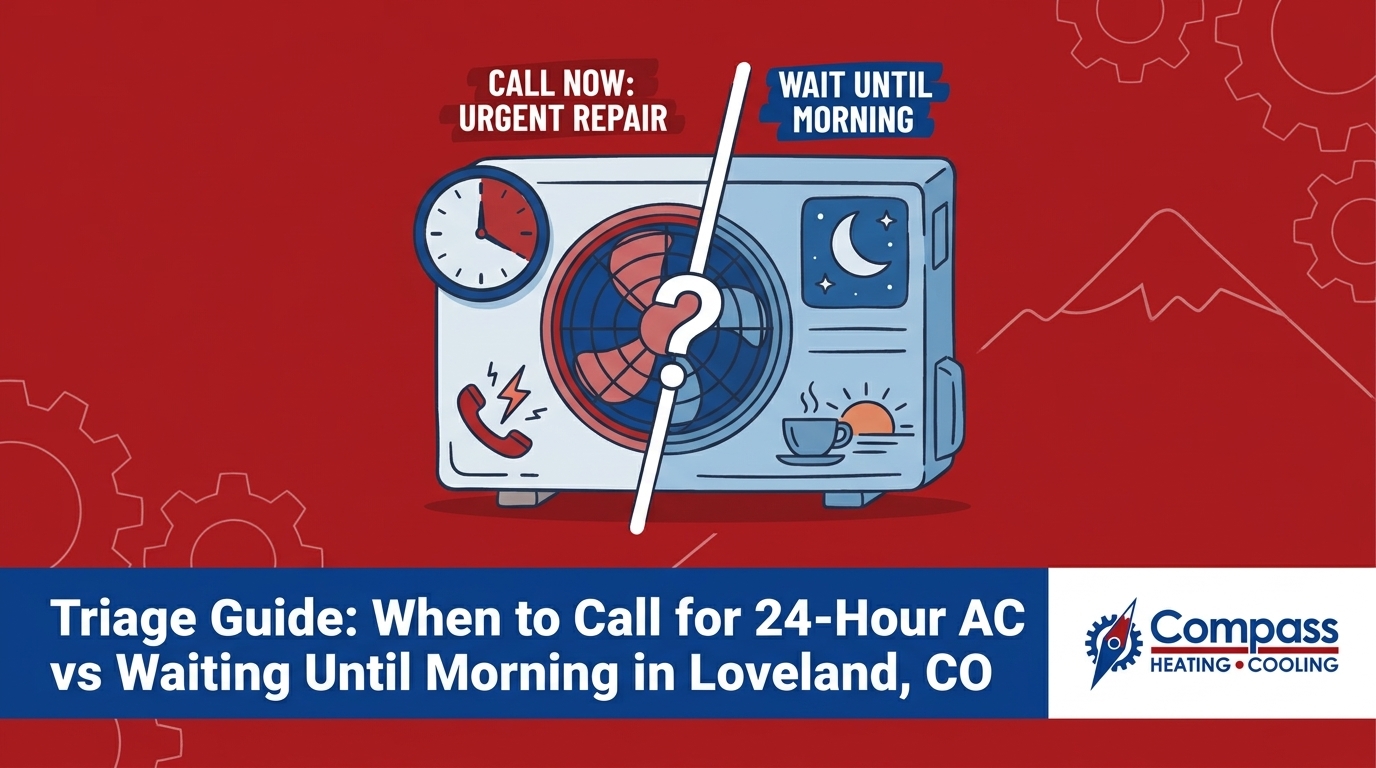
July peak summer heat in Northern Colorado is unforgiving, and if your system suddenly fails, knowing When to Call for 24-Hour AC Repair vs Waiting Until Morning in Loveland is the first step to protecting your home and your equipment. There is nothing quite as stressful as standing in front of your thermostat at 2:00 AM, watching the indoor temperature climb, and wondering if you need to wake up a technician right now. You are faced with an immediate dilemma: does this malfunction warrant an emergency after-hours dispatch, or is it safer to shut the system down and wait for standard business hours?
This triage guide is designed to provide you with honest, objective advice. Many homeowners assume that any loss of cooling is an automatic emergency, but in reality, some severe malfunctions actually cannot be fixed in the middle of the night. By understanding the difference between a true safety hazard and a frustrating inconvenience, you can make an informed decision that protects your family, prevents catastrophic damage to your HVAC system, and avoids unnecessary after-hours fees.
For reliable air conditioning services, or if you have determined you need immediate AC repair in Loveland, our team is ready to help you navigate the next steps.
The Triage Checklist: Emergency vs. Safe to Wait
When you are trying to figure out When to Call for 24-Hour AC Repair vs Waiting Until Morning, the first and most crucial step in almost all malfunction scenarios is to safely shut the system off at the thermostat or the main electrical breaker. Continuing to run a struggling air conditioner will almost always cause further mechanical damage. Once the system is off, you can use the following triage criteria to determine your next move.
A true HVAC emergency involves immediate safety risks to your home or your family. This includes electrical hazards, active fire risks, rapidly pooling water causing structural damage, or extreme indoor temperatures that threaten vulnerable individuals. In contrast, a severe inconvenience is highly uncomfortable but does not pose an immediate danger to life or property. These situations can safely wait for standard morning service.
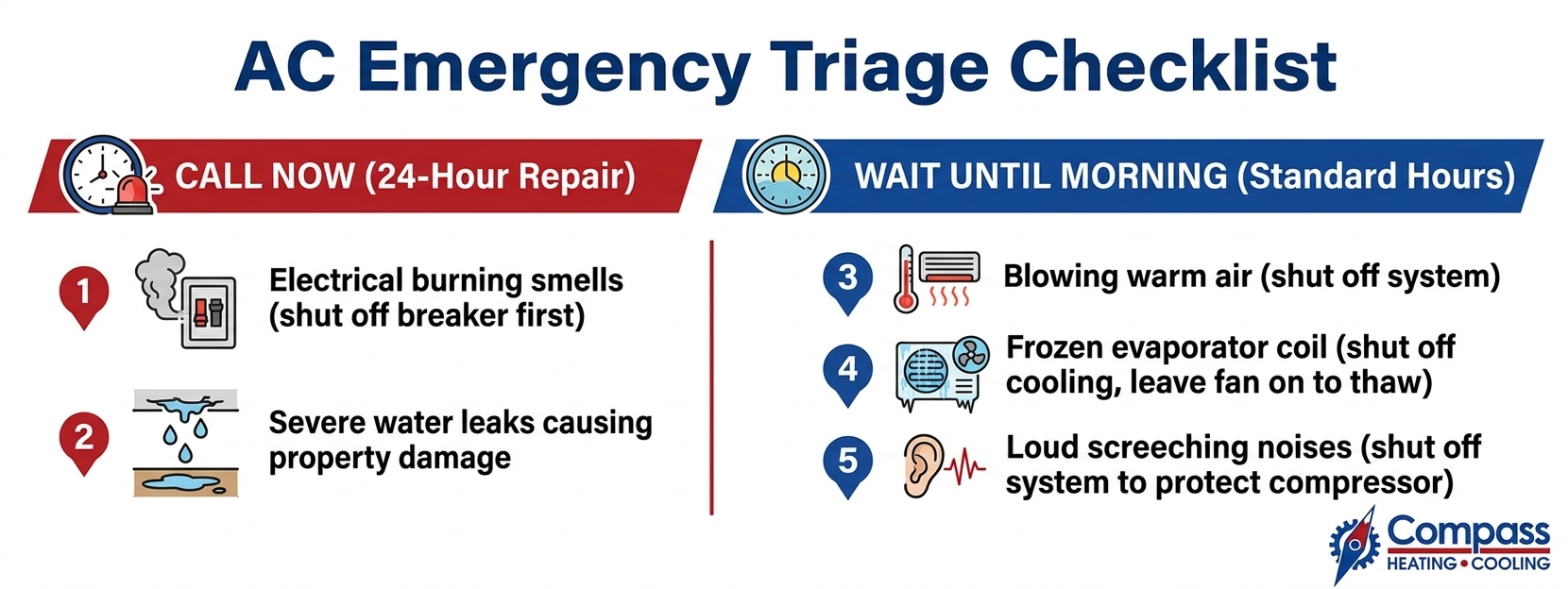
• Electrical burning smell (fishy or ozone) — Classification: Emergency — Immediate Action Required: Shut off breaker immediately; call for 24-hour service.
• Severe water leaking through ceiling — Classification: Emergency — Immediate Action Required: Shut off AC and water supply; call for emergency repair.
• Blowing warm or room-temperature air — Classification: Safe to Wait — Immediate Action Required: Shut off system at thermostat; schedule morning service.
• Loud grinding or screeching noises — Classification: Safe to Wait — Immediate Action Required: Shut off system to protect compressor; wait for morning.
• Ice forming on indoor or outdoor coils — Classification: Safe to Wait — Immediate Action Required: Turn cooling off, leave fan ON to thaw for 12-24 hours.
Definitive Signs You Need a 24 Hour AC Repair Near Me
There are specific, urgent situations that require immediate professional intervention to prevent danger or catastrophic structural damage. During July peak summer heat, the strain on your electrical system and cooling equipment is immense, and certain warning signs should never be ignored. If you experience any of the following, dispatching a professional immediately is necessary for your safety, not just your comfort.
Electrical Burning Smells: If you notice an odor resembling burning plastic, ozone, or a strange "fishy" smell coming from your vents or the indoor air handler, you are likely dealing with melting wire insulation or a failing electrical component. According to the National Fire Protection Association (NFPA), electrical failures are a leading cause of home fires. Do not wait to see if the smell dissipates. Go to your electrical panel, flip the breaker for the air conditioner to the "OFF" position, and call for emergency service immediately.
Severe and Rapid Water Leaks: While a slow drip from a condensation line is a maintenance issue, rapidly pooling water is a serious emergency. If your indoor unit is located in an attic and water is leaking through your ceiling drywall, or if a massive puddle is expanding across your finished flooring, you need immediate intervention. Shut the system off to stop the production of condensation and call for help to prevent extensive water damage and mold growth.
Sparking or Smoke: If you see visible sparks, flashes of light, or smoke coming from the outdoor compressor unit or the indoor air handler, cut the power at the breaker immediately. This indicates a severe short circuit or motor burnout. Because these issues present active fire and electrocution hazards, they require a licensed professional from our Loveland HVAC service area to safely diagnose and repair the electrical fault before the system can be restored.
When It Is Safer to Shut Off the AC and Wait Until Morning
It can feel counterintuitive, but there are common AC issues where an emergency call is actually counterproductive. Understanding When to Call for 24-Hour AC Repair vs Waiting Until Morning often means recognizing that shutting the system down is the best possible action. In these scenarios, calling a technician at 2:00 AM will not result in an immediate fix, and you will save yourself from unnecessary after-hours fees by waiting for standard business hours.
Frozen Evaporator Coils
The Problem: You notice a block of ice forming on the copper refrigerant lines outside, or your indoor coil is completely encased in frost. The system is running, but no air is coming out of the vents.
The Cause: Coils freeze due to severely restricted airflow (like a clogged filter) or a refrigerant leak that causes the temperature of the coil to drop below freezing, turning ambient humidity into solid ice.
The Solution: This is never an emergency that can be fixed at night. A technician cannot diagnose or repair a block of ice. The system must be thawed completely before any pressure gauges can be attached or airflow tests can be run. Shut off the cooling function at your thermostat, turn the fan setting from "AUTO" to "ON" to blow warm air over the ice, and wait 12 to 24 hours. Schedule a standard morning service call.
Loud Screeching or Grinding Noises
The Problem: The outdoor unit sounds like metal grinding on metal, or you hear a high-pitched screeching noise that drowns out normal conversation.
The Cause: These alarming sounds typically indicate failing motor bearings or a compressor that is tearing itself apart internally due to high pressure or lack of lubrication.
The Solution: Continuing to run the system will destroy the compressor, turning a manageable repair into a complete system replacement. Shut the system off immediately. Since replacing a motor or compressor is a major repair that requires ordering specific parts, an after-hours technician will likely only be able to confirm the diagnosis. Leave the unit off and schedule standard service.
Blowing Warm Air
The Problem: The system is running continuously, but the air coming from the vents is room temperature or warmer. You might even notice that your AC keeps turning on and off rapidly (short cycling).
The Cause: This could be a failed capacitor, a tripped outdoor breaker, or a bad contactor preventing the outdoor compressor from engaging.
The Solution: While highly uncomfortable, blowing warm air is rarely a safety hazard. Running a system that isn't cooling will overwork the indoor blower motor and waste electricity. Shut down the system completely to prevent further mechanical strain and wait for a morning appointment.
Managing Indoor Comfort During a Loveland Heatwave Overnight
If you have determined that your situation is safe to wait until morning, your next priority is managing your family's comfort. Surviving a late-night cooling failure during July peak summer heat requires a bit of strategy, especially in Northern Colorado. Fortunately, our regional climate offers some natural advantages if you know how to use them.
Weave in Loveland's high desert climate specifics—how nighttime temperatures often drop, making it viable to open windows and wait until morning, unless it is a severe July heatwave. Because of the diurnal temperature variation in the Front Range, evening air can often be leveraged to keep your home tolerable. If the outside temperature drops below your indoor temperature, open windows on opposite sides of the house to create cross-ventilation. Place box fans in windows to pull cool air in and push hot, stagnant air out.
However, contrast standard summer nights with July heat domes, where stagnant hot air makes natural ventilation ineffective. If the outside air remains stubbornly hot well into the night, keep your windows closed to trap whatever residual cool air remains in your home. Ensure all curtains and blinds are drawn to block morning sunlight. Utilize ceiling fans in occupied rooms, ensuring they are set to rotate counterclockwise to create a wind-chill effect on your skin.
Most importantly, prioritize safety. Stay hydrated with ice water and avoid using heat-generating appliances like ovens or dryers. If indoor temperatures climb to dangerous levels—particularly if you have infants, elderly family members, or individuals with medical conditions in the home—it may be necessary to temporarily relocate to a friend's house or a hotel until the morning repair can be completed.
How Honest Triage Protects Your Equipment and Your Wallet
When you are stressing over When to Call for 24-Hour AC Repair vs Waiting Until Morning, the last thing you need is a high-pressure sales pitch. Unfortunately, many companies in the industry push immediate dispatch for every minor issue, resulting in high after-hours emergency fees for problems that could have easily waited until the sun came up.
Compass Heating & Cooling builds trust by offering honest triage advice that prevents unnecessary emergency dispatch fees, prioritizing homeowner safety over booking immediate calls. We believe that empowering you with the knowledge to safely shut down your system is the best way to protect your equipment from further damage. Running a failing system out of desperation almost always leads to burned-out motors, destroyed compressors, and significantly more expensive repairs down the line.
By turning the system off at the breaker and waiting for standard hours, you preserve the integrity of your equipment and give our technicians the proper daylight and resources to perform a thorough, accurate diagnosis. Furthermore, this entire stressful scenario highlights why proactive care is so critical. Investing in routine AC maintenance often catches these late-night failure risks—like weakening capacitors, low refrigerant levels, or failing contactors—long before they leave you stranded in the dark.
Frequently Asked Questions About Late-Night AC Emergencies
What is considered an AC emergency?
An AC emergency is any situation posing a direct safety risk to your home or family, such as electrical burning smells, visible sparking, or severe water leaks causing structural damage. It also qualifies as an emergency if extreme indoor temperatures threaten vulnerable individuals, such as the elderly or infants. If you experience these signs, shut off the power at the breaker immediately and contact a professional.
Should I turn off my AC if it's blowing warm air?
Yes, you should immediately shut it off at the thermostat. Running a system that isn't cooling will not lower your home's temperature, but it will overheat the compressor and overwork the blower motor, potentially causing permanent mechanical damage. Turn the system off safely and wait for a technician to diagnose the root cause during standard business hours.
Is a frozen AC coil an emergency?
No, because a technician cannot repair a frozen coil until the solid block of ice completely melts. If you notice ice on your refrigerant lines or indoor unit, shut off the cooling function, turn the fan setting to 'ON', and wait 12 to 24 hours for it to thaw. Only after the ice has dissipated can a professional accurately test the airflow and refrigerant pressures.
Can I sleep in a house with no AC?
It depends entirely on the indoor temperature and outside climate. In Loveland, the high desert climate often allows you to open windows at night to bring in cooler air, making it safe and comfortable enough to sleep. However, during a severe July heatwave where indoor temperatures reach dangerous extremes, temporary relocation to a cooler environment may be safer for your family.
How do I find a reliable 24 hour air conditioning repair near me?
Look for licensed local contractors who offer transparent, honest triage advice rather than immediately dispatching a truck for every minor issue. A trustworthy company will help you determine over the phone if your situation is a true safety hazard or if you can save money by safely shutting down the system and waiting for standard morning service hours.
Get Honest AC Triage and Expert Repair in Loveland
Knowing When to Call for 24-Hour AC Repair vs Waiting Until Morning ultimately comes down to separating safety hazards from comfort inconveniences. By safely shutting off your system when it struggles, you protect your equipment from catastrophic failure and save yourself from unnecessary emergency fees. Whether you are facing a true late-night emergency or just need a reliable morning fix, our team is here to provide the honest assessment you deserve. Contact us today to schedule your standard service or request immediate triage.
hear what our satisfied clients have to say
Our clients consistently praise our exceptional service and attention to detail. They appreciate the personalized approach we take to meet their unique needs, ensuring satisfaction every step of the way.
.png)