



Troubleshooting a Furnace That Clicks but Refuses to Ignite
That Chilly Morning Surprise: When Your Furnace Clicks but Stays Cold
As the September pre-heating season arrives in Loveland and the mornings get chilly, our technicians at Compass Heating & Cooling start fielding a familiar type of call: homeowners troubleshooting a furnace that clicks but refuses to ignite. You walk to the thermostat, switch it over to "heat" for the first time in months, and expect a comforting rush of warm air from your vents. Instead, you hear a rhythmic clicking sound coming from the basement or utility closet, followed by complete silence. The house stays cold, and the sudden realization that your heating system is struggling can cause immediate anxiety as the outdoor temperatures continue to drop.
If you need immediate help with your HVAC system services or want to schedule professional heating repair, our team is ready to restore your home's comfort.
Here is the thing we always tell our customers: that clicking noise is not just a random sound of broken machinery. It is a very specific stage in your furnace's computerized startup sequence. Modern heating systems do not just turn on all at once; they go through a careful, step-by-step checklist to ensure every component is operating safely before any gas is lit. Hearing the click actually tells you exactly where the system is getting stuck. While there are a few basic homeowner checks you can perform, a system that stalls at the ignition phase usually involves gas components that require professional attention to resolve safely.
The Sequence of Operations: What Happens Before the Flame
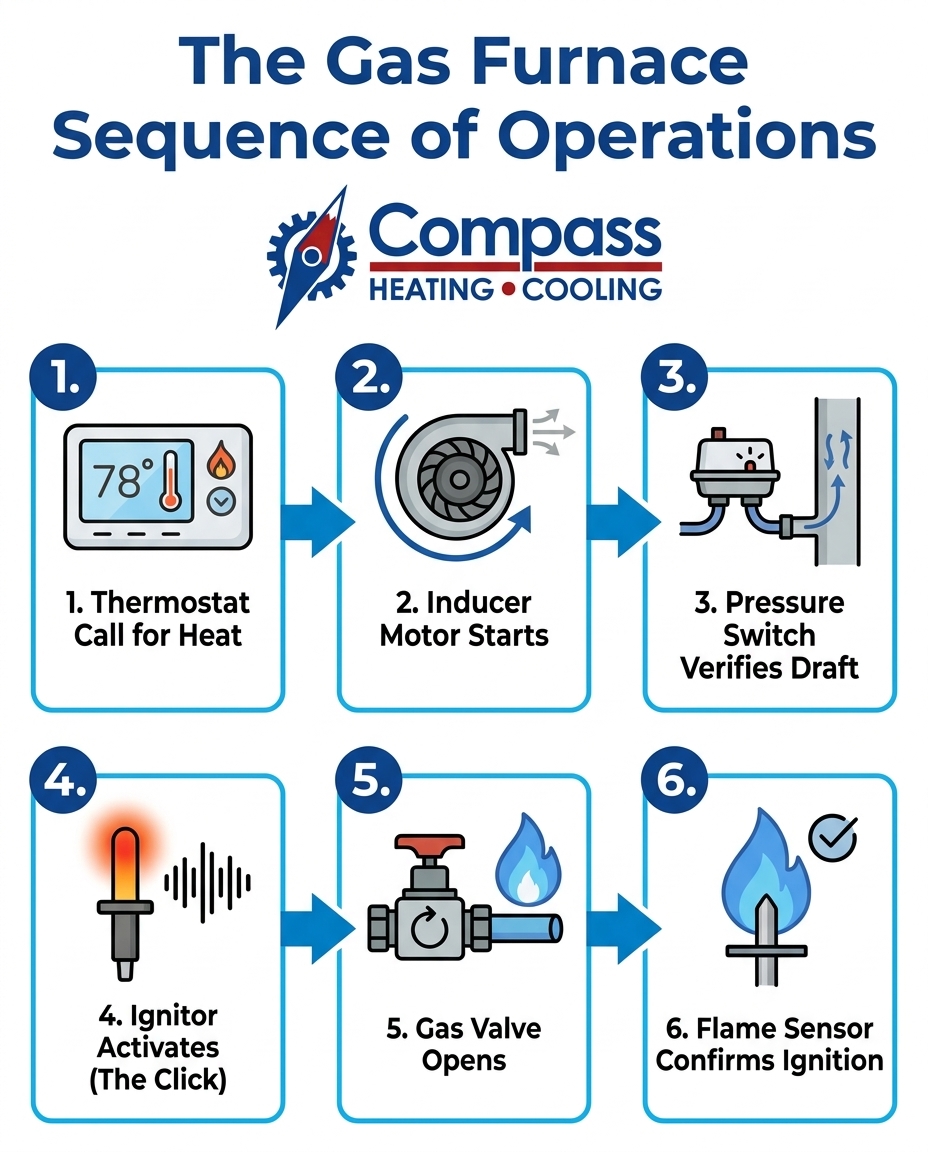
To understand why your system clicks but refuses to ignite, you first need to understand the "sequence of operations." This is the strict safety checklist programmed into your system's control board. If any single step fails, the entire sequence halts immediately to prevent a safety hazard.
1. The Thermostat Calls for Heat: You adjust the temperature on your wall, which sends an electrical signal to the furnace control board requesting warm air.
2. The Inducer Motor Starts: Before any gas flows, a small fan called the draft inducer motor kicks on. Its job is to pull air through the heat exchanger and push any lingering combustion gases out through the exhaust flue. You will usually hear this as a low humming or whirring sound.
3. The Pressure Switch Verifies Draft: As the inducer motor runs, a specialized sensor called a pressure switch measures the airflow. In our experience servicing homes at Loveland's elevation, proper drafting verified by the pressure switch is especially critical before the system even reaches the ignition phase. If the draft is too weak, the system shuts down.
4. The Ignitor Activates (The Click): Once the pressure switch confirms safe airflow, the control board sends power to the spark ignitor. This component attempts to create a high-voltage spark to light the gas. This is the distinct clicking sound you hear.
5. The Gas Valve Opens: Almost simultaneously with the sparking, the gas valve opens to release fuel to the burners.
6. The Flame Sensor Confirms Ignition: A metal rod sits directly in the path of the flame. If it does not detect a fire within a few seconds, it immediately shuts the gas valve off to prevent unburned gas from filling your home.
Because modern furnaces are highly complex, a failure at any of these steps requires careful diagnosis. If a technician tells you the entire unit needs replacing after a single failed startup sequence, getting a second opinion on HVAC work is always a smart move to ensure you aren't paying for unnecessary replacements.
Decoding the Sound: What Exactly Is That Click?
When you hear that distinct clicking noise, you are actually listening to the system attempting to pass the fourth step of its sequence. One pattern our Compass Heating & Cooling team sees often is that homeowners assume the click means the system is completely broken. In reality, hearing the click is actually a good sign that the earlier stages—the inducer motor and the pressure switch—are functioning correctly and passing their safety checks.
The sound itself typically comes from one of two specific mechanical actions. The first, and most common, is a spark ignitor attempting to create a high-voltage electrical arc. Similar to the click you hear when turning the knob on a gas grill or a gas stove, the furnace uses an electrode to generate a spark that will ignite the fuel. If the spark is too weak, or if the gas isn't present, you will hear a rhythmic "click-click-click" followed by silence as the system gives up.
The second possible source is the gas valve relay. When the control board tells the gas valve to open, a small electrical relay snaps shut to allow power to flow to the valve's solenoid. This produces a single, sharp click. If the valve is mechanically stuck, you will hear the click of the relay, but no gas will actually flow into the burners.
• Rapid, rhythmic clicking (3-5 seconds) — Likely Component Action: Spark Ignitor — What It Means: The electrode is firing, but either the spark is too weak or gas is not reaching the assembly.
• A single, sharp "clack" or click — Likely Component Action: Gas Valve Relay — What It Means: The control board is commanding the valve to open, but the mechanical valve may be stuck closed.
• Clicking followed by a 2-second "whoosh" of flame, then silence — Likely Component Action: Flame Sensor Lockout — What It Means: The system successfully lit, but the sensor failed to detect the fire and shut it down instantly.
When you search for why your system clicks but refuses to ignite, you are usually dealing with a failure right at this specific threshold. The system listens and looks for a flame immediately after the noise, and if it doesn't find one, it cuts the power.
Common Culprits Behind an Ignition Failure
When we dispatch a technician for a system stalling out during the September pre-heating season, we find the issue almost always traces back to a few specific mechanical or electrical failures at the ignition phase. Because the system is designed to fail safely, any degradation in these parts will prevent the burners from lighting.
Faulty or Worn Ignitors
Spark ignitors live a harsh life. They are subjected to intense thermal cycling—going from room temperature to hundreds of degrees in a matter of seconds, over and over again throughout the winter. Over time, the metal electrodes can warp, corrode, or crack. When this happens, the component may still receive electrical power from the control board, but it fails to generate a strong enough spark to bridge the gap and ignite the gas. You will hear the click, but the fuel simply won't catch.
Stuck or Failing Gas Valves
The gas valve is a mechanical gateway that controls the flow of fuel into your heat exchanger. Like any mechanical part, it can wear out, stick, or fail entirely. Sometimes, the internal solenoid burns out. When the control board sends the signal to open, the electrical relay activates (creating a click), but the physical valve remains stubbornly closed. Without fuel, the strongest spark in the world cannot create a flame, and the system shuts down.
Flame Sensor Lockouts
A flame sensor is a thin metal rod that sits directly in the path of the burners. It works by sending a tiny micro-amp electrical current through the actual flame to confirm the fire is lit. During the summer months when the unit sits idle, a micro-layer of household dust, pet dander, and humidity can settle on the rod. This dust acts as an insulator. The system clicks, the gas ignites for a split second, but the dirty sensor fails to read the flame. Believing the fire failed to light, the control board instantly shuts the gas valve off to protect your home.
Why the 'Clicking' Lockout is Actually Protecting Your Home
We know first-hand how incredibly frustrating it is to wake up in Loveland CO to a cold house, especially when you can hear the machinery trying and failing to start. However, it helps to reframe this breakdown: that clicking lockout is actually a vital safety mechanism working exactly as intended.
Heating systems utilize a protocol known as a safety lockout. If the control board detects a failure during the sequence of operations, it shuts down the entire unit for a set period—usually an hour—before trying again. If it fails multiple times consecutively, it will enter a hard lockout, requiring a manual reset or a professional diagnostic.
Consider what would happen if your system lacked this feature. If the gas valve opened and pumped fuel into the combustion chamber, but the spark ignitor was broken, your home would rapidly fill with unlit, highly combustible gas. By shutting down immediately when the spark fails or the flame sensor registers a fault, the control board prioritizes your physical safety over your temporary comfort. The clicking is simply the sound of your system actively preventing a dangerous situation.
Safe Troubleshooting: What You Can Check vs. When to Call a Pro
When you are dealing with a unit that clicks but refuses to ignite, it is important to establish firm boundaries on what you can safely check yourself and what requires professional intervention. Gas appliances carry inherent risks, and guesswork can lead to serious hazards.
Safe Homeowner Checks:
• Verify thermostat settings: Ensure the thermostat is set to "Heat" and the temperature is set at least three degrees above the current room temperature.
• Check the air filter: A severely clogged filter can cause the system to overheat and shut down, though this usually happens after the flame has lit. Still, starting with a clean filter is always best practice.
• Ensure the gas supply is on: Check that the gas valve on the pipe leading to the unit is parallel to the pipe (open). If you have other gas appliances, check if they are working to rule out a utility outage.
The Hard Boundary for DIY:
You must never attempt to test, repair, or replace gas valves or spark ignitors yourself. These components handle combustible fuel and high-voltage electricity. A loose connection or an improperly seated valve can result in gas leaks or fire hazards. Modern systems require specialized multimeters to measure micro-amps, ohms, and precise voltage drops to diagnose correctly.
At Compass Heating & Cooling, our technicians use strict sequence-of-operation diagnostics to pinpoint the exact failure point, ensuring accurate repairs without relying on "parts cannon" guesswork. If your basic checks do not resolve the issue, it is time to rely on Loveland heating services to safely test the internal components and restore your warmth.
The Importance of Pre-Season Furnace Preparation
The best way to handle a sudden early-season failure is to prevent it from happening in the first place. When your heating system sits dormant for months through the spring and summer, dust settles on critical internal components like the flame sensor, the ignitor, and the burners. Moving parts can stiffen, and electrical connections can loosen.
Our team highly recommends professional pre-season inspections, which are designed to catch these failing components before that first cold morning hits. A technician will clean the flame sensor, test the electrical draw of the spark ignitor, and verify that the gas valve opens smoothly. Because early fall temperature drops in our region make pre-season checks vital, having this service performed ensures the system is ready the moment the weather turns.
Investing in routine furnace maintenance not only prevents the frustration of a system that clicks but refuses to ignite during the September pre-heating season, but it also extends the overall lifespan of your equipment and ensures safe, efficient operation all winter long.
Frequently Asked Questions About Clicking Furnaces
Why is my furnace clicking but not turning on?
The clicking sound is typically the spark ignitor attempting to light the gas, or the gas valve relay opening to release fuel. If the ignitor is too weak to create a proper spark, or if the gas valve is stuck closed, the fuel will not ignite. When the system fails to detect a flame within a few seconds, it automatically shuts down to prevent a dangerous buildup of unburned gas.
Is a clicking furnace dangerous?
The clicking itself is not dangerous; in fact, it indicates the system's safety protocols are working exactly as designed by stopping the flow of unlit gas. The true danger arises if a homeowner attempts to bypass these safety switches or tries to perform DIY repairs on gas-handling components. Always leave internal gas and electrical diagnostics to a licensed professional.
How do you fix a furnace that clicks but won't ignite?
After verifying basic items like a clean air filter, an open gas supply valve, and correct thermostat settings, fixing this issue requires professional tools. A licensed technician from our team will use a multimeter to test the electrical draw of the ignitor, the resistance of the gas valve, and the micro-amp reading of the flame sensor. Once the exact point of failure is identified, they will replace the faulty component safely.
Can a dirty flame sensor cause clicking?
Yes, a dirty flame sensor is a very common cause of ignition failure. If the sensor is coated in a micro-layer of dust from sitting idle all summer, the system may ignite momentarily after the click, but the sensor will be too insulated to detect the fire. The control board will assume the flame failed and immediately shut the system off, often trying the clicking cycle again a few minutes later.
What does a furnace safety lockout mean?
A safety lockout is a built-in protective feature where the control board completely shuts down the system after multiple failed ignition attempts. This prevents the unit from repeatedly dumping unlit gas into the combustion chamber. A soft lockout usually resets itself after an hour, while a hard lockout requires a manual reset or a professional repair to clear the underlying fault.
Restore Your Home's Heat Safely and Quickly
Waking up to a cold house in Loveland CO is never a pleasant experience, but understanding the sequence of operations helps take the mystery out of that frustrating clicking sound. Remember that ignition issues, particularly those involving spark ignitors and gas valves, are not DIY projects. By reaching out to local experts who understand how to safely diagnose these complex safety systems, you can quickly move past the breakdown. Schedule a professional inspection with Compass Heating & Cooling today to restore your home's warmth safely and reliably.
hear what our satisfied clients have to say
Our clients consistently praise our exceptional service and attention to detail. They appreciate the personalized approach we take to meet their unique needs, ensuring satisfaction every step of the way.
.png)