


Early Fall HVAC Preparation for Rural Properties Around Greeley
Navigating Early Fall Heating Demands in Northern Colorado
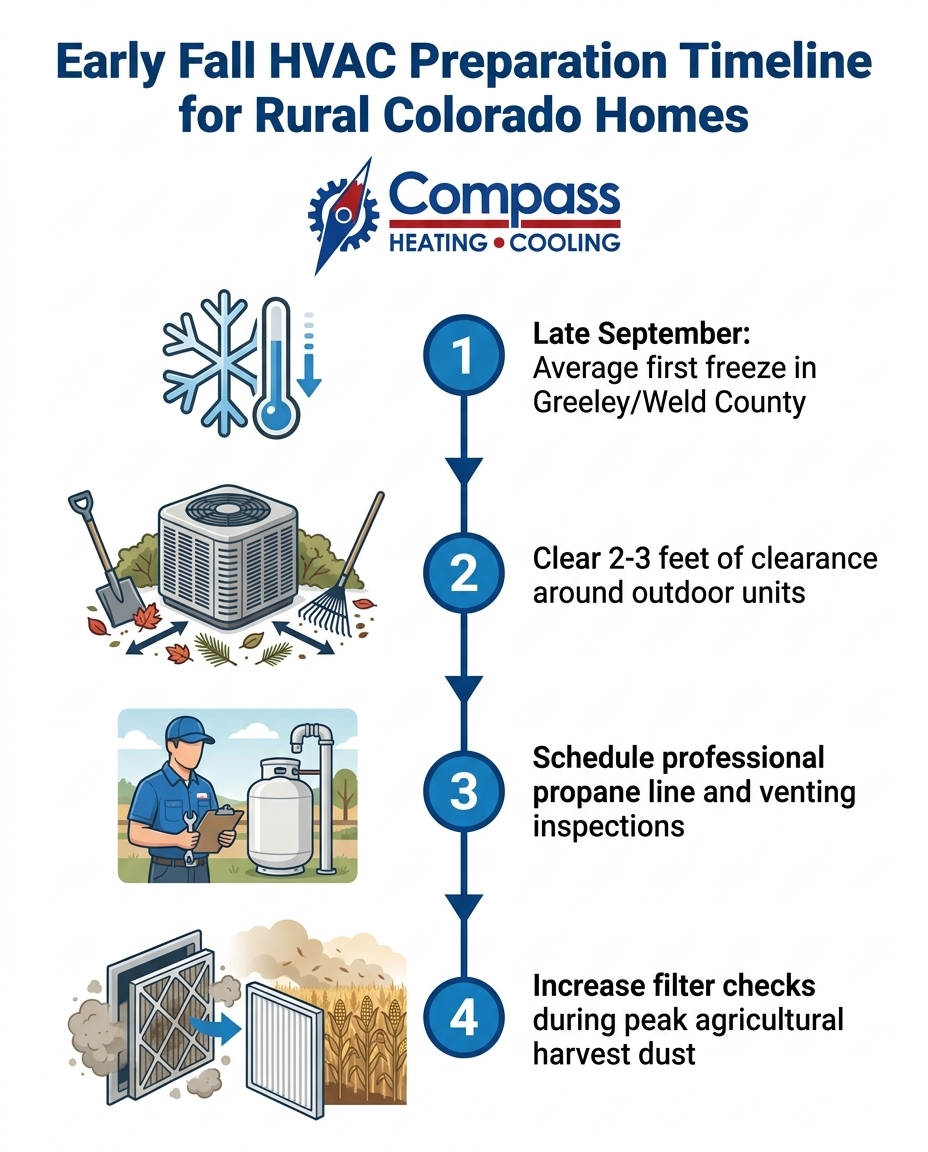
Historical data from the National Weather Service shows that Greeley's average first freeze typically strikes between late September and early October, meaning early fall HVAC preparation for rural properties around Greeley is a pressing deadline, not a weekend chore. If you live on an exposed acreage or a farm outside the municipal grid, your home faces rapid temperature drops and high winds that city neighborhoods simply do not experience. At Compass Heating & Cooling, we know firsthand that preparing rural homes that rely on alternative fuels and sit exposed to the elements requires prioritizing system safety checks and wind-proofing before severe weather hits.
Because rural setups are inherently more complex, securing your comfort means acting in September or early fall before the first hard freeze arrives. Addressing these vulnerabilities early ensures your heating systems are fully calibrated, safe, and ready to handle whatever the high plains winter delivers.
The Impact of High Plains Winds and Agricultural Dust on HVAC Systems
Living on rural properties outside Greeley city limits means your home is directly exposed to the realities of the high plains environment. Unlike standard suburban neighborhoods where houses act as windbreaks for one another, exposed properties take the full force of the weather. This unique environment alters standard maintenance timelines and requires a specialized approach that our team at Compass Heating & Cooling understands deeply.
Harvest Season Dust Accumulation
Early fall marks the peak of the agricultural harvest in Northern Colorado. As combines and tractors work the fields, they kick up massive amounts of airborne dust, chaff, and soil. This particulate matter doesn't just settle on your porch; it gets pulled directly into your outdoor HVAC coils.
When debris coats the aluminum fins of a heat pump or air conditioner, it creates a thick insulating barrier. This barrier restricts airflow and forces the compressor to work twice as hard to transfer heat. Over time, this added strain leads to elevated energy bills and premature component failure. Our technicians frequently find that following a seasonal HVAC maintenance checklist tailored for rural properties is the best way to stay ahead of this buildup.
Visual signs your outdoor unit needs professional cleaning:
• Visible matting: A fuzzy, blanket-like layer of dust and crop debris covering the metal fins.
• Reduced airflow: The fan is spinning, but you feel very little air being pushed out of the top of the unit.
• Longer run cycles: The system runs continuously without reaching the temperature set on your thermostat.
• Unusual noises: A louder-than-normal humming or straining sound coming from the compressor.
Wind Chill and Heat Loss Realities
The physical effect of unbroken winds on structural heat retention cannot be overstated. High plains gusts continuously strip away the thin layer of warm air that normally surrounds the exterior of your home, a process known as convective heat loss. Because of this, heating equipment in exposed areas works much harder than identical units located inside city limits.
To combat this accelerated heat loss, your equipment requires tighter calibration. A system that is slightly out of tune might go unnoticed in a sheltered suburb, but on an open acreage, that inefficiency quickly translates to a cold house and an overworked blower motor.
• Wind Exposure — Sheltered City Homes: Buffered by neighboring structures and fences — Rural High Plains Properties: Direct, unbroken gusts increasing heat loss
• Airborne Debris — Sheltered City Homes: Light pollen, neighborhood lawn clippings — Rural High Plains Properties: Heavy agricultural dust, chaff, and tumbleweeds
• Filter Changes — Sheltered City Homes: Every 60 to 90 days — Rural High Plains Properties: Every 30 days during peak harvest season
• System Strain — Sheltered City Homes: Moderate, predictable cycles — Rural High Plains Properties: High, requiring tighter professional calibration
Propane Heating Readiness: Safety and System Integrity
In areas lacking municipal gas lines, propane furnaces are the standard heating solution. However, propane requires a different level of respect and specialized knowledge than natural gas. Many city-focused contractors rarely encounter these setups, but our local experts at Compass Heating & Cooling understand the distinct requirements of alternative fuel sources. Preparing your propane system in September or early fall before the first hard freeze is a non-negotiable safety measure.
Professional Gas Line and Venting Inspections
Propane is heavier than air, meaning any leak in the line or the furnace itself will cause the gas to pool in low areas like basements or crawlspaces, creating a significant hazard. Because of this, checking gas line integrity and internal furnace components must always be handled by a licensed professional. Never attempt to tighten gas fittings or clean the burner assembly yourself.
Furthermore, high winds on the plains can severely affect exhaust venting. If a vent pipe is damaged or blocked by debris, your furnace cannot safely expel combustion gases. This leads to backdrafting, where dangerous gases are pushed back into your living space. A licensed technician will verify that all venting is secure, properly pitched, and capable of withstanding heavy gusts. They will also perform rigorous carbon monoxide detector testing to ensure your early warning systems are fully functional.
Fuel Logistics and Pre-Season Planning
The quick fix for winter fuel anxiety: Secure your supply before the cold weather spikes demand. Coordinating your propane delivery alongside your system tune-up is a smart logistical move.
1. Check your tank gauge: Ensure you have an adequate starting supply before the first freeze.
2. Schedule your delivery early: Avoid the frantic mid-winter rush when fuel trucks are backlogged.
3. Clear the path: Ensure the route from the driveway to your propane tank is free of overgrown brush or equipment.
4. Book your tune-up: Have a technician verify the furnace is operating cleanly so you aren't burning through fuel inefficiently.
By planning ahead, you eliminate the risk of a sudden fuel runout just as the high plains winter bares its teeth.
Securing Outdoor Equipment Against Rural Weather Extremes
The specific high plains winds in Weld County are notorious for driving agricultural debris straight into residential systems. In our years of servicing properties across Northern Colorado, we've seen that if you want to protect your investment, you have to actively manage the environment immediately surrounding your outdoor heating and cooling components. Rural properties outside Greeley city limits require aggressive exterior management to keep equipment breathing properly.
Establishing Safe Clearance Zones
The most important rule for outdoor equipment is maintaining a strict 2-to-3 foot clearance zone on all sides. During the early fall, dry brush, tumbleweeds, and tall native grasses can quickly encroach on your unit. If these materials are sucked against the intake vents, they will suffocate the system.
Beyond HVAC performance, clearing this vegetation is a critical fire safety necessity. Dry fall conditions on the plains mean that a single spark near an overgrown, debris-filled electrical unit can escalate rapidly. Take the time to clear away dead vegetation, cut back encroaching shrubs, and remove any loose items that the wind could throw against the cabinet.
Windbreaks vs. Airflow Requirements
While high winds are a problem, the solution requires a careful balance. Structural windbreaks—like slatted fences or strategically planted evergreen shrubs—can effectively protect your equipment from direct, punishing gusts. By breaking the wind, you reduce the sheer force hitting the fan blades and cabinet.
However, there is a serious danger of suffocating a unit by building enclosures too close. Solid walls or tightly packed bushes trap exhaust air, forcing the system to re-ingest the air it just expelled. This drastically reduces efficiency and overheats the compressor. Always maintain that minimum 24-inch gap, use slatted materials that allow for cross-ventilation, and remember: while you can manage the exterior clearance, the internal cleaning of the unit must be left to a qualified technician.
Managing Indoor Air Quality During the Weld County Harvest
The same agricultural dust that clogs your outdoor equipment is actively trying to infiltrate your home. Rural properties outside Greeley city limits experience a massive influx of airborne allergens, soil, and crop particulates during the early fall harvest. As the wind drives this dust against your home, it finds its way through microscopic gaps in windows, doors, and rooflines.
Once inside, your HVAC system becomes the primary line of defense. The air filter is responsible for catching these contaminants before they cycle through the blower motor and into your living spaces. During harvest season, checking and replacing your air filters more frequently is mandatory. Our team regularly responds to rural service calls where a filter that might last 90 days in the winter has become completely compacted within just 30 days during the fall harvest.
Signs your indoor air quality needs attention:
• Excessive surface dust: You find yourself dusting furniture multiple times a week.
• Allergy flare-ups: Increased sneezing, coughing, or dry eyes while inside the house.
• Stale odors: A lingering, earthy smell when the blower kicks on.
• Dark streaks on registers: Soot-like marks appearing around the edges of your ceiling or floor vents.
When filters get clogged, the system has to pull harder to circulate air, which places immense strain on the blower motor. Maintaining clean filters directly reduces the strain on your heating system. For comprehensive protection, scheduling routine HVAC maintenance includes professional duct inspections to ensure your ductwork hasn't developed leaks that are pulling dusty attic or crawlspace air directly into your home.
Strategic Scheduling: Beating the First Hard Freeze
For rural homeowners, timing is everything. Scheduling your inspections in September or early fall before the first hard freeze isn't just about beating the cold—it is about beating the logistical hurdles of rural living.
Winter weather in Northern Colorado transforms rural dirt and gravel roads into difficult, sometimes impassable terrain. We always warn our rural customers: if your heating system fails during a blizzard, you will likely face longer wait times simply due to the physical reality of navigating county roads. Early snows, mud, and heavy drifting can make it incredibly challenging for service trucks and propane delivery vehicles to reach your property quickly.
Furthermore, the HVAC industry experiences a massive surge in demand the morning after the first freezing night. Homeowners who waited to test their furnaces suddenly flood the phone lines, leading to booked schedules and delays. By taking proactive steps now, you secure flexible scheduling options and avoid the panic of an emergency breakdown.
Knowing that your propane system is fully operational, safely vented, and freshly tuned before you heavily rely on it provides immense security. If you need assistance getting your rural property ready for the dropping temperatures, securing professional heating services in Greeley ensures your equipment is calibrated for the specific demands of the high plains.
Frequently Asked Questions About Rural HVAC Preparation
How do I prepare my propane furnace for winter?
The safest approach is to schedule a professional inspection to verify gas line integrity and proper venting. A licensed technician will check the burner, test for carbon monoxide leaks, and ensure the system is operating efficiently. You should also coordinate your propane delivery early so you have a full tank before the cold weather spikes demand.
When should I schedule fall furnace maintenance in Colorado?
You should book your maintenance in September or early October, right before the first hard freeze hits. Scheduling early ensures you beat the rush of emergency calls that flood in after the first freezing night. For rural properties outside Greeley city limits, early booking also avoids potential delays caused by winter road conditions.
How do you protect an outdoor HVAC unit from high winds?
You can build a slatted windbreak or plant sturdy shrubs to block direct gusts, provided you maintain a strict 2-to-3 foot clearance zone around the unit. Never build a solid enclosure or wrap the unit completely, as this will trap air and overheat the system. Keeping the area clear of tumbleweeds and dry brush is also critical for airflow and fire safety.
How often should I change my HVAC filter during the fall harvest season?
During the peak agricultural harvest, you should check your filter every 30 days. The massive amount of dust and crop debris kicked up by farm equipment infiltrates rural homes quickly. If the filter looks dark or compacted, replace it immediately to prevent strain on your blower motor.
What are the specific heating challenges for rural homes on the high plains?
Rural homes face higher wind chills, accelerated heat loss due to unbroken gusts, and heavy agricultural dust that clogs outdoor coils. These properties also rely on alternative fuels like propane, which require specialized safety checks. Because they lack the shelter of a dense neighborhood, their heating systems work much harder to maintain indoor temperatures.
Secure Your Home's Comfort Before Winter Arrives
Preparing a rural property for a Northern Colorado winter requires more than just flipping a switch on the thermostat. From managing the heavy agricultural dust of the harvest season to protecting your outdoor equipment from punishing high plains winds, specialized rural preparation is the key to a reliable system. Rechecking your propane safety protocols in September or early fall before the first hard freeze ensures your family stays warm without the risk of dangerous gas leaks or sudden fuel runouts.
Don't wait for the first blizzard to test your equipment. Take control of your home's comfort today by scheduling a comprehensive inspection with our local experts at Compass Heating & Cooling, who understand exactly what it takes to keep rural heating systems running strong.
hear what our satisfied clients have to say
Our clients consistently praise our exceptional service and attention to detail. They appreciate the personalized approach we take to meet their unique needs, ensuring satisfaction every step of the way.
.png)