



How to Troubleshoot AC Not Cooling in Northern Colorado
When Your AC Is Running But Not Cooling in Northern Colorado — Start Here
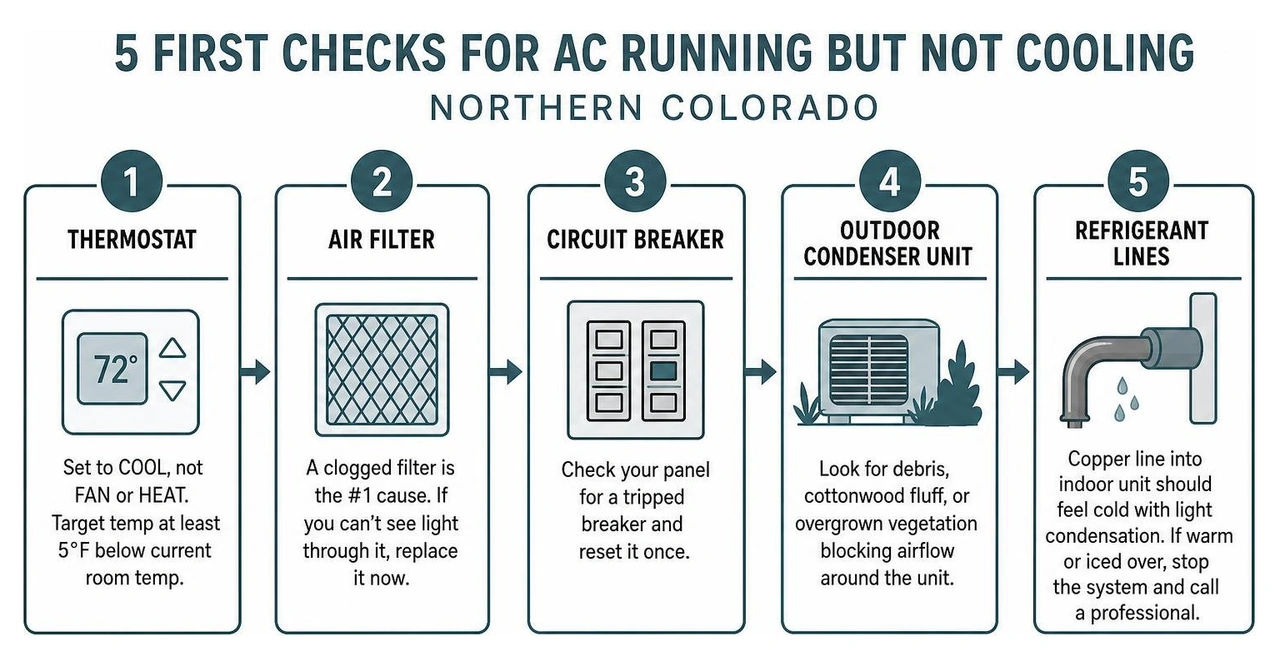
If you're dealing with an ac not cooling but running what to check first in northern colorado comes down to a short list of common culprits you can work through in under 15 minutes:
- Thermostat — Make sure it's set to COOL, not FAN or HEAT, and that the target temperature is at least 5°F below the current room temperature.
- Air filter — A clogged filter is the single most common cause. If you can't see light through it, replace it now.
- Circuit breaker — Check your panel for a tripped breaker and reset it once.
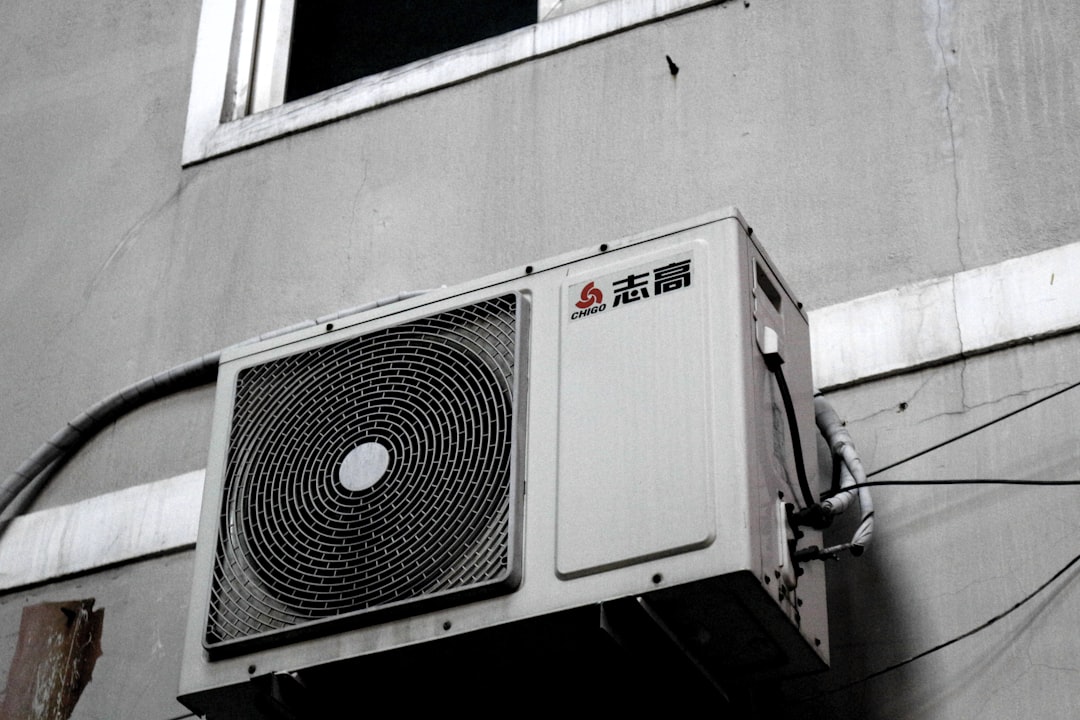
- Outdoor condenser unit — Look for debris, cottonwood fluff, or overgrown vegetation blocking airflow around the unit.
- Refrigerant lines — The copper pipe running into your indoor unit should feel cold and show light condensation. If it's warm or iced over, stop running the system and call a professional.
If none of those quick checks solve the problem, something deeper — a failed capacitor, refrigerant leak, or compressor issue — is likely at play.
When temperatures climb past 90°F across the Front Range and your air conditioner hums along without actually cooling your home, the frustration sets in fast. Northern Colorado summers are no joke, and a system that runs but delivers warm air can go from uncomfortable to a genuine health concern in a matter of hours — especially for kids, elderly family members, or pets.
What makes this region especially tricky is that local conditions like high altitude, intense UV exposure, agricultural dust, and wide daily temperature swings put extra strain on AC components compared to systems running at lower elevations. A system that would last a decade near sea level may show signs of trouble sooner here on the Front Range.
The good news is that many of the reasons an AC runs without cooling are things you can identify — and sometimes fix — on your own before picking up the phone.
AC Not Cooling But Running What to Check First in Northern Colorado
When your indoor blower fan is happily pushing air out of the vents but that air feels like a lukewarm summer breeze, your system is working half-time. In a split central air conditioning system, the indoor unit (the furnace or air handler) and the outdoor unit (the condenser) must work in perfect harmony. If the outdoor unit has shut down or is struggling, the indoor fan will keep running, blowing uncooled air throughout your house.
Before you assume you need a completely new air conditioner, it helps to understand Why Isn't My AC Working. Many issues stem from simple, easily fixable disruptions in airflow or electrical power.

Thermostat Settings and Power Switches
It may sound silly, but the very first thing we always check is the thermostat. It is incredibly easy for a family member to accidentally bump the system into "Fan Only" mode or "Heat" mode, or for a temporary power blip to reset your smart thermostat's programming.
- Verify the Mode: Ensure your thermostat is explicitly set to "Cool."
- Check the Fan Setting: Set the fan to "Auto" rather than "On." When the fan is set to "On," the indoor blower runs continuously, even when the outdoor unit isn't actively cooling. This results in room-temperature air blowing through your vents between cooling cycles.
- Inspect the Batteries: If your thermostat has a low battery, it might lose the ability to send the electrical signal to start your outdoor condenser unit, even if the display screen is still barely lit.
- Locate the Disconnect Switches: Both your indoor furnace and outdoor condenser have dedicated safety switches (which look like standard light switches indoors, or a metal pull-out box outdoors). Ensure nobody accidentally flipped the indoor switch off while retrieving items from the basement or utility closet.
Air Filter Clogs and Airflow Restrictions
A clogged air filter is the absolute king of AC troubleshooting. When air cannot pass through your filter, the system's cooling cycle breaks down entirely.
Your indoor evaporator coil relies on steady warm air flowing over it to evaporate the liquid refrigerant inside. If that airflow is choked off by a thick layer of dust, pet hair, and dander, the refrigerant inside the coil gets too cold. This causes any moisture in the air to instantly freeze on the coil, turning your indoor unit into a solid block of ice. Once the coil freezes, it acts as a physical barrier, blocking all remaining airflow and causing your system to blow warm air or short cycle. If you notice this happening, you can learn more about how restricted airflow impacts your system's behavior in our guide on why your AC Keeps Turning On and Off in Colorado Summer Heat - What Is Wrong.
During the peak of our July 2026 cooling season, standard 1-to-3-inch pleated air filters should be checked and replaced monthly. In dry, dusty regions, waiting 90 days is simply too long.
Outdoor Condenser Unit Blockages
The outdoor unit’s job is to release the heat absorbed from inside your home. To do this, the compressor pumps hot refrigerant gas through the outdoor condenser coils, and a large fan pulls outdoor air through those coils to cool them down.
If the outdoor unit is dirty or blocked, it cannot dump that heat. Common culprits in our local area include:
- Cottonwood Fluff: In early summer, cottonwood trees blanket Northern Colorado in white fluff, which acts like a thick wool blanket when sucked onto your AC coils.
- Agricultural Dust: Wind-blown dirt from nearby fields in communities like Greeley, Eaton, and Severance easily packs into the tiny aluminum fins of your condenser.
- Overgrowth: Landscaping, weeds, and shrubs should be kept at least two feet away from all sides of your outdoor unit to ensure it has room to breathe.
Environmental Factors Affecting Front Range Air Conditioners
Living along the Front Range of Colorado is beautiful, but our unique geography throws some major curveballs at mechanical equipment. Standard air conditioners are engineered for sea-level conditions, meaning our thin air and dry climate force systems to work harder to achieve the same cooling results.
Understanding How High Altitude in Northern Colorado Affects AC Cooling Performance is essential for local homeowners trying to keep their systems running efficiently.
High Altitude and Thin Air Challenges
At high elevations, the air is significantly less dense. Because the air is thinner, it carries less mass per cubic foot, meaning your air conditioner's blower fan moves about 15% to 20% less air by weight compared to a system operating at sea level. This directly reduces the system's overall cooling capacity and heat-transfer efficiency.
Additionally, our high altitude means we are closer to the sun, resulting in 20% to 30% higher UV radiation exposure. This intense UV light degrades outdoor electrical wiring insulation and plastic components much faster.
Most notably, the electrical capacitors in our local AC systems fail up to 40% more frequently than those at sea level. The combination of thinner air (which provides less natural cooling for electrical components) and extreme heat causes these vital start-and-run parts to wear out in just 5 to 7 years, compared to the 10-year lifespan typical in coastal regions.
Dry Climate and Agricultural Dust
Northern Colorado’s semi-arid climate means we have very little natural humidity. While this makes hot days feel more tolerable, it also means our soil is incredibly dry. In agricultural hubs like Greeley, Evans, and Johnstown, summer winds carry massive amounts of fine, powdery dirt through the air.
This accelerated dust accumulation means air filters clog much faster than manufacturers advertise. Furthermore, the combination of dry soil, spring cottonwood fluff, and summer dust creates a stubborn plaster-like crust on outdoor condenser coils. To keep your system running smoothly, it is important to understand How Often Should You Service Your Air Conditioner in a Hot Dry Colorado Climate to prevent these environmental factors from causing a mid-summer breakdown.
When to Troubleshoot Your AC vs. Calling a Professional
As a homeowner, it is empowering to solve home comfort issues on your own. However, air conditioners are complex machines that combine high-voltage electricity with highly pressurized chemical refrigerants. Knowing where to draw the line between a quick DIY fix and a professional service call can save you time, protect your equipment from expensive damage, and keep you safe.
If you are located in Fort Collins, Loveland, Windsor, or the surrounding areas, we are always here to help. When basic troubleshooting steps don't resolve the issue, scheduling professional AC Repair Fort Collins CO or certified AC Repair Loveland CO ensures your system is diagnosed safely and accurately.
Safe DIY Steps for an AC Not Cooling But Running What to Check First in Northern Colorado
Here are the only diagnostic and maintenance steps you should safely attempt yourself:
- The Breaker Reset (Once): If you find a tripped breaker in your main electrical panel, you can safely flip it back on. However, if it immediately trips again, do not reset it a second time. A repeated trip indicates a direct electrical short or a failing compressor.
- The Filter Swap: You can and should replace your own air filters. Always turn the system off at the thermostat before sliding out the old filter to prevent loose dust from being sucked directly into the blower motor.
- The Condenser Rinse: You can gently clean your outdoor condenser coils. Turn off the power to the outdoor unit using the local disconnect switch, then use a standard garden hose with a gentle spray pattern to rinse away dirt, grass clippings, and cottonwood fluff. Never use a pressure washer, as the high pressure will instantly bend and ruin the delicate aluminum fins.
- Thermostat Battery Replacement: Pop the faceplate off your thermostat and install fresh batteries (usually AA or AAA) once a year.
Signs of Component Failure Requiring Expert Repair
If your DIY checks don’t solve the problem, the issue is likely a failed internal component. Federal law under EPA Section 608 strictly regulates the handling of refrigerants, meaning only licensed professionals can legally inspect, test, or repair refrigerant-related issues.
Here are the most common component failures that require a professional technician:
- Failed Capacitor: If you hear a low hum coming from your outdoor unit but the fan isn't spinning, your run capacitor has likely failed. Capacitors act like temporary batteries to jumpstart the heavy-duty motors. Replacing them requires discharging high-voltage electrical energy, which can be incredibly dangerous without the right tools and training.
- Refrigerant Leak: If your copper refrigerant lines are covered in ice, or if you hear a faint hissing sound near your indoor coil, you likely have a refrigerant leak. Adding more refrigerant without locating and repairing the leak is a temporary, environmentally harmful, and costly mistake.
- Compressor Failure: The compressor is the heart of your AC. If it is struggling to start, "hard starting," or making loud grinding noises, it requires professional electrical diagnostic testing to determine if it can be saved or if it needs replacement.
To help you decide whether to grab your tools or grab your phone, refer to this quick reference guide:
| Symptoms | Likely Cause | Can I DIY? | Action Required |
|---|---|---|---|
| System blows warm air; copper lines are iced over | Clogged filter or low refrigerant | Partial | Replace filter, turn system off to thaw, and call a pro to check refrigerant. |
| Indoor fan blows air, but outdoor unit is completely silent | Tripped breaker or failed capacitor | Partial | Check breaker panel once; call a pro if it trips again or if the capacitor is dead. |
| Outdoor fan spins, but system makes a loud grinding/clicking noise | Failing compressor or fan motor | No | Shut down the system immediately and call for professional repair. |
| Outdoor unit is caked in dirt, weeds, or cottonwood fluff | Airflow restriction | Yes | Clear weeds and gently rinse the coils with a garden hose. |
| Thermostat screen is blank or displaying an error code | Dead batteries or low voltage wiring issue | Yes | Replace batteries; call a pro if the screen remains blank. |
Frequently Asked Questions About AC Troubleshooting
Why is my ac not cooling but running what to check first in northern colorado?
If your air conditioner is running but failing to lower the temperature inside your home, start by checking your thermostat settings (ensure it is set to "Cool" and "Auto"), inspect your air filter for severe dust clogs, check your electrical panel for a tripped breaker, and walk outside to verify that the outdoor condenser unit is free of debris and running. If your air filter is clean and the outdoor unit is running but still blowing warm air, you are likely dealing with a failed capacitor, a refrigerant leak, or a failing compressor that requires professional attention.
How often should I replace my air filter during peak cooling season?
In Northern Colorado, we recommend replacing standard 1-to-3-inch air filters monthly during the peak cooling months of June, July, and August. Our dry climate, high winds, and agricultural surroundings cause dust and pollen to accumulate in home ductwork much faster than in more humid regions. If you have multiple pets, suffer from severe seasonal allergies, or live near active construction or dirt roads, you may need to check and swap your filters even more frequently.
When should I consider AC repair versus full system replacement?
Deciding whether to repair or replace your system depends on three main factors: age, repair frequency, and overall efficiency. A well-maintained central air conditioner in our dry climate typically has an Average Lifespan of a Central Air Conditioner in a Hot Dry Front Range Climate of 15 to 20 years.
If your air conditioner is over 12 to 15 years old and requires an expensive repair (such as a new compressor or a major refrigerant leak fix), investing that money toward a modern, high-efficiency system is often the smarter financial move. For a detailed breakdown of how to weigh these costs, check out our comprehensive AC Repair vs Replace Decision Guide for Northern Colorado.
Conclusion
A cooling breakdown in the middle of a hot Front Range summer is always stressful, but walking through these simple troubleshooting steps can save you a frantic phone call—or at least help you describe the problem clearly when you do call.
When DIY fixes aren't enough, you don't have to tackle the heat alone. At Compass Heating & Cooling, we proudly serve homeowners across the entire Northern Colorado region, including Fort Collins, Loveland, Windsor, Wellington, Severance, Timnath, Johnstown, Greeley, Berthoud, and Evans.
We make professional service stress-free by handling all the paperwork for local utility rebates up to $8,000+ on eligible high-efficiency system upgrades. Plus, our comprehensive maintenance plan gives you priority scheduling, exclusive discounts, and year-round peace of mind.
Whether you need a quick diagnostic checkup or want to prevent future breakdowns, we've got you covered. Check out our professional AC Service Fort Collins CO and schedule your seasonal AC Maintenance Fort Collins CO today.
Ready to get your home back to a crisp, comfortable temperature? Schedule professional service with Compass Heating & Cooling or give us a call today!
hear what our satisfied clients have to say
Our clients consistently praise our exceptional service and attention to detail. They appreciate the personalized approach we take to meet their unique needs, ensuring satisfaction every step of the way.
.png)