



Upgrading from a Floor Furnace to Central Heating in Historic Loveland
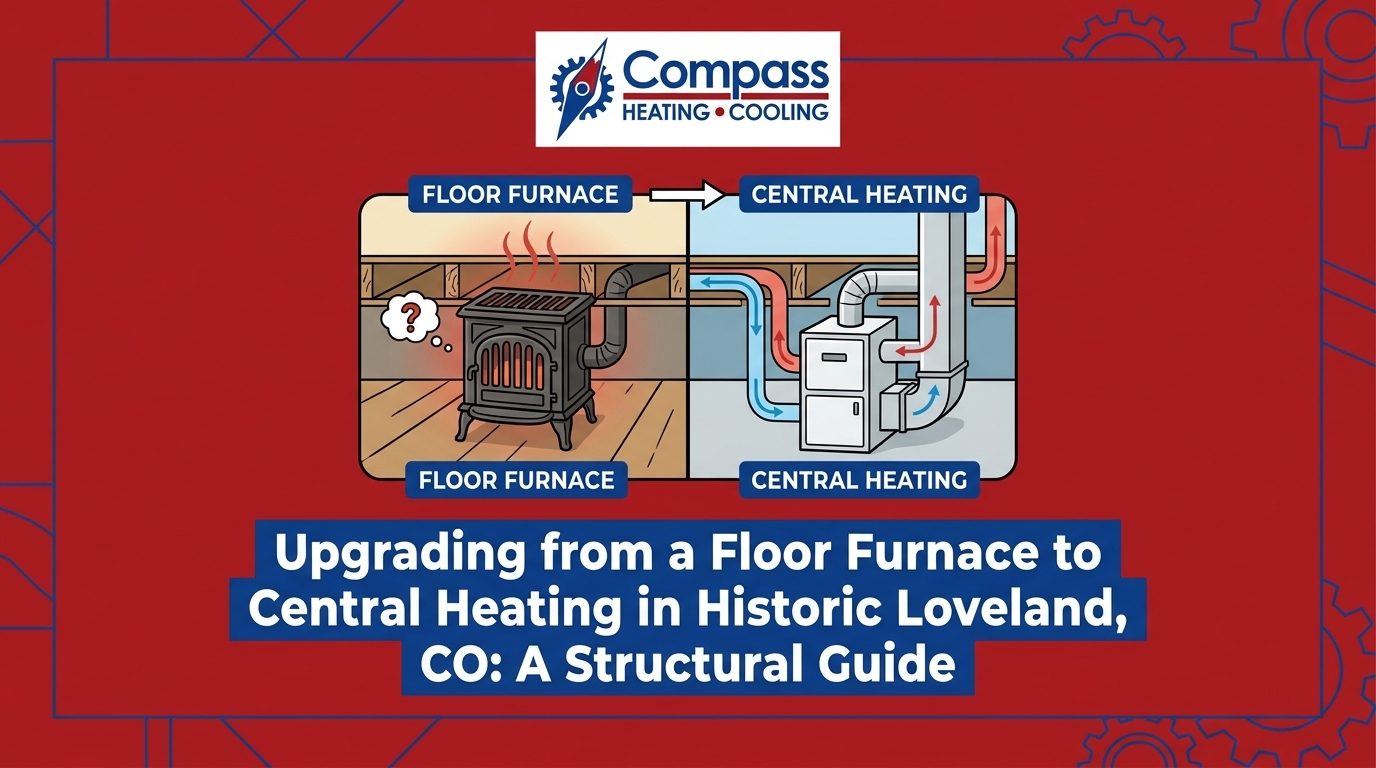
The Hidden Risks of Aging Floor Furnaces in Downtown Historic Properties
Your home is full of unique architectural charm, but that heavy metal grate dominating the hallway floor is a constant source of stress. As temperatures begin to drop, you are faced with a frustrating and familiar decision: risk running an outdated, potentially unsafe floor furnace for another winter, or finally commit to a permanent structural heating upgrade. Upgrading from a floor furnace to central heating in historic Loveland is not just about improving airflow—it is a critical step toward protecting your property, reclaiming your floor space, and ensuring your family's safety.
If you are ready to explore safer, more efficient options, our comprehensive HVAC services can help you make the transition smoothly.
For decades, floor furnaces were the standard heating solution for homes built in the early to mid-20th century. They provided a centralized source of radiant heat, but they also came with significant drawbacks that simply do not meet modern building standards. Today, homeowners in Downtown Historic Loveland are increasingly recognizing that holding onto these vintage systems carries more risk than reward. The transition requires careful planning, as removing a floor furnace is not a simple equipment swap. It is a structural modification that involves flooring repair, subfloor reinforcement, and a complete re-evaluation of how heat is distributed throughout your home.
Making this transition successfully requires partnering with local experts who understand the nuances of historic property preservation. Older homes often feature intricate woodwork, original lath-and-plaster walls, and shallow crawlspaces that complicate modern installations. Navigating these challenges takes specialized knowledge to ensure that the home's historic aesthetic remains untouched while the mechanical systems are brought fully into the 21st century.
Understanding the Safety Hazards of Outdated Floor Heating
Continuing to operate a vintage floor unit into the early fall pre-heating season exposes your household to a range of physical and health risks. These older systems operate on very basic principles, lacking the sophisticated safety mechanisms required in modern heating equipment.
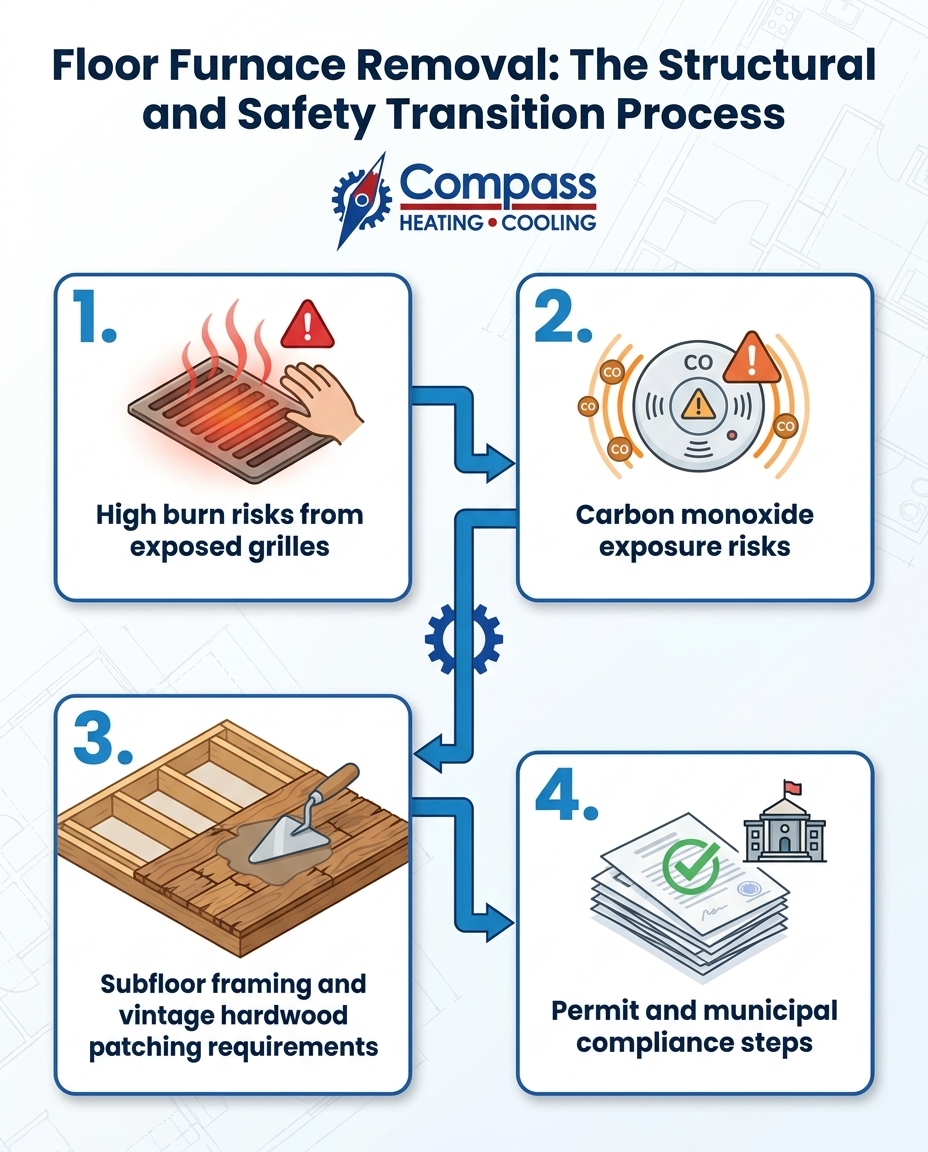
Severe Burn Hazards: Floor furnace grilles sit flush with your walking surface and are designed to radiate intense heat directly upward. During a heating cycle, these metal grates can reach extreme temperatures. This creates a severe burn hazard, particularly for small children who may crawl across the grate or pets who seek out warm spots to sleep. A momentary slip or a misplaced bare foot can result in serious injury.
Carbon Monoxide Exposure: The heat exchanger is the heart of any gas-fired furnace, responsible for keeping combustion gases separate from the breathable air in your home. Over decades of expanding and contracting, the metal heat exchangers in vintage floor furnaces are highly susceptible to cracking. When a crack forms, deadly carbon monoxide can leak directly into your living space. Because floor units are often neglected or difficult to inspect thoroughly, these micro-cracks frequently go unnoticed until they trigger a carbon monoxide alarm—or worse.
Lack of Modern Safety Switches: Contemporary central heating systems are equipped with a series of failsafes, including flame rollout switches, high-limit temperature sensors, and draft safeguard switches. If a modern system detects a blocked vent or an overheating component, it immediately shuts itself down. Outdated floor furnaces typically lack these redundant safety features. If a malfunction occurs, the unit may continue to burn fuel, creating a severe fire hazard.
Addressing these hazards is an urgent priority before the deep winter freeze sets in. Transitioning to a modern central heating system eliminates these localized dangers entirely, moving the combustion process out of your living space and safely venting it away from your family.
Structural Realities: Reclaiming and Patching Your Vintage Hardwood
Replacing a floor furnace is fundamentally a structural transition. When the metal housing is pulled from the floor, you are left with a massive void that opens directly into your crawlspace or basement. Addressing this gap requires precision carpentry and a deep understanding of historical home construction.
One of the biggest challenges homeowners face in Downtown Historic Loveland is matching and patching vintage hardwood floors. Homes built in the 1920s or 1930s often feature specific wood species, tight grain patterns, and aged patinas that cannot be easily replicated with off-the-shelf lumber. A skilled contractor must carefully weave new boards into the existing floor, staggering the joints so the patch blends seamlessly rather than looking like an obvious square plug in the middle of the hallway.
Beyond the surface aesthetics, the structural integrity of the subfloor must be evaluated. Floor furnaces are heavy, and the original installers often cut through vital floor joists to accommodate the large metal firebox. Once the unit is removed, those compromised joists must be properly sistered and reinforced to support the weight of the new flooring and ensure the structure meets current municipal load-bearing regulations. Because this process involves altering the structural framing of your home, it requires a licensed professional. Compass Heating & Cooling brings deep local expertise in navigating Loveland's historic property structures and unique retrofitting challenges, ensuring your vintage home is protected from the foundation up.
Preserving Architectural Integrity During HVAC Retrofits
Installing modern ductwork in a home that was never designed for it presents a unique set of hurdles. Historic properties typically feature narrow, restrictive crawlspaces and solid lath-and-plaster walls that make running traditional sheet metal ducts incredibly difficult.
• Navigating narrow crawlspaces: Older homes often have shallow clearances beneath the floorboards. Professionals must design custom, low-profile duct layouts that deliver proper airflow without requiring extensive excavation.
• Protecting lath-and-plaster: Unlike modern drywall, plaster is highly susceptible to cracking if subjected to heavy vibrations or aggressive cutting. Careful, specialized tools must be used to create vent openings without compromising the surrounding wall structure.
• Strategic vent placement: To preserve the home's original aesthetic, registers must be placed discreetly, often utilizing existing architectural features or custom-milled wooden grilles that match the home's era.
Professional structural care prevents damage to the home's original aesthetic, ensuring that the modernization of your mechanical systems does not come at the cost of your property's historic charm.
Navigating Local Building Codes and Compliance Requirements
Any invasive heating upgrade that involves cutting into framing, altering gas lines, or modifying electrical circuits will trigger local municipal building codes. In Downtown Historic Loveland, these regulations are strictly enforced to protect both the homeowner and the integrity of the local housing stock.
Securing the proper permits is a non-negotiable step in the floor furnace removal process. A comprehensive permit ensures that a municipal inspector will review the work, verifying that the subfloor has been reinforced correctly and that the old gas line has been capped and sealed without any leaks. Electrical connections that previously powered the floor unit's blower motor must also be safely terminated or rerouted according to the current National Electrical Code.
Attempting to bypass these requirements can lead to severe consequences. Unpermitted floor furnace removals frequently create major liabilities during future home sales. If a home inspector discovers that structural joists were altered or gas lines were capped without municipal oversight, the sale can be delayed or canceled entirely, and you may be forced to tear up the new flooring to have the work retroactively inspected. Fortunately, a qualified local contractor understands the nuances of HVAC permit requirements and will handle all compliance paperwork, scheduling, and inspections on your behalf, providing you with total peace of mind.
Modernizing Your Comfort: Evaluating Heat Pump and Ducted Alternatives
Once the decision is made to remove the floor furnace, homeowners must choose a replacement system that fits the unique constraints of a historic property. The two most common solutions are traditional ducted central air systems and modern ductless mini-split heat pumps.
Traditional central air provides a familiar, invisible comfort solution, but it requires extensive ductwork. If your historic home has a large basement or an accessible attic, a ducted system can be retrofitted effectively. However, if space is heavily restricted, ductless mini-splits offer a highly efficient, non-invasive alternative. These systems require only a small hole drilled through the exterior wall to connect an outdoor compressor to an indoor air handler, preserving your vintage plaster and trim.
Both modern options completely eliminate the drafty cold spots that are notoriously common with single-source floor furnaces. By distributing conditioned air evenly throughout the house, every room remains at a consistent, comfortable temperature. Additionally, transitioning to a modern setup reclaims valuable, usable square footage in your hallway or living room that was previously dominated by a hazardous metal grate.
When evaluating these upgrades, it is worth noting that generic federal tax credits or local utility rebates may apply to qualifying high-efficiency installations. While specific programs fluctuate, investing in a high-efficiency system often opens the door to incentives that help offset the initial investment. We always recommend consulting with your utility provider or tax professional to verify current eligibility.
• Installation Invasiveness — Traditional Ducted Central Heating: High. Requires opening walls, ceilings, or floors to route large sheet metal or flex ducts. — Ductless Mini-Split Heat Pumps: Low. Requires only a small 3-inch hole through the exterior wall for refrigerant lines.
• Aesthetic Impact — Traditional Ducted Central Heating: Minimal once installed. Vents can be customized to match historic baseboards or floors. — Ductless Mini-Split Heat Pumps: Visible indoor air handlers are mounted on the wall, floor, or ceiling of each zone.
• Comfort & Zoning — Traditional Ducted Central Heating: Provides even, whole-home heating, typically controlled by a single central thermostat. — Ductless Mini-Split Heat Pumps: Allows for precise room-by-room temperature control, eliminating cold spots entirely.
• Space Requirements — Traditional Ducted Central Heating: Requires significant attic, basement, or crawlspace room for the air handler and trunk lines. — Ductless Mini-Split Heat Pumps: Ideal for homes with no ductwork space; requires minimal indoor footprint.
Whether you choose a ducted route or opt for modern heat pump systems, the leap in comfort, safety, and energy efficiency will radically transform how you experience winters in your historic home.
Why September is the Critical Window for Structural Heating Upgrades
Timing is everything when it comes to major home modifications. The early fall pre-heating season is the absolute best time to tackle a floor furnace removal. In Northern Colorado, the average first freeze typically occurs in early October. Once the deep winter freezes set in, they demand reliable, even heating that drafty floor furnaces simply cannot provide. Waiting until the snow flies to address a failing floor unit is a recipe for an emergency no-heat situation.
Structural patching, permitting, and new system installation require a coordinated timeline that cannot be rushed. Here is why initiating the project in September is vital:
• Contractor Availability: September allows you to secure a spot on the schedule before HVAC companies become overwhelmed with emergency no-heat calls from unprepared homeowners.
• Permit Processing Time: Municipalities require time to review plans and issue the necessary structural and mechanical permits. Starting early ensures paperwork delays do not leave you freezing.
• Material Sourcing: Sourcing the exact species and grain of vintage hardwood to patch your floor takes time. A September start gives carpenters the buffer they need to find the perfect match.
• Avoiding Cold Snaps: Because removing a floor furnace leaves your home temporarily without a primary heat source, you want the work completed while daytime temperatures are still mild and comfortable.
By coordinating with Loveland heating experts in September, you avoid the panic of a sudden cold snap. You gain the profound peace of mind that comes with entering the harsh winter season with a safe, reliable, and highly efficient heating system already in place.
Protect Your Historic Home's Comfort Before Winter Arrives
Replacing a vintage floor furnace is a significant undertaking, but it is one of the most impactful upgrades you can make to a historic property. It provides the dual benefits of eliminating severe safety hazards—like burn risks and carbon monoxide exposure—while preserving the architectural charm that makes your home unique. Reclaiming your floor space and eliminating drafty cold spots will completely change how you live in your home during the colder months.
The window for a smooth transition is narrow. Acting during the early fall pre-heating season ensures that the structural framing, floor patching, and mechanical installations are completed long before the first freeze threatens your comfort. We encourage you to consult with local professionals today to evaluate your structural needs and secure a safe, warm, and code-compliant home for the winter ahead.
Frequently Asked Questions
Are old floor furnaces safe to use?
The short answer is no; aging floor furnaces present significant risks. Their metal grates reach extreme temperatures that pose severe burn hazards to children and pets. Furthermore, decades of use often lead to cracked heat exchangers, which can leak deadly carbon monoxide directly into your living space without warning.
How is the floor patched after a floor furnace is removed?
Patching the floor is a precise structural and cosmetic process. A professional carpenter will first sister and reinforce the floor joists to restore structural integrity. Then, they will carefully weave in reclaimed or matched hardwood, staggering the joints so the new wood blends seamlessly with your home's original vintage flooring.
Do I need a permit to remove a floor furnace in Loveland?
Yes, removing a floor furnace absolutely requires municipal permits. The process involves structural modifications to the floor framing, as well as the capping of live gas lines and the rerouting of electrical circuits. A licensed contractor will pull these permits to ensure all work meets local safety codes and does not hinder future home sales.
What is the best replacement for a floor furnace in an older home?
The best replacement depends on your home's available space, but ductless mini-split heat pumps are often the ideal choice for historic properties. They provide highly efficient, room-by-room heating without requiring invasive ductwork to be forced through narrow crawlspaces or behind delicate lath-and-plaster walls.
Will upgrading my floor furnace impact the historic integrity of my property?
When handled by experienced local professionals, an upgrade will actually protect and enhance your home's historic integrity. By utilizing low-profile ductless systems or custom-milled wooden vent grilles for ducted systems, experts can modernize your comfort while keeping the original aesthetic of the home intact.
Can I leave my old floor furnace in place and just install a new system?
While technically possible to abandon the unit in place, it is highly discouraged. Leaving the old metal housing in the floor retains the unsightly grate, wastes valuable square footage, and can create an unsealed pathway for drafts, pests, and moisture from the crawlspace to enter your living area.
hear what our satisfied clients have to say
Our clients consistently praise our exceptional service and attention to detail. They appreciate the personalized approach we take to meet their unique needs, ensuring satisfaction every step of the way.
.png)