


Heat Pump Installation in Greeley, CO
At Compass Heating and Cooling, we believe switching to a modern heat pump is one of the best ways to reduce your year-round energy costs, improve your indoor comfort, and move toward cleaner, all-electric heating and cooling in Greeley, CO. We provide complete heat pump installation services specifically tailored to Northern Colorado homes, addressing local weather extremes, elevation impacts, and the common challenges homeowners face here. We'll walk you through the entire installation process, how decisions are made, what to expect from the initial assessment through system handoff, and the long-term benefits of choosing the right heat pump for your Greeley home.
Heat Pump Installation in Greeley, CO
Switching to a modern heat pump is one of the most effective ways to reduce year-round energy costs, improve indoor comfort, and move toward cleaner, all-electric heating and cooling in Greeley, CO. Compass Heating and Cooling provides complete heat pump installation services tailored specifically to Northern Colorado homes, addressing local weather extremes, elevation impacts, and the common challenges homeowners face here. This page explains the full installation process, how decisions are made, what to expect from the first assessment through system handoff, and the long-term benefits of choosing the right heat pump for your Greeley home.
Why a properly installed heat pump matters in Greeley, CO
- Greeley experiences hot, dry summers with daytime highs frequently in the 80s and 90s, and cold winters where nighttime lows can drop below freezing. That means a system must both efficiently cool in summer and reliably provide heat in winter.
- Higher elevation and lower humidity affect heat pump performance and airflow. Cold-climate heat pumps and accurate system sizing are essential for dependable winter operation.
- Older homes in Greeley often have undersized or leaky ductwork, inconsistent zoning, or aging furnaces and air conditioners. A careful assessment and correctly matched system produce better comfort, lower energy bills, and fewer service calls.
Common heat pump installation types and service needs in Greeley homes
- Full heat pump replacement for homes with aging furnaces or air conditioners.
- New installations for all-electric retrofit projects or new construction.
- Ductless mini-split installations for additions, finished basements, or homes without ducts.
- Dual-fuel systems combining a heat pump with a gas furnace for cold-climate efficiency and backup heat during extreme cold.
- Zoning upgrades and ductwork sealing or replacement to improve comfort distribution.
- Equipment relocation, pad or condenser placement, and electrical service upgrades to meet local code and performance needs.
Initial consultation and home assessmentEvery Compass Heating and Cooling installation starts with a detailed, on-site consultation. A certified technician will:
- Review your current comfort problems, energy use patterns, and priorities for efficiency, noise, and indoor air quality.
- Inspect the building envelope: insulation levels, window types, air leakage, and orientation are all factors in equipment selection.
- Examine existing HVAC components: furnace, air handler, ductwork, electrical panel, and the home’s access points for equipment and refrigerant lines.
- Discuss space usage and potential future changes that could influence load requirements, such as finished basements, room additions, or planned insulation upgrades.
- Provide a transparent, written explanation of options, including ducted heat pump systems, ductless mini-splits, and dual-fuel configurations. Free onsite estimates are available for homeowners who prefer a no-obligation review.
Load calculations and right-sizingRight-sizing is critical to heat pump performance, energy efficiency, and system longevity. Compass Heating and Cooling uses industry-standard Manual J load calculations to determine heating and cooling requirements for each home. This process includes:
- Measuring conditioned square footage, orientation, ceiling heights, insulation levels, window sizes and types, and estimated air infiltration.
- Accounting for Greeley-specific climate data to ensure the system meets heating degree and cooling demands typical for the region.
- Selecting equipment capacity that balances the need for steady, efficient operation with proper humidity control and temperature stability. Oversized systems short-cycle, wasting energy and reducing comfort. Undersized systems run continuously and may not meet peak loads.
- Recommending comfort-enhancing options like variable-speed compressors and multi-stage operation to match output to actual needs.
Ducted vs ductless (mini-split) systems: choosing the right approachYour home’s layout, budget, and efficiency goals determine whether a ducted heat pump or ductless mini-split is the best solution.
Ducted heat pumps
- Work with existing ductwork or with newly installed ducts in new construction.
- Provide whole-home conditioning and can integrate smoothly with existing air handlers or furnaces for dual-fuel setups.
- Are often the right choice for homes with well-sized, sealed ducts and central distribution systems.
- May require duct sealing, insulation, or partial redesign in older Greeley homes with leaky or undersized ducts.
Ductless mini-splits
- Provide room-by-room control using indoor air handlers connected to an outdoor compressor by refrigerant lines and a condensate drain.
- Ideal for homes without ducts, for room additions, garages converted to living space, or when zoning and individualized temperature control are priorities.
- Offer high efficiency and quiet operation; multiple indoor units can be connected to a single outdoor unit in multi-zone installations.
- Require precise placement for efficient circulation in spaces with high ceilings or unique layouts.
Energy-efficient model recommendations and cold-climate optionsCompass Heating and Cooling focuses on equipment that performs reliably in Northern Colorado’s climate. Key performance factors include heating seasonal performance factor (HSPF), coefficient of performance (COP), and SEER ratings for cooling efficiency. For Greeley homes, consider:
- Cold-climate heat pumps engineered to maintain higher output at lower temperatures and to defrost effectively without losing interior comfort.
- Variable-speed compressors and inverter-driven outdoor units for smoother temperature control, lower operating noise, and improved dehumidification in summer.
- Multi-stage systems for larger homes to reduce cycling and improve humidity control.
- Compatible air handlers and indoor coil choices to maximize efficiency and maintain proper airflow.
- Recommendations take into account elevation-related performance considerations and typical winter low temperatures in Weld County.
Payment options and special-offer options Understanding the long-term savings from a heat pump is important, but homeowners often need flexible payment options. Compass Heating and Cooling reviews common payment options pathways and special offers relevant to Greeley residents:
- Payment options that spread costs over time while allowing homeowners to access higher-efficiency equipment.
- Information about potential utility rebates, state incentives, and manufacturer promotions that may reduce upfront costs or improve payback. Availability varies and may depend on program timelines and eligibility.
- Seasonal offers or incentives that align with Compass Heating and Cooling programs and the Compass Club maintenance plan. Payment and special-offer details are provided transparently during the estimate phase so homeowners can compare lifecycle costs and savings.
The professional installation process: step-by-stepCompass Heating and Cooling follows a clear installation process to minimize disruption and ensure long-term performance. Typical steps include:
Pre-install planning
- Final equipment selection, delivery scheduling, and permit review. Local codes and permit requirements for Weld County and Greeley are confirmed before work begins.
- Coordination for access to the attic, mechanical rooms, crawlspaces, and exterior areas. If electrical service upgrades are needed, a licensed electrician is scheduled.
Site preparation
- Protecting floors and furnishings with drop cloths and walk-off mats.
- Setting up a designated staging area for equipment and materials.
Removal and disposal
- Safe removal and environmentally responsible disposal of old equipment, refrigerant recovery per EPA regulations, and removal of debris.
- Verification of any asbestos or hazardous materials in older installations and appropriate handling if present.
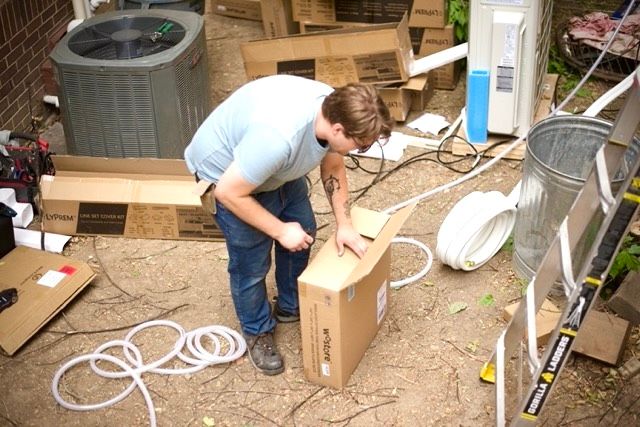
Mechanical and electrical installation
- Placement of the outdoor unit on a level pad or wall bracket with vibration isolation.
- Routing and connecting refrigerant lines, condensate drain, and wiring. For ducted systems, installation or modification of the air handler and evaporator coil occurs.
- Upgrading or configuring the electrical circuit and disconnects to meet the manufacturer’s specifications and local code requirements.
- Reconfiguring or sealing ductwork, adding return or supply pathways as needed, and installing zoning controls when applicable.
Refrigerant charging and system optimization
- Precision refrigerant charging using superheat and subcooling methods to match manufacturer recommendations for elevation and line set length.
- Programming thermostats, controls, and variable-speed settings to align with home comfort goals.
- Performing a comprehensive system startup that includes checking electrical load, airflow, static pressure, and compressor operation.
Post-install testing and walkthrough
- Temperature rise and delta T checks, airflow verification, leak testing, and a full cycle test in both heating and cooling modes.
- Noise and vibration checks at typical living areas to confirm acceptable levels.
- A homeowner walkthrough covering thermostat operation, maintenance expectations, and seasonal behavior. The system is left in optimized settings for homeowner comfort.
Warranty, documentation, and post-installation testingA well-documented installation protects your investment and simplifies future service. Compass Heating and Cooling provides:
- Manufacturer warranty information for compressors, coils, and other covered components. Warranty terms vary by brand and model.
- Labor and workmanship warranty covering installation tasks for a specified period. Warranties are clearly explained in the installation paperwork.
- Post-installation test reports that record airflow, temperature splits, refrigerant charge readings, electrical measurements, and any work performed on ductwork or controls.
- A start-up checklist and maintenance schedule, including recommended seasonal checks to maximize efficiency and maintain warranty compliance.
What to expect from first call through system handoffCompass Heating and Cooling organizes the entire process for clarity and predictability:
- First contact: You speak with a scheduling representative who arranges a free onsite estimate and outlines required information for the visit.
- Onsite estimate: A trained technician conducts the assessment, performs load calculations, and presents equipment options with transparent explanations of performance and costs. Offers and incentive information is discussed.
- Scheduling and permitting: Once an option is chosen, permits are pulled as required and a project schedule is confirmed. Equipment lead times are communicated.
- Installation day(s): Technicians arrive in uniform, perform the work professionally, and keep the work area clean. Where multiple days are needed, the schedule is maintained and communicated.
- Final inspection and handoff: The system is tested, documentation delivered, and the homeowner is instructed on thermostat function, filter replacement, and basic troubleshooting. Information about warranty registration and maintenance options is provided.
- Follow-up: A post-install follow-up ensures the system is operating as expected and addresses any questions that arise during the first weeks of operation.
Maintenance expectations and long-term careRegular maintenance preserves efficiency, extends equipment life, and reduces the chance of premature failures. For Greeley homes, recommended practices include:
- Biannual tune-ups, including spring cooling checks and fall heating checks, to ensure system health before high-demand seasons.
- Air filter replacement or cleaning every 1 to 3 months depending on filter type, household pets, and air quality.
- Annual inspections of outdoor unit clearance to prevent snow accumulation, dirt build-up, and vegetation interference. In winter, keep snow and ice away from the outdoor unit and maintain at least 12 inches of clearance when possible.
- Ductwork inspections every few years to detect leaks, insulation gaps, or damage that can reduce efficiency in Greeley’s climate.
- Enrolling in a maintenance plan, such as the Compass Club service plan, can simplify scheduling and provide predictable upkeep for your system.
Benefits of a professional, correctly sized heat pump installation
- Year-round comfort with smooth transitions between heating and cooling seasons.
- Lower energy bills compared with older electric resistance heating or inefficient fossil fuel systems when properly sized and installed.
- Reduced carbon footprint by enabling all-electric heating and potential coupling with renewable energy sources like rooftop solar.
- Improved indoor air quality when combined with properly sized filtration, humidity control, and sealed ductwork.
- Long-term reliability and fewer emergency repairs when the system is installed and maintained by certified technicians.
Local considerations for Greeley homeowners
- Evaluate system choices with Greeley winter lows and high-elevation performance in mind. Cold-climate models and backup heat options help bridge extreme low-temperature periods.
- Monitor outdoor unit placement to avoid prevailing wind exposure that can increase defrost cycles or create drafts in winter.
- Consider whole-home efficiency measures such as air sealing and attic insulation that reduce heating load and improve the return on investment for a new heat pump.
- Take advantage of local utility programs and seasonal rebates when available to offset equipment costs and improve payback timelines.
Frequently asked questions
Q: How long does a typical heat pump installation take?
A: A standard single-family home installation typically takes one to three days depending on scope. Simple ductless mini-split installations are often completed in a day, while full system replacements that involve ductwork, electrical upgrades, or permitting can require multiple days.
Q: Will a heat pump keep my home warm during Greeley winters?
A: Modern cold-climate heat pumps are designed to operate efficiently at low outdoor temperatures common in Greeley. In most installations they provide reliable heating. For homes that experience very low temperatures for extended periods, a dual-fuel setup or supplemental heat source can be included to ensure consistent comfort.
Q: What is the difference between SEER, HSPF, and COP?
A: SEER measures cooling efficiency over a seasonal cycle. HSPF measures heating efficiency for heat pumps. COP indicates instantaneous efficiency at a specific temperature. Higher numbers mean better efficiency and lower operating costs.
Q: Do I need ductwork for a heat pump?
A: Not always. Ducted heat pumps work with central duct systems. Ductless mini-splits provide targeted heating and cooling without ducts and are a great option for homes without existing ductwork or for room additions.
Q: How often should I service my heat pump?
A: At a minimum, schedule professional maintenance once a year for the heat cycle and once a year for the cooling cycle, or a combined biannual maintenance visit. Regular filter changes every 1 to 3 months are also important.
Q: Are there rebates or incentives for heat pump installations in Greeley?
A: Various utility and manufacturer incentives, as well as occasional state or federal programs, can reduce the upfront cost of heat pumps. Availability changes over time, so potential incentives are reviewed during the estimate process.
Q: Will installation require a new electrical service or panel upgrade?
A: It depends on the size and type of the heat pump and the condition of the existing electrical service. Some high-efficiency or larger systems require dedicated circuits or panel upgrades. This is evaluated during the home assessment.
Q: What should I expect regarding warranties and documentation?
A: You will receive manufacturer warranty information and a written installation warranty for labor. Post-installation documentation typically includes system configuration, refrigerant charge confirmation, and a start-up report.
Q: How long before I see energy savings after installing a heat pump?
A: Many homeowners notice reduced energy bills in the first full billing cycle after installation, with more significant savings seen over the first winter and summer seasons once the system is fully optimized and occupants adjust to new operating strategies.
Compass Heating and Cooling knows Greeley homes and climate. Our installation process is designed to be thorough, transparent, and focused on long-term comfort and efficiency. Choosing the correct heat pump, accurate sizing, professional installation, and routine maintenance are the keys to reliable heating and cooling performance in Northern Colorado.
Related Home Comfort Services
If your system is beyond repair, you may want to consider Heat Pump Maintenance in Greeley; CO. We also offer Heat Pump Repair in Greeley; CO. For homes that need additional attention, check out our AC Installation in Greeley; CO options. Learn more about our full heat pump installation services, or view all heat pump options. See all the services in greeley; co we provide.
hear what our satisfied clients have to say
Our clients consistently praise our exceptional service and attention to detail. They appreciate the personalized approach we take to meet their unique needs, ensuring satisfaction every step of the way.
.png)