


Heat Pump Installation in Evans, CO
Here at Compass Heating and Cooling, we know that heat pump installation in Evans, CO, is a great way to lower your seasonal energy costs, improve your year-round comfort, and move towards a greener, all-electric home. We provide local expertise in evaluating homes across Evans and Northern Colorado. We focus on sizing systems correctly for our unique climate and installing high-efficiency heat pumps—including ductless mini-splits and all-electric systems—so your home performs reliably through hot summers and cold winter nights.
Heat Pump Installation in Evans, CO
Heat pump installation in Evans, CO is an effective way to lower seasonal energy costs, improve year-round comfort, and move toward an all-electric, lower-emissions home. Compass Heating and Cooling provides local expertise in evaluating homes across Evans and Northern Colorado, sizing systems correctly for our unique climate, and installing high-efficiency heat pumps—including ductless mini-splits and all-electric systems—so your home performs reliably through hot summers and cold winter nights.
Why consider a heat pump for your Evans home? Heat pumps deliver both heating and cooling in one system, operate at high efficiency even in moderate cold, and pair well with electrification goals. They are especially well suited to homes in the Lower Platte Valley and Greeley-Evans area where summers can reach high temperatures and winter lows frequently drop below freezing. Proper selection, sizing, and professional installation are critical to achieve the promised energy and comfort benefits. Below is a detailed guide to the Compass Heating and Cooling installation process, what to expect, available incentives and payment options, warranty and testing procedures, and maintenance advice specific to Evans homeowners.
Why Evans, CO homes benefit from heat pump installation
- Year-round heating and cooling from a single, efficient system reduces the need for separate furnace and air conditioner equipment.
- Electric heat pumps perform efficiently during Evans hot summers and can provide comfortable heat in most Northern Colorado winters, particularly when matched to the home with a proper load calculation.
- Ductless mini-splits are ideal for older Evans homes without ductwork or for targeted zone comfort in additions and basements.
- All-electric systems are a practical step toward reducing onsite combustion appliances and taking advantage of regional incentives and lower-cost electricity during off-peak hours.
- Heat pumps with inverter-driven compressors provide quieter operation and better humidity control during our dry summer months while maintaining steadier indoor temperatures in winter.
Common heat pump options we install
- Ducted heat pumps: Ideal for homes with existing ductwork. These systems integrate with standard supply and return air systems and are sized to meet the whole-home load.
- Ductless mini-splits: Perfect for homes without ducts, room additions, or for creating zones that require independent control. Individual indoor units attach to a single outdoor compressor.
- Cold-climate heat pumps: Designed with low-temperature performance in mind. These units include enhanced vapor injection, variable-speed compressors, and controls tuned for Northern Colorado winters.
- All-electric heat pump systems: Replace gas furnaces and support electrification goals, often paired with heat pump water heaters and efficient ventilation systems.
- Hybrid or dual fuel systems: Combine a heat pump with a gas furnace and intelligent controls to optimize cost and comfort when temperatures fall to extremes.
Each option has advantages depending on your home layout, insulation levels, budget, and long-term goals. Compass Heating and Cooling evaluates those factors during the initial assessment to recommend the right system type and model for your Evans home.
Initial consultation and free onsite estimate
The installation process begins with a free onsite consultation and estimate. A certified technician visits your home to:
- Review existing HVAC equipment, ductwork, and electrical capacity.
- Inspect insulation levels, windows, building orientation, and common heat loss points.
- Discuss your comfort goals, usage patterns, and budget for both equipment and long-term operating costs.
- Explain heat pump types, efficiency ratings, and lifecycle considerations for your home.
This visit includes a preliminary assessment of project scope and an outline of potential equipment choices. Compass Heating and Cooling uses this information to schedule a detailed home energy and load assessment when appropriate.
Home energy and load assessment (Manual J and beyond)
Proper system sizing starts with a Manual J load calculation and a basic home energy assessment. This step is critical because oversizing or undersizing a heat pump can reduce comfort and efficiency.
During the energy and load assessment we:
- Perform a Manual J calculation to quantify heating and cooling loads room by room.
- Evaluate duct systems for leaks, proper sizing, and duct insulation where applicable.
- Check attic, wall, and crawlspace insulation levels and identify air infiltration points.
- Measure existing airflow and static pressure to determine fan and duct compatibility.
- Document window types, solar exposure, and the occupancy patterns that affect load.
The result is a recommended system size and capacity for each zone or the whole home. We also produce options that show efficiency tradeoffs, such as higher-efficiency models with variable-speed compressors versus standard single-speed units.
System sizing and model selection
Selecting the right model hinges on three practical considerations: accurately matched capacity, energy efficiency, and component compatibility with your home.
- Capacity: We choose a heat pump capacity that meets the Manual J load. In Evans climate, this often means favoring systems with variable output to handle wide temperature swings without short cycling.
- Efficiency ratings: Look for higher SEER and HSPF ratings for lower operating costs. For cold-weather performance, pay attention to the HSPF and low-ambient heating capability.
- Features: Variable-speed compressors, two-stage compressors, and advanced inverter technology provide better comfort, quieter operation, and improved humidity control—features that pay off in Northern Colorado.
- Ductwork compatibility: If ducts are present, we may recommend duct sealing, insulation, or a different indoor unit to match airflow requirements. For homes without ducts, ductless mini-splits with multiple zone heads are commonly recommended.
Compass Heating and Cooling presents model options with clear explanations of lifetime operating costs, reliability, and expected performance in Evans conditions so homeowners can compare the real-world implications of each choice.
Permits, rebates, and offers
Heat pump installations in Evans often require local permits and inspections. Compass Heating and Cooling handles permit submission and coordinates inspections as part of the installation package.
Incentives and rebates are commonly available through federal tax credits, state energy programs, and local utility rebates. Availability and eligibility change over time, and many programs require pre-approval or specific documentation. Compass helps identify likely incentives and prepares the necessary paperwork during the estimate and permitting phases.
Payment options are available for many homeowners. During your itemized estimate, Compass outlines ways to manage project costs—such as timing choices and solutions that can bundle equipment and installation—and shares any current promotions or eligible rebates. We present everything without pressure so you can weigh total project cost alongside expected energy savings.
Typical installation timeline and what to expect on install day
Installation timelines vary based on system complexity. Typical scenarios:
- Ductless mini-split installation: 1 to 2 days for most single- and multi-zone systems, depending on wall penetrations and number of indoor units.
- Ducted heat pump replacement with minimal duct work: 1 to 2 days.
- Full system conversion or extensive ductwork modification: 2 to 4 days.
What happens on installation day:
- Site protection: Technicians lay down walk-off mats and floor protection and keep work areas clean and organized.
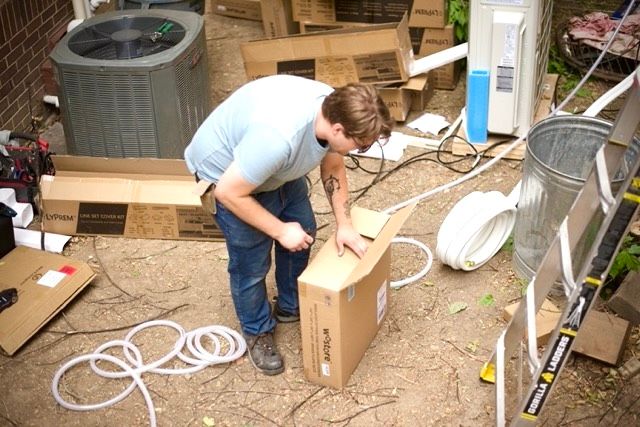
- Equipment placement: Outdoor units are positioned on a concrete pad or elevated bracket above grade. Indoor equipment is installed, duct connections are made, or wall-mounted heads are placed for mini-splits.
- Electrical and controls: We ensure the electrical service, disconnects, and breakers meet the new system requirements. If upgrades are required, Compass coordinates safe, code-compliant electrical changes.
- Refrigerant handling: Technicians use EPA-compliant practices when handling refrigerant, including proper evacuation, charging, and leak testing.
- Ductwork and airflow adjustments: Where ducts are used, we seal, insulate, or modify ductwork to match the new system’s airflow requirements.
- Cleanup: Job sites are cleaned daily, and debris is removed at project completion.
Technicians follow local codes and safety standards throughout. A residential conversion or complex two-story home may require multiple workdays to ensure a correct installation and minimize disruption.
Professional procedures and quality controls
Compass Heating and Cooling follows standardized installation procedures to protect performance and manufacturer warranties:
- Accurate load calculations before sizing to prevent short cycling and inefficiency.
- Proper refrigerant charge and airflow verification to manufacturer specifications.
- Electrical checks including voltage and amp draws to ensure safe operation and longevity.
- Duct sealing and insulation where needed to prevent heat loss and maintain balanced airflow.
- Installation of dedicated electrical disconnects and surge protection when necessary.
- Proper condensate handling and drainage to prevent indoor moisture issues.
- Commissioning checklist completed by the lead technician with documented test results.
These quality controls ensure your heat pump operates as designed and reduces the likelihood of early failures or performance shortfalls.
Post-installation testing and commissioning
Post-installation testing is where the system is measured against expectations. Our technicians perform:
- Measured airflow and static pressure checks to confirm duct and fan performance.
- Refrigerant charge verification using superheat and subcooling measurements.
- Temperature split measurements across the evaporator coil for cooling and heating modes.
- Electrical testing to confirm correct voltages, currents, and safe operation.
- Thermostat calibration and zoning control setup to ensure comfort programming is accurate.
- Noise and vibration checks to confirm equipment is operating quietly.
- Documentation of performance baselines so future maintenance can compare operating conditions.
Commissioning confirms the system is optimized for Evans temperatures and sets the baseline for warranties and any future service diagnostics.
Warranty coverage and documentation
Heat pump systems come with two primary warranty components: manufacturer equipment warranty and installer labor warranty.
- Manufacturer warranty: Typically covers major components such as compressors and sealed refrigerant circuits for a specified period. Terms vary by manufacturer and model.
- Compass labor warranty: Compass Heating and Cooling provides a workmanship warranty for installation labor. Warranty lengths and terms are documented at the time of estimate and included in the installation paperwork.
- Warranty registration: Compass assists with timely registration of equipment with the manufacturer, which may be required to activate extended warranties or certain incentives.
- Service records: All commissioning test results, serial numbers, permit documentation, and warranty information are provided to the homeowner as part of the project closeout.
Keeping records of your maintenance and any service visits helps protect warranty claims and preserve system value.
Post-installation training and homeowner orientation
After commission, technicians provide a homeowner orientation to:
- Demonstrate thermostat programming and zoning controls.
- Explain routine filter changes and basic maintenance tasks.
- Show how to operate the system in heat, cool, and emergency modes.
- Discuss recommended maintenance intervals and what signs to watch for that might indicate service is needed.
Compass Heating and Cooling strives to make sure homeowners are confident operating their new heat pump and understand how to maintain efficiency throughout the seasons.
Maintenance expectations and Compass Club benefits
Regular maintenance preserves efficiency and prolongs equipment life. Recommended maintenance includes:
- Annual heat pump tune-up before heavy-use seasons to check refrigerant charge, electrical connections, and airflow.
- Filter replacement every 1 to 3 months depending on filter type and household conditions.
- Periodic outdoor unit inspection to clear debris and check for proper clearance.
- Duct sealing inspection every few years for ducted systems.
Compass Club maintenance plan offers scheduled checkups and maintenance benefits that help keep systems running efficiently. Many new installations include an initiation period of Compass Club membership to ensure the new equipment is maintained properly from the start.
Common heat pump issues in Evans, CO and how proper installation prevents them
- Short cycling due to oversizing: Accurate load calculations reduce short cycling and excessive wear.
- Inadequate heating during cold snaps: Cold-climate heat pump models and correct backup strategies ensure reliable heat when temperatures drop.
- High energy use despite new equipment: Proper duct sealing, correct refrigerant charge, and variable-speed equipment selection optimize performance.
- Uneven temperatures: Zoning solutions or properly sized multi-head mini-splits help eliminate hot and cold spots.
- Excess moisture or condensation issues: Correct condensate design and proper indoor humidity control prevent moisture problems.
Addressing these issues at the installation and design phase prevents costly callbacks and ensures the system delivers expected energy savings.
Choosing the right system for Evans homes: ducted versus ductless
- Ducted systems are an efficient choice when existing ductwork is in good shape. They provide whole-home comfort and integrate smoothly with existing air handlers. Duct sealing and insulation are often recommended to realize full benefits.
- Ductless mini-splits are ideal for homes with no ducts, additions, or when creating additional zones is a priority. They provide flexibility with minimal invasive construction and excellent efficiency for targeted spaces.
- Hybrid solutions combine ductless for certain zones and ducted for central zones when a tailored approach best matches the home’s layout and budget.
Compass Heating and Cooling evaluates structural constraints, aesthetic preferences, and long-term cost tradeoffs to recommend the right architecture for your home.
Long-term benefits of professional heat pump installation in Evans, CO
- Lower energy use and reduced seasonal costs when systems are sized and installed properly.
- Improved indoor comfort with consistent temperature control and modern humidity management.
- Reduced greenhouse gas emissions compared with older fossil fuel systems when paired with efficient equipment.
- Reliable performance in Northern Colorado climate with equipment chosen for local conditions.
- Increased home value and appeal for buyers interested in energy-efficient homes.
Professional installation by a local, certified team ensures those benefits are realized and sustained.
Related Home Comfort Services
If your system is beyond repair, you may want to consider Heat Pump Maintenance in Evans; CO. We also offer Heat Pump Repair in Evans; CO. For homes that need additional attention, check out our AC Installation in Evans; CO options. Learn more about our full heat pump installation services, or view all heat pump options. See all the services in evans; co we provide.
hear what our satisfied clients have to say
Our clients consistently praise our exceptional service and attention to detail. They appreciate the personalized approach we take to meet their unique needs, ensuring satisfaction every step of the way.
.png)