



AC Installation in Berthoud, CO
At Compass Heating and Cooling, we know that choosing the right AC installation for your Berthoud home is a big decision for your family's comfort and energy savings. Because of the hot summer afternoons, cool mountain nights, and unique air quality challenges in Northern Colorado, we know that a system that's the right size and installed properly can keep you comfortable, lower your energy bills, and improve your indoor air. That's why we offer complete, expert AC installation services made just for Berthoud, CO homes. We start with free consultations, figure out exactly how much cooling you need, help you choose energy-efficient equipment, install everything carefully, and then test it to make sure it's working perfectly.
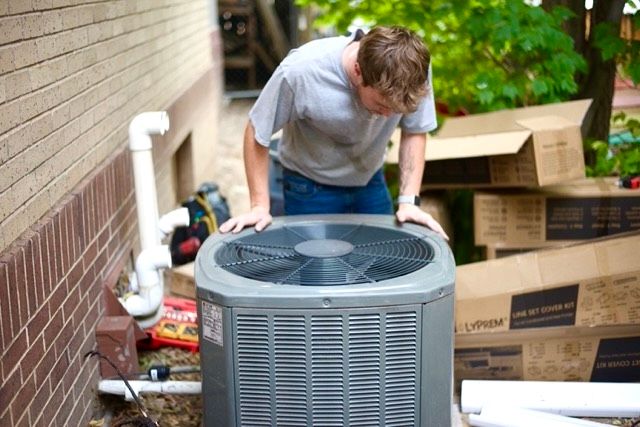
Why a professional air conditioning installation matters in Berthoud, CO
Berthoud sits at higher elevation near the Front Range, with large daytime to nighttime temperature swings, intense summer sun, and a semi-arid climate. Those local conditions change how an air conditioner performs compared to sea level locations. Key reasons to rely on professional installation include:
- Accurate sizing to avoid short cycling or comfort gaps caused by Berthoud temperature patterns.
- Proper refrigerant charge and airflow adjustments for high-altitude operation.
- Duct evaluation and sealing to prevent energy loss in older Northern Colorado homes.
- Indoor air quality considerations because wildfire smoke and dust can be seasonal concerns.
- Selection of equipment with efficiency and controls suited to Colorado energy patterns and utility programs.
Compass Heating and Cooling applies local experience to ensure your new system is configured for Berthoud homes, not generic defaults.
Common air conditioning needs and problems in Berthoud homes
Many homeowners seeking an AC installation in Berthoud contact us for one or more of the following reasons:
- Old equipment that struggles during summer peaks or is costly to repair.
- Uneven cooling between upstairs and downstairs due to improper capacity or duct layout.
- Desire to upgrade to a high-efficiency system to reduce electric bills and environmental impact.
- Remodeling projects where ductwork is incomplete or inaccessible.
- Adding cooling to additions or finished basements with limited ductwork.
- Replacing a failed compressor or outdoor unit where replacement is more cost effective than repair.
- Addressing indoor air quality concerns from spring dust and wildfire-related smoke.
Understanding the root cause of these needs is the first step in choosing the right system and installation approach.
Types of air conditioning systems commonly installed in Berthoud
Selecting the right system depends on home layout, existing ductwork, comfort goals, and budget. Here are the main options Compass Heating and Cooling evaluates during the consultation:
Central ducted split systems
- Traditional choice for homes with existing ducts.
- Components: outdoor condenser, indoor air handler or evaporator coil, and thermostat.
- Benefits: whole-house cooling, integrated with existing heating systems, often best for resale value.
Heat pump systems
- Provide both cooling and efficient heating, ideal for milder winters or all-electric homes.
- Modern cold-climate heat pumps perform well in Northern Colorado when sized and installed correctly.
Ductless mini-split systems
- Great solution for homes without ducts, additions, or room-by-room zoning needs.
- Offer high efficiency, independent zone control, and minimal disruption during installation.
Packaged units
- Common for small homes or when indoor space for an air handler is limited.
- All components in one outdoor or rooftop cabinet.
Hybrid or multi-split systems
- Combine ducted and ductless elements for flexible zoning where part of the house uses ducts and other areas do not.
Each option has tradeoffs in installation complexity, upfront cost, operating cost, and zoning flexibility. Compass Heating and Cooling recommends options based on load calculations and homeowner priorities.
Our detailed installation process for Berthoud homes
A quality installation is a system of steps, not a single event. Compass Heating and Cooling follows a structured process that reduces surprises and ensures consistent comfort.
Free onsite consultation
- We evaluate your home layout, insulation, attic and crawlspace access, existing ductwork, electrical service, and comfort needs.
- We discuss goals such as energy efficiency, zoning, and indoor air quality.
Load calculation and unit sizing
- We perform a Manual J load calculation to determine heating and cooling loads for each conditioned zone.
- Manual D duct design is used when new or modified ductwork is required.
- Proper sizing considers Berthoud solar exposure, high altitude, insulation levels, window orientation, and occupancy.
Equipment selection guidance
- We explain energy efficiency ratings such as SEER and EER and compare models that match calculated load and local climate.
- We consider heat pump HSPF ratings for combined heating and cooling performance where applicable.
- We discuss refrigerant types and future-proofing considerations.
Ducted versus ductless options
- We outline the pros and cons of ducted systems and mini-splits for your specific home.
- When ducts exist, we inspect for leaks, insulation gaps, and return path adequacy.
- For homes without ducts, we present mini-split zoning options and placement strategies.
Electrical and structural evaluation
- We verify breaker and service capacity, recommend upgrades if needed, and plan secure mounting and pad requirements for outdoor units.
Professional installation work
- Removal and responsible disposal or recycling of old equipment.
- Precision installation of the condenser, air handler or indoor heads, line sets, condensate lines, and controls.
- Accurate refrigerant charging with altitude and ambient temperatures in mind.
- Proper refrigerant recovery when required, and adherence to environmental regulations.
Commissioning and post-install testing
- System run-throughs to verify airflow, temperature differentials, refrigerant pressures, electrical load, and thermostat function.
- Duct leakage testing and airflow balancing where applicable.
- Confirmation of condensate drainage and safety controls.
Documentation, labels, and warranty registration
- We provide equipment documentation, outline warranty coverage, and explain routine maintenance needs.
- Compass Heating and Cooling notes local utility or manufacturer registration steps for rebates and warranty activation.
This process is designed to ensure performance, efficiency, and long-term reliability tailored to the Berthoud climate.
Why proper load calculation and Right-Sizing are essential
Oversizing and undersizing are both costly mistakes. In Berthoud, large daytime to nighttime swings mean systems that are too large will cool quickly but not remove enough humidity or run long enough to operate efficiently, causing short cycling and higher wear. Undersized systems will run continuously and still not keep up during heat waves.
Accurate load calculations:
- Consider insulation levels, window areas and orientation, roof and attic characteristics, tightness of the building envelope, and expected occupancy patterns.
- Allow for zoning differences such as an upstairs that receives more solar heat.
- Result in choosing equipment that runs efficiently and provides consistent comfort over a range of temperatures.
Compass Heating and Cooling performs Manual J and Manual D calculations so your system matches the real needs of your Berthoud home.
Ducted versus ductless: choosing the right approach for your home
Ducted systems
- Pros: whole-house comfort, works well with existing furnaces and heat pumps, typically lower cost per ton where ducts are present, integrated filters and IAQ options.
- Cons: requires well-sealed and insulated ducts for efficiency, duct retrofits can be disruptive.
Ductless mini-splits
- Pros: excellent for homes without ducts, targeted zoning, high efficiency, minimal invasive installation, ideal for additions, garages, and finished basements.
- Cons: multiple indoor units can be more visible, costs increase as zones are added, and not all rooms may need independent heads.
Decision factors for Berthoud homes:
- If your home has existing ducts in good condition, a central ducted system is often the most cost-effective whole-house solution.
- For historic homes or finished interiors where running ducts is not feasible, ductless mini-splits provide efficient, flexible cooling without major renovations.
- Hybrid approaches can deliver the best of both worlds for complex floor plans.
Energy-efficiency, rebates, and long-term operating costs
When selecting equipment, understanding efficiency ratings and long-term costs is essential:
- SEER (Seasonal Energy Efficiency Ratio) indicates cooling efficiency over a season; higher SEER means lower operating costs.
- EER measures performance at a specific temperature; useful for peak-load performance considerations.
- HSPF is relevant for heat pumps and represents heating efficiency.
- High-efficiency systems can reduce summer electric bills and often qualify for utility rebates or incentives in Colorado. Local utility programs may change over time, so reviewing available incentives is prudent.
Choosing equipment with the right balance of upfront cost and lifetime operating cost helps optimize total cost of ownership for Berthoud homeowners.
Warranty, payment options, and post-installation support
Compass Heating and Cooling includes clear information on warranty coverage and available payment options during the consultation:
- Manufacturer warranties
- Most major manufacturers offer limited parts warranties. Length and terms vary by model and efficiency level.
- Extended parts and compressor warranties are available on selected products.
- Labor warranty
- Installation labor warranty provides additional peace of mind and covers workmanship for a specified period.
- Compass Club membership
- New installations may include one year of the Compass Club maintenance plan to help ensure peak performance through regular checkups and tuneups.
- Payment options
All warranties and payment options are explained in detail before installation so you understand coverage, responsibilities, and any routine maintenance required to preserve warranty validity.
Post-installation testing and performance verification
A professional installation is not complete until the system meets performance targets. Post-install testing typically includes:
- Measuring supply and return air temperatures to verify correct temperature split.
- Checking airflow against design values and adjusting fan speeds or duct registers.
- Verifying refrigerant pressures and charge for altitude-compensated performance.
- Measuring electrical current draw and voltages to ensure safe and efficient operation.
- Testing thermostat settings, programmable schedules, and any smart controls.
- Ensuring proper condensate flow and safety float operations.
- Performing a system noise and vibration check and confirming secure mounting.
- Confirming that indoor air quality components such as filters, media, or UV lights are installed and operational.
These checks provide assurance that the installed system will meet comfort expectations and operate reliably during Berthoud summers.
Common post-install issues and how they are resolved
Even with proper installation, homeowners sometimes notice issues during the first days of operation. Typical items and solutions include:
- Uneven cooling
- Solution: airflow balancing, adjusting vents, or adding zoning controls to direct conditioned air where needed.
- Short cycling
- Solution: verify proper sizing and thermostat placement; make electrical and control adjustments if needed.
- High humidity
- Solution: check for proper run times and consider adding a two-stage system or enhanced dehumidification strategies.
- Higher than expected energy use
- Solution: confirm system settings, check for duct leaks, and ensure proper insulation and air sealing in the home envelope.
- Noise or vibration
- Solution: verify mounting and secure refrigerant lines, and perform vibration isolation adjustments.
Compass Heating and Cooling documents performance and addresses any start-up concerns as part of the handover.
Indoor air quality considerations for Berthoud, CO
Berthoud homeowners often have IAQ concerns driven by dry conditions, seasonal dust, and periodic wildfire smoke. When designing a new installation, consider:
- High-quality filtration
- MERV-rated filters or media filters to capture fine particles; balance with airflow requirements.
- Whole-house ventilation
- Proper ventilation to bring in fresh air without compromising energy efficiency and to help control indoor pollutants.
- Humidification and dehumidification
- Humidifiers for winter months and dehumidification strategies for summer if humidity control is a priority.
- Air cleaners and UV systems
- Supplemental options for removing particulates and neutralizing biological contaminants.
Equipment choices and duct design can be optimized to improve indoor air quality while maintaining efficient cooling.
Maintenance recommendations to protect your investment
Maintaining your new air conditioning system extends its life and preserves efficiency. Recommended practices:
- Schedule professional Tune-Ups at least once a year, ideally before cooling season.
- Replace or clean filters every 1 to 3 months depending on filter type and household conditions.
- Keep the outdoor condenser clear of debris, landscaping, and snow accumulation.
- Inspect and seal ductwork every few years to prevent energy loss.
- Monitor thermostat programming and consider smart thermostats for better control of energy use.
- Enroll in a maintenance plan like Compass Club for routine inspections and priority service.
Regular maintenance is one of the best ways to avoid premature failures and unexpected repair costs.
How Berthoud climate and home characteristics influence installation choices
Berthoud-specific considerations that affect equipment selection and installation include:
- High altitude
- Refrigerant pressures and compressor performance differ at altitude; installations must account for this to ensure manufacturer specifications are met.
- Large diurnal temperature swings
- Systems need to handle both daytime peaks and cooler night conditions without excessive cycling.
- Dry climate
- Humidity control strategies are different from humid regions; focus is often on particulate control and maintaining comfortable indoor humidity during seasonal transitions.
- Solar load
- South- and west-facing windows add heat; shading, window upgrades, or strategic zoning can mitigate these loads.
- Older homes
- Many homes in the region may have legacy ductwork or no ducts at all, influencing the choice between ducted and ductless systems.
Applying local knowledge helps achieve the best long-term performance and homeowner satisfaction.
Benefits of a professional air conditioning installation for Berthoud homeowners
Investing in a quality installation offers clear benefits:
- Predictable and even comfort in every room, regardless of temperature swings.
- Lower energy costs through correctly sized, high-efficiency equipment.
- Extended equipment life and reduced repair frequency with professional setup and maintenance.
- Improved indoor air quality and better protection from local air contaminants.
- Reduced noise and more reliable operation during peak summer demand.
- Proper warranty coverage and documentation for resale value.
Compass Heating and Cooling focuses on delivering installations that align with these long-term benefits for Berthoud homes.
Q: How long does a typical air conditioning installation take in a Berthoud home?
A: Installation time varies by system type and home complexity. A straight swap of a like-for-like central system can often be completed in one to two days. Duct modifications, electrical upgrades, or multi-zone ductless installations may extend the timeline. A precise schedule is provided after the onsite consultation and system selection.
Q: Will an air conditioner sized for Berthoud be different than one for lower elevations?
A: Yes. High-altitude locations like Berthoud affect refrigerant pressures and compressor work. Load calculations will account for altitude, solar exposure, and local insulation levels to ensure the selected equipment performs as intended.
Q: Do I need duct sealing or replacement during installation?
A: If your ducts have leaks, insufficient insulation, or poor airflow, sealing or partial replacement is often recommended. Proper ductwork ensures the system operates efficiently and delivers even comfort. Compass Heating and Cooling inspects ducts during the consultation and provides options based on findings.
Q: What are the advantages of choosing a heat pump instead of a traditional air conditioner?
A: Heat pumps provide both cooling and efficient electric heating, often reducing the need for separate heating equipment. Modern cold-climate heat pumps can handle Colorado winters effectively in many homes. They can reduce fossil fuel use and improve overall energy efficiency.
Q: How do warranties and maintenance affect long-term costs?
A: Manufacturer parts warranties cover component defects for a specified term, while labor warranties cover installation workmanship. Routine maintenance is often a condition of some warranties and helps prevent premature failures. A maintenance plan like Compass Club helps protect performance and identify issues early.
Q: Can a ductless mini-split cool my entire home in Berthoud?
A: Ductless systems can cool entire homes if properly designed, but costs increase with the number of indoor units and zones. They are particularly effective for homes without ducts, additions, or where targeted zoning is desired. A load calculation and layout assessment determine the optimal approach.
Q: How do you handle indoor air quality during installation, especially with wildfire smoke concerns?
A: We recommend high-efficiency filtration, consider whole-house ventilation strategies, and can add supplemental air cleaning options such as high-MERV filters or UV systems. Duct sealing and proper filtration go a long way toward improving IAQ in smoke-prone periods.
Q: Will my thermostat need to be replaced?
A: Often a new system benefits from an upgraded thermostat, especially if you want programmable or smart control for efficiency and comfort. Thermostat placement and calibration are part of the commissioning process.
Q: What maintenance should I perform at home after installation?
A: Change or clean filters regularly, keep outdoor units clear of debris, monitor for unusual sounds, and schedule annual professional tuneups. Following these steps helps maintain efficiency and extend equipment life.
Q: How soon after installation will I notice energy savings?
A: If you are replacing an older, inefficient unit with a modern high-efficiency system, many homeowners see measurable reductions in cooling-related energy use within the first billing cycle. Savings depend on usage patterns, thermostat settings, and home envelope condition.
Compass Heating and Cooling brings local expertise and a methodical installation process to ensure your new air conditioning system performs reliably in Berthoud, CO. From accurate load calculations and equipment selection to professional installation and thorough testing, our approach focuses on long-term comfort, efficiency, and home protection tailored to Northern Colorado conditions.
Related Home Comfort Services
If your system is beyond repair, you may want to consider AC Maintenance in Berthoud; CO. We also offer AC Repair in Berthoud; CO. For homes that need additional attention, check out our Furnace Installation in Berthoud; CO options. Learn more about our full ac installation services, or view all air conditioning options. See all the services in berthoud; co we provide.
hear what our satisfied clients have to say
Our clients consistently praise our exceptional service and attention to detail. They appreciate the personalized approach we take to meet their unique needs, ensuring satisfaction every step of the way.
.png)